Google App Engine is Google Cloud's platform-as-a-service offering. It features pay-per-use pricing and support for a broad array of programming languages.
$0.05
Per Hour Per Instance
SAP Integration Suite
Score8.5 out of 10
N/A
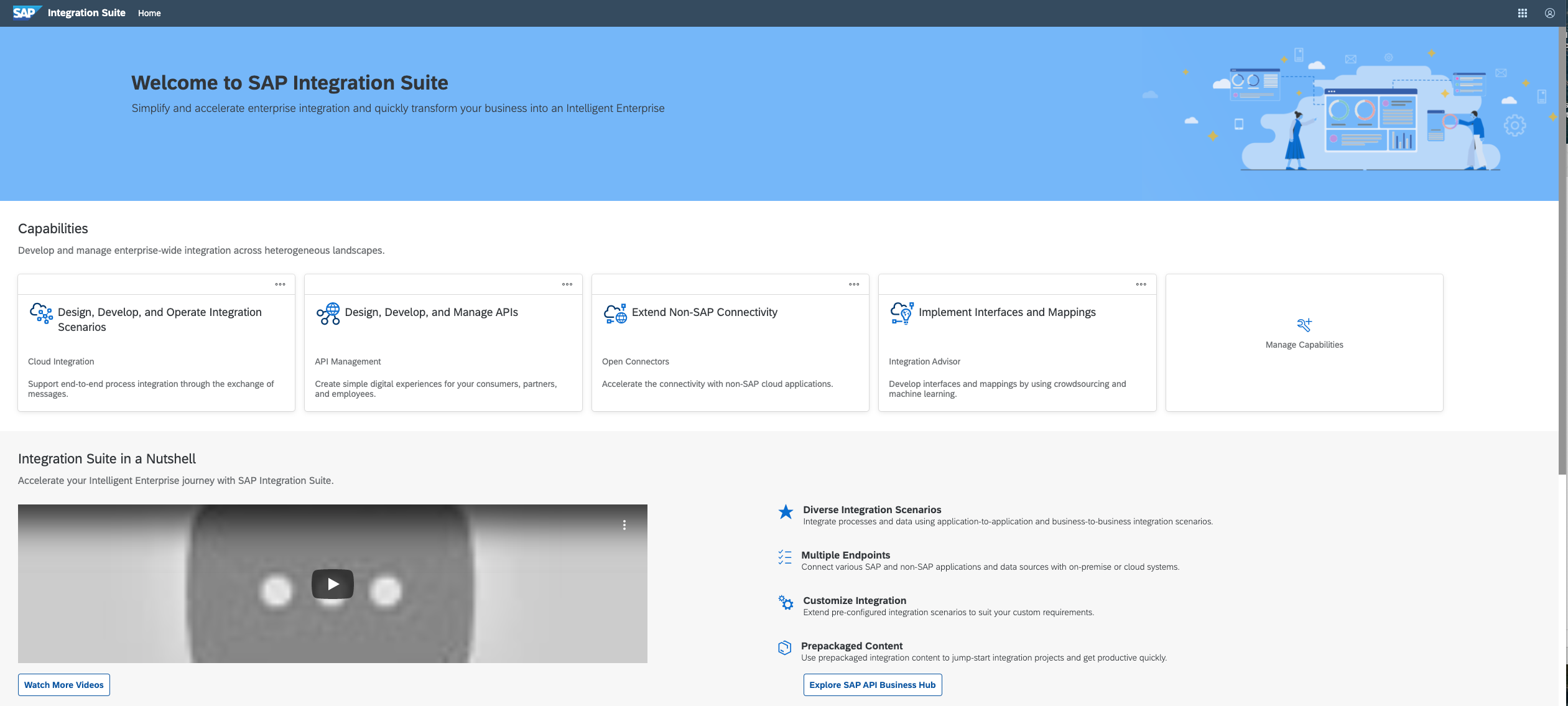
SAP Integration Suite is an integration platform-as-a-service (iPaaS) that helps quickly integrate on-premises and cloud-based processes, services, applications, events, and data. It is used to accelerate innovation, automate more processes, and realize a faster time to value.
$11,199
per year
Pricing
Google App Engine
SAP Integration Suite
Editions & Modules
Starting Price
$0.05
Per Hour Per Instance
Max Price
$0.30
Per Hour Per Instance
No answers on this topic
Offerings
Pricing Offerings
Google App Engine
SAP Integration Suite
Free Trial
No
Yes
Free/Freemium Version
Yes
No
Premium Consulting/Integration Services
No
No
Entry-level Setup Fee
No setup fee
No setup fee
Additional Details
—
Access to free tier services does not expire while there is an active Pay-As-You-Go or CPEA account with SAP. Once a free tier service limit has been reached users have the option to update from a free to a paid service plan in the same account.
More Pricing Information
Community Pulse
Google App Engine
SAP Integration Suite
Considered Both Products
Google
No answer on this topic
SAP
Verified User
Chose SAP Integration Suite
We use lots of SAP products and we do not want to have a heterogeneous system landscape, that's why we decided to again go for SAP Integration Suite.
A de minimis incentive was given to thank the reviewer for their time. The incentive was not used to bias or drive a particular response, nor was the incentive contingent on a positive endorsement. More Info
App Engine is such a good resource for our team both internally and externally. You have complete control over your app, how it runs, when it runs, and more while Google handles the back-end, scaling, orchestration, and so on. If you are serving a tool, system, or web page, it's perfect. If you are serving something back-end, like an automation or ETL workflow, you should be a little considerate or careful with how you are structuring that job. For instance, the Standard environment in Google App Engine will present you with a resource limit for your server calls. If your operations are known to take longer than, say, 10 minutes or so, you may be better off moving to the Flexible environment (which may be a little more expensive but certainly a little more powerful and a little less limited) or even moving that workflow to something like Google Compute Engine or another managed service.
A de minimis incentive was given to thank the reviewer for their time. The incentive was not used to bias or drive a particular response, nor was the incentive contingent on a positive endorsement. More Info
A de minimis incentive was given to thank the reviewer for their time. The incentive was not used to bias or drive a particular response, nor was the incentive contingent on a positive endorsement. More Info
App Engine is a solid choice for deployments to Google Cloud Platform that do not want to move entirely to a Kubernetes-based container architecture using a different Google product. For rapid prototyping of new applications and fairly straightforward web application deployments, we'll continue to leverage the capabilities that App Engine affords us.
A de minimis incentive was given to thank the reviewer for their time. The incentive was not used to bias or drive a particular response, nor was the incentive contingent on a positive endorsement. More Info
SAP Integration Suite is very helpful to us in many ways to manage purchase procedures, stocks, and data of vendors and suppliers. Also, it helps to manage data for service providers. SAP Integration Suite has the tool to conduct training and evaluation. Unique features like the cloud can provide access from any place and by any device is very helpful.
A de minimis incentive was given to thank the reviewer for their time. The incentive was not used to bias or drive a particular response, nor was the incentive contingent on a positive endorsement. More Info
SAP Integration Suite was already part of our SAP stack, part of Business Technology Platform, with out-of-the-box integration with S/4 HANA transactional and ERP system that we are using as our main back-end. Thus, we are achieving significant Total Cost Optimization benefits or running both solutions on the same platform, hosted on Azure cloud.
A de minimis incentive was given to thank the reviewer for their time. The incentive was not used to bias or drive a particular response, nor was the incentive contingent on a positive endorsement. TR verified that a representative sample of customers was invited. More Info
Effective integration to other java based frameworks.
Time to market is very quick. Build, test, deploy and use.
The GAE Whitelist for java is an important resource to know what works and what does not. So use it. It would also be nice for Google to expand on items that are allowed on GAE platform.
A de minimis incentive was given to thank the reviewer for their time. The incentive was not used to bias or drive a particular response, nor was the incentive contingent on a positive endorsement. More Info