SAP Datasphere, the next generation of SAP Data Warehouse Cloud, is a comprehensive data service that enables data professionals to deliver seamless and scalable access to mission-critical business data. It provides a unified experience for data integration, data cataloging, semantic modeling, data warehousing, data federation, and data virtualization. SAP Datasphere enables users to distribute mission-critical business data — with business context and logic preserved — across the data…
N/A
SAP Integration Suite
Score8.5 out of 10
N/A
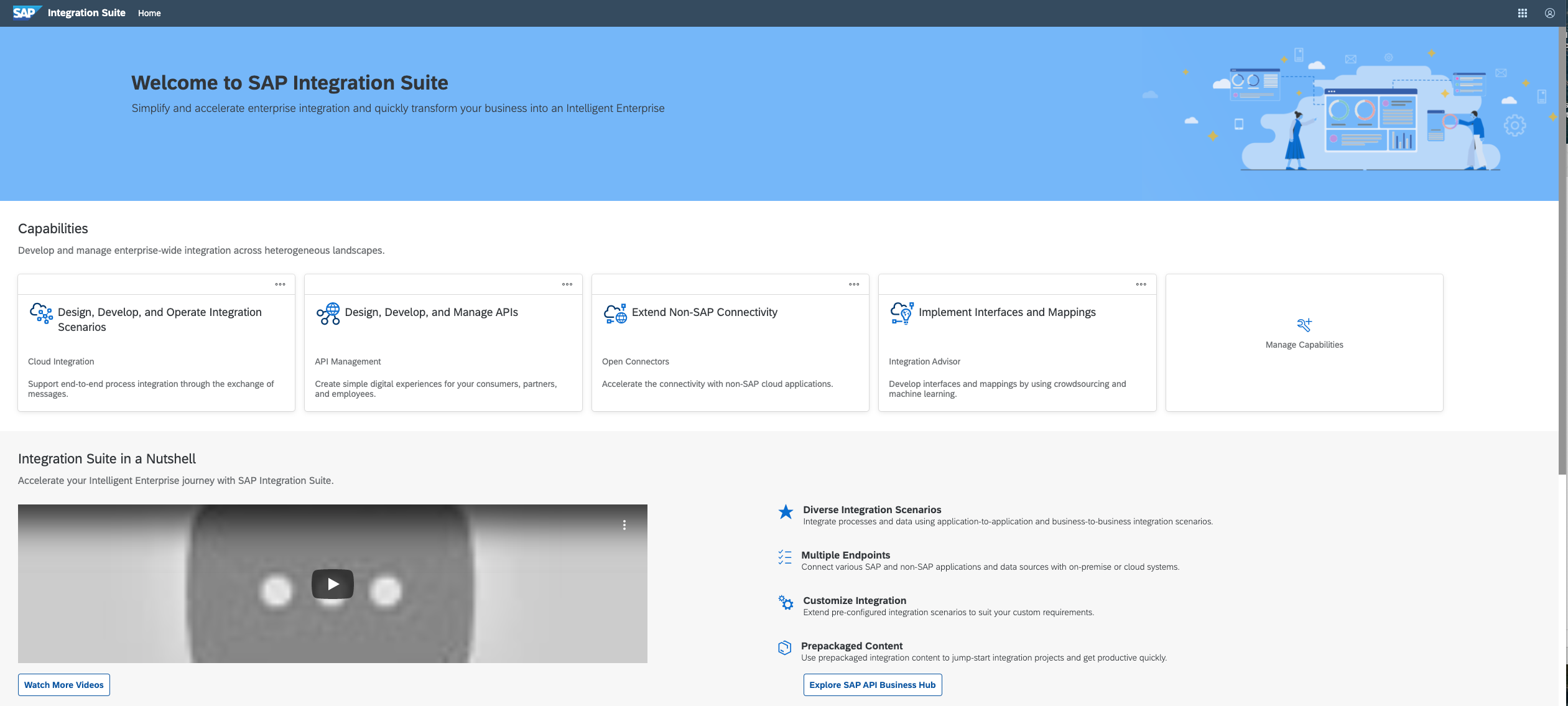
SAP Integration Suite is an integration platform-as-a-service (iPaaS) that helps quickly integrate on-premises and cloud-based processes, services, applications, events, and data. It is used to accelerate innovation, automate more processes, and realize a faster time to value.
$11,199
per year
Pricing
SAP Datasphere
SAP Integration Suite
Editions & Modules
No answers on this topic
No answers on this topic
Offerings
Pricing Offerings
SAP Datasphere
SAP Integration Suite
Free Trial
Yes
Yes
Free/Freemium Version
No
No
Premium Consulting/Integration Services
No
No
Entry-level Setup Fee
No setup fee
No setup fee
Additional Details
SAP Datasphere is available as a subscription or consumption-based model. The SAP Datasphere capacity unit (CU) offers an adaptable approach to pricing that enables any workload on any hyperscaler. The number of CUs required is determined by the unique workload, with the ability to tailor the combination of required services within SAP Datasphere utilizing a flexible tenant configuration. The services that contribute to CU consumption are the core application (compute and storage), data lake, BW bridge, data integration, and data catalog (crawling and storage).
Access to free tier services does not expire while there is an active Pay-As-You-Go or CPEA account with SAP. Once a free tier service limit has been reached users have the option to update from a free to a paid service plan in the same account.
More Pricing Information
Community Pulse
SAP Datasphere
SAP Integration Suite
Considered Both Products
SAP
No answer on this topic
SAP
Verified User
Chose SAP Integration Suite
SAP Integration Suite competes with several prominent integration platforms, including MuleSoft, Dell Boomi, Microsoft Azure Logic Apps, and Oracle Integration Cloud. Here’s a comparison highlighting key factors that influenced the companies decision: Seamless Integration with …
A de minimis incentive was given to thank the reviewer for their time. The incentive was not used to bias or drive a particular response, nor was the incentive contingent on a positive endorsement. TR verified that a representative sample of customers was invited. More Info
SAP is best suited for large global corporations. It is a very complex software and is difficult to come by individuals who have sufficient enough knowledge to master the product. Globally our company only has 1 person to support us in IT for SAP. It is great if you use a more complex web host such as SFCC as you can make connections to SAP for returns, inventory, price updates, etc.
A de minimis incentive was given to thank the reviewer for their time. The incentive was not used to bias or drive a particular response, nor was the incentive contingent on a positive endorsement. More Info
In our case to have a such a poweful middleware in the cloud, give us a lot of benefits such as maintenance and support. In the integration part to be able to connect SAP and Non SAP applications makes SAP Integration Suite a good investment when our master data in this case is in S4HANA. Less appropriate is that sometimes the updates in production tenant failed and they have to downgrade or repair the issues. Affecting the usage of the tool. I guess SAP team have to be more aware of performing the changes and tested well on development environments and then when they know for sure that is the correct way to go with the update put it in production.
A de minimis incentive was given to thank the reviewer for their time. The incentive was not used to bias or drive a particular response, nor was the incentive contingent on a positive endorsement. More Info
SAP Data Warehouse Cloud offers free trial for 90 days with free 128 GB of storage and 64 GB memory.
Availability of self-service data modeling and analytics on SAP Data Warehouse Cloud enables users to access and analyze data without getting support from the IT team.
Without zero coding while collecting, connecting, analyzing and modeling data, it saves us time and operational costs of partnering with external IT support experts.
A de minimis incentive was given to thank the reviewer for their time. The incentive was not used to bias or drive a particular response, nor was the incentive contingent on a positive endorsement. More Info
A de minimis incentive was given to thank the reviewer for their time. The incentive was not used to bias or drive a particular response, nor was the incentive contingent on a positive endorsement. More Info
Provide more pre-built integrations to use within SuccessFactors or other modules instead of everything having to be custom built
Support is unable to provide advice on custom builds so you often have to engage a 3rd party partner
Works best when you have the functional and technical teams working together. Otherwise, the system is too technical for a functional user to create integration and a technical user not always understand the functional perspective
A de minimis incentive was given to thank the reviewer for their time. The incentive was not used to bias or drive a particular response, nor was the incentive contingent on a positive endorsement. TR verified that a representative sample of customers was invited. More Info
SAP Integration Suite is very helpful to us in many ways to manage purchase procedures, stocks, and data of vendors and suppliers. Also, it helps to manage data for service providers. SAP Integration Suite has the tool to conduct training and evaluation. Unique features like the cloud can provide access from any place and by any device is very helpful.
A de minimis incentive was given to thank the reviewer for their time. The incentive was not used to bias or drive a particular response, nor was the incentive contingent on a positive endorsement. More Info
It is one of the best tools and a boon to Logistics teams across the globe. One tends to actually process warehousing data so smoothly and the way demonstration is made while in programs it makes it user friendly. The Inventory touch points that one identify is simply awesome and is best part.
A de minimis incentive was given to thank the reviewer for their time. The incentive was not used to bias or drive a particular response, nor was the incentive contingent on a positive endorsement. More Info
A de minimis incentive was given to thank the reviewer for their time. The incentive was not used to bias or drive a particular response, nor was the incentive contingent on a positive endorsement. More Info
I would greatly acknowledge the services of Sap Data [warehouse Cloud] because we were struggling before its arrival where we used to get manual data connections and this used to consume a lot of time but after its use, we now are able to connect data easily saving a lot of time and finances.
A de minimis incentive was given to thank the reviewer for their time. The incentive was not used to bias or drive a particular response, nor was the incentive contingent on a positive endorsement. TR verified that a representative sample of customers was invited. More Info
A de minimis incentive was given to thank the reviewer for their time. The incentive was not used to bias or drive a particular response, nor was the incentive contingent on a positive endorsement. More Info
Each of these listed software has its own unique strength and capacity that scales well. SAP Datasphere on its end up against them with more suitability for large establishments with complex data ecosystems with scalability support. Also, it avails a pay-as-you-go pricing for users, and it is widely up for data quality, data governance, and data discovery.
A de minimis incentive was given to thank the reviewer for their time. The incentive was not used to bias or drive a particular response, nor was the incentive contingent on a positive endorsement. More Info
SAP Integration Suite was already part of our SAP stack, part of Business Technology Platform, with out-of-the-box integration with S/4 HANA transactional and ERP system that we are using as our main back-end. Thus, we are achieving significant Total Cost Optimization benefits or running both solutions on the same platform, hosted on Azure cloud.
A de minimis incentive was given to thank the reviewer for their time. The incentive was not used to bias or drive a particular response, nor was the incentive contingent on a positive endorsement. TR verified that a representative sample of customers was invited. More Info
Despite the pricing model being expensive for small businesses, it provides decent features and capabilities for organizations of different sizes and it's an appropriate investment in today's business environment where there is constant pressure to build a scalable and flexible analytics service
A de minimis incentive was given to thank the reviewer for their time. The incentive was not used to bias or drive a particular response, nor was the incentive contingent on a positive endorsement. More Info
Ever since we implemented SAP Data Warehouse Cloud, we have been able to reduce the additional costs of hiring third-party service providers by incorporating professional services offered by the vendor.
A de minimis incentive was given to thank the reviewer for their time. The incentive was not used to bias or drive a particular response, nor was the incentive contingent on a positive endorsement. More Info
Preserving data quality has enhanced governance on data by having a single source that is accessible to every business user via self-service capabilities.
Operational cost is lowered by connecting data in one integrated solution hence making it easy to access information without having to keeping logging to other applications. Additionally, no external IT support is needed since SAP Data Warehouse Cloud has no-coding modeling tools.
SAP Data Warehouse Cloud has enabled every business user to understand different data by transforming data to real insights.
A de minimis incentive was given to thank the reviewer for their time. The incentive was not used to bias or drive a particular response, nor was the incentive contingent on a positive endorsement. More Info
A de minimis incentive was given to thank the reviewer for their time. The incentive was not used to bias or drive a particular response, nor was the incentive contingent on a positive endorsement. More Info