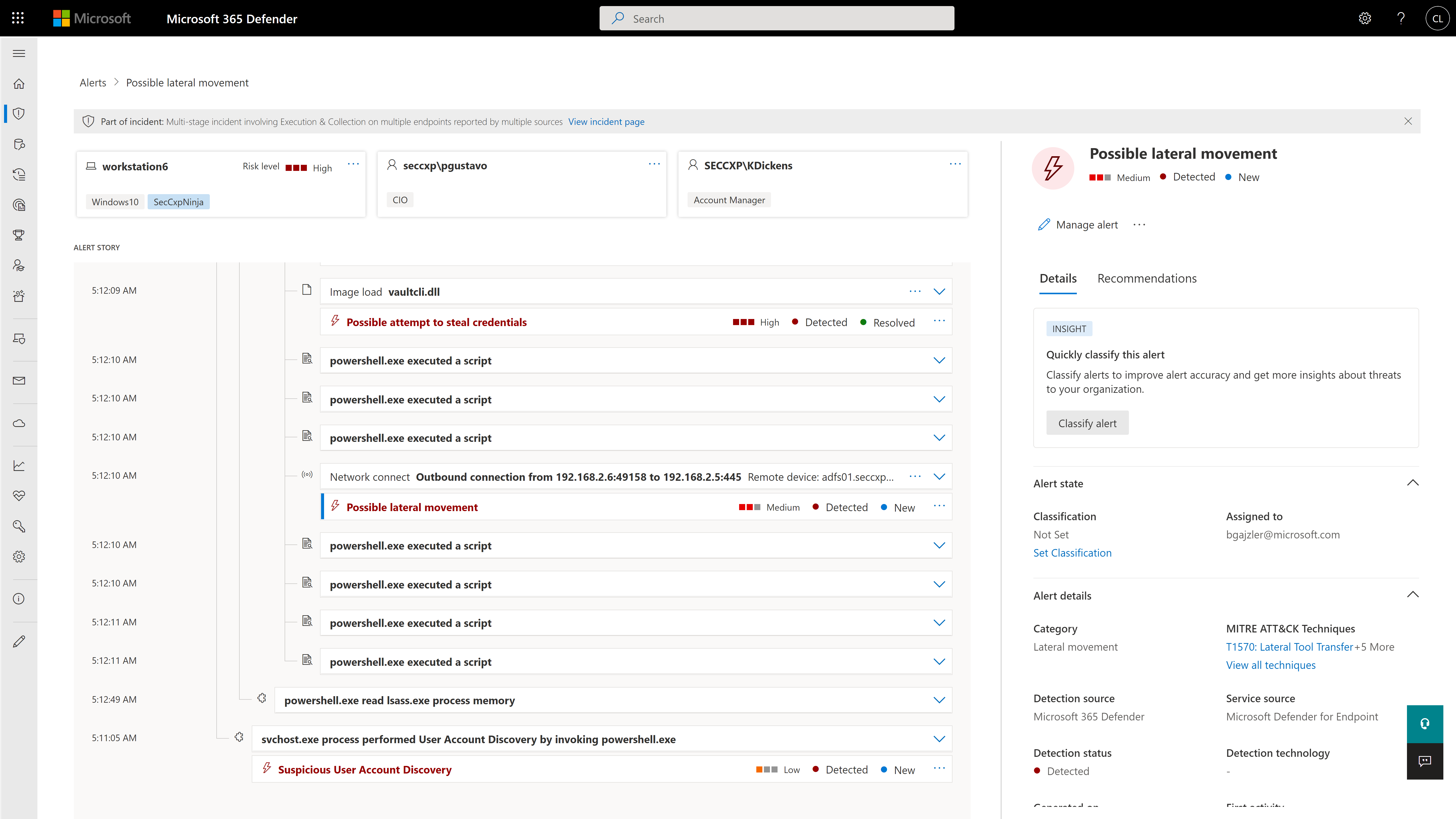
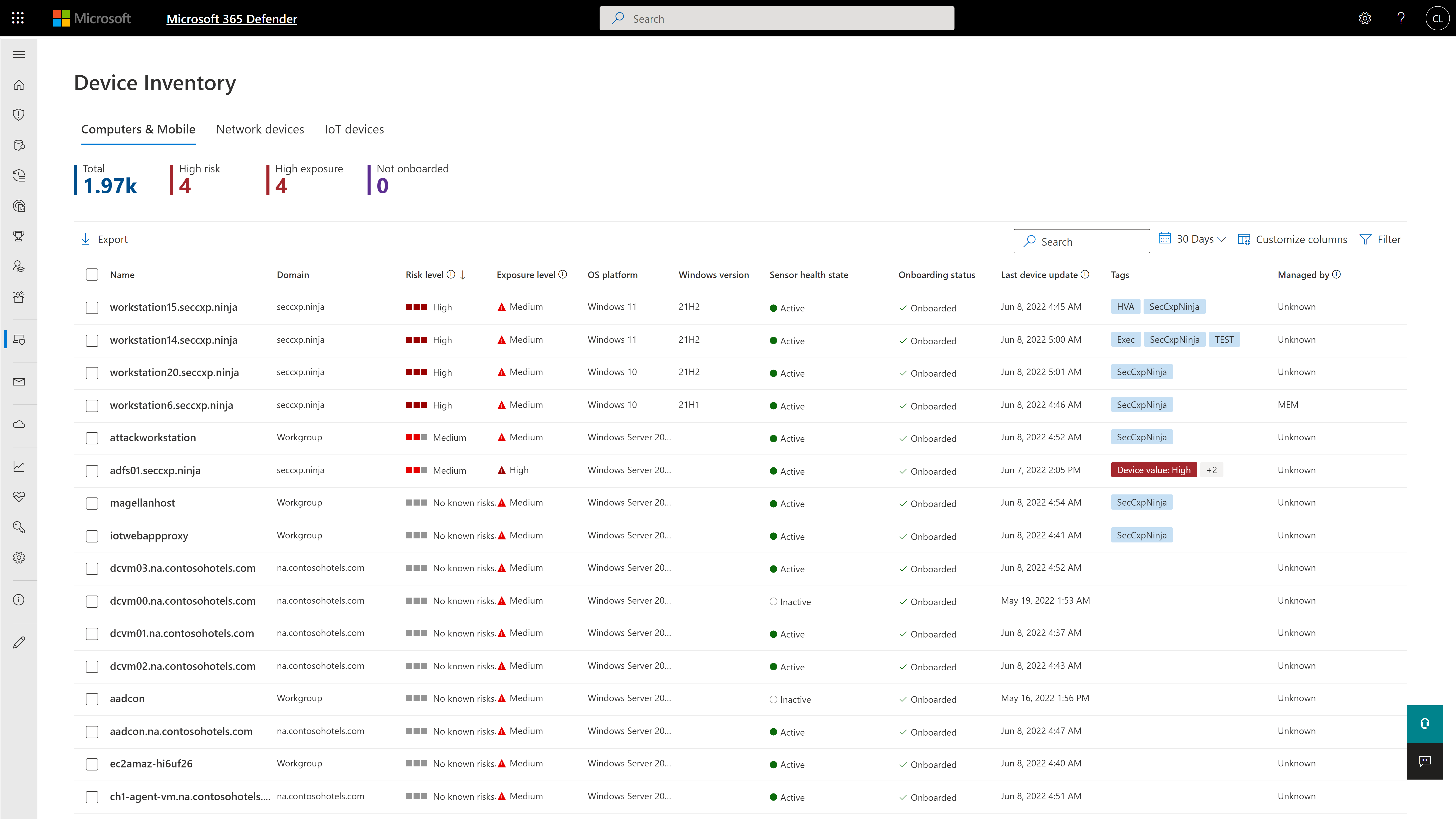
Microsoft Defender for Endpoint (formerly Microsoft Defender ATP) is a holistic, cloud delivered endpoint security solution that includes risk-based vulnerability management and assessment, attack surface reduction, behavioral based and cloud-powered next generation protection, endpoint detection and response (EDR), automatic investigation and remediation, managed hunting services, rich APIs, and unified security management.
$2.50
per user/per month
Symantec Endpoint Security
Score 6.2 out of 10
N/A
Symantec Endpoint Protection is the company's flagship antivirus / endpoint security product.
$29.99
1 year 100-249 devices
Pricing
Microsoft Defender for Endpoint
Symantec Endpoint Security
Editions & Modules
Academic
$2.50
per user/per month
Standalone
$5.20
per user/per month
Endpoint Security, Initial Hybrid Subscription License With Support
$29.99
1 year 100-249 devices
Symantec Endpoint Security Enterprise, Initial Hybrid Subscription License with Support
$34.99
1 year 1-99 devices
Endpoint Security, Initial Hybrid Subscription License With Support
$90.99
3 years 100-249 devices
Symantec Endpoint Security Enterprise, Initial Hybrid Subscription License with Support
$99.99
3 years 1-99 devices
Symantec Endpoint Security Complete, Initial Hybrid Subscription License with Support
Because of its integration with Windows, it is very easy to deploy and manage. Any IT department should be able to leverage the software and interface. The admin portal provides weighted recommendations that comprise the Secure Store, offering admins, security teams, and business owners valuable insights into their security footprint without requiring a strong security background. The software would be ideal for small and mid-sized businesses that cannot dedicate resources to security. Larger enterprises would also benefit, but may require the enhanced license.
We have found that Symantec Endpoint Security is better suited to newer systems running faster processors and more than 8GB RAM otherwise the client agent takes up too many resources and slows the system down. However, if you have a reasonably modern fleet of systems it does everything you would expect from an Endpoint Protection solution and works well as part of a multi-layered cybersecurity policy.
One, it's crazy lightweight, so compared to some of the competitors that we also have used with our security services, it's really lightweight and so I don't have a lot of overhead on the system that it's running on.
So the fact that Defender for Endpoint still works with signatures is actually, I don't know, a little difficult for us because, I mean, since Microsoft trusts those signatures, you can easily inject code. And we've done it many times. To show that you can inject code through vulnerabilities like CV 2013, 99, and 33 but still keep the signature. So because of the trust of those signatures, the malware just kind of slides into the environment without Defender knowing. That's the first part. The second part is that the behavioral analysis is not precisely its Prime. It's not Defender's best capability for endpoints. So, Defender does not identify all behaviors considered by other EDRs in the market.
Removing dead clients from the console. This is nearly impossible to do, and makes keeping the console clean a very difficult task.
Poorly tested versions are sometimes released that cause serious issues for users. This ranges from browsers malfunctioning to BSOD errors.
Malware detection is good but not great. We are not confident in SEP by itself to neutralize malware threats. It's detection rate just isn't high enough for next generation and zero day threats.
Microsoft Defender is closely catching -up in market with existing competitors they have added DLP endpoint & DLP Network and Cloud DLP solution last year with OCR capabilities. I would say Microsoft Defender is not legacy Vendor in end point security, the need to learn from other vendors in market and focus on new XDR technologies, which is going to be new battle for all vendors
Continued satisfied support. The saying "if it ain't broke, don't fix it..." comes to mind. It works, and we'll continue to use it and support Symantec.
Because in terms of the usability is easy to understand, it's easy to manage, obviously you need to have specific skills to do that, but I would say that even the console and the product is walking through the flow that you are looking for on this console.
The rating reflects Symantec Endpoint Security's ability to balance enterprise grade security with user-friendly workflows or advanced configurations require extra effort. For most organizations, the streamlined management and robust automation justify the high score. Management GUI is old fashined and need to be improve. Older devices may experience slowdowns during full scans without careful configuration.
Microsoft Defender for Endpoint chugs along just fine no matter what we throw at it and what systems it's running on. It doesn't take up a lot of resources either, so that's welcomed.
We've used it for years and the software is easy to use. The dashboard is easy to read, and you can easily figure out where to go to troubleshoot or deploy software. Symantec is there for emergencies like backup restoration or file retrieval. It's pretty low maintenance. Symantec is there when your IT infrastructure needs it
Overall support is really good for this product. Since it's a Microsoft product, you will get good support from a number of different resources, including knowledgebase articles on the web, support from Microsoft technicians, and documentation (which tends to very thorough). Also, there is a vast user support community for this product, so user support forums would also be another valuable channel to get help if needed. I don't envision too many people will have issues/problems with the product, as it tends to run good overall.
Support is completely awful! You can never get anyone to help if you can even find a number to call. The support web portal is a joke and their response time if you're even able to submit a ticket is ridiculously slow.
Deployment was handled by our team here and everything went pretty smoothly. We did have a few hiccups in our test group, but that only took a bit to get ironed out.
Microsoft Defender for Endpoint offers strong integration with Microsoft 365 and Azure services, which provide a unified security experience. While McAfee Trellix is known for solid antivirus, Microsoft Defender excels in integration in the ecosystem.
Symantec Endpoint Security seems to be a more mature solution compared with CrowdStrike, particularly when CS was just recently getting their USB blocking functionality rolled out for macOS endpoints this year. Another differentiator with CrowdStrike is that Symantec ES still provides both on-demand scanning & real-time signature-based detection in addition to solely real-time machine learning detection whereas on-demand scanning and signatures are not available on CrowdStrike. This means there is a doubt as to whether we can use CS to comply with some of our PCI DSS obligations which specifically require the use of signature-based antivirus solutions.