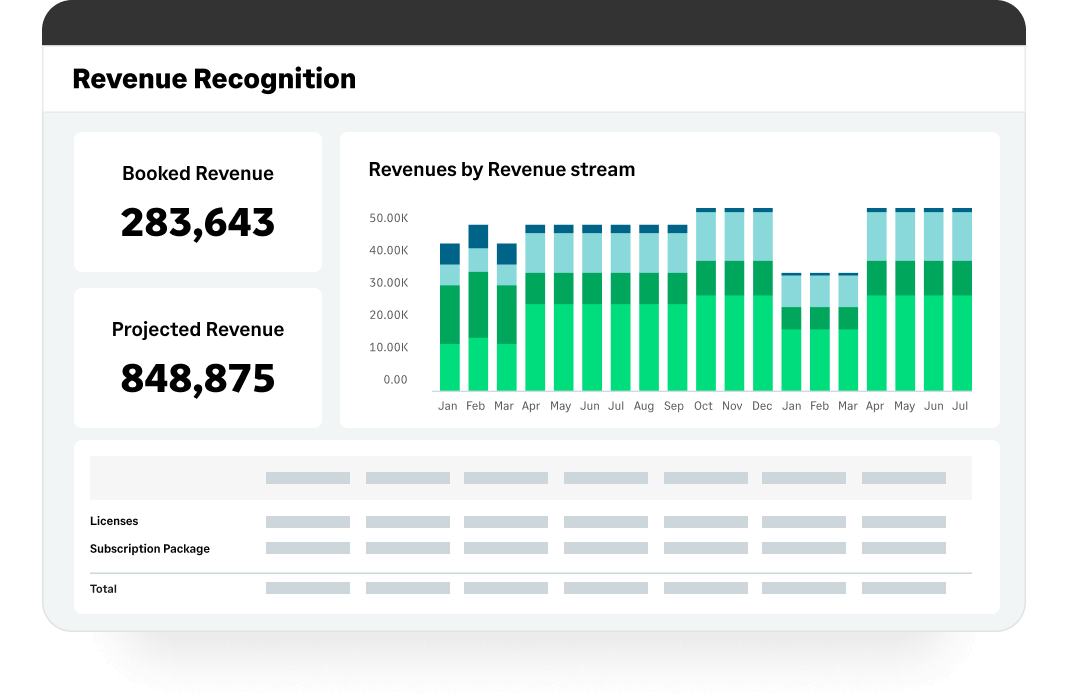
Sage Intacct is a cloud ERP system targeted at high-growth small and medium-sized businesses. Intacct includes applications for core financials and accounting, purchasing, order management, and financial reporting and business intelligence. It also integrates with 3rd party software like Salesforce.
N/A
Microsoft Dynamics 365 Finance
Score 8.7 out of 10
N/A
Microsoft Dynamics 365 Finance is used to automate and modernize global financial operations. The application can monitor performance in real time, predict future outcomes, and support data-driven decisions to drive business growth.
$2,520
per year per user
Pricing
Sage Intacct
Microsoft Dynamics 365 Finance
Editions & Modules
No answers on this topic
Dynamics 365 Finance
$2520
per year per user
Dynamics 365 Finance Premium
$3600
per year per user
Offerings
Pricing Offerings
Sage Intacct
Microsoft Dynamics 365 Finance
Free Trial
No
Yes
Free/Freemium Version
No
No
Premium Consulting/Integration Services
Yes
No
Entry-level Setup Fee
No setup fee
No setup fee
Additional Details
Must contact sales team for pricing.
—
More Pricing Information
Community Pulse
Sage Intacct
Microsoft Dynamics 365 Finance
Considered Both Products
Sage Intacct
Verified User
Director
Chose Sage Intacct
Before switching to Sage Intacct we were using Microsoft Dynamics Solomon. We started evaluating software solutions in 2016 and looked at NetSuite, Acumatica, and Microsoft Dynamics 365 Finance. NetSuite had more bells and whistles than we needed. I was really impressed with …
It is well-suited for nonprofit accounting with its ability to track expenses and revenues by both department and funding source. It is easy to set up vendors and customers for invoices and bill payments. It is less appropriate for proper budget management and purchasing with multiple approvers, particularly when edits are required.
I think D365 has the ability to be useful for 90% of businesses out there. Its just a matter of if those costs make sense but as far as what is on the market today in my opinion MS is number 1.
Custom, real-time financial reporting. I am able to streamline my reporting to pull in various account groups and calculations which save me time from having to do it in Excel.
Out of the box standard reports for clients who don't require as custom of reporting or even as a great starting point to build out reports.
Integrations with other platforms, such as Airbase, various banks, Rippling, etc.
The dashboard module is extremely helpful in my monthly review of various entities.
Sage Intacct is continuously evolving and increasing it's functionalities. I am excited to attend conferences to learn what is in the roadmap for future releases. Additionally, using Sage Intacct allows me grow as a professional, I am really enjoy the knowledge that I have within the product to be able to share my experiences.
The ease of use as a seasoned user is wonderful; however, new users struggle to adapt to the program efficiently. Better training videos--all in one location--would be beneficial. The use of a "sandbox" environment is a great tool for new employees or for the fiscal department to test certain journal entries or other transactions to verify accuracy of data.
There has only been one occurrence where Sage Intacct was not available to me, however I had already been working a number of hours trying to get a project completed. It honestly allowed me to step back and take a much needed break.
As fas as integration is concerned I don't feel this slows Sage Intacct down at all. However, sometimes I do feel it takes some larger reports more time to load due to all the detail. As well as, I "move very fast" in my motions so sometimes I double click on fuctions too quickly and the system seems to think that I have a duplicate request.
Only a few times have we had to reach out to support, and every time we did, we received a relatively quick response and a solution was found fairly quickly. Only once was there an issue that took longer than a week to resolve, but it still did eventually get solved.
I have taken in person training classes at several of the annual Sage Intacct user conferences. It is very interactive and the trainers are very easy to follow and understand. They are great at getting everyone in the class involved. They also make sure everyone has learned to task before moving to a new one.
The free training is very minimal. For what we pay for the service, I would like more training. We end up training new users in-house because the provided free training is not nearly comprehensive enough. That being said, the training provided, for the material covered, was adequate and relevant for the given topics.
I would not use a thrid party administrator to implement your system, especially if you are going to be modifying the system at all. Use Intacct implementors as they will be able to better support you on any issues that come up after you go live.
As a CPA in public accounting, I was exposed to many systems. I was in on the ground floor with the implementation of NetSuite for a client; it was clunky, the reporting was ugly, and it wasn’t user friendly. Sage Intacct is a great option for mid-size organizations who have outgrown Quickbooks.
I have used everything from industry standard TMS systems to SAP to various BIs like Tableau and Power BI. The point is my background is varied, but what's nice is being it's MS anything you already use that is also Microsoft will make Microsoft Dynamics 365 Finance feel way more natural and native, being you have used MS products for years likely.
Sage Intacct has made a very positive impact to our business objectives; it has provided strong ROI through automation features that reduce manual data input and associated risk of error, enhancing accuracy and operational efficiency.
It empowers us to make data-driven decisions that further refine our strategic plan by bettering the process of financial close with real-time and detailed reporting.
This also extends to multi-entity management, which eased consolidation and thus supported growth and scaling. This feature-rich software finally serves to drive productivity further and facilitate resource usage.