CloudFoundry is a free, open source cloud computing platform supported by the non-profit CloudFoundry. It is not tied to any particular cloud service, but can be self-hosted or run on any cloud service preferred.
N/A
SAP Integration Suite
Score8.5 out of 10
N/A
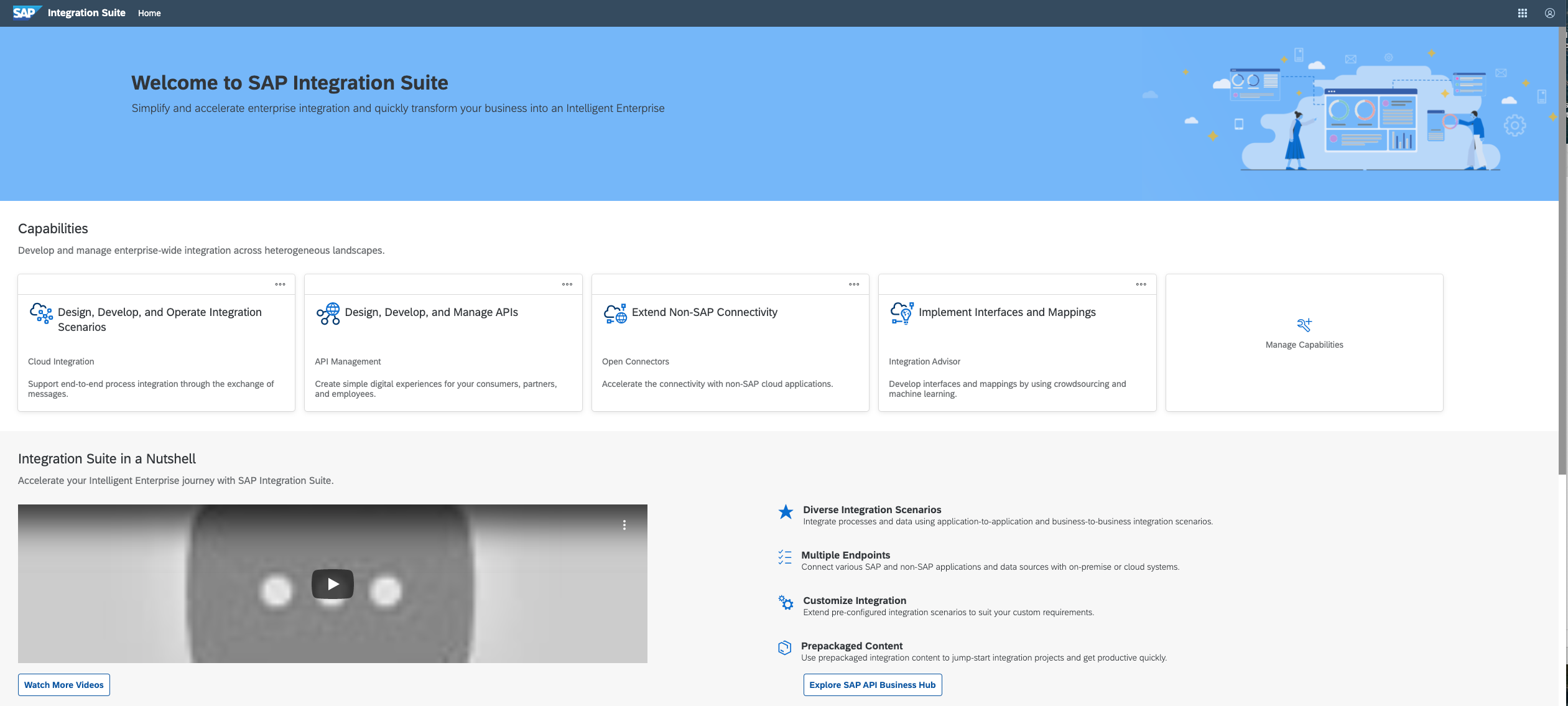
SAP Integration Suite is an integration platform-as-a-service (iPaaS) that helps quickly integrate on-premises and cloud-based processes, services, applications, events, and data. It is used to accelerate innovation, automate more processes, and realize a faster time to value.
$11,199
per year
Pricing
CloudFoundry
SAP Integration Suite
Editions & Modules
No answers on this topic
No answers on this topic
Offerings
Pricing Offerings
CloudFoundry
SAP Integration Suite
Free Trial
No
Yes
Free/Freemium Version
Yes
No
Premium Consulting/Integration Services
No
No
Entry-level Setup Fee
No setup fee
No setup fee
Additional Details
—
Access to free tier services does not expire while there is an active Pay-As-You-Go or CPEA account with SAP. Once a free tier service limit has been reached users have the option to update from a free to a paid service plan in the same account.
A de minimis incentive was given to thank the reviewer for their time. The incentive was not used to bias or drive a particular response, nor was the incentive contingent on a positive endorsement. More Info
In our case to have a such a poweful middleware in the cloud, give us a lot of benefits such as maintenance and support. In the integration part to be able to connect SAP and Non SAP applications makes SAP Integration Suite a good investment when our master data in this case is in S4HANA. Less appropriate is that sometimes the updates in production tenant failed and they have to downgrade or repair the issues. Affecting the usage of the tool. I guess SAP team have to be more aware of performing the changes and tested well on development environments and then when they know for sure that is the correct way to go with the update put it in production.
A de minimis incentive was given to thank the reviewer for their time. The incentive was not used to bias or drive a particular response, nor was the incentive contingent on a positive endorsement. More Info
Support for Orgs and Spaces that allow for managing users and deployables within a large organization.
Easy deployment, deploying code is as simple as executing single line from CLI, thanks to build-packs.
Solid and rich CLI, that allows for various operations on the instance.
Isolated Virtual Machines called Droplets, that provide clean run time environment for the code. This used to be a problem with Weblogic and other application servers, where multiple applications are run on the same cluster and they share resources.
SSH capability for the droplet (isolated VM's are called droplets), that allows for real time viewing of the App code while the application is running.
Support for multiple languages, thanks to build-packs.
Support for horizontal scaling, scaling an instance horizontally is a breeze.
Support for configuring environment variable using the service bindings.
Supports memory and disk space limit allocation for individual applications.
Supports API's as well as workers (processes without endpoints)
Supports blue-green deployment with minimal down time
A de minimis incentive was given to thank the reviewer for their time. The incentive was not used to bias or drive a particular response, nor was the incentive contingent on a positive endorsement. More Info
Does not support stateful containers and that would be a nice to have.
Supports showing logs, but does not persist the logs anywhere. This makes relying on Cloud Foundry's logs very unreliable. The logs have to be persisted using other third party tools like Elk and Kibana.
A de minimis incentive was given to thank the reviewer for their time. The incentive was not used to bias or drive a particular response, nor was the incentive contingent on a positive endorsement. More Info
Provide more pre-built integrations to use within SuccessFactors or other modules instead of everything having to be custom built
Support is unable to provide advice on custom builds so you often have to engage a 3rd party partner
Works best when you have the functional and technical teams working together. Otherwise, the system is too technical for a functional user to create integration and a technical user not always understand the functional perspective
A de minimis incentive was given to thank the reviewer for their time. The incentive was not used to bias or drive a particular response, nor was the incentive contingent on a positive endorsement. TR verified that a representative sample of customers was invited. More Info
SAP Integration Suite is very helpful to us in many ways to manage purchase procedures, stocks, and data of vendors and suppliers. Also, it helps to manage data for service providers. SAP Integration Suite has the tool to conduct training and evaluation. Unique features like the cloud can provide access from any place and by any device is very helpful.
A de minimis incentive was given to thank the reviewer for their time. The incentive was not used to bias or drive a particular response, nor was the incentive contingent on a positive endorsement. More Info
A de minimis incentive was given to thank the reviewer for their time. The incentive was not used to bias or drive a particular response, nor was the incentive contingent on a positive endorsement. More Info
A de minimis incentive was given to thank the reviewer for their time. The incentive was not used to bias or drive a particular response, nor was the incentive contingent on a positive endorsement. TR verified that a representative sample of customers was invited. More Info
A de minimis incentive was given to thank the reviewer for their time. The incentive was not used to bias or drive a particular response, nor was the incentive contingent on a positive endorsement. More Info
While Docker shines in providing support for volumes and stateful instances, Cloud foundry shines in providing support for deploying stateless services. Heroku shines in integrating with Git and using commits to git as hooks to trigger deployments right from the command line. But it does not provide on-premise solution that Cloud foundry provides.
A de minimis incentive was given to thank the reviewer for their time. The incentive was not used to bias or drive a particular response, nor was the incentive contingent on a positive endorsement. More Info
SAP Integration Suite was already part of our SAP stack, part of Business Technology Platform, with out-of-the-box integration with S/4 HANA transactional and ERP system that we are using as our main back-end. Thus, we are achieving significant Total Cost Optimization benefits or running both solutions on the same platform, hosted on Azure cloud.
A de minimis incentive was given to thank the reviewer for their time. The incentive was not used to bias or drive a particular response, nor was the incentive contingent on a positive endorsement. TR verified that a representative sample of customers was invited. More Info
Positive impact, since it simplifies the deployment time by a huge margin. Without cloud foundry, deploying a code needs coordination with infrastructure teams, while with cloud foundry, its a simple one line command. This reduces the deployment time from at least few hours to few minutes. Faster deployments promote faster dev cycle iterations.
Code maintenance such as upgrading a Node or Java version is as simple as updating the build-pack. Without cloud foundry, using web logic, the specific version only supports a specific version of Java. So updating the version involves upgrading the version of web logic that needs to involve few teams. So without cloud foundry, it takes at least few days, with cloud foundry, its a matter of few mins.
Overall, happier Developers and thats harder to quantify.
A de minimis incentive was given to thank the reviewer for their time. The incentive was not used to bias or drive a particular response, nor was the incentive contingent on a positive endorsement. More Info
A de minimis incentive was given to thank the reviewer for their time. The incentive was not used to bias or drive a particular response, nor was the incentive contingent on a positive endorsement. More Info