TrustRadius: an HG Insights company

SAP Integrated Business Planning

Score8.3 out of 10

76 Reviews and Ratings

What is SAP Integrated Business Planning?

SAP supports supply chain management with Integrated Business Planning, the company's real-time cloud-based supply chain planning platform supporting demand response, supply planning and inventory management oriented features, with supply chain analytics to support decisioning.

Read more details.

Media

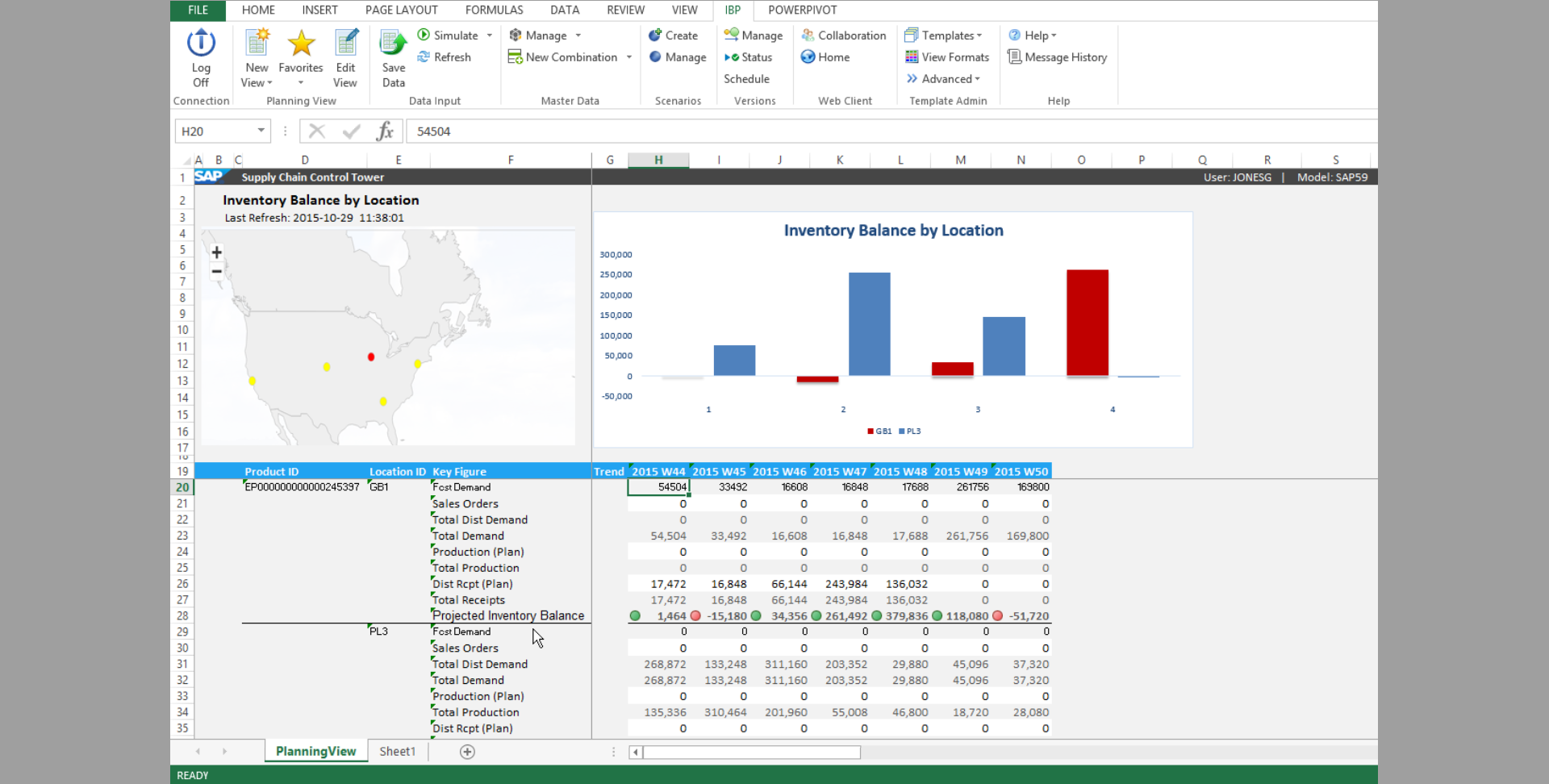
Screenshot of SAP IBP Statistical Forecast
Screenshot of SAP IBP for Demand
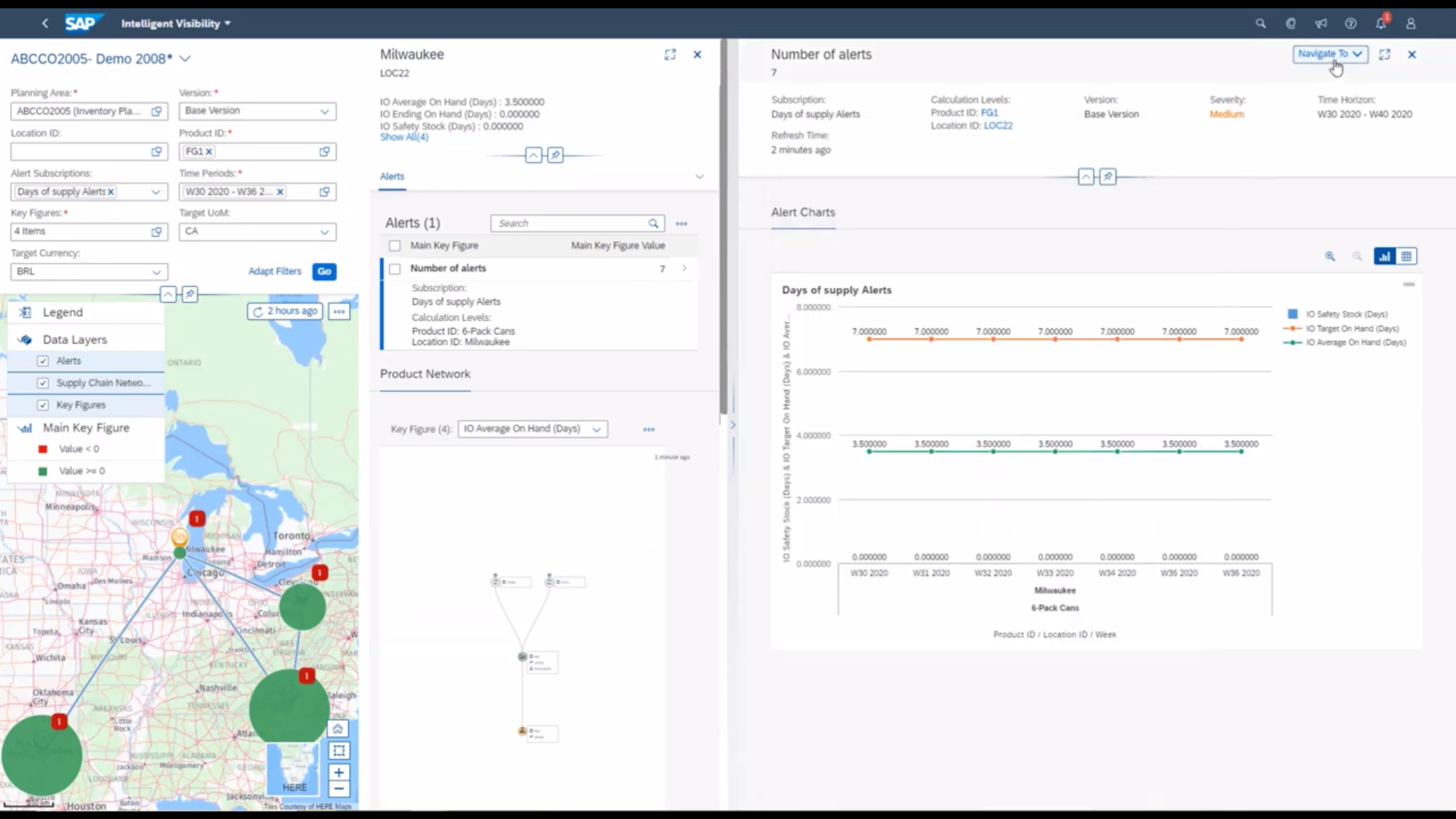
Screenshot of SAP Supply Chain Control Tower
Screenshot of Supply Chain Visibility

1 / 4

Screenshot of SAP IBP Statistical Forecast

Top Performing Features

  • Expense Logging

    Ability to record and store information about expenses incurred from purchasing materials and labor.

    Category average: 7.8

  • Pricing and product configurations generation

    Ability to generate pricing and product configurations for customers.

    Category average: 8.8

  • Fleet management

    Management of a fleet of vehicles (usually trucks) used to transport goods.

    Category average: 7.5

Areas for Improvement

  • Packaging

    Packaging of materials or products.

    Category average: 7.4

  • Shipping performance

    Monitoring of shipping performance.

    Category average: 7.6

  • Stock monitoring

    Ability to monitory inventory levels across one or multiple warehouses.

    Category average: 8

Who Buys & Uses SAP Integrated Business Planning

Pros

  • Robust planning capabilities across demand, supply, and financial aspects
  • Seamless integration with SAP S/4 HANA for broader data context
  • User-friendly Excel add-in for data interaction and quicker adoption

Cons

  • Challenges with data integration and consistency, especially with S/4 HANA
  • Data management and performance issues requiring data pull limitations
  • User interface and overall ease of use require improvement and clearer functionality

SAP Integrated Business Planning - Value for money if implemented well

Use Cases and Deployment Scope

Planning & execution

Pros

  • Supply planning
  • Demand planning
  • Production planning and scheduling

Cons

  • Adoptability
  • Scaling
  • Prerequisites and user friendliness

Return on Investment

  • Master data cleanliness
  • User training
  • Not fit for all

Usability

SAP Integrated Business Planning works fine

Use Cases and Deployment Scope

To have better control of our suppliers and customers it is a great addon to our other systems and applications. SAP Integrated Business Planning is a very smooth working application that is easy to run for end users as well as for our power user to enable fast processing of business data.

Pros

  • Smooth interface
  • Integration with SAP S/4HANA
  • User friendly

Cons

  • Nothing at this point

Return on Investment

  • Quicker handling of customer inquiries

Usability

Integrated Business Planning

Use Cases and Deployment Scope

I am an internal consultant responsible for IBP Demand Planning and IBP Supply Planning. I have been implementing IBP for 6 years. We are deployed globally

Pros

  • Excel add in integration with software allows users to ramp up quickly
  • Webinars and knowledge sharing is exceptional with plethora of information
  • Ability to connect well with Demand and Supply as well as financials to allow a large context of information for the user

Cons

  • Cloud based controls by SAP is confusing as sometimes performance issues can only be controlled by SAP
  • Some functionality is not clearly understood by consultants and myself have to dig in to find the issue

Return on Investment

  • Moved from 15 Demand Planning Areas in APO to one planning area globally in IBP
  • Supply and Demand Planning in one planning area in IBP compared to at least two in APO

Usability

Offering special strategies to match our specific distribution problems.

Use Cases and Deployment Scope

I rely on SAP Integrated Business Planning in our distribution set-up to control inventory in several warehouses. The system performs real-time analysis to minimize inventory costs and simultaneously meet all our customer requirements. Replenishment planning is supported because the system shows supply chain limitations and lead times.

Pros

  • By using the multi-echelon inventory optimization feature, we have lowered our total inventory and maintained our service performance.
  • Through SAP Integrated Business Planning, we can test different stocking approaches and see how they affect our key performance measures.
  • Because of the ERP integration, our data is updated in real time, guaranteeing higher accuracy.

Cons

  • The system does not work as smoothly when processing large volumes of data. There are processing delays when we are busy planning.
  • Moreover, because inventory exceptions are not automatically alerted, employees have to check them manually, which takes extra time. Upgrades in these sections could raise our operational efficiency.

Return on Investment

  • After bringing in SAP IBP, holding inventory costs and order fulfillment rates have decreased.
  • We achieved better customer satisfaction and less waste due to optimized stock levels and more accurate forecasts.

Usability

Forecasting accuracy transformation in retail operations

Use Cases and Deployment Scope

By using SAP Integrated Business Planning I ensure the inventory levels are in correspondence with the consumer demand in several locations. Through the assessment of previous sales figures and the current trends within the market, we are better able to predict demand more accurately, and each store is better provided, ensuring that stores do not factor low sales. This has played a very important role in reducing excess inventory and less relieving lost sales aloof as a result of stock out. It has given a common platform of demand planning, supply planning and inventory optimization which has improved our capability to make decisions based on informed decisions across the globe.


Pros

  • The capabilities of the system in integrating multiple data sources offer the full picture of our supply chain.
  • The feature of the scenario planning allows us to be able to model various different demands and prepare for the seasonal demand peaks and promotional events.
  • Our collaborative planning capabilities have also helped to make our purchasing and sales departments better coordinated.

Cons

  • A place for improvement is the system’s ability to respond during peak usage.
  • We've had intermittent slowdowns which impact planning activities.
  • Customization of reports may be constrained meaning there is extra work to adapt outputs to our needs.

Return on Investment

  • We have been able to reduce inventory holding costs by 15% and stock availability has gone up by 10% since we embraced SAP integrated business planning.
  • Such improvements have brought along increased levels of customer satisfaction and revenue on sales during peak shopping time.

Usability