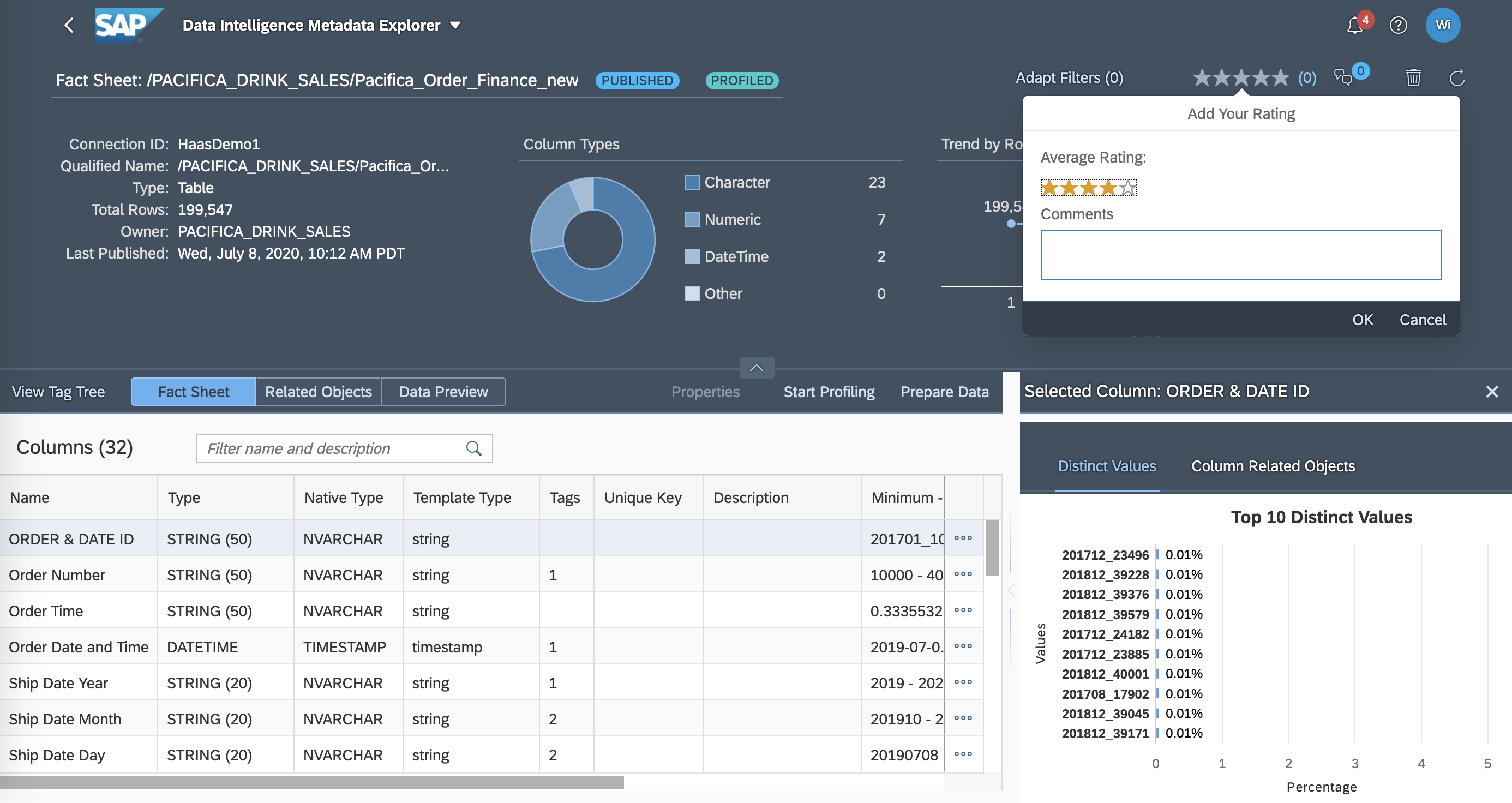
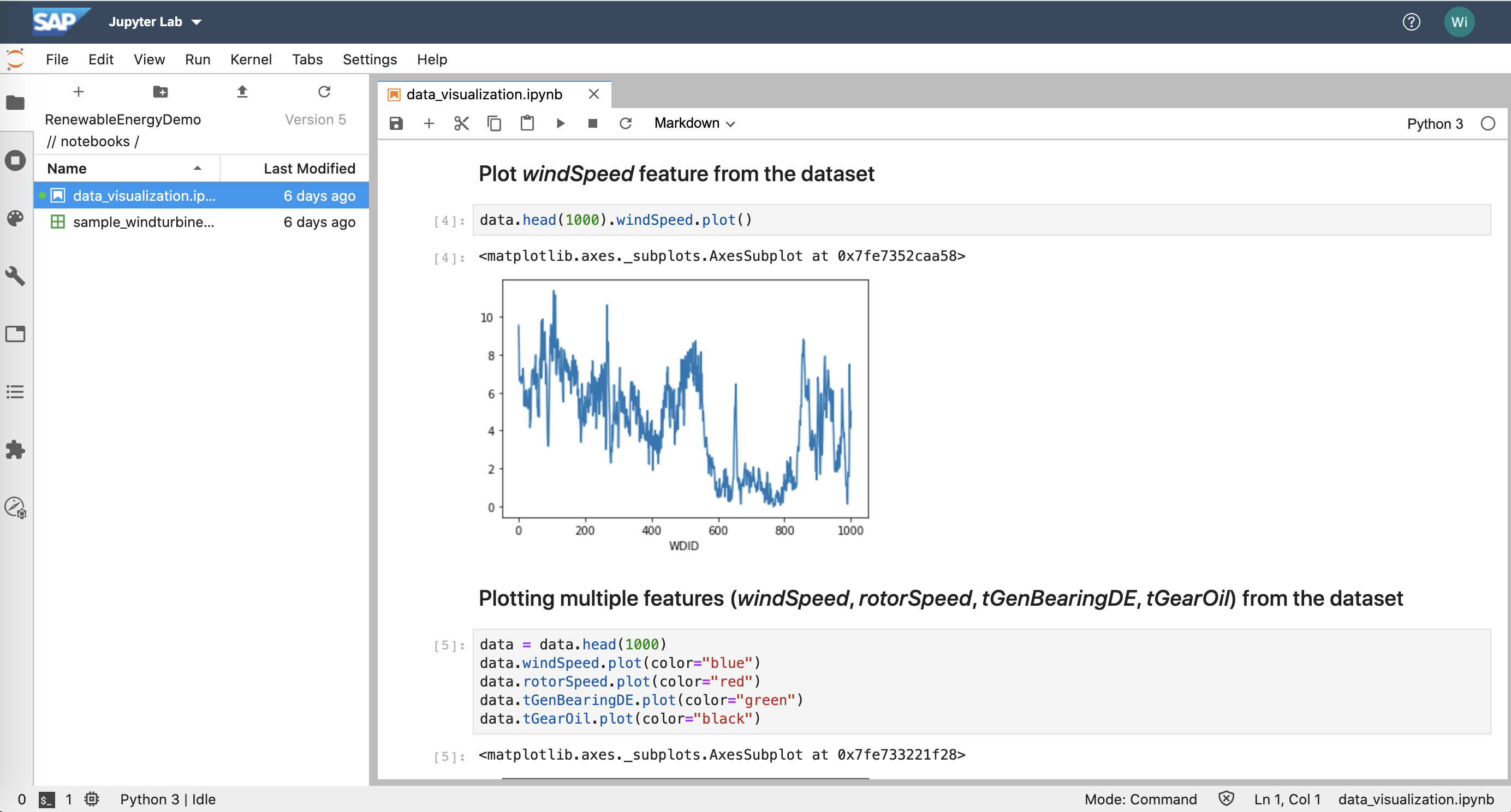
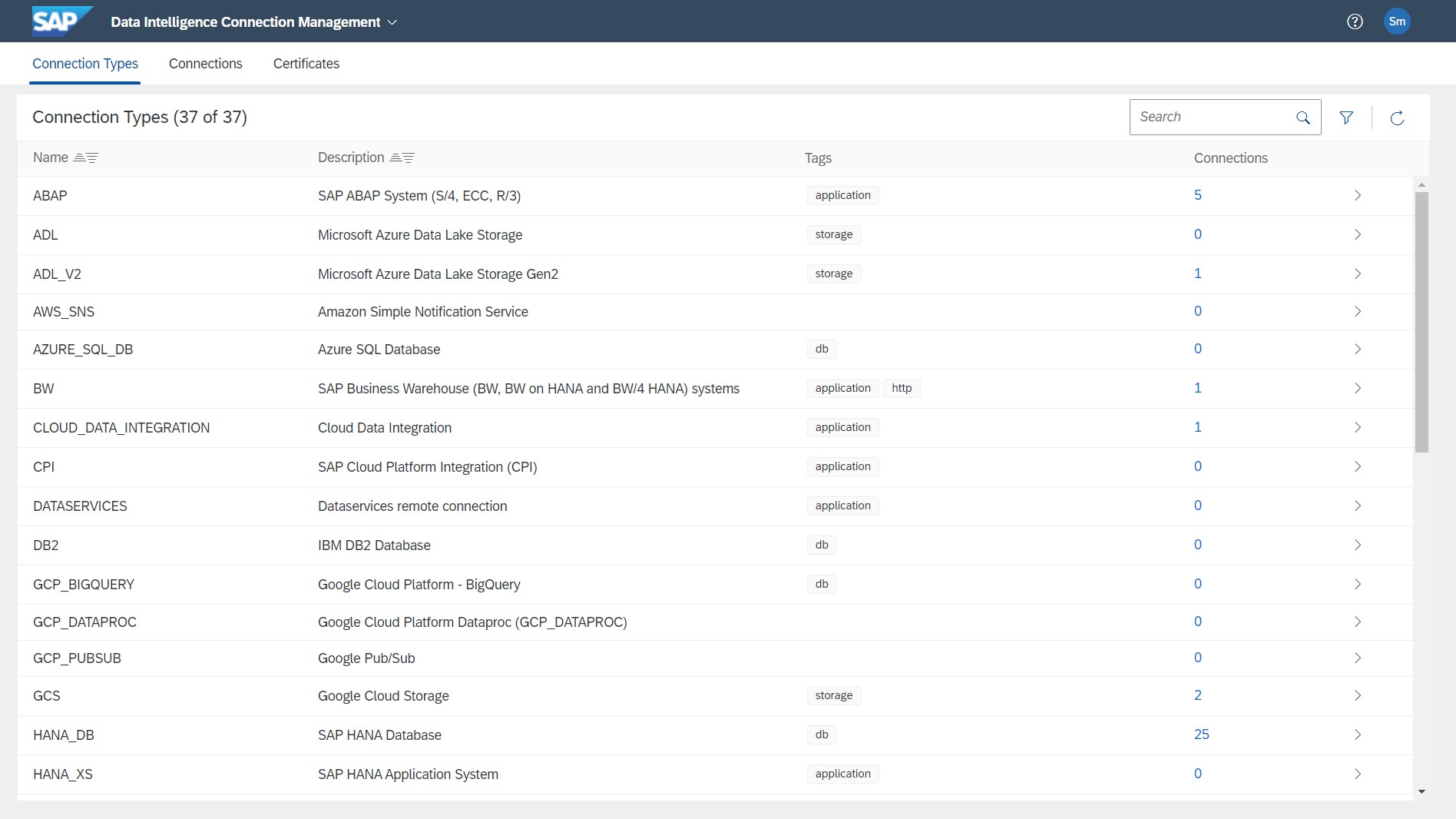
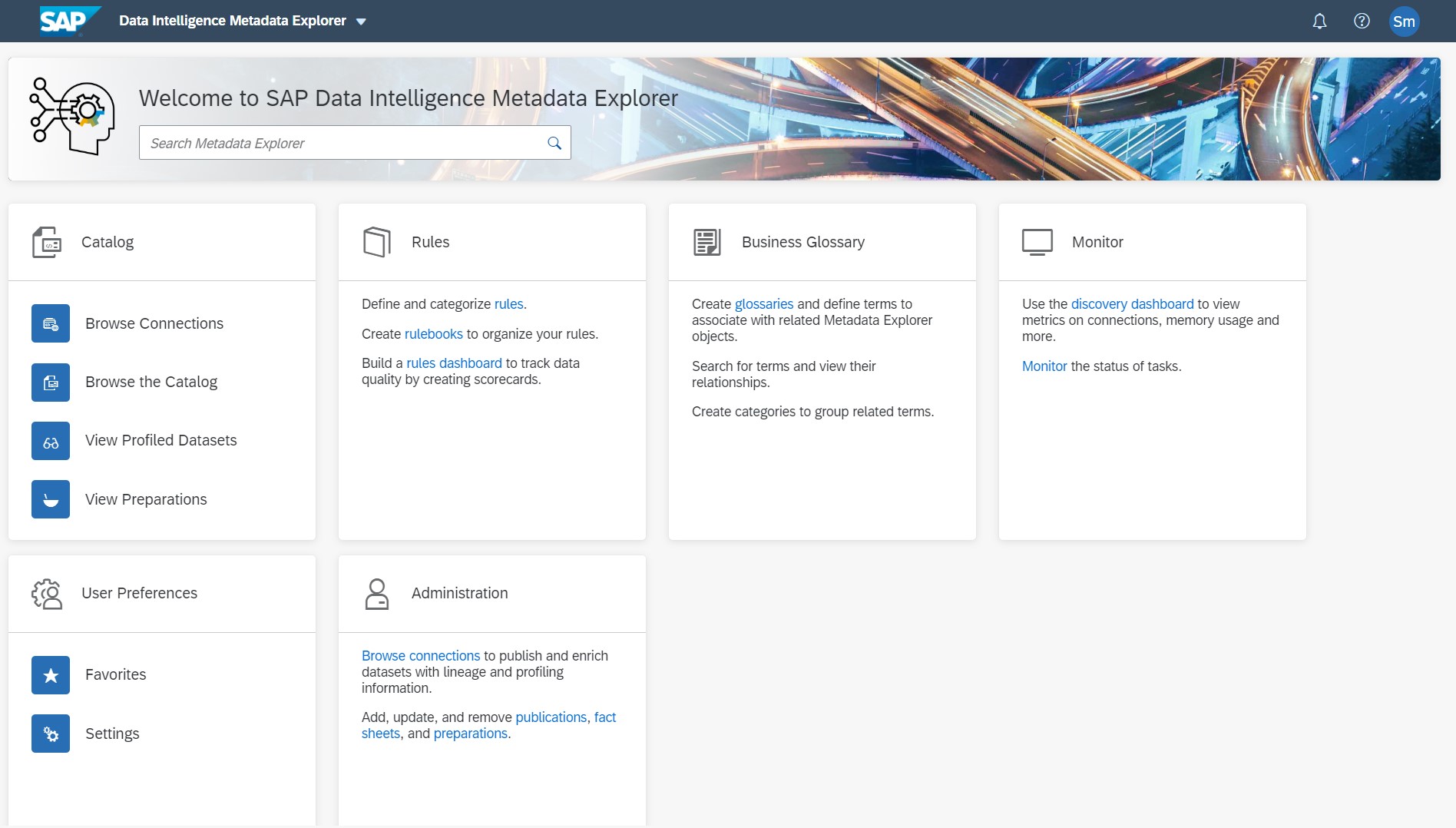
SAP Data Intelligence is presented by the vendor as a single solution to innovate with data. It provides data-driven innovation in the cloud, on premise, and through BYOL deployments. It is described by the vendor as the new evolution of the company's data orchestration and management solution running on Kubernetes, released by SAP in 2017 to deal with big data and complex data orchestration working across distributed landscapes and processing engine.
SAP Technical Manager in Information Technology at Syntax (1001-5000 employees employees)
Use Cases and Deployment Scope
I use SAP Data Intelligence for Sending the Financials & Material inventory data from S/4H to Azure Data lake Should have the knowledge on the terminators and connectors.
A de minimis incentive was given to thank the reviewer for their time. The incentive was not used to bias or drive a particular response, nor was the incentive contingent on a positive endorsement. TR verified that a representative sample of customers was invited. More Info
Verified User
Professional in Information Technology (10,001+ employees employees)
Use Cases and Deployment Scope
SAP Data Intelligence is helping us solve the following business problems. 1. Handle huge volumes of data coming from a variety of sources. 2. Orchestrate data pipelines with optimum governance around them 3. Helping in data management activities with its strong feature set on data profiling, data cataloging, etc. 4. Helping us prepare data for our AI/ML processes
Pros
Data pipeline orchestration capabilities
Data governance
Scalability
Cons
Like every SAP product, it is rigid with product strategy and hard to keep pace with advancements in technology
Integration with open-source technologies and the future road map is always a point of contention
Costs
Return on Investment
Improved governance around data acquisition and data management
Almost 20 to 25% savings in managing the data pipelines from operations point of view
More focus on bringing additional external sets of data into the landscape for AI / ML processes
Alternatives Considered
Informatica API Manager
Usability
Other Software Used
SAP BW/4HANA, Snowflake, Databricks Data Intelligence Platform
A de minimis incentive was given to thank the reviewer for their time. The incentive was not used to bias or drive a particular response, nor was the incentive contingent on a positive endorsement. More Info
Programmer Analyst in Information Technology at SDI Presence (501-1000 employees employees)
Use Cases and Deployment Scope
In my experience, SAP Data Intelligence simplifies the process of bolstering data-sharing, pipelineing, and governance in a networked environment. I think the supply chain and logistics industries may benefit form SAP Data Intelligence. It has enormous potential for waste minimization.
Pros
Lessen the total processing time.
Compatible with a wide variety of add-ons.
Cons
Failures in a Kubernetes cluster might be difficult to diagnose.
I think it's easy for mistakes to be made during installation.
Return on Investment
Improvements in efficiency and new ideas.
Complex business processes are simple to analyze and forecast.
A de minimis incentive was given to thank the reviewer for their time. The incentive was not used to bias or drive a particular response, nor was the incentive contingent on a positive endorsement. More Info
Engineering Manager in Finance and Accounting at INGKA Services LLP (10,001+ employees employees)
Use Cases and Deployment Scope
This product is mainly used for Event processing and requires additional capabilities on how this product helps on Event Mesh and Data Mesh solutions, especially how this is useful to enable Data Product.
Pros
Event Processing
Cons
Standardization of transformation solution
Return on Investment
Licensing cost is too much which does not make sense from ROI
A de minimis incentive was given to thank the reviewer for their time. The incentive was not used to bias or drive a particular response, nor was the incentive contingent on a positive endorsement. More Info
Head Research Assistant in Engineering at Nazarbayev University JSC (1001-5000 employees employees)
Use Cases and Deployment Scope
This SAP's Data Intelligence software tool is used for the implementation of for data integration (based on ETL and ELT processes) with defined scope of functionalities and capabilities provided. Moreover, it provides great integration with other SAP products such as SAP 4HANA. We utilize it in conjunction with AWS and Microsoft Azure tools.
Pros
Good integration and data migration functionalities (from one DB cluster to another)
provision and support of different level of data access (tabular format level, ETL layer level, ODP level)
Reasonable pricing (pay-as-you-use strategy, without overhead cost implemented)
Cons
High entry level of usage - for some users like me it is hard to get things performed without referring to the tech support and their documentation
the management and control of the source code imposes the difficulties in terms of ease of usage - with complex projects this issue is critical and becomes a bottleneck for the further development processes implemented
as easy it is to manipulate and perform operations on tabular data, as hard it is to work with non-relational database entities such as semi-structured documents and files
Return on Investment
This tool has provided great functionality on migrating DB cluster, therefore having directly positive impact on ROI by reducing the operating costs with the support of Oracle DB
It has provided decreased time-to-market delivery, as we have expected to finish the whole project in 6 months instead of 3. This had a enormous impact on the overall performance of the project, with great advantage in terms of ROI.
With the decrease of operating costs, we have optimized the overall budget devoted to the support of our DB clusters, thereby improving the cost budgeting
Overall, very reasonable pricing strategy provided (pay-as-you-go)
Alternatives Considered
StreamSets DataOps Platform and Azure Data Factory