TrustRadius: an HG Insights company

SolarWinds AppOptics

Score7.9 out of 10

59 Reviews and Ratings

What is SolarWinds AppOptics?

SolarWinds AppOptics (formerly Librato) is an IT infrastructure monitoring service and APM, based on technology acquired by SolarWinds with Librato in 2015 to expand its cloud monitoring portfolio.

Media

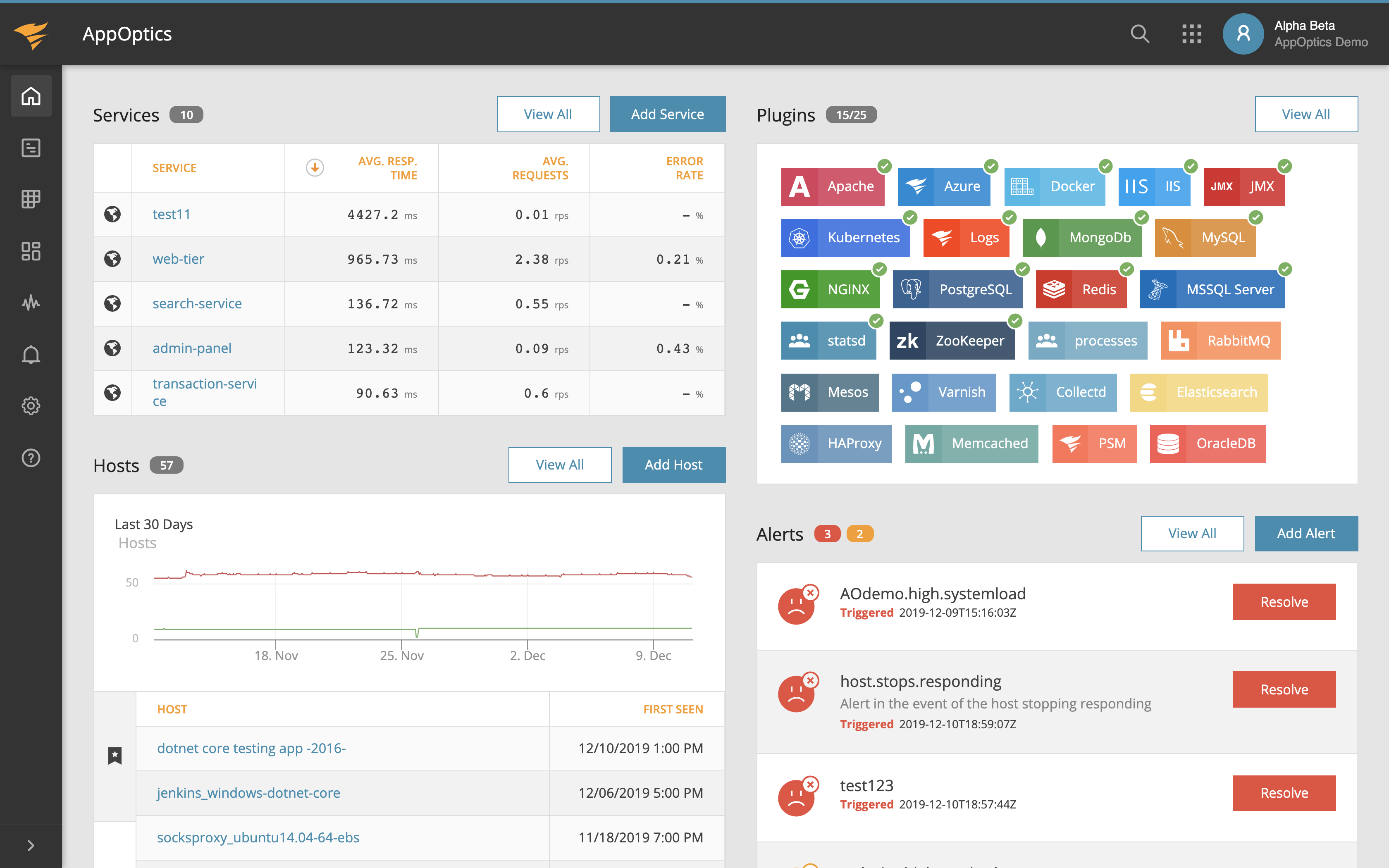
AppOptics Home Screen
AppOptics Dashboard
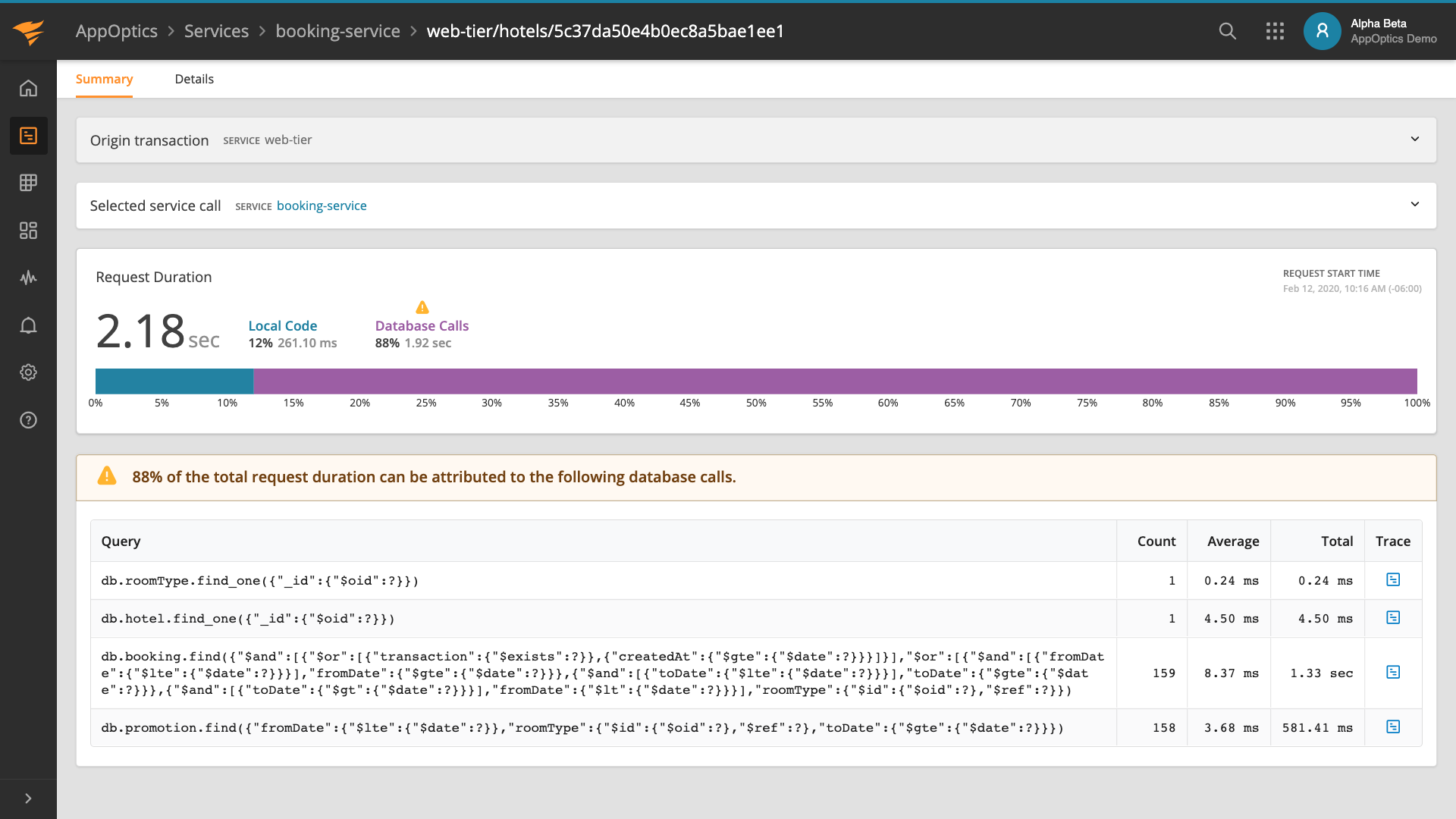
AppOptics Traces
AppOptics Trace Root Cause
AppOptics Infrastructure
Host Heat Map

1 / 6

Top Performing Features

  • Application monitoring

    Application monitoring involves tracking response times and resource usage for applications, including highly-distributed applications

    Category average: 8.6

  • Server availability and performance monitoring

    Ability to monitor server availability

    Category average: 9.4

  • Database monitoring

    Database monitoring means looking for database bottlenecks liable to slow response times

    Category average: 8.2

Areas for Improvement

  • Out-of-the box templates to monitor applications

    Built-in templates for specific applications

    Category average: 7.5

  • Collaboration tools

    Collaboration tools enable DevOps staff to collaborate by adding notes/comments and also integrating with external collaboration tools like ticketing systems

    Category average: 7.4

  • Predictive capabilities

    Data mining of log and other performance data to understand predictors of slowdowns or outages

    Category average: 7.6

Master Player just Born

Use Cases and Deployment Scope

SolarWinds AppOptics is being analysed to be used as a potential Cloud Services Monitoring tool - and on a side note, also being analysed on how effectively AppOptics can be leveraged to to APM things such as Appdynamics and Dynatrace does. So we are proposing SolarWinds AppOptics to our client as the new technology monitoring tool for cloud infra, primarily.

Pros

  • Cloud Service Monitoring
  • New Technologies Monitoring such as Containers Docker
  • APM

Cons

  • GCP is not Supported
  • Oracle is not Supported
  • No Integration available with Service Now

Return on Investment

  • Cloud Services Monitoring
  • Microservices Monitoring
  • Application Tracing

Alternatives Considered

AppDynamics and Dynatrace

Usability

Its good and easy to use

Pros

  • Best GUI.
  • Detailed view of latencies.
  • Application integration is easy.

Return on Investment

  • Positive

Detect bottlenecks in your application

Pros

  • Average response time.
  • Average request rate.
  • Tracing different layers in a request.
  • Detection of slow queries.

Cons

  • More data can be added, however, it could also be that we haven't set it up fully.

Return on Investment

  • Faster page response times.
  • Optimization of database queries.
  • Removal of all unnecessary cache calls.

Other Software Used

Elasticsearch, SonarQube, Atlassian Confluence

Good value for cloud infrastructure monitoring!

Pros

  • Simple installation and configuration
  • Easy to use UI
  • Good value
  • Many integrations with third-party software

Cons

  • Better cluster support: identify and group all related hosts automatically based on name

Return on Investment

  • Saves time by simplifying troubleshooting
  • Avoids downtime through monitoring and alerting

Alternatives Considered

New Relic and Datadog

Other Software Used

Amazon S3 (Simple Storage Service), PostgreSQL, Elasticsearch

Works okay for Python but needs work

Pros

  • Distributed tracing.
  • Basic hardware monitoring.
  • Application transaction stats/details.

Cons

  • Support for celery in Python.
  • Overall better Python support.
  • Backwards compatibility.

Return on Investment

  • Faster troubleshooting when it works.
  • Additional labor to keep up with documentation and backward compatibility breakages (in Python).
  • Grafana has been implemented to deal with the shortcomings of AppOptic's statistical abilities.