TrustRadius: an HG Insights company

Cisco 5500 Series Network Convergence System (NCS 5500)

Score9.2 out of 10

19 Reviews and Ratings

What is Cisco 5500 Series Network Convergence System (NCS 5500)?

Cisco 5500 Series Network Convergence System (NCS 5500) Series offers industry-leading density of routed 100 GE ports for high-scale WAN aggregation.

Read more details.

Categories & Use Cases

Media

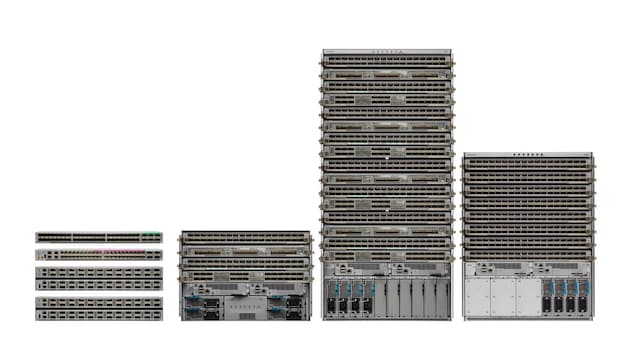
Screenshot of fixed and modular options

Screenshot of fixed and modular options

Who Buys & Uses Cisco 5500 Series Network Convergence System (NCS 5500)

Cisco 5500 Series Network Convergence System - Why it makes sense

Use Cases and Deployment Scope

The Cisco 5500 Series Network Convergence System scales to 400 GbE, and in my experience, it is utilized at various large service providers where critical bandwidth is necessary. The Cisco 5500 Series Network Convergence System also provides Software Defined Networking, which is a major plus in applying networking in a virtualized manner. In any managed service provider, you are responsible for handling a very large number of clients in an enterprise solution, and scales down for mid-tier MSP's. Segment routing is also enhanced with cloud enhanced IOS XR, which is Cisco's operating system. This aids in creating unique networking experiences that can be tailored to specific needs/wants.

Pros

  • Provides functionality to both Top of Rack (TOR) and Spine and Leaf role models
  • High Port densities
  • Deep packet buffering
  • Ultra low power consumption

Cons

  • Learning Curve for employees not versed on Cisco Technology
  • Expensive
  • Port Upgrades can become very pricey based on the number of ports being added
  • Maintenance costs can be very expensive, especially when renewals come up

Most Important Features

  • Integrated Interface – 1GE/10GE/25GE/40GE/100 Gigabit Ethernet support
  • Industry leading carrier-class Cisco IOS XR Software
  • Flexible platform along with packaging components

Return on Investment

  • Upgrade flexibility, if you move up to the 5700 you only need to replace the line cards and the fabric card
  • Positive experience moving from standard routers to SDN routers, simplistic in nature
  • Maintenance and port upgrade/additions are expensive

Alternatives Considered

Juniper 7000

Other Software Used

SolarWinds Hybrid Cloud Observability, New Relic, Dynatrace

NCS5500 system is fantastic as a service provider edge platform where extensive egress features aren't necessary

Use Cases and Deployment Scope

We primarily use the NCS 5508 as an edge platform connection to major customers and other service providers. We have been moving to this platform and away from the ASR 9K for these use cases. The NCS 5508 has been a relatively flexible platform that we use mostly for moving lots of packets at speed, mostly 100G connections.

Pros

  • It has the 100G port density we require

Cons

  • The use of merchant silicon leads to very frustrating issues particularly related to the missing ability to do egress DSCP marking, which we use extensively in our network

Most Important Features

  • Port density and 100G ports

Return on Investment

  • I'm not involved in the finance side, so I can't speak to ROI

Cisco 5500 Series Network Convergence System Review

Pros

  • It is versatile due to the diversity in models and form factors.
  • Low power consumption compared to similar models
  • Mature operating system code allowing for quick production installation and configuration.

Cons

  • The 5508 router may not be as capable as the equivalent ASR 9000 as an edge device.
  • QoS/TCAM memory and Forwarding capacity with the NCS on high-traffic load
  • Protection during amplified DDOS attacks could be another concern.

Return on Investment

  • Cisco NCS 5500 series models offer a broad range of uses that can positively impact ROI if properly discovered and implemented.
  • The smaller chassis of the 5501 and 5502 require small rack space for installation, relatively low cost and low power consumption.
  • The Cisco NCS 5508 is capable of routing large amounts of traffic on a service provider or large enterprise network and by running mature IOS-XR code does not require a lot of investment in staff training if already familiar with the CLI.

Other Software Used

Cisco 1000 Series Aggregation Services Routers (ASR 1000), Cisco 9000 Series Aggregation Services Routers (ASR 9000), Cisco 5500 Series Network Convergence System (NCS 5500)

NCS 5500 Converged Solution

Pros

  • High-density 100g ports
  • Card features scale with application or design
  • Support for segment routing and WAN aggregation

Cons

  • When upgrading components of the NCS 5500 it can take a particularly long time and many steps to confirm additional components. Have all updates on the need basis instead of a one-step process.

Return on Investment

  • The chassis flexibility and use of many different feature set line cards extend the purpose and life, thus giving a better ROI per project than other choices.

Alternatives Considered

Juniper Enterprise Routers

Other Software Used

Cisco 9000 Series Aggregation Services Routers (ASR 9000), Cisco Nexus, Cisco 1000 Series Aggregation Services Routers (ASR 1000)

Performance and reliability workhorses

Pros

  • Packet routing and forwarding.
  • Monitoring and usage tracking.
  • Distributed and high-availability architecture.

Cons

  • The price tag is on the high side.

Return on Investment

  • 100% uptime for 5 years.
  • No successful intrusion attempts in 5 years.
  • Very high throughput has allowed for constant and reliable connectivity.

Alternatives Considered

Aerohive Wireless and Juniper Enterprise Routers