

AWS CloudFormation
107 Reviews and Ratings
What is AWS CloudFormation?
AWS CloudFormation provides a common language for users to model
and provision AWS and third party application resources in a cloud
environment. AWS CloudFormation allows users to use programming languages or a
simple text file to model and provision, in an automated and secure manner, all
the resources needed for applications across all regions and accounts.
This provides a single source of truth for AWS and third party resources.
Categories & Use Cases
Videos
Screenshots


1 / 4
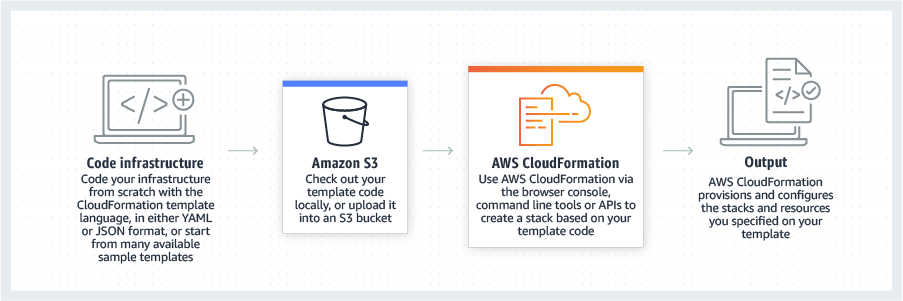
Screenshot of CloudFormation - How it works overview
Product Demos
Technical Details
| Deployment Types | On-Premise |
|---|---|
| Operating Systems | Windows, Linux, Mac |
| Mobile Application | No |
| Supported Countries | Americas, Europe, Middle East, Africa, Asia Pacific |
FAQs
What is AWS CloudFormation?
AWS CloudFormation gives developers and systems administrators a way to create and manage a collection of related AWS resources, provisioning and updating them in a predictable fashion. Use AWS CloudFormation’s sample templates or create templates to describe the AWS resources, and any associated dependencies or runtime parameters, required to run an application. Users don’t need to figure out the order for provisioning AWS services or the subtleties of making those dependencies work. CloudFormation takes care of this. After the AWS resources are deployed, users can modify and update them in a controlled and predictable way, in effect applying version control to AWS infrastructure as with software.
What are AWS CloudFormation's top competitors?
HashiCorp Terraform are common alternatives for AWS CloudFormation.