TrustRadius: an HG Insights company

Amazon RDS

Score8.7 out of 10

288 Reviews and Ratings

What is Amazon RDS?

Amazon Relational Database Service (Amazon RDS) is a database-as-a-service (DBaaS) from Amazon Web Services.

Media

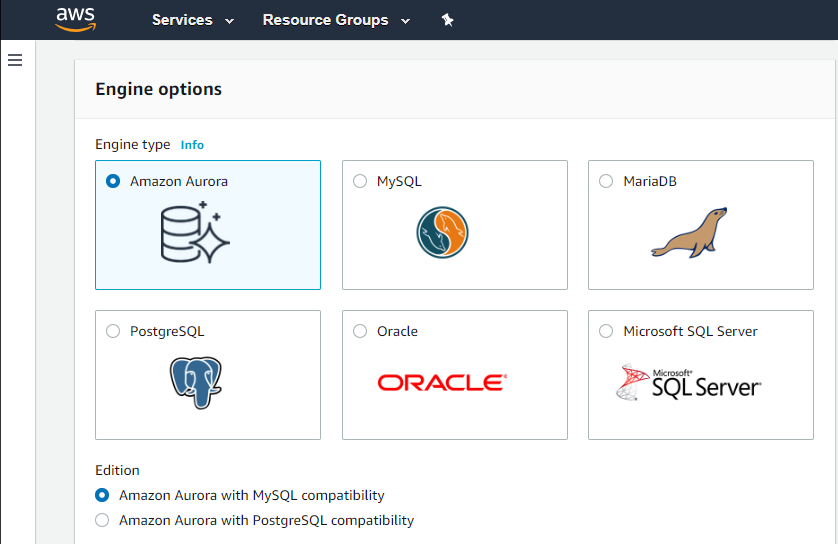
A look inside the RDS console.

Amazon RDS

Use Cases and Deployment Scope

RDS is getting used for keeping the application data for multiple microservices. Amazon managed postgres RDS with multiple AZs for High availability. The integration with applications is quote easier with RDS as it provides a cluster endpoint to be used with services

Pros

  • Performance across multiple azs
  • Query Monitoring with performance insights
  • Maintaince is reduced as automatically done by amazon

Cons

  • RDS upgrade using blue green deployment can be made a bit easier. Prerequisites can be made more clearer

Return on Investment

  • Using reserved instances helped reducing the overall DB cost
  • Blue green deployment helped managing the postgres versions migrations

Usability

AWS RDS - Simple and Efficient datastore for your cloud application.

Use Cases and Deployment Scope

Many teams, including mine, use Amazon RDS as an operational data store for applications. Amazon RDS is a great service that provides seamless setup, read replicas, intuitive scale-in and scale-out options, built-in monitoring, and much more.

Pros

  • Easy and simple setup.
  • Excellent support for cross region replication.
  • Enhanced security and access controls.
  • Multiple instance types based on the need.
  • Relatively less expensive.

Cons

  • It could do well to provide tools to update or create database table schemas easily.
  • Native support to postgres database could benefit.

Return on Investment

  • RDS has had a positive ROI. We transferred from Mongo to RDS and saved 80% of our cost.
  • Due to inbuilt monitoring, we never had database failures, leading to a 100% reduction in failures.

Usability

Alternatives Considered

MySQL

Thinking about database service, Wise Decision is RDS.

Use Cases and Deployment Scope

We use RDS for database development and production. Its fully managed capacity and scalability improve productivity and make us tension-free in all environments. I help us create and build instances in seconds, which the teams require, and through which they easily integrate their service with a few clicks.

Pros

  • Scalability.
  • Fully Management.
  • Encryption for the databases.
  • Easy to manage.

Cons

  • For sure, pricing.
  • Limited sharding support.

Return on Investment

  • Scaling of our service.
  • Security of production data,
  • Easy to manage and access rights,

Usability

Alternatives Considered

Google Cloud Datastore and Google Cloud BigTable

Other Software Used

Google Cloud BigTable, Google Cloud Datastore, Amazon Elastic Compute Cloud (EC2)

Fully Managed RDS (Relational Database Service) by AWS

Use Cases and Deployment Scope

As a Relational Database Service we have used AWS RDS because as a Banking and Fintech organisation we are dealing with millions of customer and as AWS provides this Managed service which is fully fledged with lots of feature like High Availability, Fault Tolerance, Security measures, In Depth Monitoring, Resilency, Query Suggestions and Very High Performance. Moreover this all set of features are available as one click solutions so we don't have a external headache to manage the Database we just have to focus on our Application.

Pros

  • Multi AZ, EC2 secure instance connect, Read and Write replicas
  • Storage and Database autoscaling is achieved by just one click so that our DB performance is not impacted due to huge number of users
  • In depth monitoring of Database and Database Queries and also the suggestions to improvise the same.
  • Automated and Manual Backup process that reduces our time to setup the Database Backup process

Cons

  • Faster DB provisioning speed
  • No room for improvement as of now

Return on Investment

  • Improved Database Admin tasks like Setup of Backup, Disaster Recovery
  • Reduced Downtime due to featured like Multi AZ, Read Replicas, Proxy
  • Improved Security by features like EC2 instance connect to access DB securely
  • User Experience improved due to Read/Write Query improvements followed by suggestions from Enhanced and Performance monitorings

Alternatives Considered

Amazon Aurora, Amazon DynamoDB, Amazon RDS Performance Insights and Amazon DocumentDB (with MongoDB compatibility)

Other Software Used

MongoDB Atlas, Amazon DocumentDB (with MongoDB compatibility), HashiCorp Vault

Amazon Relational Database Service (RDS) provides the best service among its competitors!

Use Cases and Deployment Scope

RDS performs frequent backups of your database, and you may configure retention rules to control how long backups are kept. RDS makes it simple to extend our database instance vertically by switching instance types or horizontally by adding read replicas. AWS takes care of the underlying infrastructure, including hardware provisioning, database setup, patching, and backups of our business.

Pros

  • Regular backups of database.
  • Database is available even if there is hardware and network issues.
  • We can control access to your RDS instances through security groups and network access control lists

Cons

  • RDS price may be complicated, with various aspects such as instance type, storage, I/O operations, and data transmission influencing costs
  • RDS may lag in supporting the most recent versions of database engines.

Return on Investment

  • RDS decreases the administrative load associated with database administration greatly.
  • RDS enables you to swiftly provision and scale database instances, allowing for quicker application development and deployment.

Alternatives Considered

Google Cloud SQL

Other Software Used

Google Cloud SQL
