
Snowflake vs. Workday Prism Analytics
| Product | Rating | Most Used By | Product Summary | Starting Price |
|---|---|---|---|---|
 Snowflake | Score8.9 out of 10 | N/A | The Snowflake Cloud Data Platform is the eponymous data warehouse with, from the company in San Mateo, a cloud and SQL based DW that aims to allow users to unify, integrate, analyze, and share previously siloed data in secure, governed, and compliant ways. With it, users can securely access the Data Cloud to share live data with customers and business partners, and connect with other organizations doing business as data consumers, data providers, and data service providers. | N/A |
 Workday Prism Analytics | Score7.1 out of 10 | N/A | Workday Prism Analytics is a scalable data hub that enables Finance and HR to securely ingest, blend, and transform high volumes of data from any source—integrated with Workday’s people and financial data. Prism Analytics powers deeper insights across Workday HCM, Financials, and Adaptive Planning, helping teams make smarter decisions without heavy IT reliance. Built on a high-performance Spark engine with machine learning-based resource management, multi-cloud support, and a tables-based… | N/A |
| Snowflake | Workday Prism Analytics | |||||||||||||||
|---|---|---|---|---|---|---|---|---|---|---|---|---|---|---|---|---|
| Editions & Modules | No answers on this topic | No answers on this topic | ||||||||||||||
| Offerings |
| |||||||||||||||
| Entry-level Setup Fee | No setup fee | No setup fee | ||||||||||||||
| Additional Details | — | — | ||||||||||||||
| More Pricing Information | ||||||||||||||||
| Snowflake | Workday Prism Analytics | |
|---|---|---|
| Considered Both Products | No answer on this topic | No answer on this topic |
| Key User Insights | ||
| Would buy again | ||
100% Would buy again 29 Answers | 91% Would buy again 10 Answers | |
| Delivers good value for the price | ||
100% Delivers good value for the price 27 Answers | 100% Delivers good value for the price 8 Answers | |
| Happy with the feature set | ||
100% Happy with the feature set 29 Answers | 100% Happy with the feature set 11 Answers | |
| Lived up to sales and marketing promises | ||
96% Lived up to sales and marketing promises 22 Answers | 100% Lived up to sales and marketing promises 7 Answers | |
| Implementation went as expected | ||
100% Implementation went as expected 24 Answers | 100% Implementation went as expected 6 Answers | |
| Snowflake | Workday Prism Analytics | ||||||||||
|---|---|---|---|---|---|---|---|---|---|---|---|
| Workforce Analytics |
| ||||||||||
| Snowflake | Workday Prism Analytics | |
|---|---|---|
| Small Businesses | No answers on this topic |  ActivTrak Score8.8 out of 10 |
| Medium-sized Companies |  Azure Synapse Analytics Score6.9 out of 10 |  Predictive Index Behavioral Assessment Score6.2 out of 10 |
| Enterprises |  Teradata Vantage Score8.1 out of 10 |  Visier People Score8.7 out of 10 |
| All Alternatives | View all alternatives | View all alternatives |
| Snowflake | Workday Prism Analytics | |
|---|---|---|
| Likelihood to Recommend | 9.2 | 8.6 |
| Likelihood to Renew | 10.0 | - |
| Usability | 9.3 | - |
| Support Rating | 9.9 | - |
| Contract Terms and Pricing Model | 8.0 | - |
| Snowflake | Workday Prism Analytics | |
|---|---|---|
| Likelihood to Recommend |
|
|
| Pros |
|
|
| Cons |
|
|
| Likelihood to Renew |
| No answers on this topic |
| Usability |
| No answers on this topic |
| Support Rating |
| No answers on this topic |
| Alternatives Considered |
|
|
| Return on Investment |
|
|
| ScreenShots | Snowflake Screenshots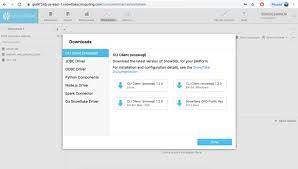 | Workday Prism Analytics Screenshots   |




