Salesforce Sales Cloud is a platform for sales with a community of Sellers, Sales Leaders, and Sales Operations, who use the solution to grow sales and increase productivity. The AI CRM for Sales features data built right in, so that companies can sell faster, sell smarter and sell efficiently. Salesforce Sales Cloud is used for, and supports: Buyer Engagement Sales Engagement Enablement Sales AI Sales Analytics Team…
$25
per month per user
Salesforce Starter
Score 8.9 out of 10
Small Businesses (1-50 employees)
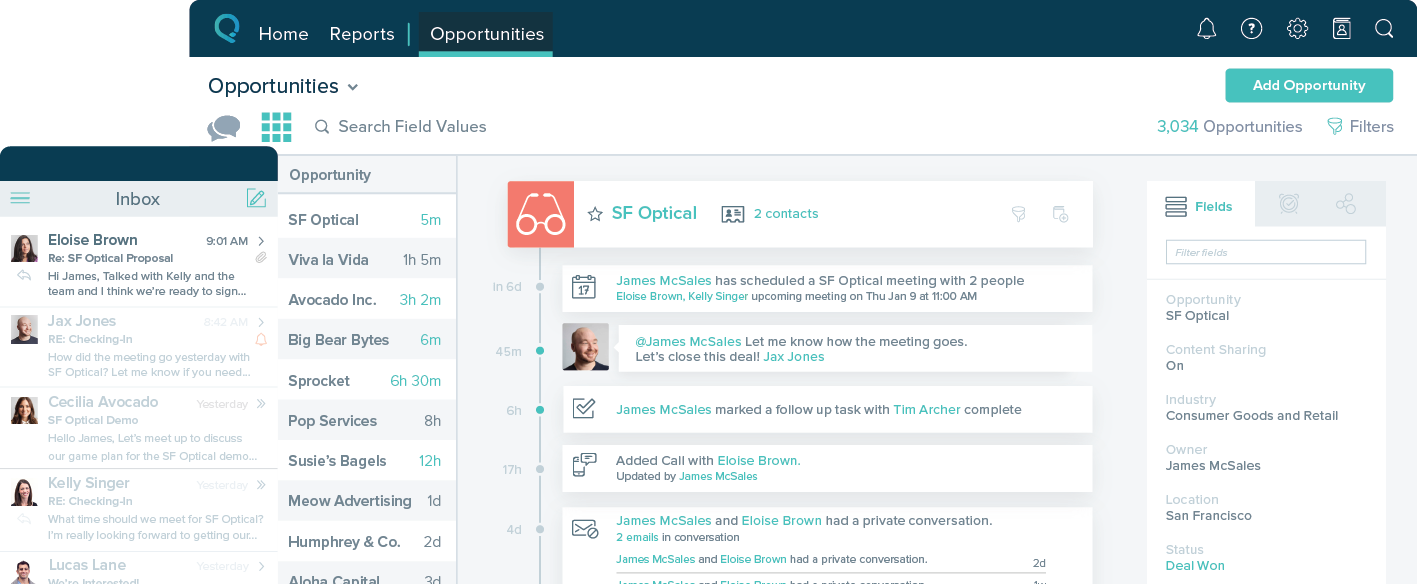
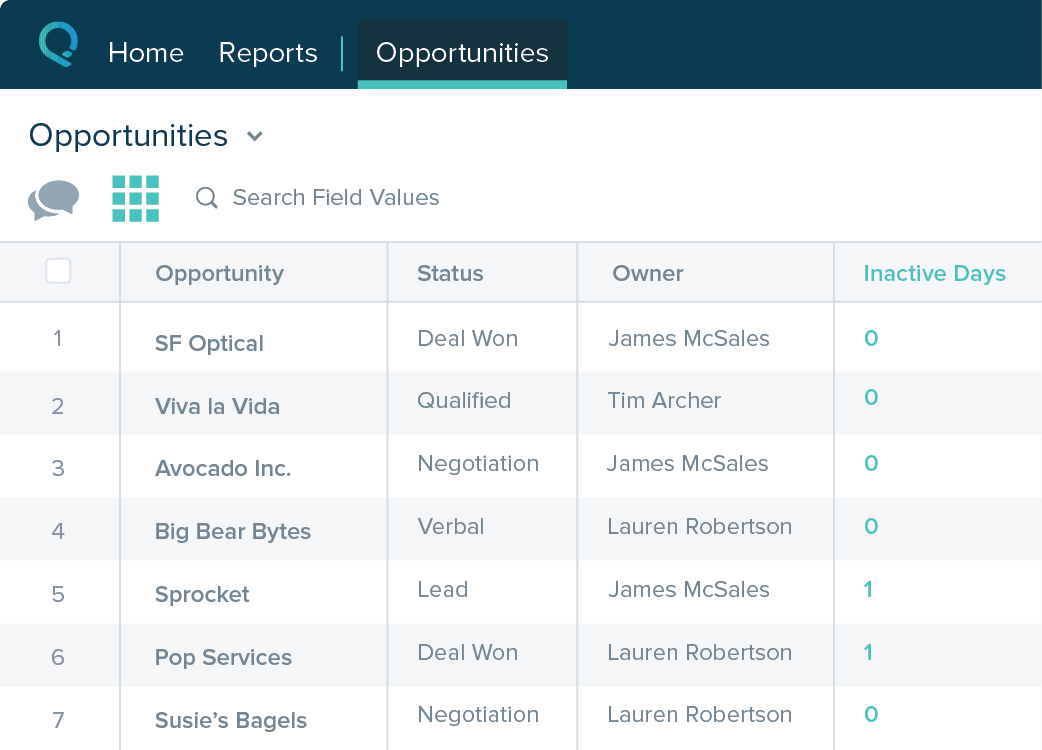
Salesforce Starter (formerly Salesforce Essentials) is a small business CRM that replaces the former SalesforceIQ product. It is priced at $35 per user, on a monthly basis, or at $25 per month for if billed annually ($300) and can be tried free for 14 days on a trial.
N/A
Pricing
Salesforce Sales Cloud
Salesforce Starter
Editions & Modules
Starter
$25.00
per month per user
Professional
$80.00
per month per user
Enterprise
$165.00
per month per user
Unlimited
$330.00
per month per user
Agentforce 1 Sales
$550
per month per user
No answers on this topic
Offerings
Pricing Offerings
Salesforce Sales Cloud
Salesforce Starter
Free Trial
Yes
Yes
Free/Freemium Version
No
No
Premium Consulting/Integration Services
No
No
Entry-level Setup Fee
Optional
No setup fee
Additional Details
—
—
More Pricing Information
Community Pulse
Salesforce Sales Cloud
Salesforce Starter
Features
Salesforce Sales Cloud
Salesforce Starter
Sales Force Automation
Comparison of Sales Force Automation features of Product A and Product B
Salesforce Sales Cloud
8.4
Ratings
9% above category average
Salesforce Starter
9.0
Ratings
15% above category average
Customer data management / contact management
9.30 Ratings
9.00 Ratings
Workflow management
8.30 Ratings
00 Ratings
Territory management
7.70 Ratings
8.60 Ratings
Opportunity management
8.70 Ratings
9.00 Ratings
Integration with email client (e.g., Outlook or Gmail)
8.60 Ratings
10.00 Ratings
Contract management
7.90 Ratings
00 Ratings
Quote & order management
7.70 Ratings
9.00 Ratings
Interaction tracking
8.80 Ratings
7.80 Ratings
Channel / partner relationship management
8.10 Ratings
9.40 Ratings
Customer Service & Support
Comparison of Customer Service & Support features of Product A and Product B
Salesforce Sales Cloud
7.9
Ratings
5% above category average
Salesforce Starter
-
Ratings
Case management
8.30 Ratings
00 Ratings
Call center management
7.80 Ratings
00 Ratings
Help desk management
7.50 Ratings
00 Ratings
Marketing Automation
Comparison of Marketing Automation features of Product A and Product B
Salesforce Sales Cloud
8.4
Ratings
10% above category average
Salesforce Starter
8.8
Ratings
15% above category average
Lead management
8.50 Ratings
8.80 Ratings
Email marketing
8.20 Ratings
00 Ratings
CRM Project Management
Comparison of CRM Project Management features of Product A and Product B
Salesforce Sales Cloud
8.4
Ratings
10% above category average
Salesforce Starter
8.8
Ratings
15% above category average
Task management
8.90 Ratings
9.00 Ratings
Billing and invoicing management
7.70 Ratings
8.00 Ratings
Reporting
8.60 Ratings
9.40 Ratings
CRM Reporting & Analytics
Comparison of CRM Reporting & Analytics features of Product A and Product B
Salesforce Sales Cloud
8.3
Ratings
9% above category average
Salesforce Starter
9.0
Ratings
17% above category average
Forecasting
8.10 Ratings
9.00 Ratings
Pipeline visualization
8.10 Ratings
8.60 Ratings
Customizable reports
8.80 Ratings
9.40 Ratings
Customization
Comparison of Customization features of Product A and Product B
Salesforce Sales Cloud
8.7
Ratings
15% above category average
Salesforce Starter
8.9
Ratings
17% above category average
Custom fields
9.00 Ratings
9.40 Ratings
Custom objects
8.90 Ratings
9.40 Ratings
Scripting environment
8.20 Ratings
7.80 Ratings
API for custom integration
8.60 Ratings
8.80 Ratings
Security
Comparison of Security features of Product A and Product B
Salesforce Sales Cloud
8.9
Ratings
7% above category average
Salesforce Starter
9.4
Ratings
12% above category average
Single sign-on capability
8.90 Ratings
9.40 Ratings
Role-based user permissions
8.80 Ratings
9.40 Ratings
Social CRM
Comparison of Social CRM features of Product A and Product B
Salesforce Sales Cloud
8.8
Ratings
18% above category average
Salesforce Starter
8.1
Ratings
10% above category average
Social data
8.90 Ratings
00 Ratings
Social engagement
8.70 Ratings
8.10 Ratings
Integrations with 3rd-party Software
Comparison of Integrations with 3rd-party Software features of Product A and Product B
Salesforce Sales Cloud
8.2
Ratings
11% above category average
Salesforce Starter
8.3
Ratings
12% above category average
Marketing automation
8.40 Ratings
8.60 Ratings
Compensation management
8.00 Ratings
8.10 Ratings
Platform
Comparison of Platform features of Product A and Product B
It’s great at bringing in members from different sources and streamlining their journey — making it easier for our staff to manage follow-ups and tailor actions based on where each member is in their path. As for where it’s less suited, I’d say it depends on company size — it might be a bit too much for a very small organization.
SalesforceIQ is a perfect CRM to start with and get your organization used to tracking customer contact. It was an easy setup and well adopted. It allowed us to rollout completely in just 30 days. We have seen a large increase in our ability to communicate. It may be lacking in some items if you already have a tracking method but was the perfect starting point for us.
Logging notes: SF makes it easy to log notes in the timeline or static notes that live in an easy-to-see spot for longevity.
Logging activities: It's easy to post a call, text, email, etc.
API data: Once connected, SF is critical to automation, such as website activity, login activity, pages visited, etc., which saves the Customer Success side time in understanding account activity.
Custom fields: you can add custom fields to really personalize your experience. We use quite a few and it's brilliant.
Sales CRM with built-in guidance and reminders to manage and track opportunities.
Self-service for customers and internal employee needs. Integrates forms and chatbots very easily into your existing website.
Guided setup with inherent flows to make transitioning from legacy systems to new age cloud-based technologies
Integrates with Outlook and Gmail extremely well. Includes the Salesforce Inbox mobile app to link records with calendar and email. Email reminders included automatically.
The Salesforce Mobile App comes with Starter, making it super easy to work on the go, even in remote areas.
I have hard-coded the auto-update of the phone number format and state format from some codes shared by the community, but I do not know where to do it. I cannot reset it either.
It is unclear what functionalities each version has. We use the enterprise version, and it seems we can only have one design of the pipeline. But different business segments would have very different sales cycles, and hence, pipeline tracking would be different. It would be nice to have this available in our version.
It seems I cannot create a report to pull notes logged at the account levels.
Table views can be sorted by column. Filters can be applied, but only to one column. Multi-column filtering like Excel allows would be extremely useful and a big improvement.
The ability to quick copy data in a table view would also be helpful, like (ctrl ') in excel.
There are days when I wish we hadn't switched, but I know that if we put in the time, we will get to where we want to be with the software and that it has many more capabilities than anything else we looked at. However, the amount of time and onboarding we need to do is also far greater than we realized/were told when we originally bought the product. They told us we should hire onboarding support, but at the end, after we had already reached our budget maximum for this, so it's been slower than we had hoped.
Salesforce has been designed on the basis of "Clicks, not code". So anyone willing to learn the Salesforce user interface (which is quite good as far as management software platforms go) is able to become a Salesforce user or even a Salesforce administrator. You don't have to know coding language to work in the Salesforce environment. Also, Salesforce has one of the best software training resources (Trailhead) that I have ever encountered. It is free to all, easy to use, and most importantly it is interactive. No scrolling through endless text in a user manual. There are hands-on modules and related videos interlaced and through it all you earn points and badges to display your level of learning.
easy to use, training is intuitive and can be peer taught if needed. Not overly complex so that users can get started within a very short period of time.
All Force.com apps run on world-class data centers with backup, failover, and disaster-recovery facilities. Force.com has had a proven 99.9 percent uptime record for years. Accordingly, I only recall our instance of Salesforce having one unscheduled, brief down time over 6 years. I can't remember for sure, but it may have been due to our Internet Service Provider (ISP) versus Salesforce itself. Also, Salesforce does it's best to keep customers in the loop:
Trust.salesforce.com is the salesforce.com community's home for real-time information on system performance and security. On this site you'll find:
Live and historical data on system performance Up-to-the minute information on planned maintenance Phishing, malicious software and social engineering threats Best security practices for your organization Information on how we safeguard your data
For a SaaS provider, I'd rate their performance to be one of the best. At times, reporting tends to slow down if the data set is very large, which is the case in any system. But, that's a very rare phenomenon
The overall support has been good. More and more features are being released quite frequently. Very small features are also making big difference in how the tool can be adapted and used better. If there is anything we need or are stuck, the support team sets up a call and helps in resolving the issue/provides workarounds.
I attended two training sessions. I would rate them a 4 as an advanced user. It was very basic – great for someone new – would give 8+ for new person.
I had 3 years of experience at the time. I skipped basic and went onto advanced and still not helpful. A lot of it was best practices that didn’t feel relevant for our business
I have gone through multiple. The content that’s delivered is quite basic – I wish they had more advanced training.
We are grandfathered into premium support plus training. We get unlimited access to instructor led and online training for free. We have taken advantage of this
Just from an organizational standpoint - we standardized our data prior to moving to Salesforce. But we essentially standardized it wrong. That's created a big disgusting mess for us know that I'll have to deal with as the Admin. Be sure you think through use cases prior to doing something like that - seek outside opinions on how the data will work best, especially depending on what else you're going to integrate with Salesforce.
Salesforce sales can do everything Front does regarding email integrations and communicating with your peers. Still, it provides even more insight for our salespeople and leadership team. Although Front is cheaper, we decided the added productivity and visibility provided to the team would be well worth the higher price tag.
Salesforce Starter is exactly what it says. It's specific to getting a small business up and running effectively, without unnecessary development or internal overhead required. It doesn't allow for a ton of customization, but it provides more than most other providers across sales, service, and integration/automating business processes. Some tools are more specific to organizations that want to focus on a specific area to grow or manage their business. That's where the other package types and integrations with specific tools come in
Salesforce Sales Cloud is highly scalable and designed to accommodate the needs of businesses of all sizes, from small startups to large enterprises. It offers flexible subscription models and can easily scale up or down based on the organization's requirements. Whether a company is expanding its sales team, increasing its customer base, or adding new features and functionalities, Sales Cloud can adapt to support growth without sacrificing performance or reliability. Additionally, Salesforce's cloud-based architecture ensures that users have access to resources and capabilities as needed, making it a highly scalable solution for organizations looking to automate customer relationship management at scale.