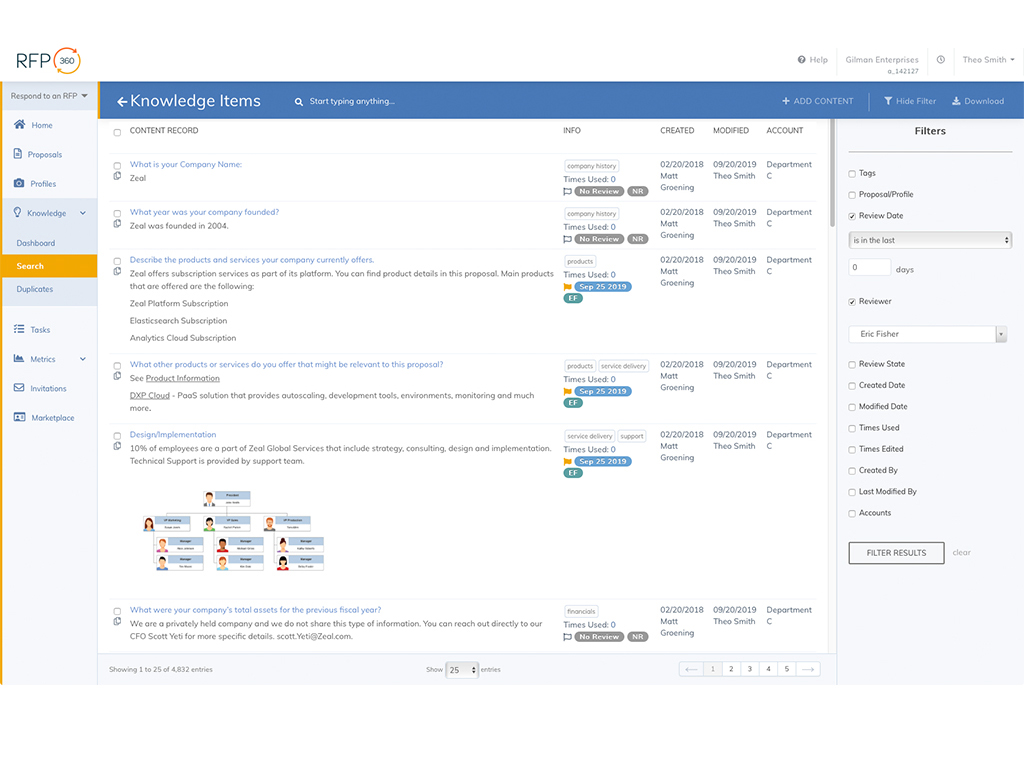
RFP360, from Responsive (formerly RFPIO) is used by organizations to request information, respond to requests and connect, aiming to make the RFP and proposal process more efficient, effective, collaborative, consistent and repeatable for everyone.
N/A
SAP Ariba
Score 7.6 out of 10
N/A
With advanced tools to automate manual processes and support close collaboration with suppliers, SAP Ariba helps streamline source-to-pay processes across organizations.
N/A
Pricing
RFP360
SAP Ariba
Editions & Modules
No answers on this topic
No answers on this topic
Offerings
Pricing Offerings
RFP360
SAP Ariba
Free Trial
Yes
No
Free/Freemium Version
No
Yes
Premium Consulting/Integration Services
No
No
Entry-level Setup Fee
No setup fee
Optional
Additional Details
Pricing is based on use case and client requirements.
Massive RFP workload- juggling several at a time, filling out answers that are similar. This works incredibly if you have past RFPs to load into the answer bank. It cuts out the time required for completing new ones, while keeping things organized and at forefront. RFP360 streamlines the entire process, giving you at a glance what you need to do when. The Google Chrome add on extension works very well, as well as the microsoft word and excel plugins. The tools given in RFP360 allow one to fill things out at a much quicker pace while having all past answers available, making it easy to update new ones.
SAP Ariba is pivotal for our organization's supply chain requirements. The purchasing department needs it for vendor purchase order issuance and vendor order management. We can check procurement history for the last purchased price, standard price, price breaks, lead time for products, vendor, and alternate vendor details.
Complete Procurement of Inventory step easy through GUI-Ariba integration once Purchase order is created and it is sent to the SAP Ariba Supplier Network. Vendor confirms the order and sends notification of Inbound Delivery to the warehouse through ASN and the Inbound process, Goods Receipt Process, Unloading, Put away process easy.
SAP Ariba integrates the different SAP Sourcing platforms, services and their tools in order to optimize operations, saves cost and meeting customer requirements through its easy to use tools. Such as integration with SAP S/4 HANA, SAP EWM using Idocs for End to End sourcing and Procurement coverage.
As a part of the SAP Direct Sourcing suite, it helps allow customer manage their direct materials in the single dashboard and helping customer to have view of the comprehensive info about BoM and the structure. Based on requirements, buyers can run materials and/or entire Bill of Materials. When these are sent from ERP to SAP Ariba, managers can manage them in the direct spend dashboard. Can search for desired items in the dashboard and view details of BoM or deeper view of information of the material. Buyers can run sourcing, run details for materials, create material quotes, and create pricing using book quotes.
Analysis Tools: although what is provided is quite good, there is definitely room for improvement. For instance it would be nice if it were easier/quicker for each evaluator to record their notes/comments when scoring, and to be able to search through those notes/comments later. Also, it would be really helpful to be able to annotate/mark-up the actual responses (highlight, underline, circle, call-out notes, etc.), with such mark-up tracked by evaluator, and with the option to hide/show mark-up.
Results Analysis, Reporting, and Presentation: in my opinion, this is the only area of weakness in RFP360. There are very limited options, after scoring/evaluation of responses is completed, for generating reports, graphs, charts, etc. to be used in evaluating results and presenting to the end client. I've always had to export the scores and use Excel to create the necessary visuals for final analysis and presentation.
Complex Questions: RFP360's ability to handle complex RFP questions (e.g. involving tables, charts, multi-part answers, graphics, etc.) is limited, and existing capabilities in this area are fairly cumbersome to navigate and use.
Integration with other tools is not very good. The APIs provided are not scheduled within the Ariba process and must use a middleware to send information back and forth between tools
Customer support for configuration questions. The response time can be weeks or months waiting time and the response back is often unhelpful.
Flexibility with company entities. With a large company with so many entities it is hard to structure and customize your suppliers into many entities. You often have to duplicate.
This tool has been fantastic as we have revamped our RFP process. We are much faster and far more efficient.Our win rate is up, but I am not 100% sure this is the cause, but I love to see it. The customer support and training are also fantastic. Thumbs up!
While its great at usability. I would love ut have it more simplified. I would like to advocate for some personas who are non tech savvy or who have less or no experience in procurement. I sometimes feel that the valley of user learning fir such personas is quite steep and it may take them long time of learning to get adept to the platform.
Excellent support during the training process. Since we were onboarded, we have not had too many questions, but when we did, they were answered promptly and thoroughly. We have been very satisfied.
Customer support has always been top notch. From small configuration changes to overall process changes, support has the teammates in place with excellent knowledge and is able to provide solutions based on business challenges quickly. Their customer support through their Account teams continues to be hands on and very responsive to needs in a timely fashion.
I was not involved in the process of selecting RFP360 for our firm, so I am largely unfamiliar with competitors. I am, however, quite pleased with RFP360 as a user, and am confident that my colleagues who were responsible for making the decision were thorough and discerning.
It's important to note that user experiences may vary, and the perceived areas for improvement depend on the specific needs and expectations of each organization. Frequent updates and feedback from users often guide software developers in addressing these areas to enhance the overall user satisfaction with the platform
We saved nearly 10% of planned costs due to the large database of vendors we created within the company as a whole.
Saving in time due to shortening of procurement cycles. Procurement activities were never on the critical path and were accomplished with less Supply Chain resources than originally planned.
In the process we created a huge database of Vendors and Pricing which well be beneficial in our future projects.
It is an excellent tool and just what are business required and could afford.