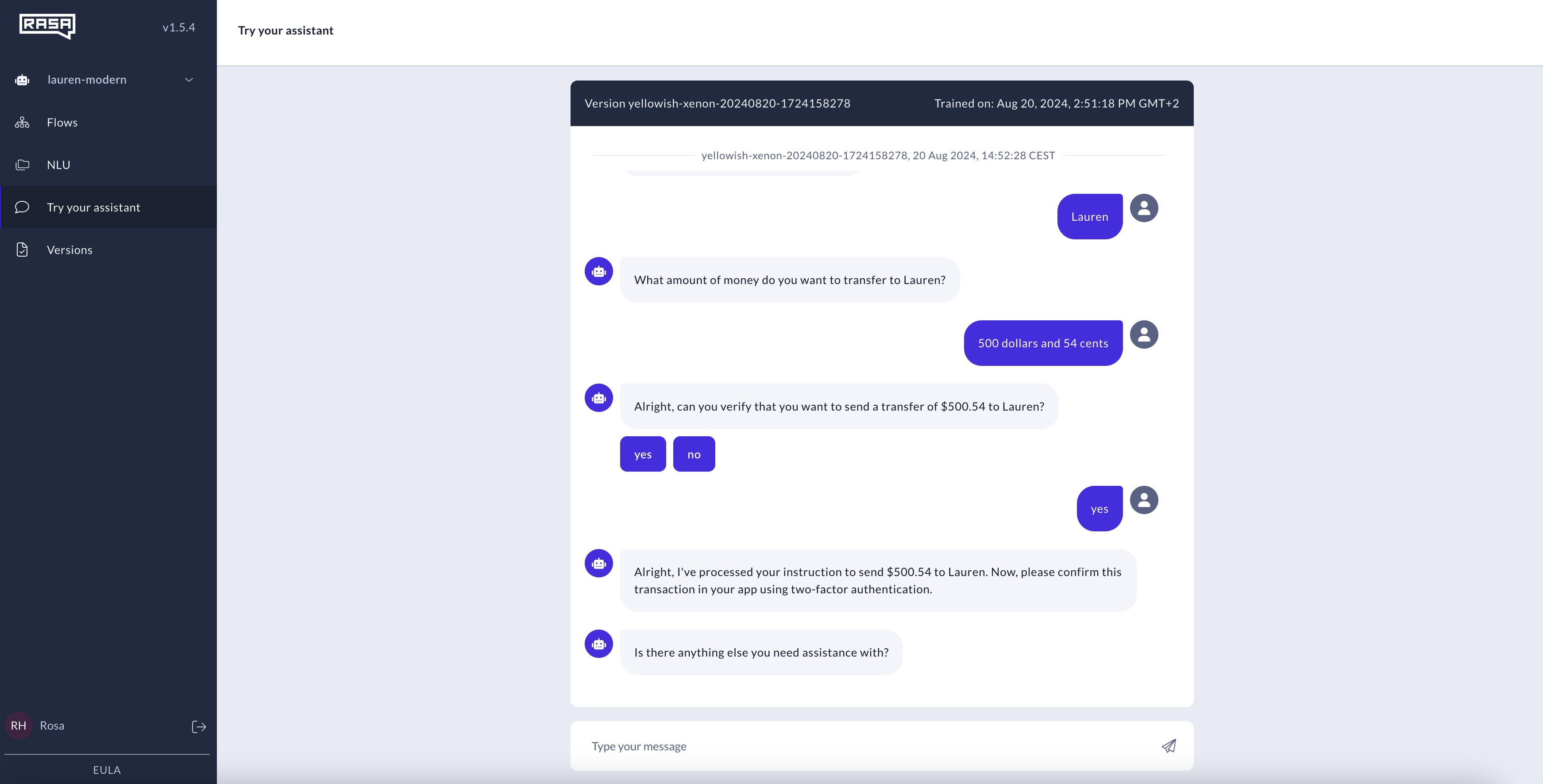
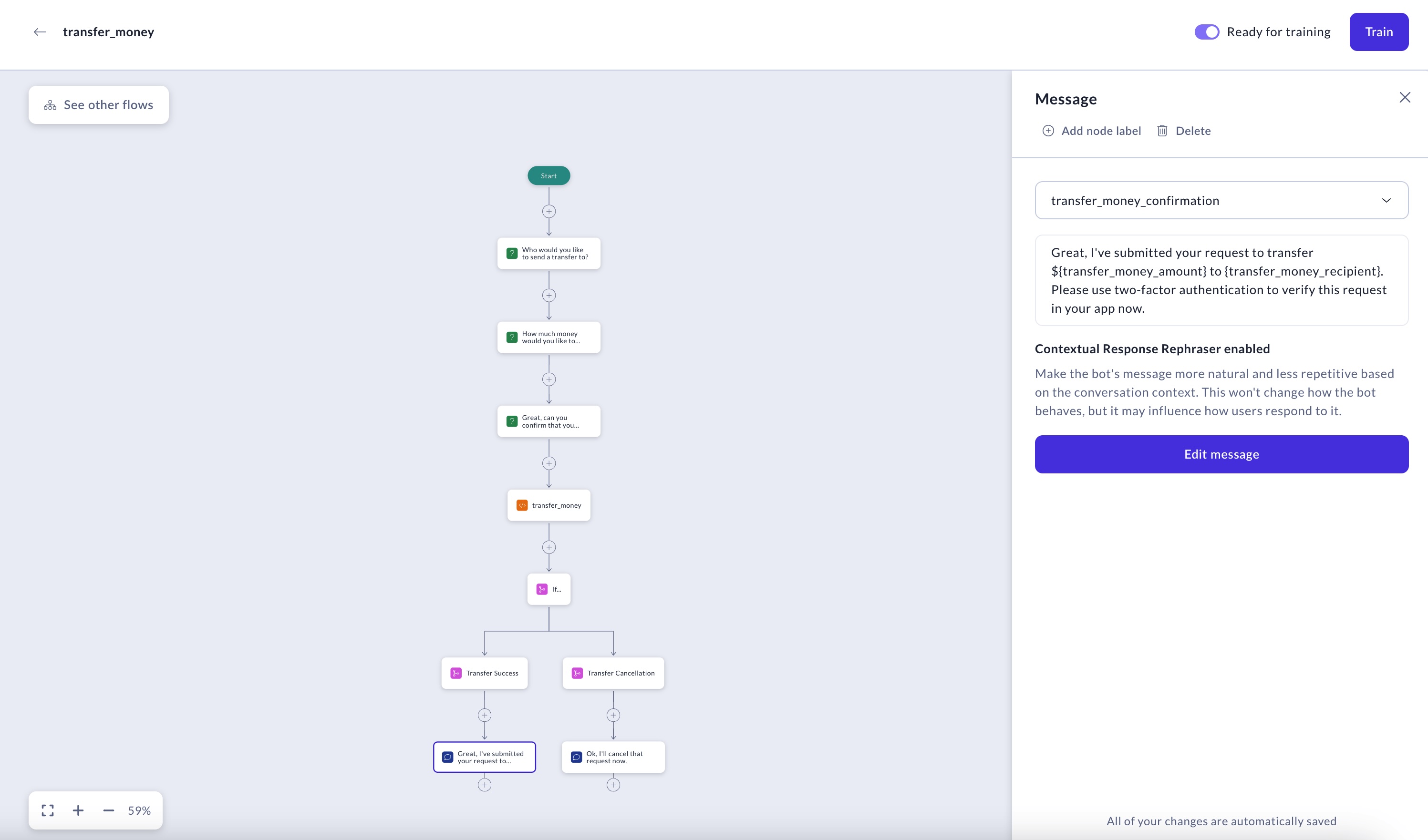
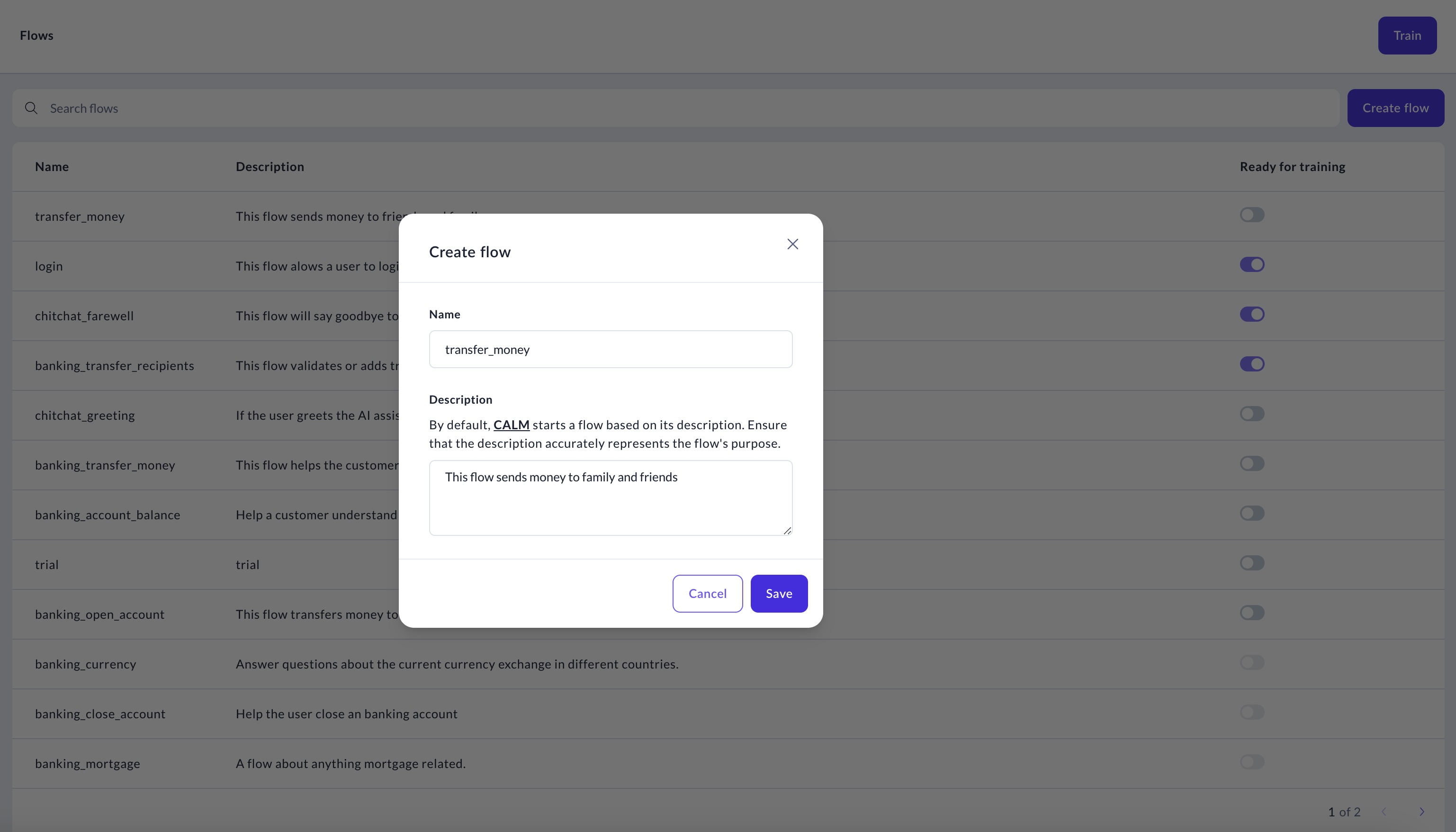
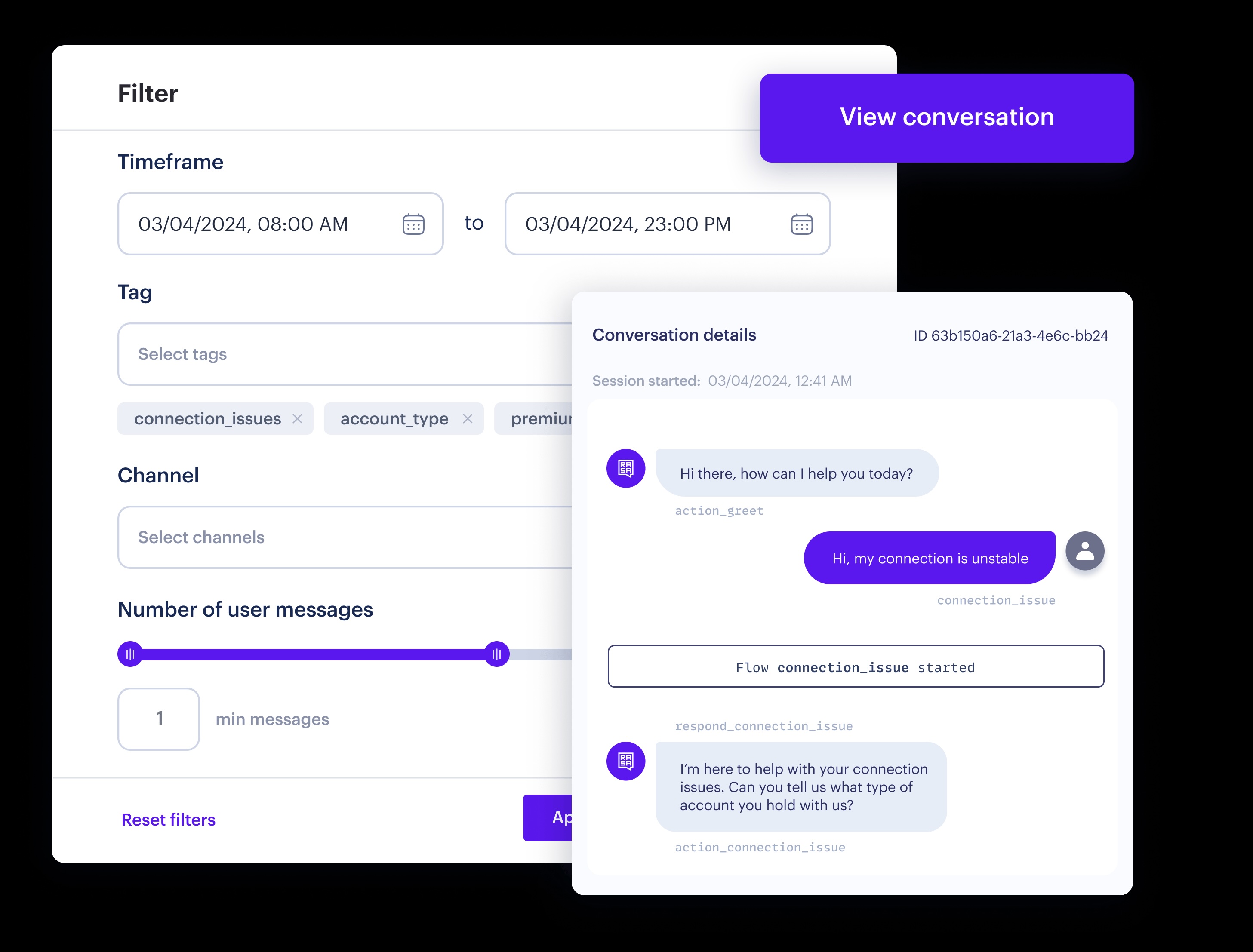
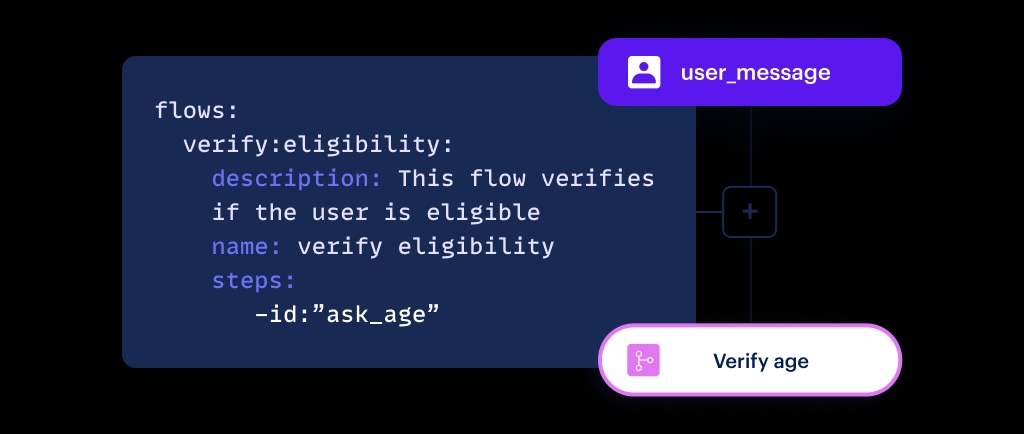
Rasa is a conversational AI platform from the company of the same name headquartered in San Francisco, enabling enterprises to build customer experiences. Rasa’s platform was built to create enterprise-grade virtual assistants, allowing personalized conversations with customers - at scale. Rasa’s conversational AI platform allows companies to build better customer experiences by lowering costs through automation, improving customer satisfaction, and providing a scalable way to gather customer…
$0
Salesloft
Score8.5 out of 10
N/A
Salesloft’s Revenue Orchestration Platform uses AI to help market-facing teams prioritize and take action on what matters most, from first touch to upsell and renewal.
Rasa Pro is well suited for corporate use and for chatbots which require backend connections. Smaller chatbots with a few flows might be better served with a simple dialogue engine and custom AI agents, or Rasa Open Source. Rasa does not come with its own complex vector database, just in-memory FAISS and connectors to external vector DB's such as Milvus and Qdrant. It provides only a basic document parser and embedder for FAISS. If you need to build a RAG focused chatbot around a large knowledge base with complex documents, e.g. lots of MS Word or PDF files, you'll have to build a separate document parser and embedder, as well as your own semantic search engine
A de minimis incentive was given to thank the reviewer for their time. The incentive was not used to bias or drive a particular response, nor was the incentive contingent on a positive endorsement. More Info
I find it to be the best resource for scheduling calls with clients. Specifically when the call includes multiple people using Salesloft, it's so simple and easy to use to send open times to client and then to be able to send active links to the client where with one click the calendar invite shows up on my calendar? it's the best most efficient tool I have in my toolbelt at the moment. When it comes to logging, it's also simple but I wish I could add a contact to SL from the Microsoft integration.
A de minimis incentive was given to thank the reviewer for their time. The incentive was not used to bias or drive a particular response, nor was the incentive contingent on a positive endorsement. More Info
A de minimis incentive was given to thank the reviewer for their time. The incentive was not used to bias or drive a particular response, nor was the incentive contingent on a positive endorsement. More Info
A de minimis incentive was given to thank the reviewer for their time. The incentive was not used to bias or drive a particular response, nor was the incentive contingent on a positive endorsement. More Info
A de minimis incentive was given to thank the reviewer for their time. The incentive was not used to bias or drive a particular response, nor was the incentive contingent on a positive endorsement. More Info
Would be nice to have custom reporting available. Coming from Salesforce, the included canned reports are useful but I like to roll my sleeves up and build exactly what I want.
Conversations will record meetings booked via MSTeams but requires the BDR/SDR to hit record. Other solutions (e.g. Chorus.ai) join as a participant and don't require a user hitting the "record" button. We have to change our flow to make this work and it is a bit clunky.
SalesLoft is absolutely VITAL to our daily operations. We could not function without it or a program like it. Speaking as a Sales Person who has had to operate without a product like this, the difference is night and day. The ability to stay organized, automate tasks, easily log activities and notes, review calls, and coach team members is an absolute gamechanger.
A de minimis incentive was given to thank the reviewer for their time. The incentive was not used to bias or drive a particular response, nor was the incentive contingent on a positive endorsement. More Info
With the help of dedicated team - documentation and video resources it is relatively easier to build. We prioritized pro-code usage to begin with launch.
A de minimis incentive was given to thank the reviewer for their time. The incentive was not used to bias or drive a particular response, nor was the incentive contingent on a positive endorsement. More Info
Drift was extremely easy for both our demand gen team and SDR to jump right into. It was feature rich and purpose-built for marketers—it was remarkably easy to connect our marketing automation, CRM, and more to the platform and get everything to work together. Now the ability to create digital experiences and conversation landing pages is democratized—empowering our team to do better work and provide better prospect/customer experience.
The availability is pretty good, we do sometimes have errors or delays in syncing activities but nothing that has been too detrimental to our workflow. Most recently we had an issue with Lofting through Outlook due to a change in security token that took a few weeks to resolve but it is fixed now.
A de minimis incentive was given to thank the reviewer for their time. The incentive was not used to bias or drive a particular response, nor was the incentive contingent on a positive endorsement. More Info
Yes timely and easy to use. The only delays we have are when we run our big month sales blitz and activities take some time to sync to the reporting as well as SalesForce
A de minimis incentive was given to thank the reviewer for their time. The incentive was not used to bias or drive a particular response, nor was the incentive contingent on a positive endorsement. More Info
Rasa support has been very responsive, trying to fix any reported issues ASAP. They've also listened to many requests for improvement. The Rasa features and changelog are well documented
A de minimis incentive was given to thank the reviewer for their time. The incentive was not used to bias or drive a particular response, nor was the incentive contingent on a positive endorsement. More Info
The support team was very responsive but at the end of the day they took a long time to fix our issue. The issue did get fixed, though, so that is what matters. Very nice people who are there to help in any way they can.
We had some virtual training with our CSM which was very well constructed. It took some time to get into the full swing of things but with a few weeks of hands on experience I was feeling confidant. The SL team was always available to answer questions or jump an a call to walk us through stuff. I also used the Customer Help Center for a few self guided learnings on how to use specific features related to reporting and team management.
A de minimis incentive was given to thank the reviewer for their time. The incentive was not used to bias or drive a particular response, nor was the incentive contingent on a positive endorsement. More Info
A de minimis incentive was given to thank the reviewer for their time. The incentive was not used to bias or drive a particular response, nor was the incentive contingent on a positive endorsement. More Info
A de minimis incentive was given to thank the reviewer for their time. The incentive was not used to bias or drive a particular response, nor was the incentive contingent on a positive endorsement. More Info
Salesloft blows outreach out of the water in all aspects. One of the biggest issues I had was their unwillingness to listen to customer feedback. I had requested several small changes to be made when I had previously used the platform that unfortunately fell onto deff ears. I am much happier using Salesloft and the positive results I've experienced are a direct result of that.
A de minimis incentive was given to thank the reviewer for their time. The incentive was not used to bias or drive a particular response, nor was the incentive contingent on a positive endorsement. More Info
A de minimis incentive was given to thank the reviewer for their time. The incentive was not used to bias or drive a particular response, nor was the incentive contingent on a positive endorsement. More Info
A de minimis incentive was given to thank the reviewer for their time. The incentive was not used to bias or drive a particular response, nor was the incentive contingent on a positive endorsement. More Info
I have been with a company that was using Salesloft, but moved to a competitor. I can't say it was exactly the competitors fault, as a lot of other internal changes were happening, (hence leaving the system that was working well), but we had the worst sales year in company history that year. Reps who consistently performed at or above quota were suddenly struggling to keep their pipelines in order, and the middle of the pack reps were going on PiPs and being let go.
Is it the dialer, or the leadership? You decide.
But the leadership also changed the dialer - so maybe it's both?
A de minimis incentive was given to thank the reviewer for their time. The incentive was not used to bias or drive a particular response, nor was the incentive contingent on a positive endorsement. More Info