
Proposify vs. Storylane
Proposify vs. Storylane
| Product | Rating | Most Used By | Product Summary | Starting Price |
|---|---|---|---|---|
 Proposify | N/A | Proposify is an online proposal software designed to give users control and visibility into the most important stage of a sales process: the close. From deal design to sign-off, the vendor states users get the confidence and flexibility to dominate deals, and further states users will: Create impressive sales documents that stay consistent and error-free. Receive the insights to scale a process, make timely engagements, and accurately… | $0 per month | |
 Storylane | N/A | Storylane, headquartered in Santa Clara, helps companies build interactive product demos in minutes with their eponymous no-code tool. Marketing users can embed guided product tours on their websites, landing pages , blogs or share them in email campaigns. Sales users can replicate the product and build custom demos tailor made for conversation. Storylane's no code editor enables users to personalize anything in the demo. | $50 per month per seat |
| Proposify | Storylane | |||||||||||||||
|---|---|---|---|---|---|---|---|---|---|---|---|---|---|---|---|---|
| Editions & Modules | No answers on this topic |
| ||||||||||||||
| Offerings |
| |||||||||||||||
| Entry-level Setup Fee | Optional | No setup fee | ||||||||||||||
| Additional Details | Get a free trial version of our Team Plan for 14 days. You're welcome to switch to our Free plan if you need more time with the product. No credit card required. No contracts. Pick the plan that meets your needs when you're ready. | Discount available for annual pricing. | ||||||||||||||
| More Pricing Information | ||||||||||||||||
| Proposify | Storylane |
|---|
| Proposify | Storylane | ||||||||||||||||||
|---|---|---|---|---|---|---|---|---|---|---|---|---|---|---|---|---|---|---|---|
| Proposal Creation & Organization |
| ||||||||||||||||||
| Proposal Collaboration & Workflow |
| ||||||||||||||||||
| Proposal Delivery |
|
| Proposify | Storylane | |
|---|---|---|
| Small Businesses |  QuoteWerks Score 9.4 out of 10 |  Mediafly Score 7.7 out of 10 |
| Medium-sized Companies | QuoteWerks Score 9.4 out of 10 |  Paperflite Score 9.3 out of 10 |
| Enterprises |  Conga CPQ Score 8.5 out of 10 | Paperflite Score 9.3 out of 10 |
| All Alternatives | View all alternatives | View all alternatives |
| Proposify | Storylane | |
|---|---|---|
| Likelihood to Recommend | 8.7 (23 ratings) | 9.0 (1 ratings) |
| Likelihood to Renew | 1.0 (2 ratings) | - (0 ratings) |
| Usability | 8.3 (3 ratings) | - (0 ratings) |
| Support Rating | 7.7 (5 ratings) | - (0 ratings) |
| Proposify | Storylane | |
|---|---|---|
| Likelihood to Recommend | Proposify
 Dwight Zähringer Founder | Storylane
|
| Pros | Proposify
 Zach Yokum COO / Creative Director | Storylane
|
| Cons | Proposify
 Will Goad Director of Implementation | Storylane
|
| Likelihood to Renew | Proposify
Will Goad Director of Implementation | Storylane No answers on this topic |
| Usability | Proposify
 Natalie C. Winslow Co-Founder / Marketing Chief | Storylane No answers on this topic |
| Support Rating | Proposify
Natalie C. Winslow Co-Founder / Marketing Chief | Storylane No answers on this topic |
| Alternatives Considered | Proposify
| Storylane
|
| Return on Investment | Proposify
 Brie Goumaz Business Owner | Storylane
|
| ScreenShots | Proposify Screenshots   | Storylane Screenshots    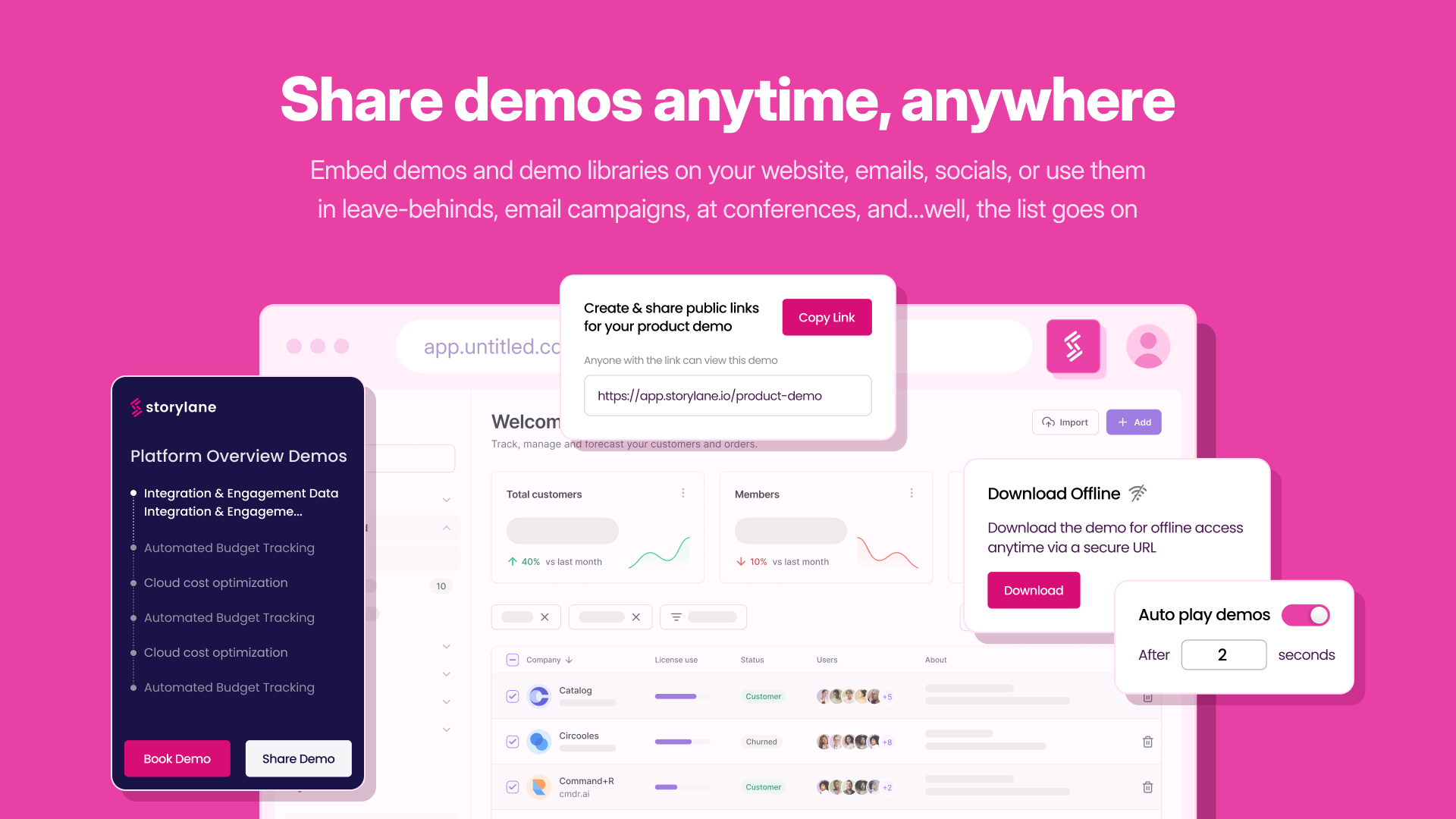  |