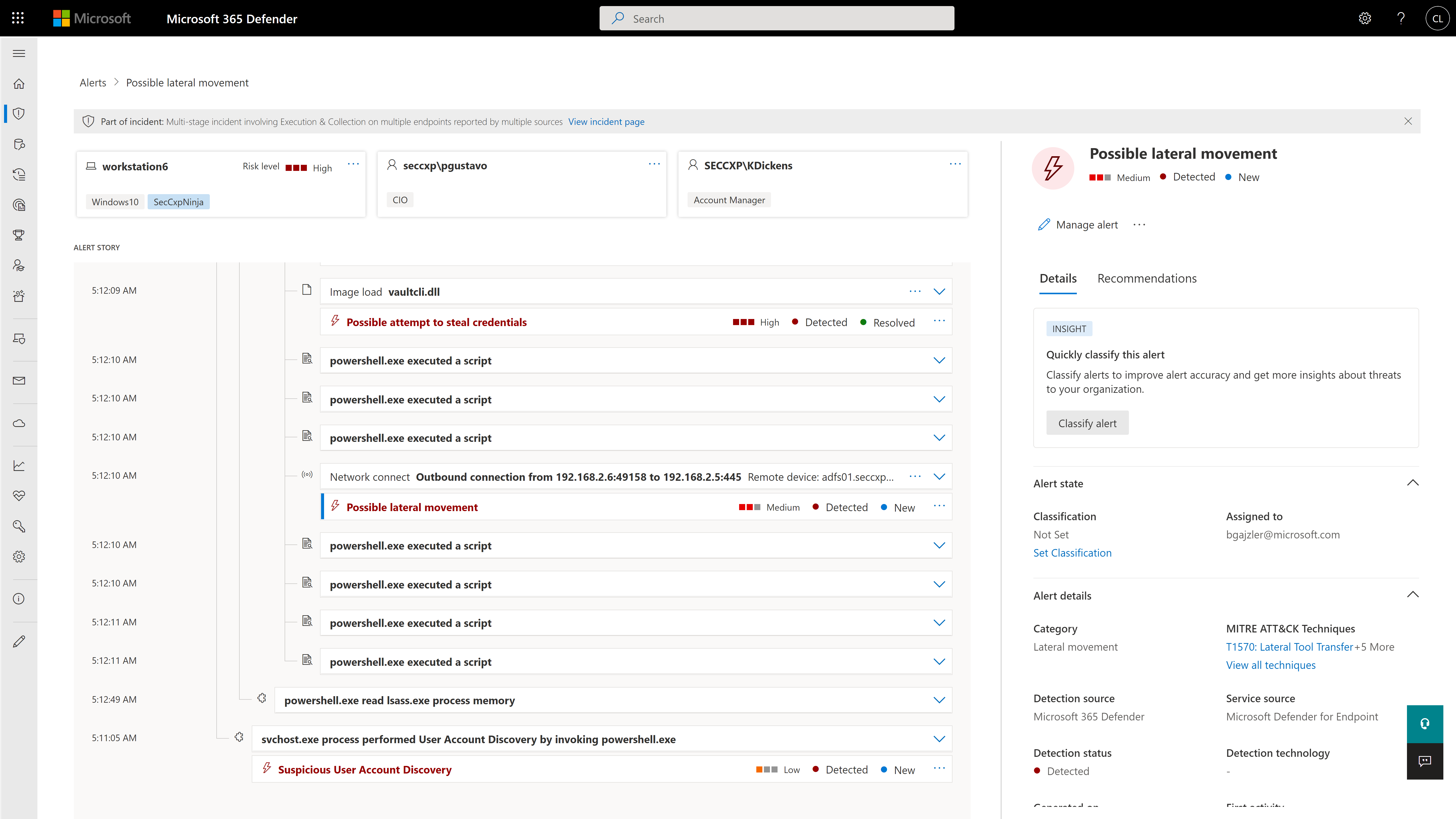
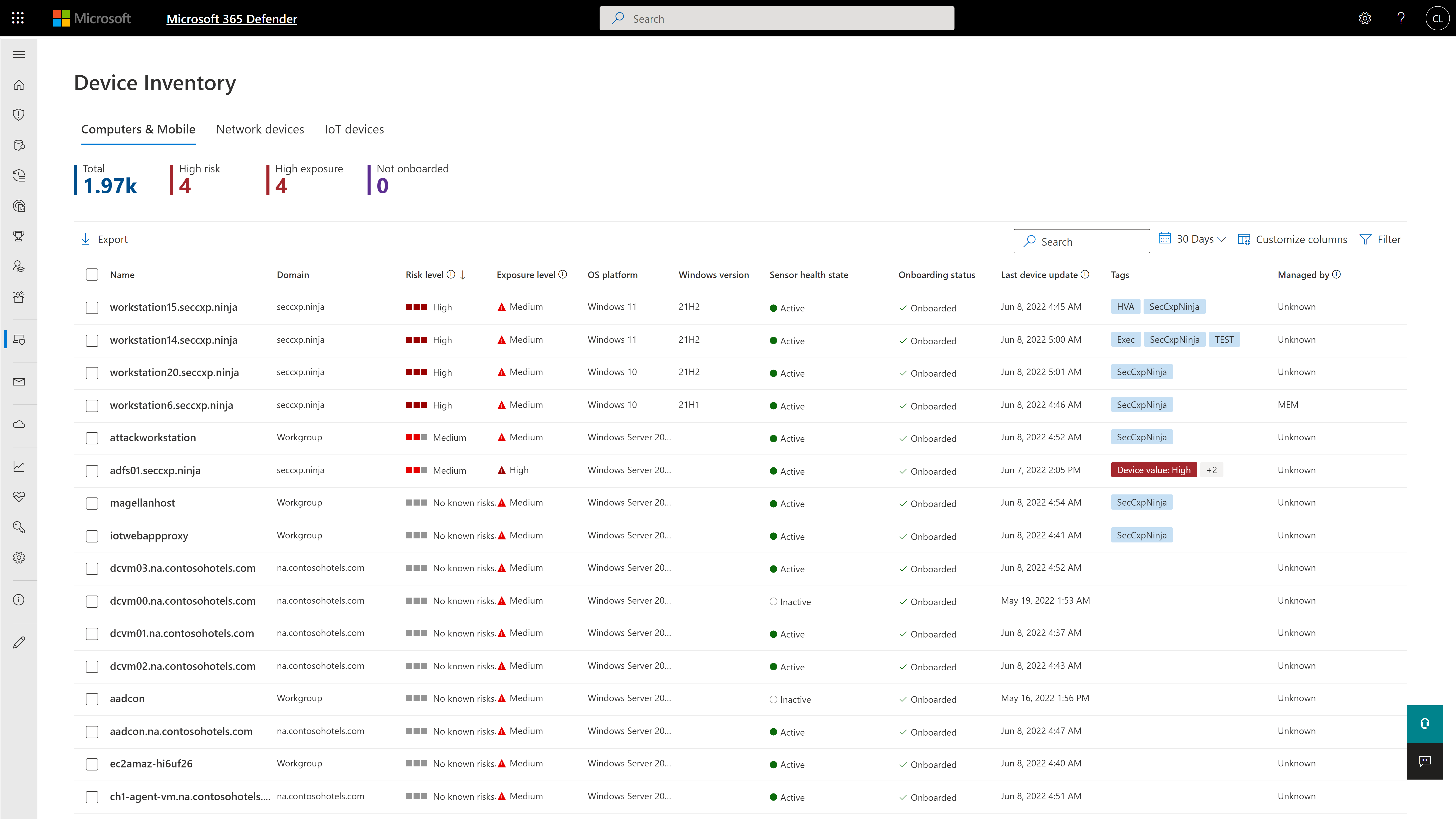
Microsoft Defender for Endpoint (formerly Microsoft Defender ATP) is a holistic, cloud delivered endpoint security solution that includes risk-based vulnerability management and assessment, attack surface reduction, behavioral based and cloud-powered next generation protection, endpoint detection and response (EDR), automatic investigation and remediation, managed hunting services, rich APIs, and unified security management.
$2.50
per user/per month
Palo Alto Networks Cortex XDR
Score8.4 out of 10
N/A
Cortex XDR (formerly Traps) replaces traditional antivirus with multi-method prevention, a proprietary combination of malware and exploit prevention methods that protect users and endpoints from known and unknown threats.
N/A
Pricing
Microsoft Defender for Endpoint
Palo Alto Networks Cortex XDR
Editions & Modules
Academic
$2.50
per user/per month
Standalone
$5.20
per user/per month
No answers on this topic
Offerings
Pricing Offerings
Microsoft Defender for Endpoint
Palo Alto Networks Cortex XDR
Free Trial
Yes
No
Free/Freemium Version
No
No
Premium Consulting/Integration Services
No
No
Entry-level Setup Fee
No setup fee
No setup fee
Additional Details
—
—
More Pricing Information
Community Pulse
Microsoft Defender for Endpoint
Palo Alto Networks Cortex XDR
Considered Both Products
Microsoft
Verified User
Chose Microsoft Defender for Endpoint
We have reviewed/used ESET and find Defender much better for Endpoints. We have also used McAfee on Servers and have since migrated to Defender on Servers.
A de minimis incentive was given to thank the reviewer for their time. The incentive was not used to bias or drive a particular response, nor was the incentive contingent on a positive endorsement. More Info
Associate Director - Practice Lead, Network and Systems Engineering in Engineering at Arcadis (Computer & Network Security, 10,001+ employees)
Chose Microsoft Defender for Endpoint
Enterprise Endpoint Protection: Microsoft Defender for Endpoint is well suited for large organizations with numerous endpoints, such as desktops, laptops, and servers, as it provides centralized management and monitoring of security across the entire network. Microsoft …
A de minimis incentive was given to thank the reviewer for their time. The incentive was not used to bias or drive a particular response, nor was the incentive contingent on a positive endorsement. TR verified that a representative sample of customers was invited. More Info
Verified User
Chose Microsoft Defender for Endpoint
Microsoft Defender for Endpoint has the best integration for us in our (mostly) Windows environment. Also we are using M365 E3 so this already included Microsoft Defender for Endpoint P1. The extra cost for Defender for Endpoint P2 is definitely worth it. You need to see these …
A de minimis incentive was given to thank the reviewer for their time. The incentive was not used to bias or drive a particular response, nor was the incentive contingent on a positive endorsement. TR verified that a representative sample of customers was invited. More Info
A de minimis incentive was given to thank the reviewer for their time. The incentive was not used to bias or drive a particular response, nor was the incentive contingent on a positive endorsement. More Info
Because of its integration with Windows, it is very easy to deploy and manage. Any IT department should be able to leverage the software and interface. The admin portal provides weighted recommendations that comprise the Secure Store, offering admins, security teams, and business owners valuable insights into their security footprint without requiring a strong security background. The software would be ideal for small and mid-sized businesses that cannot dedicate resources to security. Larger enterprises would also benefit, but may require the enhanced license.
A de minimis incentive was given to thank the reviewer for their time. The incentive was not used to bias or drive a particular response, nor was the incentive contingent on a positive endorsement. TR verified that a representative sample of customers was invited. More Info
Malware that doesn’t leave files behind has become widely available. Anyone who can afford to reverse this trend should purchase technology. Application whitelisting isn’t for everyone, and Palo Alto Networks Traps can help. Enterprises looking for a low-affected, next-generation solution with high protection should consider it. PAN Traps is a great product at a reasonable price, and I highly recommend it.
A de minimis incentive was given to thank the reviewer for their time. The incentive was not used to bias or drive a particular response, nor was the incentive contingent on a positive endorsement. More Info
One, it's crazy lightweight, so compared to some of the competitors that we also have used with our security services, it's really lightweight and so I don't have a lot of overhead on the system that it's running on.
A de minimis incentive was given to thank the reviewer for their time. The incentive was not used to bias or drive a particular response, nor was the incentive contingent on a positive endorsement. TR verified that a representative sample of customers was invited. More Info
A de minimis incentive was given to thank the reviewer for their time. The incentive was not used to bias or drive a particular response, nor was the incentive contingent on a positive endorsement. More Info
So the fact that Defender for Endpoint still works with signatures is actually, I don't know, a little difficult for us because, I mean, since Microsoft trusts those signatures, you can easily inject code. And we've done it many times. To show that you can inject code through vulnerabilities like CV 2013, 99, and 33 but still keep the signature. So because of the trust of those signatures, the malware just kind of slides into the environment without Defender knowing. That's the first part. The second part is that the behavioral analysis is not precisely its Prime. It's not Defender's best capability for endpoints. So, Defender does not identify all behaviors considered by other EDRs in the market.
A de minimis incentive was given to thank the reviewer for their time. The incentive was not used to bias or drive a particular response, nor was the incentive contingent on a positive endorsement. TR verified that a representative sample of customers was invited. More Info
A de minimis incentive was given to thank the reviewer for their time. The incentive was not used to bias or drive a particular response, nor was the incentive contingent on a positive endorsement. More Info
Cost add-ons for Security features is nickel and diming the process to keep pace with cybercrime. Limited Education budgets require us to be more pro-active in finding cost-effective measures to protect our devices, staff and students. Defender is a strong, well-featured product that is pricing itself out of the education market
A de minimis incentive was given to thank the reviewer for their time. The incentive was not used to bias or drive a particular response, nor was the incentive contingent on a positive endorsement. TR verified that a representative sample of customers was invited. More Info
It offers multiple security features and integrates well with Microsoft ecosystems. A workflow for threat detection, investigation, automated remediation, and a centralized dashboard is an added advantage. This application is mainly designed for experienced users; new users may feel challenged.
A de minimis incentive was given to thank the reviewer for their time. The incentive was not used to bias or drive a particular response, nor was the incentive contingent on a positive endorsement. TR verified that a representative sample of customers was invited. More Info
Cortex XDR does a very good job of blocking suspicious and threatening items. However, as with all software of this nature, it will sometimes block known-good items. The difficulty is in manually whitelisting these known-good items. The interface to whitelist is confusing even for a seasoned IT professional and has been the single most frustrating experience of using Cortex XDR
A de minimis incentive was given to thank the reviewer for their time. The incentive was not used to bias or drive a particular response, nor was the incentive contingent on a positive endorsement. More Info
Microsoft Defender for Endpoint chugs along just fine no matter what we throw at it and what systems it's running on. It doesn't take up a lot of resources either, so that's welcomed.
A de minimis incentive was given to thank the reviewer for their time. The incentive was not used to bias or drive a particular response, nor was the incentive contingent on a positive endorsement. More Info
A de minimis incentive was given to thank the reviewer for their time. The incentive was not used to bias or drive a particular response, nor was the incentive contingent on a positive endorsement. More Info
The first time I tried to onboard my macOS endpoints to MDE I struggled for quite a bit. I had to reach out to Microsoft's MDE support team. The tech was very helpful in walking me through the steps during a screen share session
A de minimis incentive was given to thank the reviewer for their time. The incentive was not used to bias or drive a particular response, nor was the incentive contingent on a positive endorsement. More Info
The support we receive from Palo Alto is one of the best aspects of Traps. It is very easy to recommend their support. It seems much easier to connect directly with someone with a deep understanding of the product rather than other companies where you basically have to make an airtight case that it is some kind of non-standard issue that can't be solved with existing documentation. Palo Alto digs deep and helps with advanced troubleshooting to get things working.
A de minimis incentive was given to thank the reviewer for their time. The incentive was not used to bias or drive a particular response, nor was the incentive contingent on a positive endorsement. More Info
Deployment was handled by our team here and everything went pretty smoothly. We did have a few hiccups in our test group, but that only took a bit to get ironed out.
A de minimis incentive was given to thank the reviewer for their time. The incentive was not used to bias or drive a particular response, nor was the incentive contingent on a positive endorsement. More Info
Cylance's policy is to block everything and requires an active person to monitor and unblock legitimate processes. As updates and software continue to evolve, it is a full-time job to be a Cylance administrator. Microsoft Defender for Endpoint is a set-and-forget solution that catches threats when they occur and leaves you to focus on your work unimpeded.
A de minimis incentive was given to thank the reviewer for their time. The incentive was not used to bias or drive a particular response, nor was the incentive contingent on a positive endorsement. TR verified that a representative sample of customers was invited. More Info
Traps is the slickest interface, easy to use and intuitive rule making, and the rest just didn't quite stack up to the performance level of Traps. McAfee and Kaspersky just hog processor and RAM power. I didn't like the interface and functionality of SentinelOne as much as Traps. Palo Alto really put a lot of time into the development of this software, and had some of the founding fathers of IT Security heading the development process. Can't beat that.
A de minimis incentive was given to thank the reviewer for their time. The incentive was not used to bias or drive a particular response, nor was the incentive contingent on a positive endorsement. More Info
A de minimis incentive was given to thank the reviewer for their time. The incentive was not used to bias or drive a particular response, nor was the incentive contingent on a positive endorsement. More Info
A de minimis incentive was given to thank the reviewer for their time. The incentive was not used to bias or drive a particular response, nor was the incentive contingent on a positive endorsement. TR verified that a representative sample of customers was invited. More Info
A de minimis incentive was given to thank the reviewer for their time. The incentive was not used to bias or drive a particular response, nor was the incentive contingent on a positive endorsement. More Info