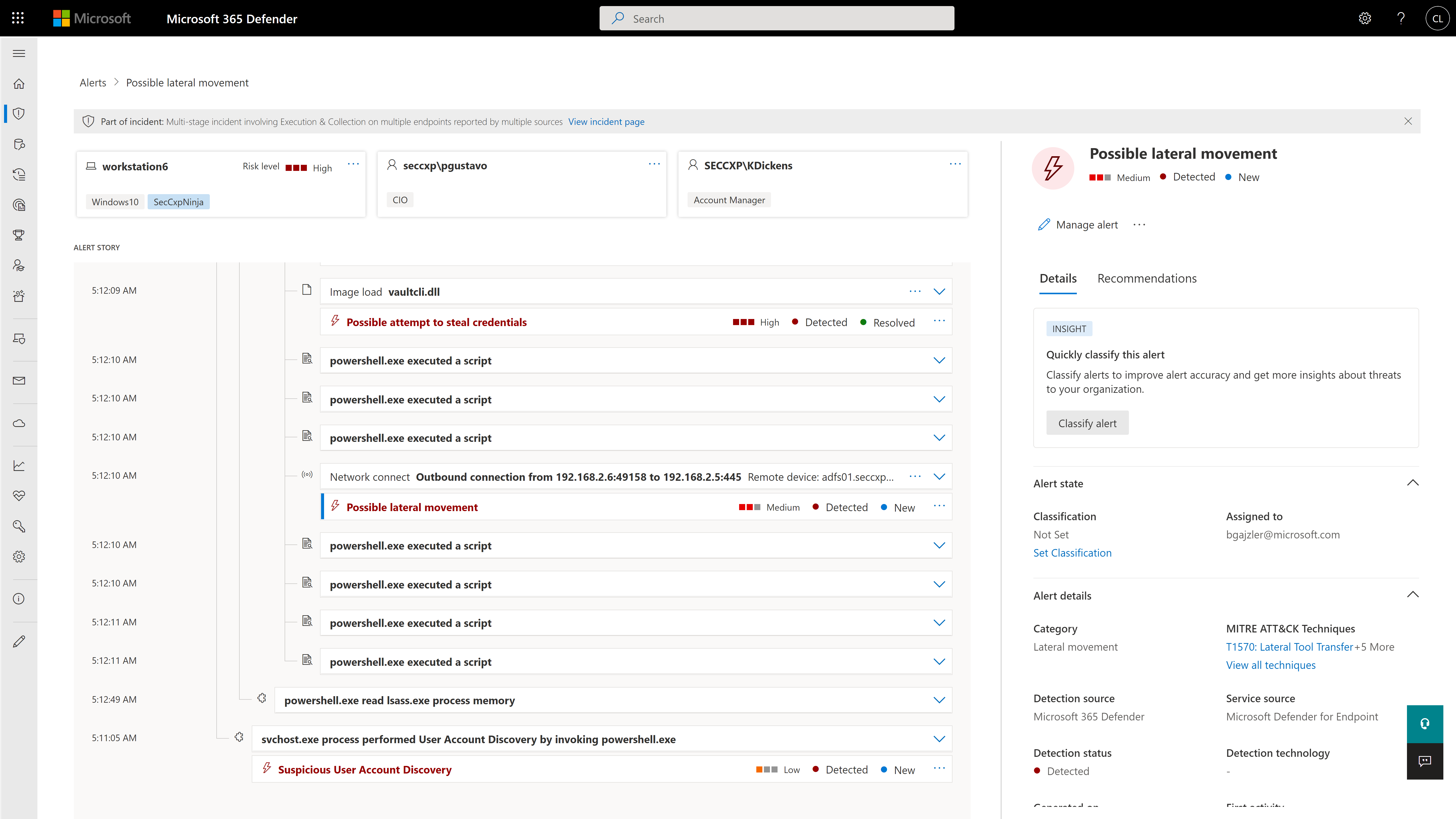
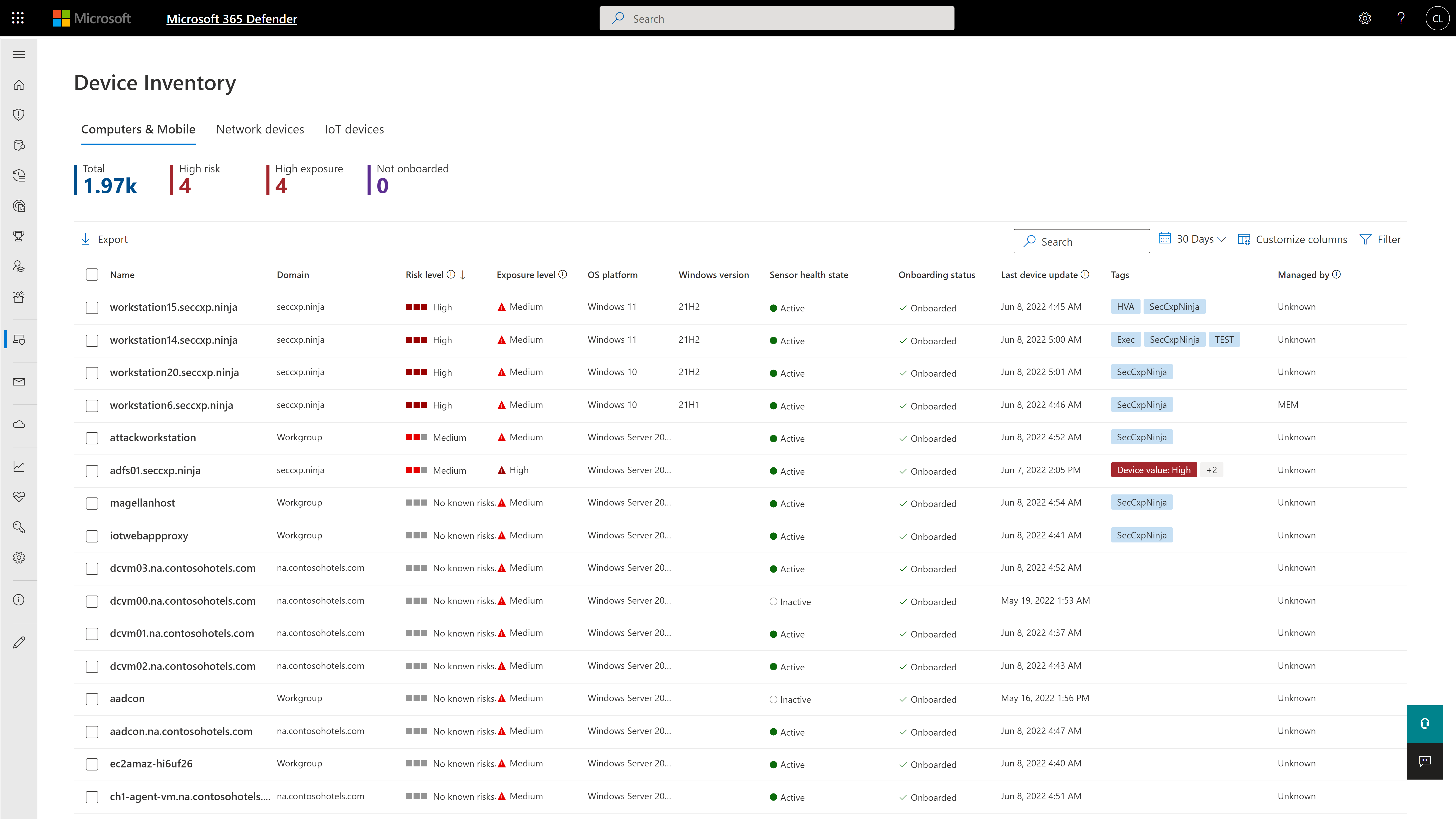
Microsoft Defender for Endpoint (formerly Microsoft Defender ATP) is a holistic, cloud delivered endpoint security solution that includes risk-based vulnerability management and assessment, attack surface reduction, behavioral based and cloud-powered next generation protection, endpoint detection and response (EDR), automatic investigation and remediation, managed hunting services, rich APIs, and unified security management.
$2.50
per user/per month
Microsoft Purview Data Loss Prevention
Score 7.1 out of 10
N/A
Microsoft Purview Data Loss Prevention is used to provide intelligent detection and control of sensitive information across Office 365, OneDrive, SharePoint, Microsoft Teams, and on the endpoint. It also helps prevent data loss through identifying and preventing risky or inappropriate sharing, transfer, or use of sensitive data on endpoints, apps, and services.
N/A
Pricing
Microsoft Defender for Endpoint
Microsoft Purview Data Loss Prevention
Editions & Modules
Academic
$2.50
per user/per month
Standalone
$5.20
per user/per month
No answers on this topic
Offerings
Pricing Offerings
Microsoft Defender for Endpoint
Microsoft Purview Data Loss Prevention
Free Trial
Yes
Yes
Free/Freemium Version
No
No
Premium Consulting/Integration Services
No
No
Entry-level Setup Fee
No setup fee
No setup fee
Additional Details
—
—
More Pricing Information
Community Pulse
Microsoft Defender for Endpoint
Microsoft Purview Data Loss Prevention
Features
Microsoft Defender for Endpoint
Microsoft Purview Data Loss Prevention
Endpoint Security
Comparison of Endpoint Security features of Product A and Product B
Microsoft Defender for Endpoint
8.3
56 Ratings
3% below category average
Microsoft Purview Data Loss Prevention
-
Ratings
Anti-Exploit Technology
7.753 Ratings
00 Ratings
Endpoint Detection and Response (EDR)
9.155 Ratings
00 Ratings
Centralized Management
8.955 Ratings
00 Ratings
Hybrid Deployment Support
7.110 Ratings
00 Ratings
Infection Remediation
9.454 Ratings
00 Ratings
Vulnerability Management
7.352 Ratings
00 Ratings
Malware Detection
8.855 Ratings
00 Ratings
Data Preparation
Comparison of Data Preparation features of Product A and Product B
Because of its integration with Windows, it is very easy to deploy and manage. Any IT department should be able to leverage the software and interface. The admin portal provides weighted recommendations that comprise the Secure Store, offering admins, security teams, and business owners valuable insights into their security footprint without requiring a strong security background. The software would be ideal for small and mid-sized businesses that cannot dedicate resources to security. Larger enterprises would also benefit, but may require the enhanced license.
I would highly recommend Microsoft Purview Data Loss Prevention for companies that are utilizing Microsoft technologies based on the strong integrations. If a company is using other technologies (e.g Google Workspace), then Microsoft Purview Data Loss Prevention would not be a good fit and would be difficult to implement/manage.
One, it's crazy lightweight, so compared to some of the competitors that we also have used with our security services, it's really lightweight and so I don't have a lot of overhead on the system that it's running on.
Automatic labeling, once we've trained the naming conventions and things like that and we get the labels placed on things. One of the biggest problems that our clients face is the fact that they don't particularly know every single time exactly the data that they're trying to protect, how to identify it when it comes into the system or when they create it, right? So we're using Purview and we're using the abilities that Purview has to auto-label things based off of either taxonomy that you have produced or created or that have been automatically populated through AI. That makes it a lot easier and kind of thwarts possible user error that causes problems for organizations.
So the fact that Defender for Endpoint still works with signatures is actually, I don't know, a little difficult for us because, I mean, since Microsoft trusts those signatures, you can easily inject code. And we've done it many times. To show that you can inject code through vulnerabilities like CV 2013, 99, and 33 but still keep the signature. So because of the trust of those signatures, the malware just kind of slides into the environment without Defender knowing. That's the first part. The second part is that the behavioral analysis is not precisely its Prime. It's not Defender's best capability for endpoints. So, Defender does not identify all behaviors considered by other EDRs in the market.
Overall, Microsoft DLP is not my number one choice because there's not much flexibility. There's a lot of restrictions and the way they set up rules a lot really restrictive. Thus it takes a lot more time for my team to build the rules and establish the controls as needed. So it's very clunky in that way and they have not improved it over the years, but I know they're trying to get a better, however it takes time because Microsoft, as we all knows, not a really security centric company.
Cost add-ons for Security features is nickel and diming the process to keep pace with cybercrime. Limited Education budgets require us to be more pro-active in finding cost-effective measures to protect our devices, staff and students. Defender is a strong, well-featured product that is pricing itself out of the education market
It offers multiple security features and integrates well with Microsoft ecosystems. A workflow for threat detection, investigation, automated remediation, and a centralized dashboard is an added advantage. This application is mainly designed for experienced users; new users may feel challenged.
Microsoft Defender for Endpoint chugs along just fine no matter what we throw at it and what systems it's running on. It doesn't take up a lot of resources either, so that's welcomed.
The first time I tried to onboard my macOS endpoints to MDE I struggled for quite a bit. I had to reach out to Microsoft's MDE support team. The tech was very helpful in walking me through the steps during a screen share session
Deployment was handled by our team here and everything went pretty smoothly. We did have a few hiccups in our test group, but that only took a bit to get ironed out.
Cylance's policy is to block everything and requires an active person to monitor and unblock legitimate processes. As updates and software continue to evolve, it is a full-time job to be a Cylance administrator. Microsoft Defender for Endpoint is a set-and-forget solution that catches threats when they occur and leaves you to focus on your work unimpeded.
There are much more comprehensive and granular DLP solutions out there like Trellix and Sophos but ultimately they are expensive and require significant administrative oversight for implementation and deployment. For a company of our size, they are just not economically feasible. We purchased out 365 E5 tenant with Purview DLP integration from a reseller at a price that we couldn't compete with vs a standalone enterprise product.