An integrated solution, designed for small or medium-sized businesses, bringing together the productivity of Microsoft Office with advanced security capabilities to help
safeguard data from external threats and help protect against data leaks.
With Microsoft 365 Business Premium, users can empower employees to be productive
anywhere on any device. Get more done with AI built into the Office apps. Work
better together with a hub for teamwork bringing your tools and people together
in one place.…
N/A
Microsoft Defender for Endpoint
Score 8.7 out of 10
N/A
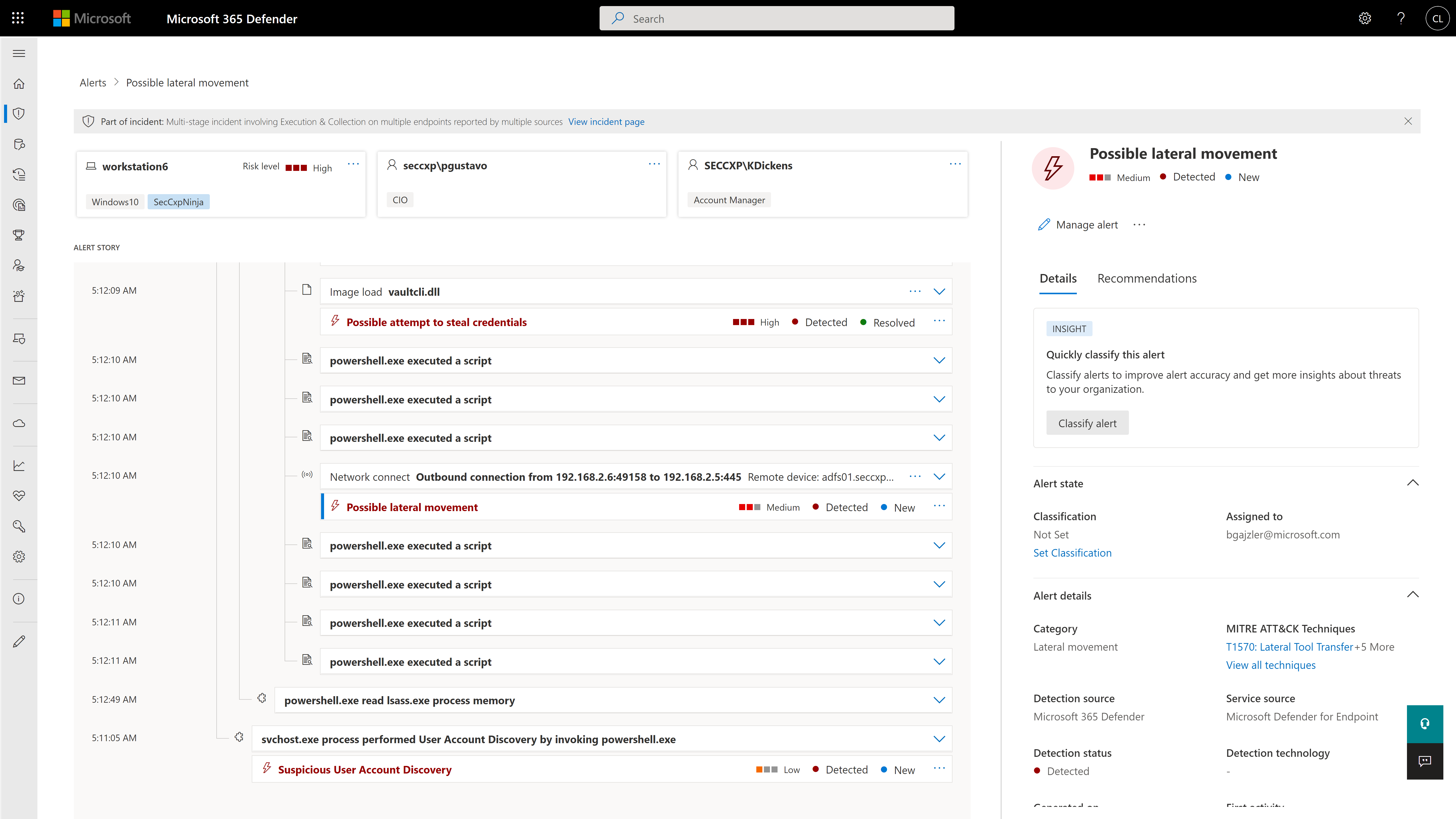
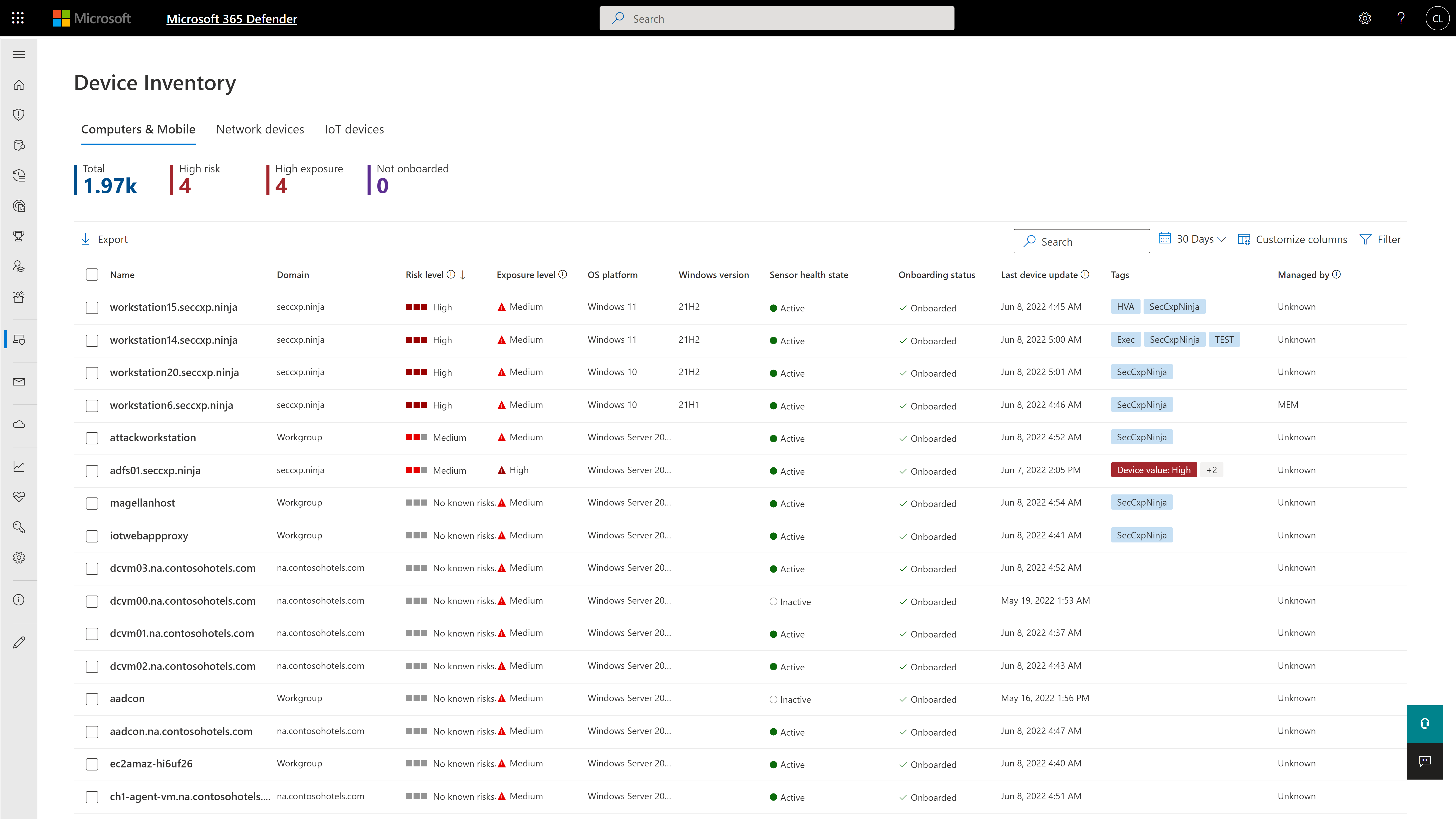
Microsoft Defender for Endpoint (formerly Microsoft Defender ATP) is a holistic, cloud delivered endpoint security solution that includes risk-based vulnerability management and assessment, attack surface reduction, behavioral based and cloud-powered next generation protection, endpoint detection and response (EDR), automatic investigation and remediation, managed hunting services, rich APIs, and unified security management.
$2.50
per user/per month
Pricing
Microsoft 365 Business Premium
Microsoft Defender for Endpoint
Editions & Modules
No answers on this topic
Academic
$2.50
per user/per month
Standalone
$5.20
per user/per month
Offerings
Pricing Offerings
Microsoft 365 Business Premium
Microsoft Defender for Endpoint
Free Trial
No
Yes
Free/Freemium Version
No
No
Premium Consulting/Integration Services
No
No
Entry-level Setup Fee
No setup fee
No setup fee
Additional Details
—
—
More Pricing Information
Community Pulse
Microsoft 365 Business Premium
Microsoft Defender for Endpoint
Considered Both Products
Microsoft 365 Business Premium
No answer on this topic
Microsoft Defender for Endpoint
Verified User
C-Level Executive
Chose Microsoft Defender for Endpoint
MS ATP is lower on system resources and enables us to stretch out our endpoint hardware for an additional year. Also, MS ATP being an MS product fits in very nicely into MS remote management software and MS operating system. We have had little to no issues when hotfixes and …
Microsoft 365 Business Premium is well suited to any size organization and is a must-have for business purposes. It is a vital component for the majority of work software needs, as the Microsoft 365 Business Premium package has apps to handle needs that I didn't know we had. It is a great way to provide the required software programs to teams, especially those that work remotely due to the great sharing capabilities built into it. Furthermore, the nonprofit program provided our small nonprofit with vital components for our remote work, while allowing us to keep our donated funds going directly to our mission.
Because of its integration with Windows, it is very easy to deploy and manage. Any IT department should be able to leverage the software and interface. The admin portal provides weighted recommendations that comprise the Secure Store, offering admins, security teams, and business owners valuable insights into their security footprint without requiring a strong security background. The software would be ideal for small and mid-sized businesses that cannot dedicate resources to security. Larger enterprises would also benefit, but may require the enhanced license.
One, it's crazy lightweight, so compared to some of the competitors that we also have used with our security services, it's really lightweight and so I don't have a lot of overhead on the system that it's running on.
So the fact that Defender for Endpoint still works with signatures is actually, I don't know, a little difficult for us because, I mean, since Microsoft trusts those signatures, you can easily inject code. And we've done it many times. To show that you can inject code through vulnerabilities like CV 2013, 99, and 33 but still keep the signature. So because of the trust of those signatures, the malware just kind of slides into the environment without Defender knowing. That's the first part. The second part is that the behavioral analysis is not precisely its Prime. It's not Defender's best capability for endpoints. So, Defender does not identify all behaviors considered by other EDRs in the market.
Cost add-ons for Security features is nickel and diming the process to keep pace with cybercrime. Limited Education budgets require us to be more pro-active in finding cost-effective measures to protect our devices, staff and students. Defender is a strong, well-featured product that is pricing itself out of the education market
The basic apps are straightforward and easy to use, especially since they have been around so long. I'm referring to the basic apps like Outlook, Excel, Word, PowerPoint, OneNote, etc. Other features such as Microsoft Teams and Sharepoint Sites, Sharepoint Lists, Sharepoint Groups, etc. all require a higher level of knowledge to both implement and use properly
It offers multiple security features and integrates well with Microsoft ecosystems. A workflow for threat detection, investigation, automated remediation, and a centralized dashboard is an added advantage. This application is mainly designed for experienced users; new users may feel challenged.
Microsoft Defender for Endpoint chugs along just fine no matter what we throw at it and what systems it's running on. It doesn't take up a lot of resources either, so that's welcomed.
In the last 5 years, Microsoft has come a long way. The performance of the products has become more and more user-friendly and it seems that the feedback provided by the user community is being listened to and worked on. The processes are very fast and seamless. There are negligible errors and doesn't slow the systems down.
As mentioned elsewhere in the review, Microsoft has historically paid attention to community feedback and issues, but timeliness can improve, and so can the addressing of long-standing issues about which many users have said "I have this issue too!" but no official solution exists. For issues that do have a solution, however, the solution is usually not difficult to find, and the explanation of features on Microsoft's website can mitigate many problems.
The first time I tried to onboard my macOS endpoints to MDE I struggled for quite a bit. I had to reach out to Microsoft's MDE support team. The tech was very helpful in walking me through the steps during a screen share session
Deployment was handled by our team here and everything went pretty smoothly. We did have a few hiccups in our test group, but that only took a bit to get ironed out.
Before migrating to Microsoft 365 Business Premium, we possessed an in-house exchange server. Therefore, it was difficult for us to look at alternatives to Microsoft for a solution – we did look at the Google Suite of products, but the transition for us seemed less cumbersome to stay with Microsoft from a staff and administrative perspective. While the G Suite does offer us many outstanding products and services, we also didn’t feel that Gmail is up-to-par as a corporate solution the way Exchange/Outlook/OWA are – this alone was also a driving force for our end-users, as there was minimal transition for them to move from an on-premise solution to an off-premise solution. The additional features of SharePoint, Teams, Project, and so many other applications within Microsoft 365 also helped us make a strong case to stay with Microsoft and expand what we were using. The end-user and mobile protections of InTune have also put us at ease when issuing laptops and mobile phones to an almost fully-remote end-user base.
Cylance's policy is to block everything and requires an active person to monitor and unblock legitimate processes. As updates and software continue to evolve, it is a full-time job to be a Cylance administrator. Microsoft Defender for Endpoint is a set-and-forget solution that catches threats when they occur and leaves you to focus on your work unimpeded.
We can now keep work going from anywhere. It doesn't matter if we are on a job site or sitting in the office or working from home for a day or two we don't have to miss a beat.
It has unified how we store information so that everything isn't stored on individual computers