Kaspersky Small Office Security (formerly Kaspersky Work Space Security) is antivirus / endpoint security software from Russian company Kaspersky.
$29.99
per month
Microsoft Defender for Endpoint
Score8.7 out of 10
N/A
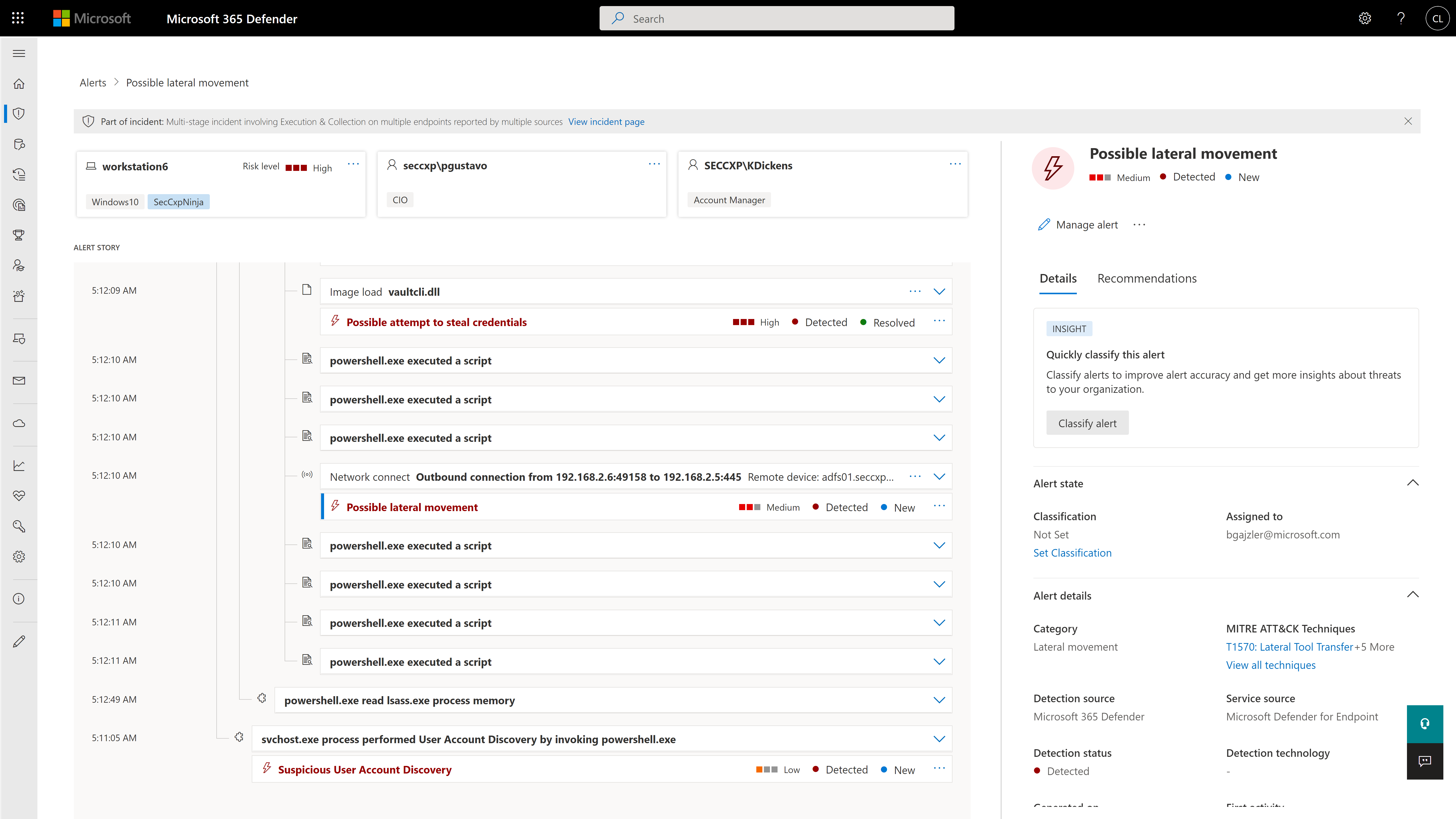
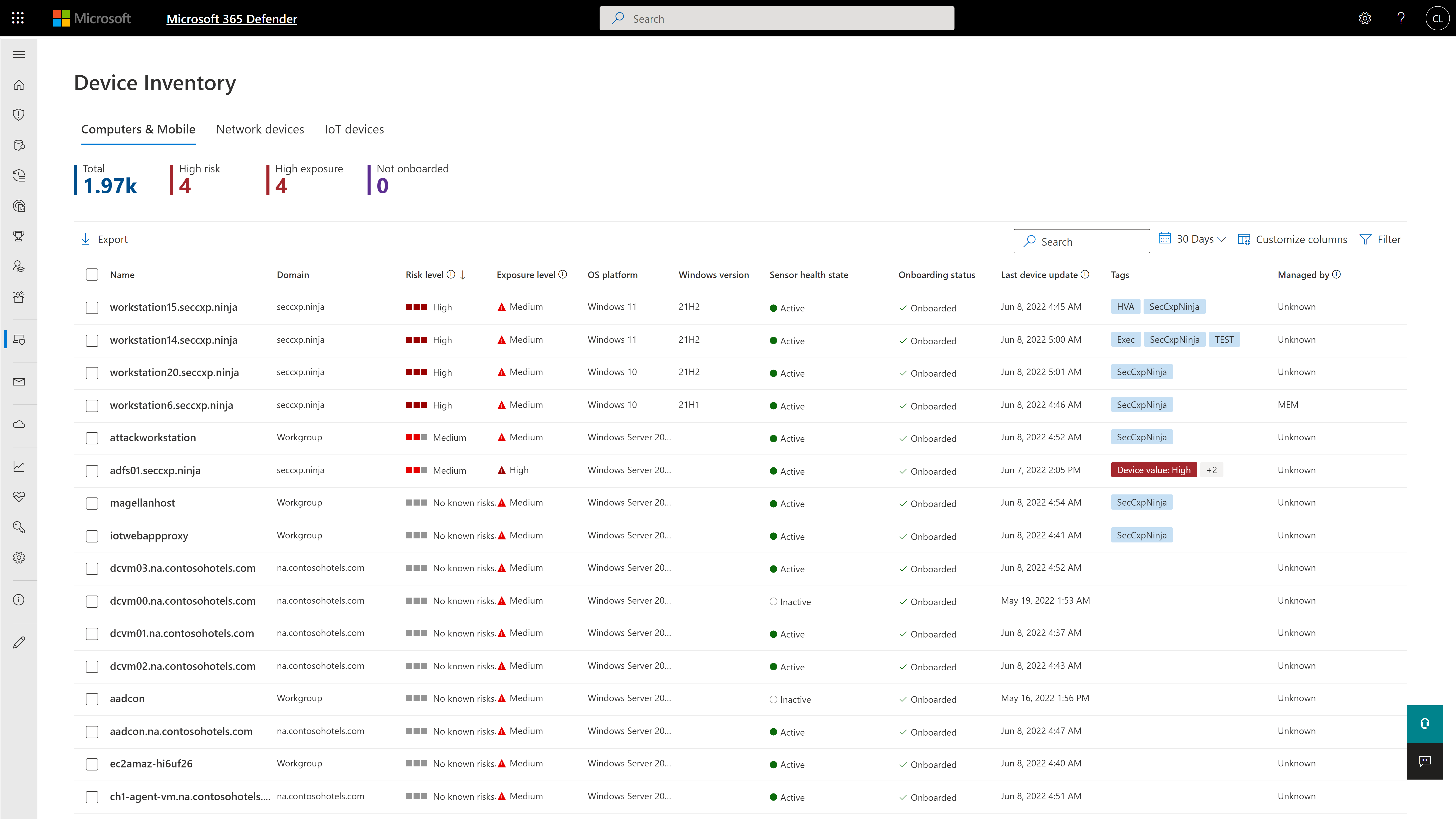
Microsoft Defender for Endpoint (formerly Microsoft Defender ATP) is a holistic, cloud delivered endpoint security solution that includes risk-based vulnerability management and assessment, attack surface reduction, behavioral based and cloud-powered next generation protection, endpoint detection and response (EDR), automatic investigation and remediation, managed hunting services, rich APIs, and unified security management.
Founder in Corporate at LetsReflect (Information Technology & Services, 1-10 employees)
Chose Microsoft Defender for Endpoint
I feel that Microsoft Defender for Endpoint is much better in protecting our Windows based devices as it is developed by Microsoft itself. However, it comes with a little price hike.
A de minimis incentive was given to thank the reviewer for their time. The incentive was not used to bias or drive a particular response, nor was the incentive contingent on a positive endorsement. More Info
Verified User
Chose Microsoft Defender for Endpoint
It excels in detecting unusual behavior on endpoints, offering valuable insights into potential attack paths, and it operates with remarkable speed and responsiveness.
A de minimis incentive was given to thank the reviewer for their time. The incentive was not used to bias or drive a particular response, nor was the incentive contingent on a positive endorsement. TR verified that a representative sample of customers was invited. More Info
Verified User
Chose Microsoft Defender for Endpoint
In my opinion, Microsoft Defender for Endpoint is inferior to the competition. Combined with Huntress it is good (they are designed to integrate), but in my opinion, no need to use the paid version of Microsoft Defender for Endpoint when combining with Huntress, so not really …
A de minimis incentive was given to thank the reviewer for their time. The incentive was not used to bias or drive a particular response, nor was the incentive contingent on a positive endorsement. TR verified that a representative sample of customers was invited. More Info
Verified User
Chose Microsoft Defender for Endpoint
We liked the cost of the Microsoft Defender for Endpoint version and the ease of deployment so decided to use that instead of kaspersky.
A de minimis incentive was given to thank the reviewer for their time. The incentive was not used to bias or drive a particular response, nor was the incentive contingent on a positive endorsement. TR verified that a representative sample of customers was invited. More Info
Verified User
Chose Microsoft Defender for Endpoint
We used to use Symantec's Endpoint Detection and Response Solution, and so that's actually what we replaced with Defender for Endpoint. So it's just lightyears ahead of that one. So personally, I've also used Webroot in the past for an antivirus solution and Kaspersky and …
A de minimis incentive was given to thank the reviewer for their time. The incentive was not used to bias or drive a particular response, nor was the incentive contingent on a positive endorsement. More Info
Verified User
Chose Microsoft Defender for Endpoint
Very reliable with accuracy Does not become a resource hog
A de minimis incentive was given to thank the reviewer for their time. The incentive was not used to bias or drive a particular response, nor was the incentive contingent on a positive endorsement. More Info
Performance e Controle Comercial na Groupe Renault in Finance and Accounting at Groupe Renault (Automotive, 10,001+ employees)
Chose Microsoft Defender for Endpoint
The biggest advantage over their relationship is the Windows Defender and how it doesn't affect the performance of the computer as most other antiviruses do. Even when you are doing an upgrade, the computer will counteract with the same performance. On the other hand, it does …
A de minimis incentive was given to thank the reviewer for their time. The incentive was not used to bias or drive a particular response, nor was the incentive contingent on a positive endorsement. More Info
I think Kaspersky is well suited for large and small companies. Larger companies can take advantage of the KSC (Kaspersky Security Center) servers to help manage a large network. The KSC has many good features to help monitor the health of the organization. It does a good job with updating and deploying remotely. It has inventory features, and can even deploy non-Kaspersky software packages uploaded to the center. KSC can become a source of good information about [your] network that can be seen at a glance. IT departments are normally smaller than they need to be. KSC helps with larger and smaller companies because of this. A small company would appreciate the amount of information and management that can be done through KSC without needing extra help. If the company is small enough that they don't have servers on-site, there is a cloud version. I have not used that to know how it differs from the local KSC.
A de minimis incentive was given to thank the reviewer for their time. The incentive was not used to bias or drive a particular response, nor was the incentive contingent on a positive endorsement. More Info
Because of its integration with Windows, it is very easy to deploy and manage. Any IT department should be able to leverage the software and interface. The admin portal provides weighted recommendations that comprise the Secure Store, offering admins, security teams, and business owners valuable insights into their security footprint without requiring a strong security background. The software would be ideal for small and mid-sized businesses that cannot dedicate resources to security. Larger enterprises would also benefit, but may require the enhanced license.
A de minimis incentive was given to thank the reviewer for their time. The incentive was not used to bias or drive a particular response, nor was the incentive contingent on a positive endorsement. TR verified that a representative sample of customers was invited. More Info
The Security Center is laid out very well and makes it easy to install and manage the client endpoint protection on servers and workstations.
The way security policies are defined and managed is very easy to understand.
The client programs seem to be lighter and smaller on the client systems than others I have used in the past. Using fewer resources is always an advantage.
A de minimis incentive was given to thank the reviewer for their time. The incentive was not used to bias or drive a particular response, nor was the incentive contingent on a positive endorsement. More Info
One, it's crazy lightweight, so compared to some of the competitors that we also have used with our security services, it's really lightweight and so I don't have a lot of overhead on the system that it's running on.
A de minimis incentive was given to thank the reviewer for their time. The incentive was not used to bias or drive a particular response, nor was the incentive contingent on a positive endorsement. TR verified that a representative sample of customers was invited. More Info
A de minimis incentive was given to thank the reviewer for their time. The incentive was not used to bias or drive a particular response, nor was the incentive contingent on a positive endorsement. More Info
So the fact that Defender for Endpoint still works with signatures is actually, I don't know, a little difficult for us because, I mean, since Microsoft trusts those signatures, you can easily inject code. And we've done it many times. To show that you can inject code through vulnerabilities like CV 2013, 99, and 33 but still keep the signature. So because of the trust of those signatures, the malware just kind of slides into the environment without Defender knowing. That's the first part. The second part is that the behavioral analysis is not precisely its Prime. It's not Defender's best capability for endpoints. So, Defender does not identify all behaviors considered by other EDRs in the market.
A de minimis incentive was given to thank the reviewer for their time. The incentive was not used to bias or drive a particular response, nor was the incentive contingent on a positive endorsement. TR verified that a representative sample of customers was invited. More Info
The product is stable and accurate in detecting security threats. There are very few or no false positives in detecting security threats or unusual behavior and has very sharp heuristics. The product does the job very well including saving us money in getting 3rd party patch management tools as the business is already using Microsoft System Center Configuration Manager which is Microsoft product specific and the product patches these third party products e.g Adobe Flash Player
A de minimis incentive was given to thank the reviewer for their time. The incentive was not used to bias or drive a particular response, nor was the incentive contingent on a positive endorsement. More Info
Cost add-ons for Security features is nickel and diming the process to keep pace with cybercrime. Limited Education budgets require us to be more pro-active in finding cost-effective measures to protect our devices, staff and students. Defender is a strong, well-featured product that is pricing itself out of the education market
A de minimis incentive was given to thank the reviewer for their time. The incentive was not used to bias or drive a particular response, nor was the incentive contingent on a positive endorsement. TR verified that a representative sample of customers was invited. More Info
I will give Kaspersky a score of 9 out of 10 for scalability, as it allows businesses to easily expand their security infrastructure. This means it won't cost them a lot to add further protection and security. It won't also require them to purchase other hardware and services for their required protection.
It offers multiple security features and integrates well with Microsoft ecosystems. A workflow for threat detection, investigation, automated remediation, and a centralized dashboard is an added advantage. This application is mainly designed for experienced users; new users may feel challenged.
A de minimis incentive was given to thank the reviewer for their time. The incentive was not used to bias or drive a particular response, nor was the incentive contingent on a positive endorsement. TR verified that a representative sample of customers was invited. More Info
I've used the on-premise server. I've only experienced one time that we couldn't open the console, and that was a server issue. It seems to be a dependable solution. It's there, and it's stable.
A de minimis incentive was given to thank the reviewer for their time. The incentive was not used to bias or drive a particular response, nor was the incentive contingent on a positive endorsement. More Info
Microsoft Defender for Endpoint chugs along just fine no matter what we throw at it and what systems it's running on. It doesn't take up a lot of resources either, so that's welcomed.
A de minimis incentive was given to thank the reviewer for their time. The incentive was not used to bias or drive a particular response, nor was the incentive contingent on a positive endorsement. More Info
Users don't notice any slowdown with the antivirus running on their systems. There have been issues when the systems have missed a scheduled scan, and it was checked to run at [a] first available time, they will start a full scan at startup. This has caused some lag. Normally there are also some issues with the workstation, but it is something to note.
A de minimis incentive was given to thank the reviewer for their time. The incentive was not used to bias or drive a particular response, nor was the incentive contingent on a positive endorsement. More Info
A de minimis incentive was given to thank the reviewer for their time. The incentive was not used to bias or drive a particular response, nor was the incentive contingent on a positive endorsement. More Info
I give the maximum grade because we have no complaints; we never had any failure, serious error, and serious threat to the company. All of its features work very well. The great advantage of having a product supported by an industry-leading security company is that regularly updated security protocols will protect the system against all emerging threats.
A de minimis incentive was given to thank the reviewer for their time. The incentive was not used to bias or drive a particular response, nor was the incentive contingent on a positive endorsement. More Info
The first time I tried to onboard my macOS endpoints to MDE I struggled for quite a bit. I had to reach out to Microsoft's MDE support team. The tech was very helpful in walking me through the steps during a screen share session
A de minimis incentive was given to thank the reviewer for their time. The incentive was not used to bias or drive a particular response, nor was the incentive contingent on a positive endorsement. More Info
Make sure to provide awareness campaigns on changes that will be implemented and WHY the business is doing it and the benefits reaped. Benefits reaped is very important for the justification of why things have to change and emphasizing the importance of security. This will reduce user disgruntlement and total bitterness on use of their workstation or laptop
A de minimis incentive was given to thank the reviewer for their time. The incentive was not used to bias or drive a particular response, nor was the incentive contingent on a positive endorsement. More Info
Deployment was handled by our team here and everything went pretty smoothly. We did have a few hiccups in our test group, but that only took a bit to get ironed out.
A de minimis incentive was given to thank the reviewer for their time. The incentive was not used to bias or drive a particular response, nor was the incentive contingent on a positive endorsement. More Info
Kaspersky is a leader in endpoint protection, but its ties to potential adversaries are unsettling. Kaspersky has a great threat research team and quickly identifies malicious software and its signature. Its web-based protection is also top notch. This is a great product but as with everything has its place.
A de minimis incentive was given to thank the reviewer for their time. The incentive was not used to bias or drive a particular response, nor was the incentive contingent on a positive endorsement. More Info
Cylance's policy is to block everything and requires an active person to monitor and unblock legitimate processes. As updates and software continue to evolve, it is a full-time job to be a Cylance administrator. Microsoft Defender for Endpoint is a set-and-forget solution that catches threats when they occur and leaves you to focus on your work unimpeded.
A de minimis incentive was given to thank the reviewer for their time. The incentive was not used to bias or drive a particular response, nor was the incentive contingent on a positive endorsement. TR verified that a representative sample of customers was invited. More Info
You can create groups and create different policies for each group. You can customize many parts of the software before it is deployed. You can create different tasks and schedules based on the groups. It is customizable.
A de minimis incentive was given to thank the reviewer for their time. The incentive was not used to bias or drive a particular response, nor was the incentive contingent on a positive endorsement. More Info
A de minimis incentive was given to thank the reviewer for their time. The incentive was not used to bias or drive a particular response, nor was the incentive contingent on a positive endorsement. More Info
A de minimis incentive was given to thank the reviewer for their time. The incentive was not used to bias or drive a particular response, nor was the incentive contingent on a positive endorsement. More Info
A de minimis incentive was given to thank the reviewer for their time. The incentive was not used to bias or drive a particular response, nor was the incentive contingent on a positive endorsement. TR verified that a representative sample of customers was invited. More Info