Google Trends is a search engine optimization software solution offered by .
N/A
Textmetrics
Score6 out of 10
N/A
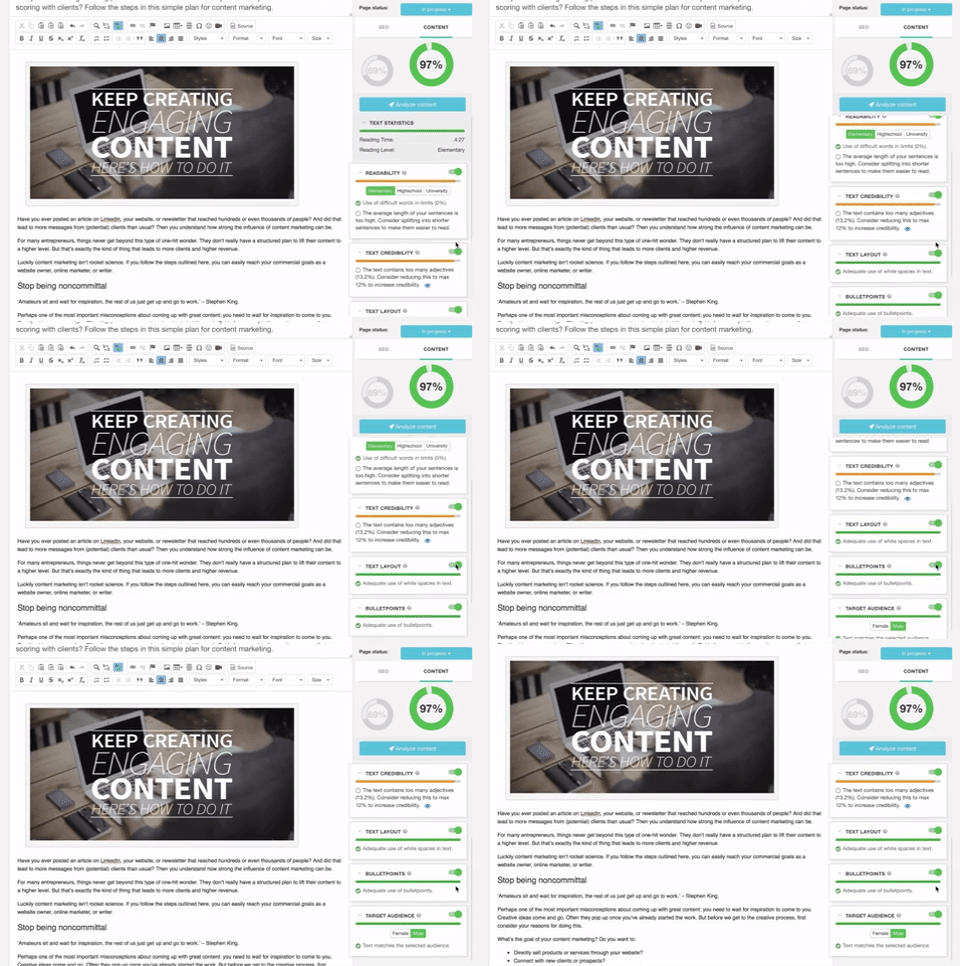
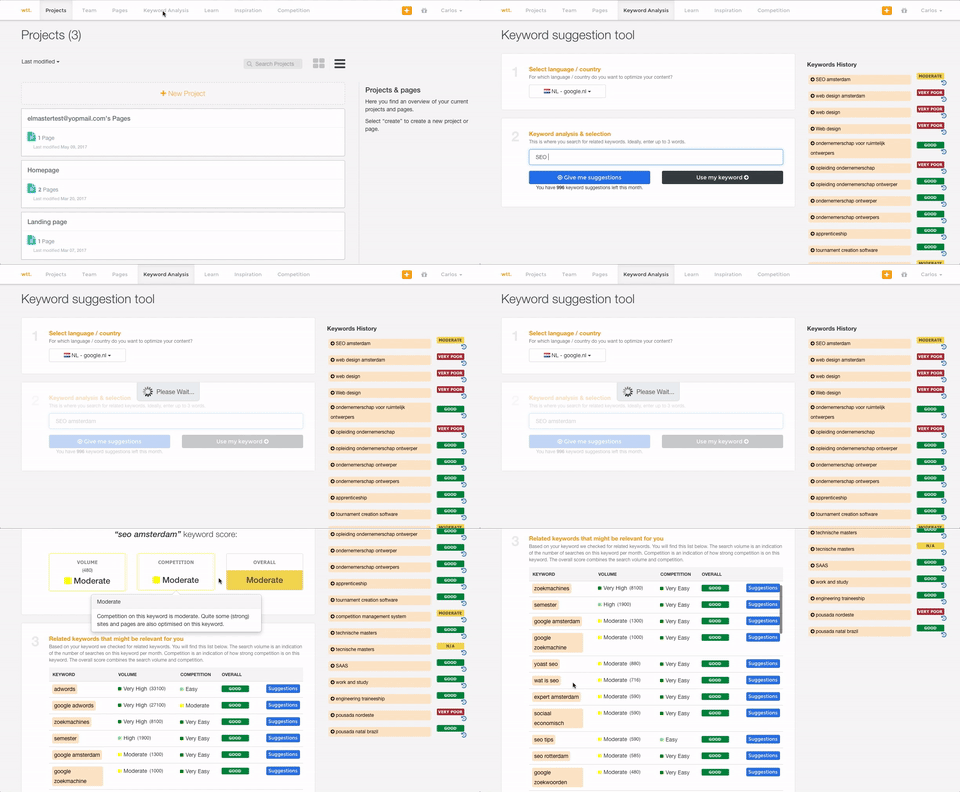
Textmetrics (formerly Webtexttool) aims to help content creators create rank-boosting web content. The tools key differentiator is big data Textmetrics creates predictive data, by analyzing the data of users (anonymously). 20.000+ user generated texts are analyzed and compared to real-world outcomes. The best performing outcomes are used to better its real-time optimization tips. Value prop: More website…
Google Trends is appropriate in so many scenarios, but I definitely suggest it for content ideas and inspiration. Many people utilize it after already writing their content to add in popular phrases or words, but that is not enough. The platform should be used prior and during the content creation process so that you can use the data to see what your audience/customers are interested in at the moment and create the content based on their interests. It can help, but I find it much less appropriate to use it after your article, eBook, etc. is already written. Maximize on this useful tool by ensuring the topic you're writing about is relevant in the first place before simply adding in popular keywords. An article that's written based on what's trending will be far more successful than an article that solely has popular phrases added to it.
A de minimis incentive was given to thank the reviewer for their time. The incentive was not used to bias or drive a particular response, nor was the incentive contingent on a positive endorsement. More Info
I honestly can't think of a scenario where WebTextTool (TextMetrics) would not be valuable for anyone writing content intended for publishing either online or in print media. If the intent is for print media, then even if you completely ignore the SEO section of the analysis, all of the other analysis tools intended for content are incredibly insightful and helpful. These days, even print media almost always ends up online in some form or another on the publisher's website or in a digital format of the publication. So the SEO tools can still give a little boost in reworking or rewording some parts to make sure they will be effective not only in print but online as well.
A de minimis incentive was given to thank the reviewer for their time. The incentive was not used to bias or drive a particular response, nor was the incentive contingent on a positive endorsement. More Info
Google Trends shows me geographic locations where a particular topic may be useful for advertising.
Google Trends allows me to drill down into those locations to metro and city levels where I can focus on exactly what local business clients need to know.
Google Trends allows me to identify and qualify search terms that my client's need to optimize their websites and social media content for.
Google Trends shows me what people are talking about in a specific location over a specific period of time. This is a great way to know what I should be posting on social media.
A de minimis incentive was given to thank the reviewer for their time. The incentive was not used to bias or drive a particular response, nor was the incentive contingent on a positive endorsement. More Info
A de minimis incentive was given to thank the reviewer for their time. The incentive was not used to bias or drive a particular response, nor was the incentive contingent on a positive endorsement. More Info
A de minimis incentive was given to thank the reviewer for their time. The incentive was not used to bias or drive a particular response, nor was the incentive contingent on a positive endorsement. More Info
WebTextTool (TextMetrics) assumes that each uploaded or typed in the article is intended for online publishing, mostly in a blog type environment. While this is a perfectly understandable assumption in this day and age, it shouldn't be so difficult to ask the question of whether the content is intended for online or print media.
The "Credibility" section tends to be a little too harsh for my taste. Depending on the style of writing and the type of content, "too many adjectives" is too subjective a metric to apply to all writing ( still, I do get why they try to do it).
This is a little nitpicky, but I'd prefer to see how many projects and credits I have left to use on the dashboard page as opposed to having to click over to my account. A dashboard should show everything that a user needs to see in one shot.
A de minimis incentive was given to thank the reviewer for their time. The incentive was not used to bias or drive a particular response, nor was the incentive contingent on a positive endorsement. More Info
Google Trends is very easy to use. you just search for a certain keyword or phrase, and it tells you how often that keyword or phrase is searched, where in the world it is searched, and over the last decade, how often it is per year.
A de minimis incentive was given to thank the reviewer for their time. The incentive was not used to bias or drive a particular response, nor was the incentive contingent on a positive endorsement. More Info
I haven't needed to use any support for Google Trends. However, I've used Google's support in general and it's a hit or miss. Usually, there's a long wait or they don't understand my problem. They are the only ones that can help, so sometimes I feel stuck. They prioritize paying customers for sure.
A de minimis incentive was given to thank the reviewer for their time. The incentive was not used to bias or drive a particular response, nor was the incentive contingent on a positive endorsement. More Info
I only had to reach out to TexMetrics once when initially getting my account setup after signing up. The response was swift, and they addressed my question completely. I've had no other issues since I began using TextMetrics, so based on that one interaction, I have to give them a great score. I assume that it is still the same as when I reached out that one time (at least I hope it is!).
A de minimis incentive was given to thank the reviewer for their time. The incentive was not used to bias or drive a particular response, nor was the incentive contingent on a positive endorsement. More Info
Overall I think that Ahrefs is a better product when it comes to really drilling down and getting all the data that you need in order to understand a given behavior or problem. Ahrefs is much more powerful in its feature set but does not have the same level of overall data/visual data representation that Google Trends does.
A de minimis incentive was given to thank the reviewer for their time. The incentive was not used to bias or drive a particular response, nor was the incentive contingent on a positive endorsement. More Info
A de minimis incentive was given to thank the reviewer for their time. The incentive was not used to bias or drive a particular response, nor was the incentive contingent on a positive endorsement. More Info
A de minimis incentive was given to thank the reviewer for their time. The incentive was not used to bias or drive a particular response, nor was the incentive contingent on a positive endorsement. More Info
A de minimis incentive was given to thank the reviewer for their time. The incentive was not used to bias or drive a particular response, nor was the incentive contingent on a positive endorsement. More Info