Google Images analysis model is a good one and I think is very useful in our case of detections. Speech AI is also a good one. I can only recommend Google Cloud AI API and the model for that second will be SpeechKit by Yandex both these tools have exceptional values one can utilise to enhance their projects.
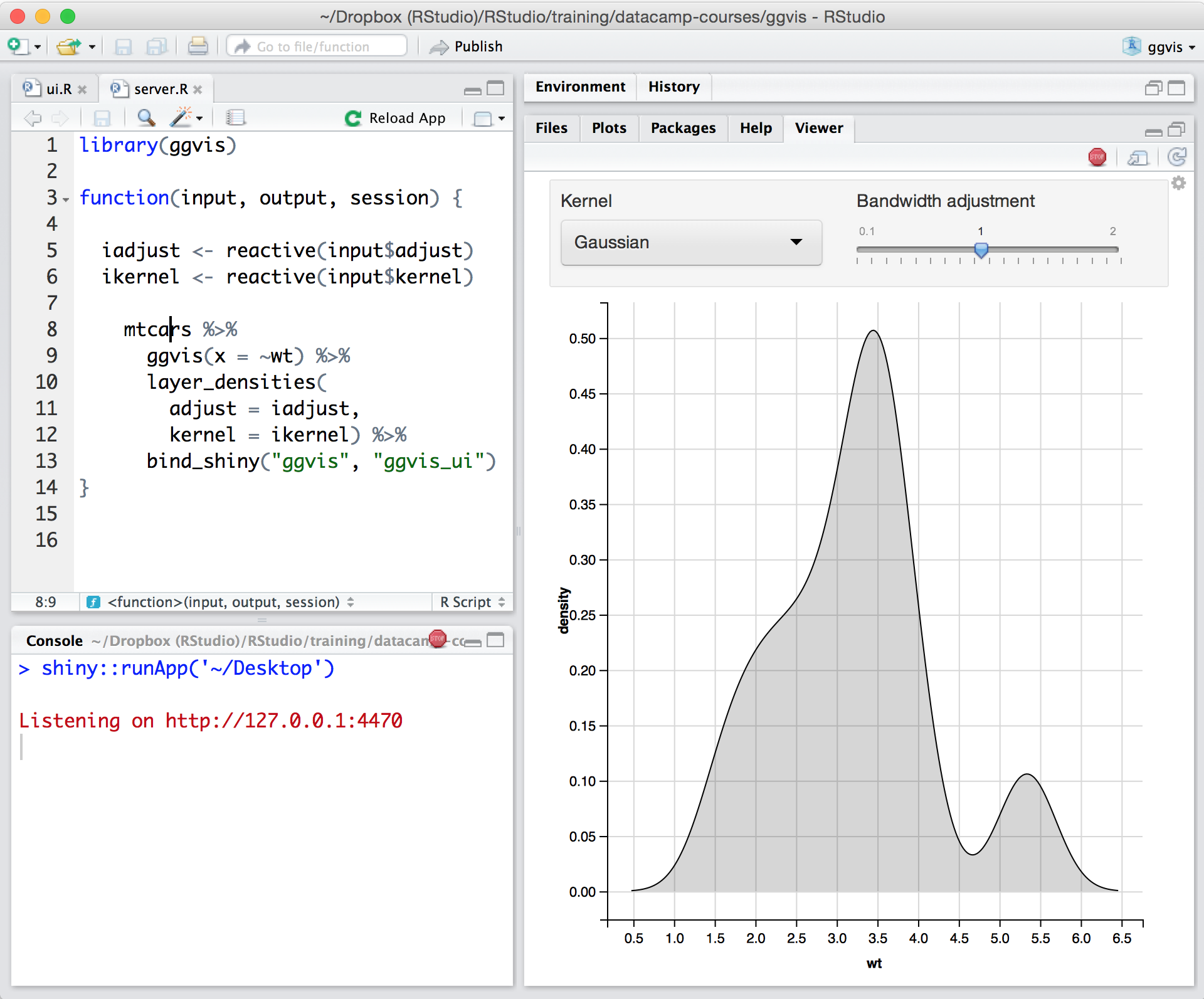
In my humble opinion, if you are working on something related to Statistics, RStudio is your go-to tool. But if you are looking for something in Machine Learning, look out for Python. The beauty is that there are packages now by which you can write Python/SQL in R. Cross-platform functionality like such makes RStudio way ahead of its competition. A couple of chinks in RStudio armor are very small and can be considered as nagging just for the sake of argument. Other than completely based on programming language, I couldn't find significant drawbacks to using RStudio. It is one of the best free software available in the market at present.
Smart reply and its AI suggestions make the organization think more carefully about their e-mail responses in Gmail. We were skeptical at first but it really works well for many instances.
We do a lot of business and contracts in Western Europe and South America, so the translate solutions make this much easier for our banking paperwork.
When we go to meetings or during a meeting, we often use the Google voice search to save time on research and filtering ideas or analysis.
Hard to find what to use - To find the right products, you need look closely at the details of each API, and find which suits your purposes. This can be easily fixed by creating a main page that details all of the products simply.
Expensive - The API costs can quickly add up, especially during the setup process and as engineers figure out the usage of the API.
No playground or training - There is a lack of an "API playground" or training sessions that could make onboarding engineers to this API much easier.
Ability to scale across the company is limited based on the users license, cannot share a dashboard to the general view of the company.
Ability to retain session - not simple method to customize view per user (e.g., once session is ended, the users will return next time to the baseline view).
Ability to enable communication between multiple users - leave notes, tag other users, or share specific view.
We are extremely satisfied with the impact that this tool has made on our organization since we have practically moved from crawling to walking in the process of generating information for our main task to investigate in the field through interviews. With the audio to text translation tool there is a difference from heaven to earth in the time of feeding our internal data.
There is no other platform that meets our needs. Even if it was terrible we would still use it but fortunately for us it is a very solid project with a great support team. I hope in the future to expand our use and get more licences as well as upgrade to RStudio workbench but for now we are very happy.
I give 8 because although it´s a tool I really enjoy working with, I think Google Cloud AI's impact is just starting, therefore I can visualize a lot/space of improvements in this tool. As an example the application of AI in international environments with different languages is a good example of that space/room to improve.
For someone who learns how to use the software and picks up on the "language" of R, it's very easy to use. For beginners, it can be hard and might require a course, as well as the appropriate statistical training to understand what packages to use and when
RStudio is very available and cheap to use. It needs to be updated every once in a while, but the updates tend to be quick and they do not hinder my ability to make progress. I have not experienced any RStudio outages, and I have used the application quite a bit for a variety of statistical analyses
Every rep has been nice and helpful whenever I call for help. One of the systems froze and wouldn't start back up and with the help of our assigned rep we got everything back up in a timely manner. This helped us not lose customers and money.
Since R is trendy among statisticians, you can find lots of help from the data science/ stats communities. If you need help with anything related to RStudio or R, google it or search on StackOverflow, you might easily find the solution that you are looking for.
In fact, you only need the basic tech knowledge to do a Google search. You need to know if your organization requires it or not,. our organization required it. And that is why we acquired it and solved a need that we had been suffering from. This is part of the modernization of an organization and part of its growth as a company.
Google's documentation for their AI and Machine Learning products is a bit more straightforward and still much easier to onboard into compared to the Azure Machine Learning and other AI products. Additionally, Google's Cloud AI products provide more comprehensive specific use-cases that are API-optimized, and easier to integrate into existing scripts and backends.
RStudio was provided as the most customizable. It was also strictly the most feature-rich as far as enabling our organization to script, run, and make use of R open-source packages in our data analysis workstreams. It also provided some support for python, which was useful when we had R heavy code with some python threaded in. Overall we picked Rstudio for the features it provided for our data analysis needs and the ability to interface with our existing resources.
I think that RStudio scales pretty well based on the size of the datasets I'm using. It has multithreading capabilities unlike some other statistical analysis programs which is very useful in cutting down on time. The format of RStudio's syntax also makes it very easy to replicate regardless off the scale of the analysis and data set
Using it for data science in a very big and old company, the most positive impact, from my point of view, has been the ability of spreading data culture across the group. Shortening the path from data to value.
Still it's hard to quantify economic benefits, we are struggling and it's a great point of attention, since splitting out the contribution of the single aspects of a project (and getting the RStudio pie) is complicated.
What is sure is that, in the long run, RStudio is boosting productivity and making the process in which is embedded more efficient (cost reduction).