The Forcepoint ONE Secure Web Gateway (SWG) is one of the three foundational gateways of the Forcepoint ONE all-in-one cloud platform. Forcepoint ONE SWG monitors and controlsany interaction with any website, including blocking access to websites based on category and risk score, blocking download of malware, blocking upload of sensitive data to personal filesharing accounts, detecting shadow IT, and optionally providingRemote Browser Isolation (RBI) with Content Disarm andReconstruction (CDR).
N/A
Microsoft Defender for Endpoint
Score 8.7 out of 10
N/A
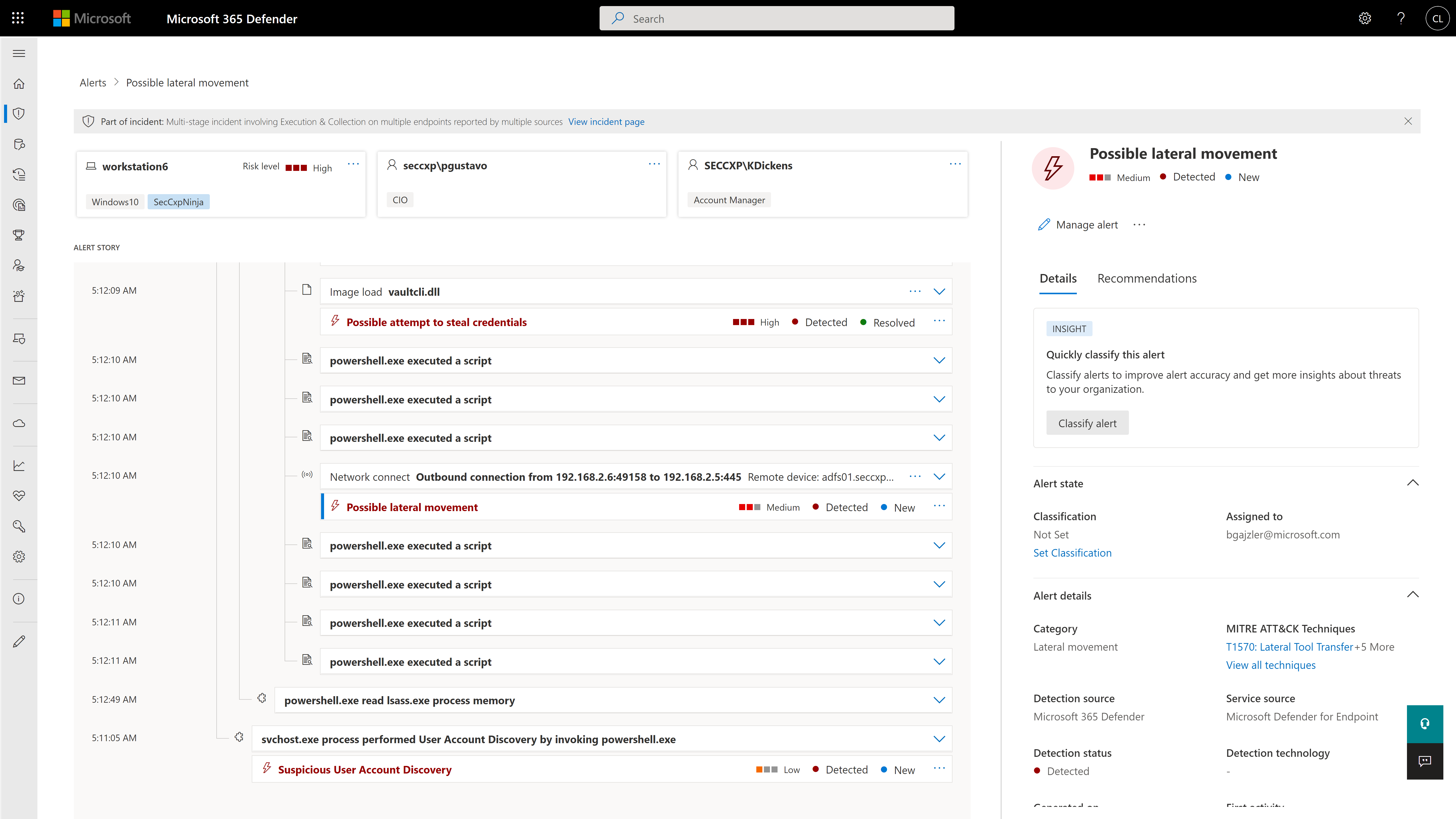
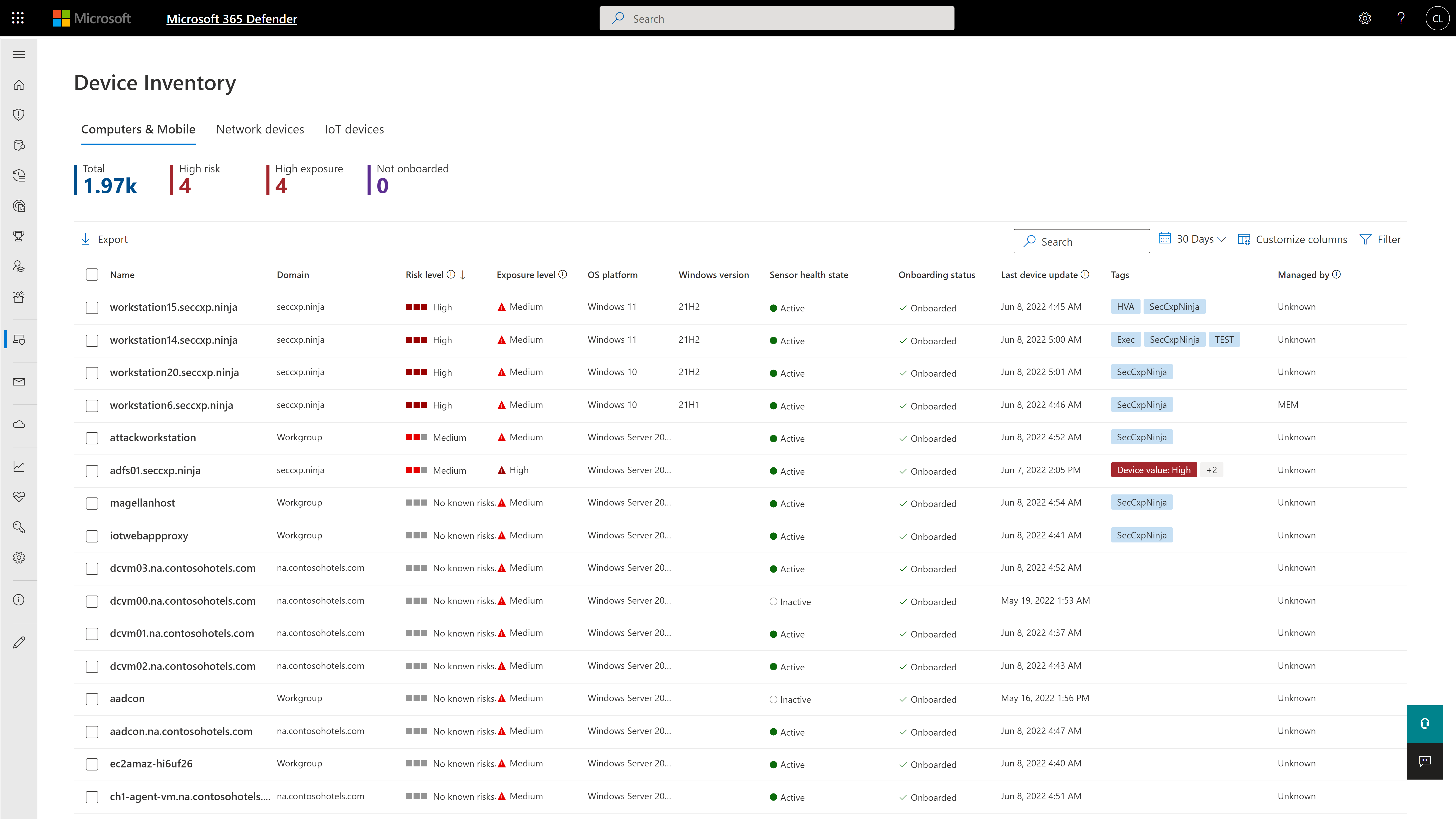
Microsoft Defender for Endpoint (formerly Microsoft Defender ATP) is a holistic, cloud delivered endpoint security solution that includes risk-based vulnerability management and assessment, attack surface reduction, behavioral based and cloud-powered next generation protection, endpoint detection and response (EDR), automatic investigation and remediation, managed hunting services, rich APIs, and unified security management.
Over the years, [in our experience], the maintenance of the Forcepoint Web Security solution proved to be more cumbersome and troublesome with each version upgrade. In addition, it did not transition well to support the large increase of remote workers. We also experienced weird incompatibilities with the client. We have since replaced this solution with Zscaler Internet Access, a cloud-based secure web gateway solution with a client that behaves as expected, is more flexible, and requires significantly less administration.
Because of its integration with Windows, it is very easy to deploy and manage. Any IT department should be able to leverage the software and interface. The admin portal provides weighted recommendations that comprise the Secure Store, offering admins, security teams, and business owners valuable insights into their security footprint without requiring a strong security background. The software would be ideal for small and mid-sized businesses that cannot dedicate resources to security. Larger enterprises would also benefit, but may require the enhanced license.
This package is one of the few that offers a category, quota time, that allows us to limit certain categories and or websites for staff that would normally be blocked for customers and may not be something that is needed in their day to day job duties. We allow staff one hour a day, broken down into six 10 min increments, to visit sites for shopping, travel arrangement and other areas that are more of a personal need than a business need.
Forcepoint has a wide selection of categories that can be enabled, quota timed or restricted at a top-level or you can go more granular and drill down to subcategories to allow for only partial access.
One, it's crazy lightweight, so compared to some of the competitors that we also have used with our security services, it's really lightweight and so I don't have a lot of overhead on the system that it's running on.
The user access logs contain a lot of useless information. I understand this is very hard to tackle as I've seen this across any product that logs web activity.
I would like to see more customization options of website block pages.
So the fact that Defender for Endpoint still works with signatures is actually, I don't know, a little difficult for us because, I mean, since Microsoft trusts those signatures, you can easily inject code. And we've done it many times. To show that you can inject code through vulnerabilities like CV 2013, 99, and 33 but still keep the signature. So because of the trust of those signatures, the malware just kind of slides into the environment without Defender knowing. That's the first part. The second part is that the behavioral analysis is not precisely its Prime. It's not Defender's best capability for endpoints. So, Defender does not identify all behaviors considered by other EDRs in the market.
It is very stable, the organisation has "locked in" the product and has no plans to change or try another product. We have already renewed our 2019-2020 licenses. It is user friendly and people catch on easily when they first use it. The only downtime is when we install Microsoft updates! It has excellent reporting which help in determining how the organisation's Internet is used and also during both internal and external IT audits.
Microsoft Defender is closely catching -up in market with existing competitors they have added DLP endpoint & DLP Network and Cloud DLP solution last year with OCR capabilities. I would say Microsoft Defender is not legacy Vendor in end point security, the need to learn from other vendors in market and focus on new XDR technologies, which is going to be new battle for all vendors
Despite the intimidating Linux CLI when you use the appliance for troubleshooting, the web security usability compensates as most of the Administration of the system is done there. It is GUI based and has an easy to use UI where one can navigate around rather easily like getting reports, checking alerts, looking the whole setup under deployment to check if all services are running in one place though there are other parts to the system.
Because in terms of the usability is easy to understand, it's easy to manage, obviously you need to have specific skills to do that, but I would say that even the console and the product is walking through the flow that you are looking for on this console.
Microsoft Defender for Endpoint chugs along just fine no matter what we throw at it and what systems it's running on. It doesn't take up a lot of resources either, so that's welcomed.
The is a quick first response to acknowledge your issue and the Engineers never take more than two hours to fix an issue and we hardly get issues looking at the fact that the system is pretty stable. There is also a robust Knowledge Base in the site for known problems.
Overall support is really good for this product. Since it's a Microsoft product, you will get good support from a number of different resources, including knowledgebase articles on the web, support from Microsoft technicians, and documentation (which tends to very thorough). Also, there is a vast user support community for this product, so user support forums would also be another valuable channel to get help if needed. I don't envision too many people will have issues/problems with the product, as it tends to run good overall.
Research known issues with upgrading from the Support Knowledge base, this will enable you avoid road blocks along the way and reduce your dependence on Forcepoint Support
Deployment was handled by our team here and everything went pretty smoothly. We did have a few hiccups in our test group, but that only took a bit to get ironed out.
To be honest, once using Forcepoint for our Web Security, I have not wanted to look anywhere else. The dashboard gives me quick insight of threats, productivity, and bandwidth usage. Again, this is a layer in my security and it fills many holes. I feel safe and I do like I can just let it do its thing
Microsoft Defender for Endpoint offers strong integration with Microsoft 365 and Azure services, which provide a unified security experience. While McAfee Trellix is known for solid antivirus, Microsoft Defender excels in integration in the ecosystem.