ESET provides Endpoint Protection Platform (EPP) capabilities via the ESET PROTECT Platform, covering Windows, Mac, Linux, and both Android and iOS operating systems, providing Mobile Device Management functionality. It comes with multi-tenant management, ensuring real-time visibility for both on-premises and off-premises endpoints as well as full reporting for ESET enterprise-grade solutions. ESET PROTECT management platform can be deployed on-premise or in-cloud. For organizations looking to…
$49.99
per year
Microsoft Defender for Endpoint
Score8.7 out of 10
N/A
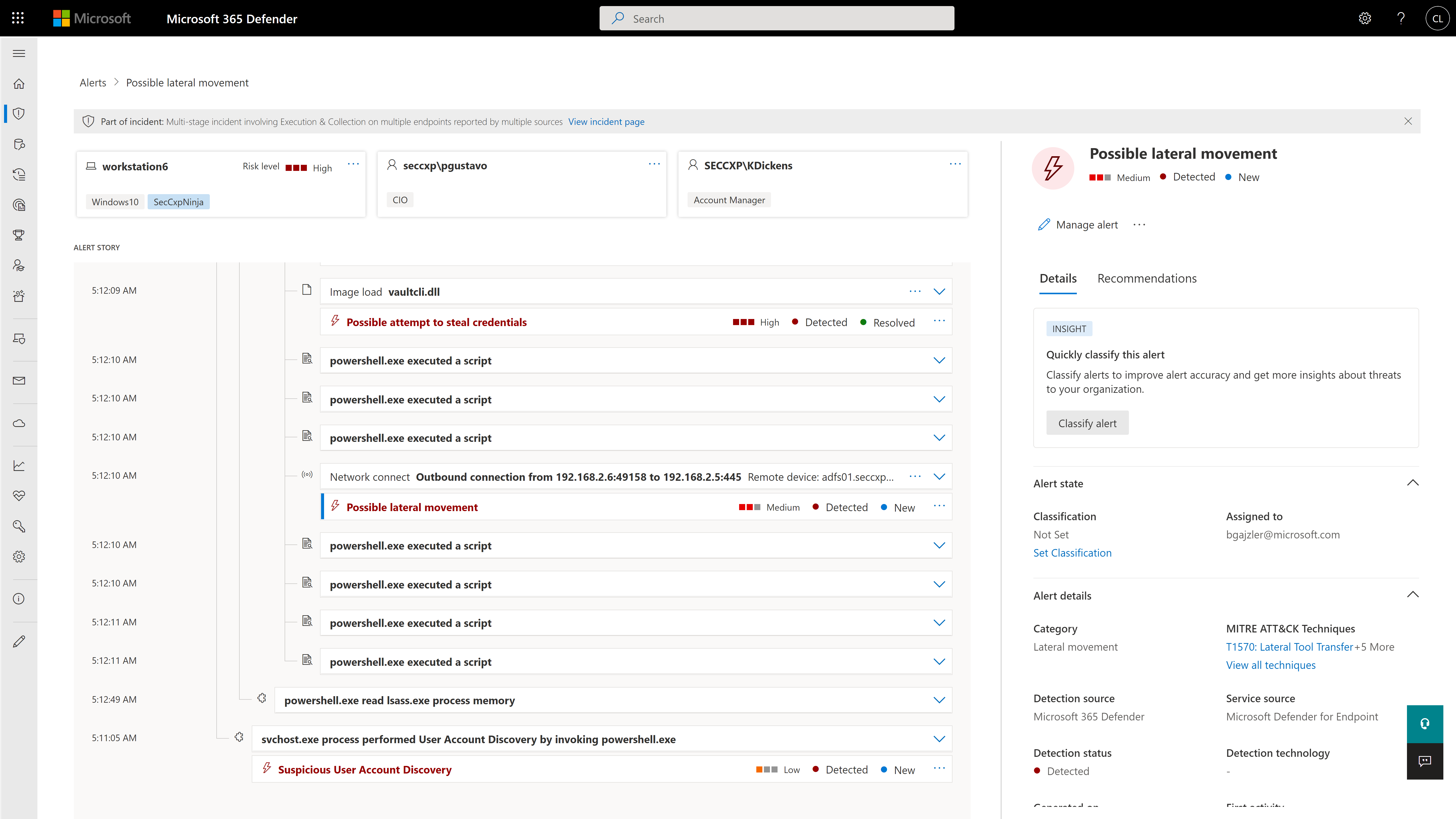
Microsoft Defender for Endpoint (formerly Microsoft Defender ATP) is a holistic, cloud delivered endpoint security solution that includes risk-based vulnerability management and assessment, attack surface reduction, behavioral based and cloud-powered next generation protection, endpoint detection and response (EDR), automatic investigation and remediation, managed hunting services, rich APIs, and unified security management.
$2.50
per user/per month
Pricing
ESET PROTECT
Microsoft Defender for Endpoint
Editions & Modules
Essential
$49.99
per year 1 device
Premium
$59.99
per year 1 device
Ultimate
$179.99
per year 5 devices
Academic
$2.50
per user/per month
Standalone
$5.20
per user/per month
Offerings
Pricing Offerings
ESET PROTECT
Microsoft Defender for Endpoint
Free Trial
Yes
Yes
Free/Freemium Version
Yes
No
Premium Consulting/Integration Services
Yes
No
Entry-level Setup Fee
Optional
No setup fee
Additional Details
ESET offers are tailored to each customer’s needs. ESET takes pride in working with customers and partners to find the perfect solution for their security challenges at the right price. Contacting an ESET partner or sales representative ensures each solution is made-to-measure and precisely fits the size, complexity of IT environment and level of protection to match the customer’s business requirements. Pricing percentage is dependent on number of years and devices purchased.
Systems and Security Administrator in Information Technology at Guy Yocom Construction (Information Technology and Services, 201-500 employees)
Chose ESET PROTECT
It was pre-existing when I came to this company so ESET is dug in deep and removing it would be a process. Defender was nice and is a solution I wouldn't mind moving to. My biggest concern is web protection due to the amount of password compromise request emails the user base …
A de minimis incentive was given to thank the reviewer for their time. The incentive was not used to bias or drive a particular response, nor was the incentive contingent on a positive endorsement. More Info
Microsoft
Verified User
Chose Microsoft Defender for Endpoint
Crowdstrike is the more feature complete product but licensing model and cost does not work well with the small business model. ESET PROTECT is considerably more complicated from a licensing perspective but once operational is a fine product.
A de minimis incentive was given to thank the reviewer for their time. The incentive was not used to bias or drive a particular response, nor was the incentive contingent on a positive endorsement. TR verified that a representative sample of customers was invited. More Info
Verified User
Chose Microsoft Defender for Endpoint
Microsoft Defender is more easy to install, upgrade and use. Eset is annoyingly visible.
A de minimis incentive was given to thank the reviewer for their time. The incentive was not used to bias or drive a particular response, nor was the incentive contingent on a positive endorsement. TR verified that a representative sample of customers was invited. More Info
Verified User
Chose Microsoft Defender for Endpoint
In my opinion, Microsoft Defender for Endpoint is inferior to the competition. Combined with Huntress it is good (they are designed to integrate), but in my opinion, no need to use the paid version of Microsoft Defender for Endpoint when combining with Huntress, so not really …
A de minimis incentive was given to thank the reviewer for their time. The incentive was not used to bias or drive a particular response, nor was the incentive contingent on a positive endorsement. TR verified that a representative sample of customers was invited. More Info
Because of its integration with Windows, it is very easy to deploy and manage. Any IT department should be able to leverage the software and interface. The admin portal provides weighted recommendations that comprise the Secure Store, offering admins, security teams, and business owners valuable insights into their security footprint without requiring a strong security background. The software would be ideal for small and mid-sized businesses that cannot dedicate resources to security. Larger enterprises would also benefit, but may require the enhanced license.
A de minimis incentive was given to thank the reviewer for their time. The incentive was not used to bias or drive a particular response, nor was the incentive contingent on a positive endorsement. TR verified that a representative sample of customers was invited. More Info
A de minimis incentive was given to thank the reviewer for their time. The incentive was not used to bias or drive a particular response, nor was the incentive contingent on a positive endorsement. More Info
A de minimis incentive was given to thank the reviewer for their time. The incentive was not used to bias or drive a particular response, nor was the incentive contingent on a positive endorsement. More Info
I'm giving it a 10, because I would totally have no reservations about staying on with eSet for another 3 years once our contract comes up for renewal. We are looking to transfer to a different product in January, however. This is due to a special pricing contract with the state of Ohio that made a normally much more expensive product very affordable and was cheaper than our coming eSet renewal cost. This is a very special case only available to government and educational organizations, but had that not been offered, we would have gladly stayed with eSet.
A de minimis incentive was given to thank the reviewer for their time. The incentive was not used to bias or drive a particular response, nor was the incentive contingent on a positive endorsement. More Info
Excellent support from ESET and when we had questions regarding the initial deployment they were there. The questions we put forth were answered immediately with great detail. Any of the items we put forth, scenarios, were given a good solution from ESET to fit our needs. This company stands by their product and are happy to step up when needed.
A de minimis incentive was given to thank the reviewer for their time. The incentive was not used to bias or drive a particular response, nor was the incentive contingent on a positive endorsement. More Info
The first time I tried to onboard my macOS endpoints to MDE I struggled for quite a bit. I had to reach out to Microsoft's MDE support team. The tech was very helpful in walking me through the steps during a screen share session
A de minimis incentive was given to thank the reviewer for their time. The incentive was not used to bias or drive a particular response, nor was the incentive contingent on a positive endorsement. More Info
Do the full scan at the beginning and be prepared to wait until it is done. It will find things you did not know were there. You can leave on the Apple firewall as well as the ESET firewall. There have been no conflicts. Remember to remove emails from being backed up, so you do not have spam on your backup! This was the mistake I made.
A de minimis incentive was given to thank the reviewer for their time. The incentive was not used to bias or drive a particular response, nor was the incentive contingent on a positive endorsement. More Info
ESET maintains the security of our machines, files, reports, etc., an invasion or infection could result in a catastrophe, loss of important data, expenses with specialized support, hours or days of work stopped until the solution is found, without ESET prevention we could have big expenses at any time.
A de minimis incentive was given to thank the reviewer for their time. The incentive was not used to bias or drive a particular response, nor was the incentive contingent on a positive endorsement. More Info
A de minimis incentive was given to thank the reviewer for their time. The incentive was not used to bias or drive a particular response, nor was the incentive contingent on a positive endorsement. TR verified that a representative sample of customers was invited. More Info