Epicor HCM supplied human resource management system (HRMS) capabilities, but Epicor has stopped offering this functionality and company's HR applications are no longer available.
N/A
Paycom
Score 7.5 out of 10
N/A
Paycom supports HR and payroll with automated, employee-first technology that supports every stage of employment. Its single database enables seamless data management, to reduce errors, endless data entry and time-consuming administrative tasks.
I could not recommend this system to anyone. If you do decide to go with this system, depending on organization size, you'll need at least one dedicated IT person with SQL/Report-builder experience to manage the system and reporting, as well as another full-time HR member to manage other administrative set-up and deal with the many, many, user support issues that will crop up. I'm shocked at the number of positive reviews for this product. A couple of them reiterate the same thing such as each of use (which is completely untrue) and many fields/tables for data storage, which leads me to believe that they're from Epicor or Epicor consultants
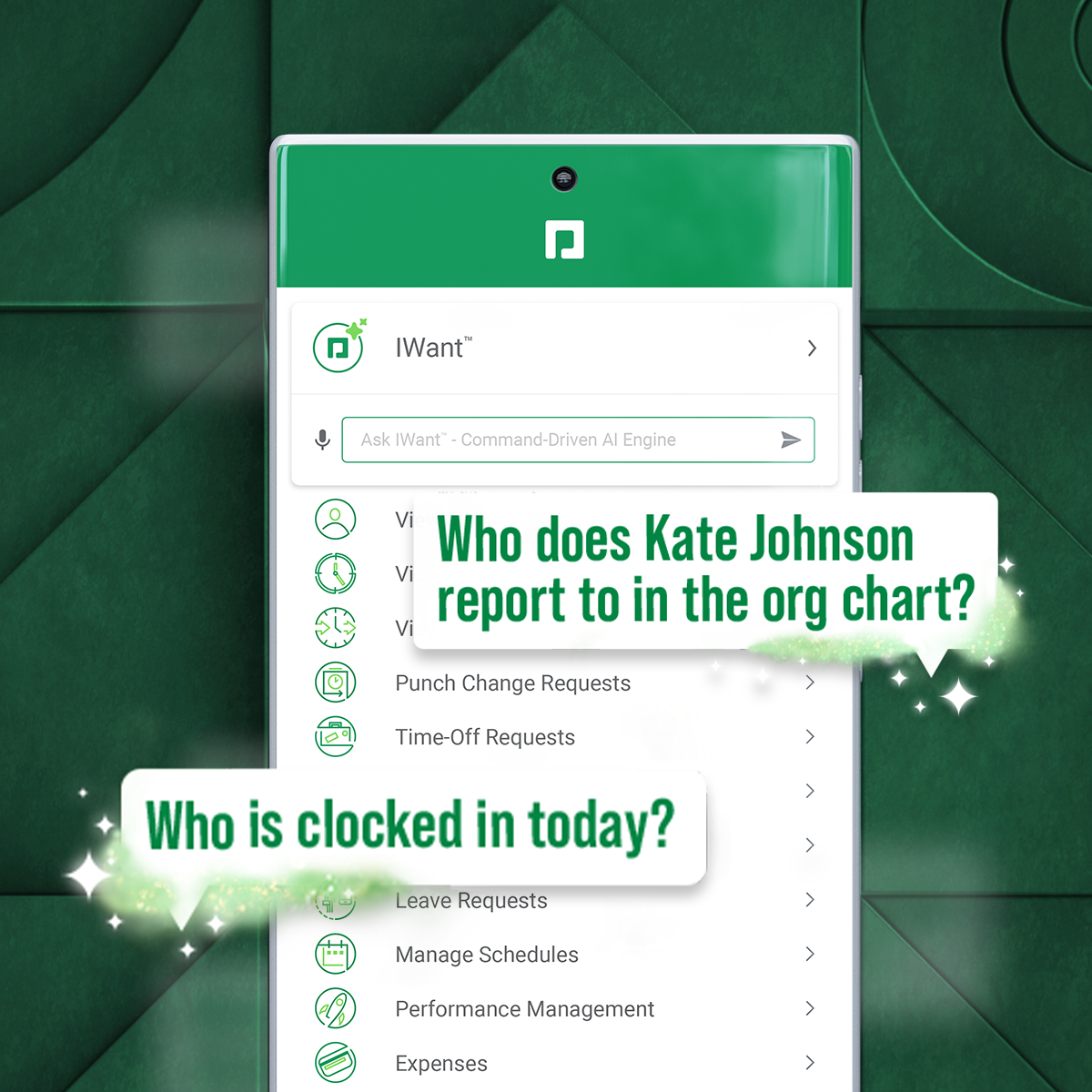
It's very mobile friendly, especially for people that aren't tech savvy. We have an aged workforce where we were really concerned about how they would adapt, going from the comfort of using paper to a mobile and online application. But the training was really easy and the adaptation has been simple for us as a company.
Timesheets show everything that time has been charged to in a quick glance. There is a lot of information displayed onscreen and is very easy to decipher.
Employees charge their time on a well-designed front end program, and data is gleaned from that and dispersed into the various timekeeping and expense tracking modules.
The abilities to charge time to direct, indirect and downtime are all valuable- see where time is being spent and use it as a coaching tool.
I think that it's just really user friendly on both sides, the employer and the employee side. I think from the employer side, once you get a niche of it and how it works, it's really easy to troubleshoot on your own. At least from my experience, you rarely have to call your contact because it's just so easy to try to figure out on your own. And on the employee side, I feel like the fact that we get to see what employees see, but before we put anything out really helps us help them if they are running into any issues. But typically when we do send something out, we just did our performance reviews, no issues whatsoever. It kind of takes you step by step. I feel like it just does a really good job of seamlessly taking people step by step in every process throughout whatever they're doing in Paycom.
Compliance is one area that needs further attention. For example in candidate self-service, the admin and managers can see the candidate's demographic information as part of their application, which shouldn't happen. If an internal candidate applies for a job, the hiring manager automatically gets access to that employee's record just like their regular manager.
On the timesheets module, there are issues with CA specific OT calculation rules on a bi-weekly payroll, where it does not calculate OT for time worked in excess of 5 consecutive days. Also, the application has random (but rare) occurrences where it resets the time zone to the server time zone for users that clock-in/ out.
Customizations that require professional services contracts can be somewhat difficult in terms of getting resources assigned. When upgrading the system to a new version, the admin has to conduct its own testing, including all and any customizations made to the system and then work with Epicor on resolving any issues.
Customer Support structure could be better. Currently there is no official filtering of issues and expected response time for different kinds of issues, except for system access. When offering payroll and time keeping, the customer support should reflect reduced time for resolution of issues in these time sensitive areas.
User training. Epicor HCM offers no free training, aside from webinars on new version releases. While they do offer training sessions, users have to pay for it. From a customer perspective this is difficult to accept. You pay to purchase the system/ module, but if you want to learn how to use it, you have to pay again.
We wish that Paycom would offer more hands-on help. A lot of our specialist is great in helping us to resolve whatever issues that we have. However, it's just a list of steps to get there. It's not necessarily like, "hey, here you go, here's the resolution to your problem." So if we don't already understand how to do something, providing steps doesn't necessarily clear that understanding up or provide any clarification.
Additionally, I find that for our organization in particular, we have specific niches within it that Paycom doesn't really address or has any solution on how to address it. It just remains unresolved to this day and we continue to have errors in that area.
I just recently lost my job after 16 years, and purposely sought out a position where I could continue to work with HCM. I am now in a similar role to what I was in before, and can continue the same type of work and enhancements that I did at my other company.
Because it has everything that we need and as we grow, we are learning how robust Paycom can actually be but we need to be willing to spend the money. It's not expensive but we, as a company, are not used to spending that much on a system for HR and payroll.
Where it's good: Epicor HCM at a high level has a straight-forward interface for navigating to the main content sections at either the employee or HR administrator level. The interfaces are consistent throughout the application, and after a brief learning curve, one can navigate through the remainder of the interface pages in any content area without too much difficulty. HCM also has great tools for making sure the analysis of data is available and accessible to non-programmer personnel. Where it struggles: One thing working against the usability of the HCM product is the overuse of the row-selection scheme for all many to many relationships. HCM uses a "select the row from the left frame" and then "enter data corresponding to this row in the right frame" scheme for most of its data entry components. One example of overuse is the employee address entry. During the first setup of an employee or during a candidate's application, HCM allows the user to specify multiple addresses. While this functionality is desired for long-term storage, an option doesn't exist to forgo this interface type for quick initial entry for the primary use case (one address per employee). This is one example, but is particularly visible when a candidate must also bridge the learning curve.
The interface is very intuitive, you can navigate it pretty well. Everything's pretty much spelled out and the features just flow really well. They make it easy for you to go back and forth with the UX/UI type of interface. So I think it was built pretty well.
The product performs well. As with any software there are bugs and system enhancements needed, but there are channels in place to let Epicor know what they are so they can add to future versions. Open Enrollment and Salary Planning can be a bit slow at times.
The customer support is terrible. When we open cases, it takes weeks to get the development team to have the first look at the case. If development is required, their team commits on a delivery date and up to now—those dates were never respected. They don't do any follow up. Customer service is very bad. When we request an update on the development progress, nobody answers!
Our TSR has been wonderful to work with. Every step of the way he was quick to respond and answer any questions we had. I knew I could reach him at any time (day or night) and he would be available to assist. Implementing a new HRIS system is obviously a huge task and I contribute all our success to our rep Kurt! Of course, with any implementation, there were bumps along the way and issues. But I always knew we would work as a team to get those issues figured out. Working in the Paycom system has been smooth and easy to learn and I enjoy the employee self-service interface. Our managers have had positive things to say and are all excited about the changes we have been able to make to our organization due to Paycom being implemented.
We had someone from Epicor come on site to do training, and we "shared" our trainer with another company who was also doing the same major upgrade. It was nice to have another company there so we could ask each other (and the trainer) questions. This allowed for more meaningful discussions during training.
It was good, but hard to know what questions you need to ask until you actually get in there and start working with a live product. But Paycom is also very helpful every time I call and can't figure something out. Nathan has been very friendly and helpful no matter what I call him about. He is always eager to help out.
As stated earlier, you won't find all of the problems and things that you would like to improve on until you implement. After go-live, you then will have a long period of adjustment as you get the data and processes to work the way that you really want them to.
Not at all satisfied it was a nightmare we spent over 8 months with the implementation team having issues after issues all related to the Puerto Rico regulations (half my employees are in Puerto Rico) and at the end we were moved over from the implementation team to the production team without all the issues being resolved
After a failed implementation with Open4, we needed a solution that was more usable with our end-users. The outdated system provided by one of ADP's products needed to be replaced. We chose Epicor HCM because we were enticed by the functionality it provided and ease of use, as well as its ability to be integrated with Epicor ERP, a product which we had owned and used for several years.
We really only had Paychecks and that was our biggest problem is that with several different companies, it was very hard If you had a salary employee and didn't terminate them in the prior company, they get paid twice, so this has really been definitely a big help for us.
Performance is not noticeably impacted by adding more users. Microsoft IIS and SQL are Epicor HCM's underlying technology and have proven reliability. In addition, IS staff are easy to find that know these technologies.
Report deadlines must always be extended as my organization's HR team must manually comb through the data for inaccuracies.
Reports generated lack integrity. For example, I sent a report to a large donor and the report eliminated nearly 100 employees unbeknownst to my department.
My organization is still waiting to see the ROI on Epicor. It hasn't been able to meet our basic needs.
I would think the most time would come from applicant tracking and I don't think that's a Paycom issue necessarily. I think it was a training issue during implementation. I would say that that has improved now that we had onsite training. But initially the applicant tracking piece can be difficult when you're used to just using an ATS. That's specifically for talent acquisition because there's a lot of nuances that goes into the system that Paycom bills.