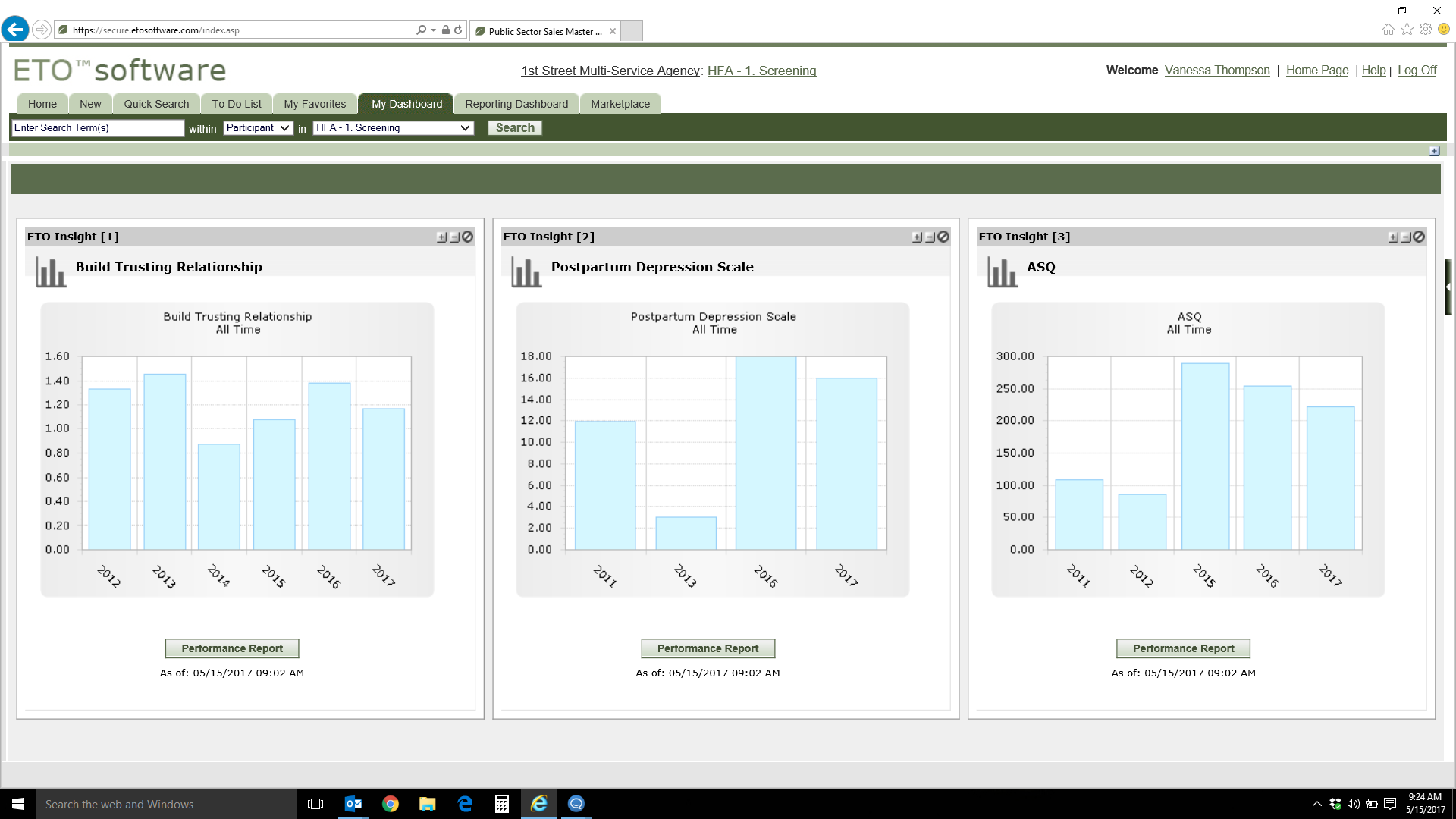
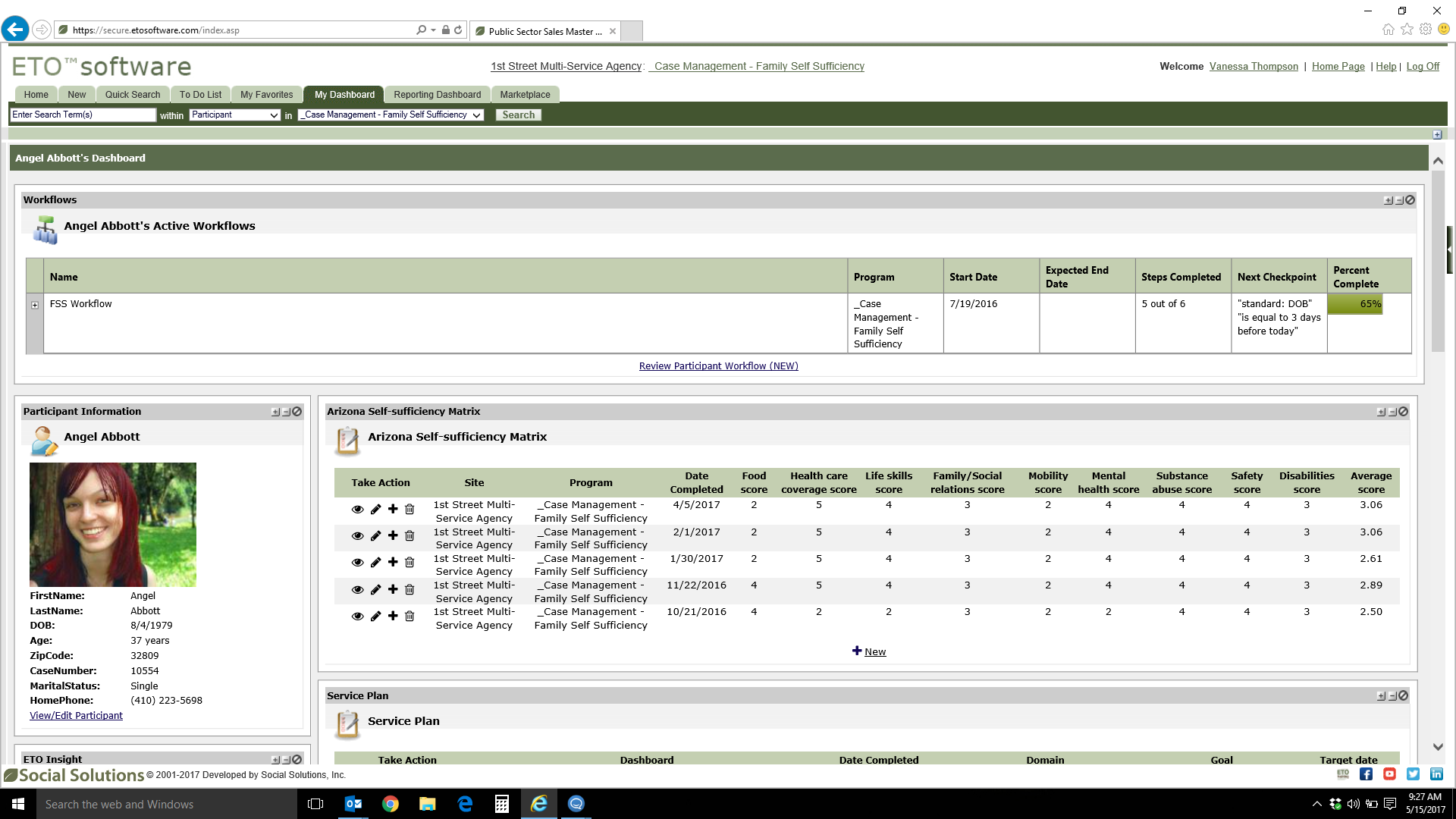
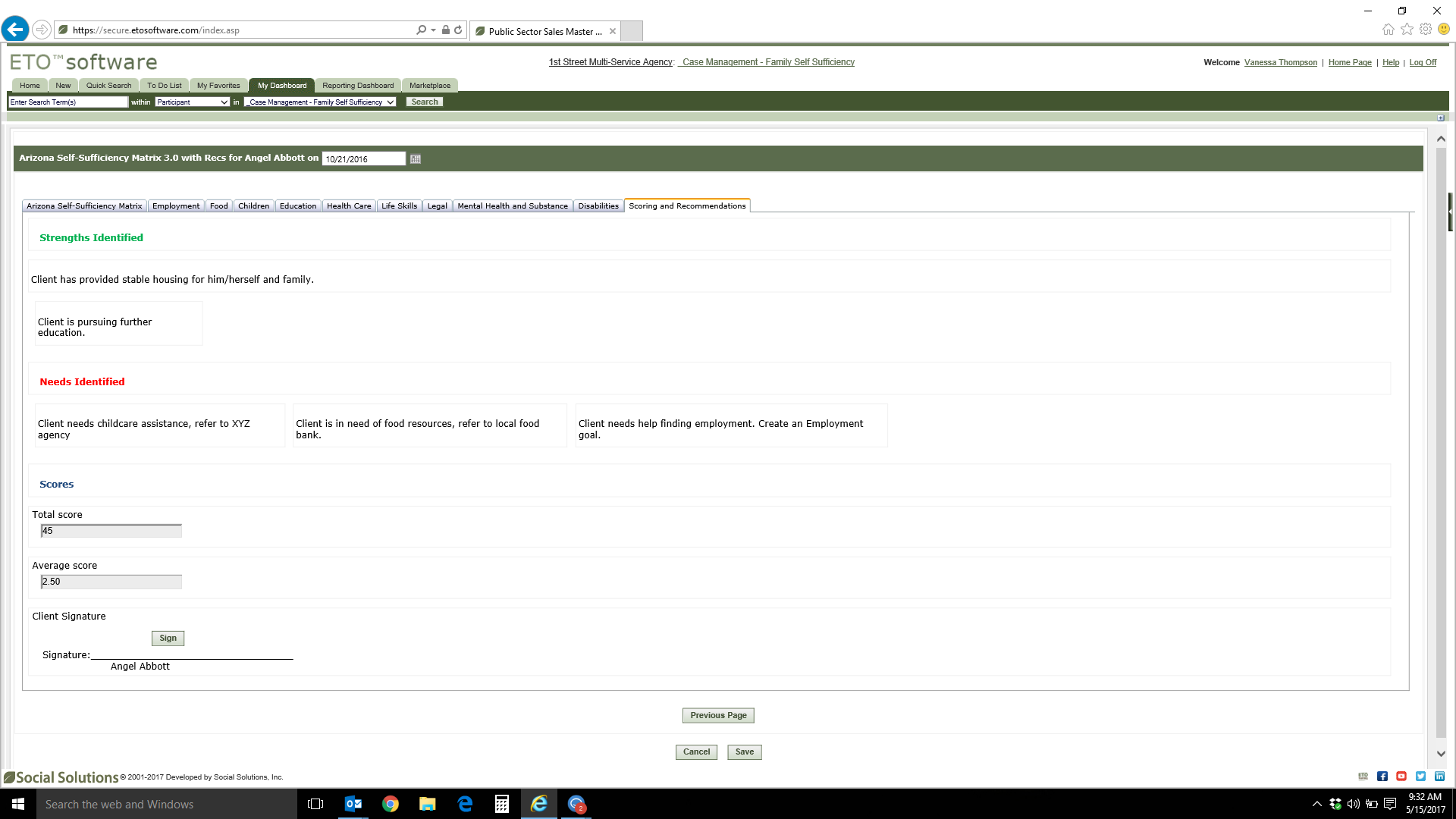
Bonterra ETO is a case management platform that consolidates data, caseloads, and service delivery programs, helping users to save time and serve more people. ETO is purpose-built for organizations looking to improve their program and case management. ETO is built in accordance with industry security standards and includes tools that helps users to focus on advancing their missions, as well as: Reduce time spent entering data into separate systems to increase…
N/A
Pega Platform
Score 5.7 out of 10
N/A
Pega Platform is a combined business process management and robotic process automation (RPA) platform with advanced workforce analytics from Pegasystems.
$35
per month per user* (or $0.45 per case**)
Pricing
Bonterra ETO
Pega Platform
Editions & Modules
No answers on this topic
Low-code Factory Edition
$35
per month per user* (or $0.45 per case**)
Standard Edition
$90
per month per user* (or $0.80 per case**)
Enterprise Edition
Custom Quote
Offerings
Pricing Offerings
Bonterra ETO
Pega Platform
Free Trial
No
Yes
Free/Freemium Version
No
No
Premium Consulting/Integration Services
No
No
Entry-level Setup Fee
Required
No setup fee
Additional Details
—
*500 named user minimum. Additional users available in blocks of 100. Billed annually. Based on a 3-year term.
**350,000 cases / year minimum. Additional cases available in blocks of 150,000.
More Pricing Information
Community Pulse
Bonterra ETO
Pega Platform
Features
Bonterra ETO
Pega Platform
Reporting & Analytics
Comparison of Reporting & Analytics features of Product A and Product B
Bonterra ETO
-
Ratings
Pega Platform
8.8
Ratings
7% above category average
Dashboards
00 Ratings
9.00 Ratings
Standard reports
00 Ratings
8.60 Ratings
Custom reports
00 Ratings
8.60 Ratings
Process Engine
Comparison of Process Engine features of Product A and Product B
Bonterra ETO
-
Ratings
Pega Platform
7.8
Ratings
7% below category average
Process designer
00 Ratings
8.00 Ratings
Process simulation
00 Ratings
6.00 Ratings
Business rules engine
00 Ratings
9.00 Ratings
SOA support
00 Ratings
9.00 Ratings
Process player
00 Ratings
9.40 Ratings
Support for modeling languages
00 Ratings
5.40 Ratings
Form builder
00 Ratings
9.60 Ratings
Model execution
00 Ratings
6.00 Ratings
Collaboration
Comparison of Collaboration features of Product A and Product B
Bonterra ETO
-
Ratings
Pega Platform
9.0
Ratings
7% above category average
Social collaboration tools
00 Ratings
9.00 Ratings
Content Management Capabilties
Comparison of Content Management Capabilties features of Product A and Product B
I can see from an education perspective how it would be an incredible fit. The functionality is all there and growing. From a CAC perspective, it's still a work in progress, especially for larger CACs where lots more services are provided and the lines between programs blur a bit more. I think that ETO is becoming more user-friendly for CACs and Social Solutions is moving in the right direction too. I can't wait for some of the new features to roll out and be able to use them in our system. I really do think that will improve our user experience significantly.
Pega [RPA] is good to address a specific business function requirement with not too many bots or automation processes. It takes time and effort to set it up. Though once done, it is very easy to configure and use. One should also run a POC to verify if this product meets the scalability requirements.
Pega’s Situational layer cake architecture is capable of organizing application to suit enterprise needs. An enterprise can have a complex organization structure located around the globe. Because of Situational layer cake architecture reusing common policies and procedures is easy while allowing for differences between products, regions, channels and customer segments.Whereas with some application development platforms, separate copies of the application should be created to suite different business context.
Faster application delivery
With Pega developers can reuse common policies and procedures, replicate functions and industry specific frameworks and utilize pega UI elements to develop applications. IT is easy to deploy.Therefore developers are capable of delivering application earlier compared to some application development platforms. Pega reduces time taken to deliver an outcome.
Pega upgrades
Pega platform is upddated to adapt and work with latest technologies.
Proprietary users support and maintain Pega platform continuously. Pega customer support is always willing to enhance product support.
ETO needs to be mobile friendly because a lot of our staff do outreach work, including all touchpoints, demographics, enrollments, and dashboards on their phone.
Too many ways to get to the same thing. E.g. Add New Participant Tab, Add New Participant in Navigation Bar, Add New Participant on Home Page, etc. This generates mistakes and a need for very thorough training and tight oversight.
Inability to remove touchpoints from custom universes once they have already been added. There is a limit of 20 touchpoints per custom universe. If the touchpoints in a universe have become obsolete or irrelevant, there is no way to make room for a new, more relevant touchpoint. Old touchpoints can be disabled but not removed.
Need to pay extra for email and calendar notifications. This should be a built-in function, as the software already costs a lot, and many organizations cannot afford to spend more to get this vital functionality.
It would be great if a "Case Conference" chat feature could be attached to participants. Case managers could enter the chat room and relay important information about the participant to each other. This could also work when people aren't there in real time, like emails. The important part is that all of this information would be accessible UNDER the participant's profile or dashboard that it's regarding.
Reporting is not extensive in Pega. Because of this higher management is not able to get the reports which will give them insights into a different area. So Reporting functionality can be improved in Pega.
Organizations that want to fully use all the features of the Pega 7 platform must follow Pega’s solution development methodology which may not be aligned fully with the organization objectives.
During upgrades, some of the rules which are deprecated have to be changed to new available rules. This becomes a problem as one has to understand all the functionality and then change a lot of things.
Social Solutions has been great for our organization. It has allowed us to not only report on data, but to dive into it to see trends and give snapshots of the current status of our neighbors. Social Solutions has been helpful in getting us to see additional ways we can use our data and ways that it is easier for front line staff to use this tool
Pegasystems has continued to demonstrate a strong partnership with our organization and investment in their product that aligns with our overall vision and need. Pegasystems has engaged us at every level, with the assistance of minor defects to the overall roadmap planning and alignment of our goals
6 years of experience dealing with a poor interface, unreliable reports, and broken promises with virtually zero improvements. I have too many issues to list but have an entire file if anyone ever shows interest from a site Manager. I listed some of the issues in some of the first questions in this review and I appreciate the opportunity to share my experiences.
Pega Platform is enhancing its product and launching new features day by day which help to achieve customers needs. If I talk about the earlier version of Pega Platform (i.e. pega v5 and 6.3) there were many numbers of limitations in Pega Platform and if we need to do some customization then needed to write custom java and jave scripts to achieve the functionally. Now I can say Pega Platform is running with market trends and demand. Pega Platform is giving all the options which support the current technologies like decisioning capabilities, real time processing, mashup, process fabrics etc..
Routine maintenance is announced with plenty of lead time, and the few times I've been unable to log in to the system properly a simple refresh was all that was required to fix.
Mostly really strong now, although I understand that for some years before switching their hosting service to AWS performance was a real issue with ETO and we had frequent problems with pages timing out or other glitches stemming from performance issues. With AWS that is mostly a thing of the past, although it is still a major issue with the reporting tool which is unable to run reports on the entire database due to performance limitations, instead requiring admins to define universes prior to running queries.
We love the first tier customer support folks! They're friendly, helpful, and knowledgeable within the scope of their position. The experiences we've had with their supervisors have also been mostly good and again they seem to be doing what they can within the scope of their positions. This is what prevents me from selecting 1. Unfortunately, none of these wonderful folks can offer real solutions when things are actually broken. They verify there's a problem and send it to the black hole called "the developers". After that, we don't hear anything useful and we figure out how to live with/work around the problem ourselves. (Requests for updates typically get "still with the developer" responses.) This is highly frustrating given that most of our issues are basic system issues (functionality that worked then broke after an update by Social Solutions, servers not syncing, report universes not flattening automatically, etc.). All we want is for the system to work as designed and to be fixed in a timely fashion when it doesn't. Apparently, that's too much to ask. (And no, we don't expect it to happen instantly, programming and quality control checks obviously take time.)
It’s very slow sometimes, but that may be our servers. Also the Knowledge Library needs some work - again, not sure if it’s our setup or what- but I’m unable to search the body of an article for content, so I have to be very intentional with tagging, but it’s not ideal.
Really good trainer and exhaustive curriculum covered, but ETO is a complex enough system that you don't *really* know how to use it until you've been in the trenches for a few weeks. For instance, I took a Report Writing training and emerged with some fluency in the reports interface and a vague understanding of the process, but immediately encountered a legion of instance-specific idiosyncrasies that would have been totally impossible to address in a webinar training for a dozen folks from different orgs working in different instances.
Hard to say, as I was not with the agency at the time. However, based on our use of the software ~5years later I can say that there were no catastrophic design choices made during implementation that have become unduly burdensome as we've scaled up.
We originally built our program around SharePoint and were dissatisfied by the lack of transparency it provided. We then moved to ETO, primarily because it was the cheapest of the other solutions that we looked at. Now, we are realizing that we are not getting any real value from our ETO system, so we will likely be investing in a more sophisticated system.
We did evaluate multiple products offerings with Pega Platform capabilities and observed that Pega PRPC rules engine and case management capabilities are better over so many BPM Tools. We also conducted a detailed study with developers to identify the best products out of Suite of BPM products. It's observed that Rules engines integration is very streamlined with forms in Pega whereas other tools multiple have powerful data model capabilities but lacks the ease of creating business rules.
The core product scales well, and we've grown quite a bit as an agency during our use of ETO. However, there are some real pain points particularly around creating new programs and managing report universes that require extensive offline checklist resources and a full-spectrum understanding of how changing settings in one part of ETO can have downstream impact in other areas. This can introduce a "chilling" effect on proposed changes to the system, where there is strong incentive to leave things as-is to avoid unforeseen consequences.
It has saved us time in terms of putting together reports for internal use and for external funders.
Better accountability for gathering information.
Given the monthly cost of the system we are probably paying too much but the cost of switching to another piece of software doesn't quite justify a move yet.