Blumira’s cloud SIEM platform offers both automated threat detection and response, enabling organizations of any size to more defend against cybersecurity threats in near real-time. It's goal is to ease the burden of alert fatigue, complexity of log management and lack of IT visibility.
$12
per month per employee
Microsoft Defender for Endpoint
Score 8.7 out of 10
N/A
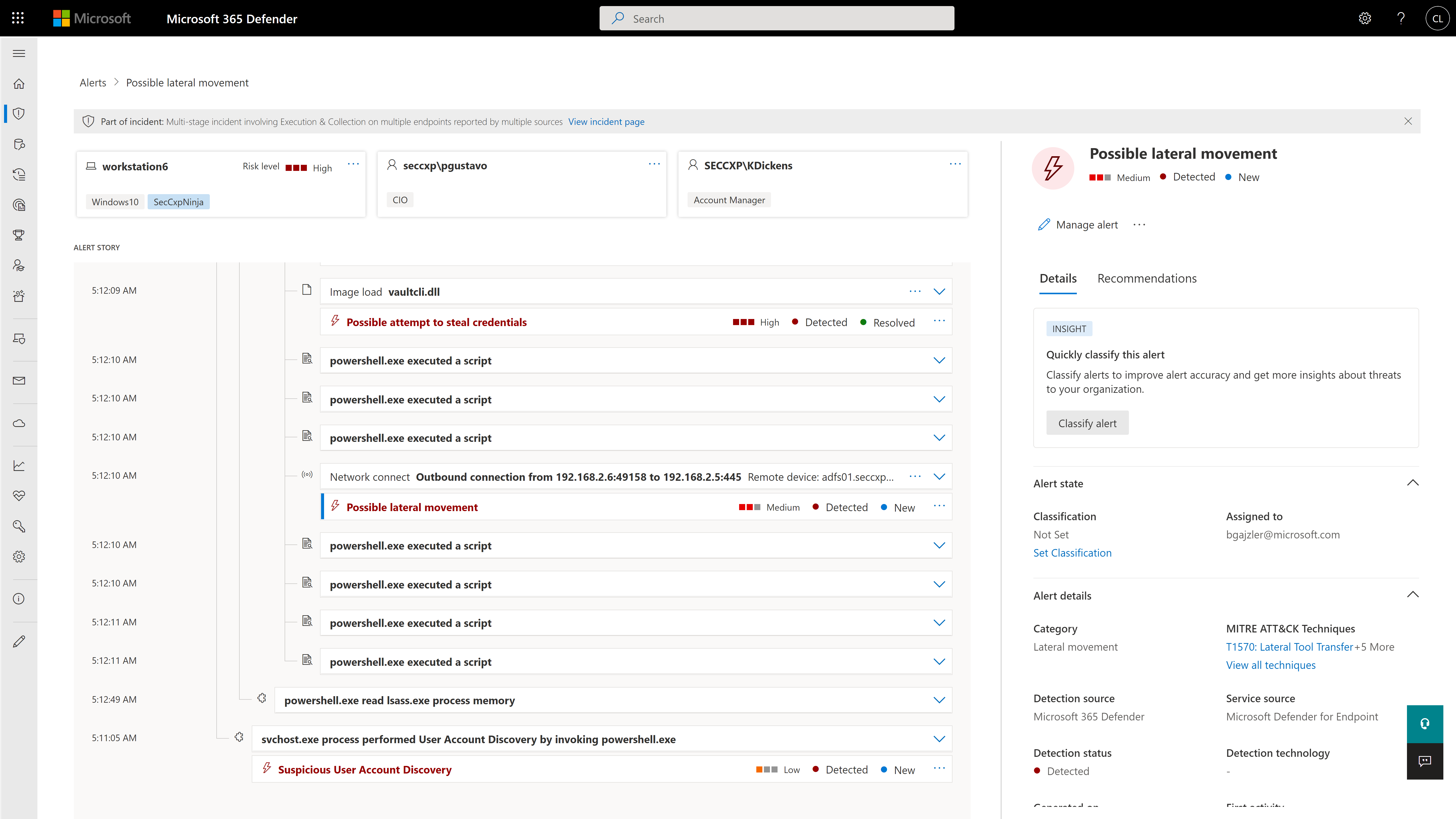
Microsoft Defender for Endpoint (formerly Microsoft Defender ATP) is a holistic, cloud delivered endpoint security solution that includes risk-based vulnerability management and assessment, attack surface reduction, behavioral based and cloud-powered next generation protection, endpoint detection and response (EDR), automatic investigation and remediation, managed hunting services, rich APIs, and unified security management.
$2.50
per user/per month
Pricing
Blumira
Microsoft Defender for Endpoint
Editions & Modules
SIEM Starter
$12
per month per employee
SIEM +
$16
per month per employee
XDR Platform
$21
per month per employee
Academic
$2.50
per user/per month
Standalone
$5.20
per user/per month
Offerings
Pricing Offerings
Blumira
Microsoft Defender for Endpoint
Free Trial
No
Yes
Free/Freemium Version
Yes
No
Premium Consulting/Integration Services
No
No
Entry-level Setup Fee
No setup fee
No setup fee
Additional Details
Pricing is based on the total number of “employees” or knowledge workers in an organization (it does not refer to the number of users or admins with Blumira accounts). A knowledge worker is an employee with a corporate email address and workstation/device (may not include number of factory workers or students at a university).
—
More Pricing Information
Community Pulse
Blumira
Microsoft Defender for Endpoint
Features
Blumira
Microsoft Defender for Endpoint
Security Information and Event Management (SIEM)
Comparison of Security Information and Event Management (SIEM) features of Product A and Product B
Blumira
8.8
Ratings
12% above category average
Microsoft Defender for Endpoint
-
Ratings
Centralized event and log data collection
10.00 Ratings
00 Ratings
Correlation
9.00 Ratings
00 Ratings
Event and log normalization/management
9.00 Ratings
00 Ratings
Deployment flexibility
9.00 Ratings
00 Ratings
Integration with Identity and Access Management Tools
9.00 Ratings
00 Ratings
Custom dashboards and workspaces
9.00 Ratings
00 Ratings
Host and network-based intrusion detection
9.00 Ratings
00 Ratings
Data integration/API management
9.00 Ratings
00 Ratings
Rules-based and algorithmic detection thresholds
9.00 Ratings
00 Ratings
Response orchestration and automation
8.00 Ratings
00 Ratings
Reporting and compliance management
8.00 Ratings
00 Ratings
Incident indexing/searching
8.00 Ratings
00 Ratings
Endpoint Security
Comparison of Endpoint Security features of Product A and Product B
Blumira is great for a small IT team in a small to medium sized environment. It gives you unlimited logging (no limit on the number of logs sent) and doesn't require advanced knowledge or expertise in SIEMs to get the system up and running.
Because of its integration with Windows, it is very easy to deploy and manage. Any IT department should be able to leverage the software and interface. The admin portal provides weighted recommendations that comprise the Secure Store, offering admins, security teams, and business owners valuable insights into their security footprint without requiring a strong security background. The software would be ideal for small and mid-sized businesses that cannot dedicate resources to security. Larger enterprises would also benefit, but may require the enhanced license.
One, it's crazy lightweight, so compared to some of the competitors that we also have used with our security services, it's really lightweight and so I don't have a lot of overhead on the system that it's running on.
So the fact that Defender for Endpoint still works with signatures is actually, I don't know, a little difficult for us because, I mean, since Microsoft trusts those signatures, you can easily inject code. And we've done it many times. To show that you can inject code through vulnerabilities like CV 2013, 99, and 33 but still keep the signature. So because of the trust of those signatures, the malware just kind of slides into the environment without Defender knowing. That's the first part. The second part is that the behavioral analysis is not precisely its Prime. It's not Defender's best capability for endpoints. So, Defender does not identify all behaviors considered by other EDRs in the market.
Microsoft Defender is closely catching -up in market with existing competitors they have added DLP endpoint & DLP Network and Cloud DLP solution last year with OCR capabilities. I would say Microsoft Defender is not legacy Vendor in end point security, the need to learn from other vendors in market and focus on new XDR technologies, which is going to be new battle for all vendors
Because in terms of the usability is easy to understand, it's easy to manage, obviously you need to have specific skills to do that, but I would say that even the console and the product is walking through the flow that you are looking for on this console.
Microsoft Defender for Endpoint chugs along just fine no matter what we throw at it and what systems it's running on. It doesn't take up a lot of resources either, so that's welcomed.
Overall support is really good for this product. Since it's a Microsoft product, you will get good support from a number of different resources, including knowledgebase articles on the web, support from Microsoft technicians, and documentation (which tends to very thorough). Also, there is a vast user support community for this product, so user support forums would also be another valuable channel to get help if needed. I don't envision too many people will have issues/problems with the product, as it tends to run good overall.
Deployment was handled by our team here and everything went pretty smoothly. We did have a few hiccups in our test group, but that only took a bit to get ironed out.
Blumira is "right-sized" for my small organization. It is not a strain on our resources (people, system, or monetary). It gives us exactly what we needed
Microsoft Defender for Endpoint offers strong integration with Microsoft 365 and Azure services, which provide a unified security experience. While McAfee Trellix is known for solid antivirus, Microsoft Defender excels in integration in the ecosystem.