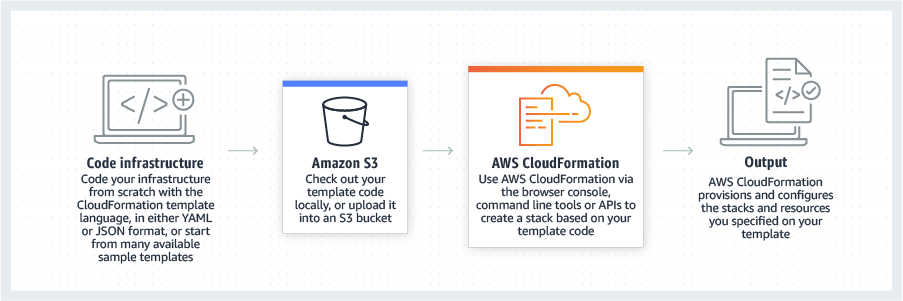
AWS CloudFormation gives developers and systems administrators a way to create and manage a collection of related AWS resources, provisioning and updating them in a predictable fashion. Use AWS CloudFormation’s sample templates or create templates to describe the AWS resources, and any associated dependencies or runtime parameters, required to run an application. Users don’t need to figure out the order for provisioning AWS services or the subtleties of making those dependencies work.…
$0
Microsoft System Center
Score 9.0 out of 10
N/A
Microsoft System Center Suite is a family of IT management software for network monitoring, updating and patching, endpoint protection with anti-malware, data protection and backup, ITIL- structured IT service management, remote administration and more.
It is available in two editions: standard and datacenter. Datacenter provides unlimited virtualization for high density private clouds, while standard is for lightly or non-virtualized private cloud workloads.
$1,323
Pricing
AWS CloudFormation
Microsoft System Center
Editions & Modules
Free Tier - 1,000 Handler Operations per Month per Account
$0.00
Handler Operation
$0.0009
per handler operation
Standard Edition
$1323
Datacenter Edition
$3607
Offerings
Pricing Offerings
AWS CloudFormation
Microsoft System Center
Free Trial
Yes
No
Free/Freemium Version
Yes
No
Premium Consulting/Integration Services
No
No
Entry-level Setup Fee
No setup fee
No setup fee
Additional Details
There is no additional charge for using AWS CloudFormation with resource providers in the following namespaces: AWS::*, Alexa::*, and Custom::*. In this case you pay for AWS resources (such as Amazon EC2 instances, Elastic Load Balancing load balancers, etc.) created using AWS CloudFormation as if you created them manually. You only pay for what you use, as you use it; there are no minimum fees and no required upfront commitments.
When you use resource providers with AWS CloudFormation outside the namespaces mentioned above, you incur charges per handler operation. Handler operations are create, update, delete, read, or list actions on a resource.
Cloning a virtual machine creates a virtual machine that is a copy of the original. The new virtual machine is configured with the Cloning Cloning a virtual machine creates a virtual machine that is a copy of the original. The new virtual machine is configured with the same virtual hardware, installed software, and other properties that were configured for the original virtual machine. For information about persistent memory and PMem storage, see the vSphere Resource Management Guide. For information virtual machine creates a virtual machine that is a copy of the original. The new virtual machine is configured with the same virtual hardware, installed software, and other properties that were configured for the original virtual machine. For information about persistent memory and PMem storage, see the vSphere Resource. Management guide. For information virtual hardware, installed software cloning a virtual machine creates a virtual machine that is a copy of the original. The new virtual machine is configured with the same virtual hardware, installed software, and other properties that were configured for the original virtual machine. For information about persistent memory and PMem storage, see the vSphere Resource Management Guide. For information and other properties that were configured for the original virtual machine. For information about persistent memory and PMem storage, see the vSphere Resource Management Guide. For information.
We used a product before that was designed to prevent users making changes and saving files to the desktop computer. This required a renewal of the license. By using SCCM in our environment we were able to discontinue using that product because SCCM allows us to completely restore a machine back to the original configuration. We have taught our users to save their individual work on either a network drive or a cloud drive. By doing this, if we do a re-image of their machine they have lost no data, and it makes for a faster resolution. In some instances having a computer in our SCCM environment it can become cumbersome when creating new users for very specific purposes. It can be done by creating new organizational units and applying new policies but when in a pinch it can be frustrating. For the most part we have tried to make "new" purpose images and groups to at least accommodate a quick install.
Provides our users the ability to deploy and manage our own datacenter based on defined software with understandable solutions for storage, compute, networking and security.
We are able to update at once all the computers from all departments without having to install the OS on every computer.
It allows us to have everything in one place for database management and datacenter inspection as well.
Needs web based storefront for requesting new software
Needs ability to manage the packaging work flow better
Sometimes is slow to download and there is no indication the entire catalog is being loaded, resulting in confused users not being able to find common software in the available list.
It's easy enough to get a shared template & apply it. You don't even have to download-then-upload or copy-and-paste, a publicly-accessible url works.
Diving deeper, it has enough powerful capabilities to make the life of a platform / DevOps engineer bearable.
However, you need equally deep knowledge to troubleshoot issues, when they inevitably pop up. This is the same for all IaC technologies, as they are additional abstraction layers on top of the native API provided by the cloud providers.
No matter our issues with the software, its ability to centrally manage systems, patch, image, and remote help users has far exceeded our timeliness to help staff. Its ability to keep current, enable us to keep the network secure, and standardize our end-user experience has saved us many hours, dollars, and time every day.
If I had to dislike something about the system it would be how much it changes once you upgrade. This could be more of a problem of mine since I get used to one way and don't like it when it changes so much. I am enjoying the newest update, but it is a mess when you are actually going through the upgrades.
Since the product I'm involved is primarily hosted on AWS we use CloudFormation but in some other products where we have hybrid cloud deployments we prefer Terraform which is opensource.
None. We are a Microsoft business, and this is THE tool for imaging, packaging, remote support, and antivirus management. Microsoft's tool is the best for managing its software, systems, and antivirus clients. I will say that Microsoft Intune, the cloud platform, can be used for those with heavy 365 usage, but for us, that does not meet our current company needs.
We have been able to automate our patch management, firmware and other security concerns.
We have a standardized "image" ensuring our setup is consistent across the enterprise. This alone has saved us in time to support and time to understand how to use our desktops.