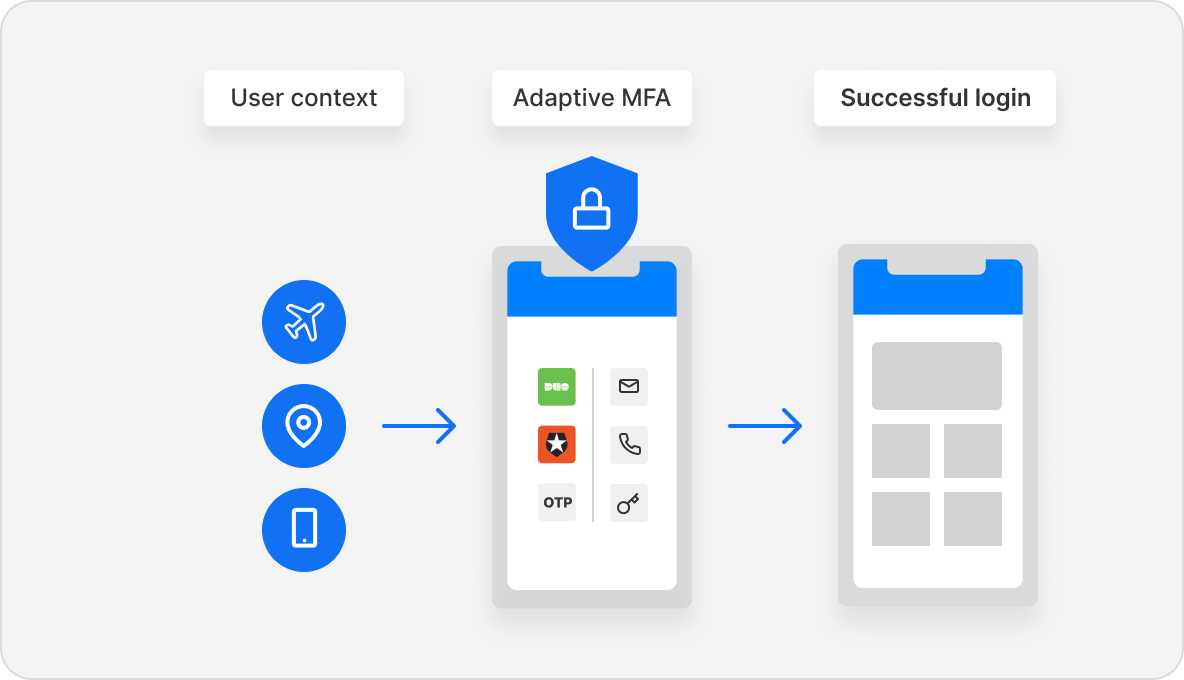
Auth0 is an identity management platform for developers and application teams. It gives users a platform to authenticate and authorize, providing secure access to applications, devices, and users. Auth0 aims to provide the simplicity, extensibility, and expertise to scale and protect any application, for any audience. Integrate Auth0 into any app, written in any language, and any framework.
$23
per month
Microsoft Entra ID
Score 8.7 out of 10
N/A
Microsoft Entra ID (formerly Microsoft Azure Active Directory or Azure AD) is a cloud-based identity and access management (IAM) solution supporting restricted access to applications with Azure Multi-Factor Authentication (MFA) built-in, single sign-on (SSO), B2B collaboration controls, self-service password, and integration with Microsoft productivity and cloud storage (Office 365, OneDrive, etc) as well as 3rd party services.
Auth0 is very well suited for situations where a JSON web token can be used for authorizing APIs, websites, and mobile devices. It's especially useful if the JWT validation can happen at a gateway layer. It's especially useful if you only need to verify the user's email address or mobile number as the passwordless login is easy to implement.
For one, a significant factor for us is that it is integrated with HelloID, which gives us, as the IT department, a lot of time back because we don’t need to create user accounts manually. It is great for the roles we have defined, as they can be used repeatedly. A great feature is that guest accounts can be created for external users; we only need to be in a closed area of your domain.
It addresses the issue of identity management very well with respect to putting in that multi authentication.
It can also support with respect to we can push these policies into another product that is not Microsoft, but it needs that SSO so we can have one account going into multi different accounts. I think that's the biggest pros and the easy use of Microsoft 365 also is one of those pros also in terms of administration.
Auth0 can be somewhat limiting if you want a lot of control over the design of your authentication flow. Custom branding can be done, but it may be limited depending on how you plan to integrate.
The Auth0 API documentation has proven confusing at times; a single API endpoint's behaviour will change based on inputs and configured settings (e.g. offline_access). Consequently fields that are advertised as being returned in a response might not be there or have different values if you miss a key detail and it can be difficult to debug when this happens. All information required is available in the documentation but requires some digging.
The toggle to switch tenants feels a bit odd, it works, but I've had a few instances where I didn't realize I was on a staging tenant looking for something that was on the production tenant. Not a big deal, just something to watch out for.
Well, I'm an active ad admin, so there's a lot of features in active directory that Entra ID seems to be just adding now. We're kind of figuring out that the policies are different than Entra ID that they were in active directory and we're finding other products to do that, like Azure policy. Some things I'm used to seeing in identity products or like active directory aren't in Entra iID, but are doing good job of managing stuff that it does so far.
Entra ID is a vital part of our Identity management/administration. With the integrations it has to other Microsoft products, setup and configuration is a breeze. Additionally, Microsoft has been around a long time and have the resources to ensure this product is stable and secure for many years to come. We know it will evolve with time to provide us what we need as technology changes.
- integration and ease of implementation - great over all product support specially for passkey biometric authentication -Auth0 is very reliable to use their API integration for security verification. It provides best API to integrate our website and application with Single Sign In option and two step verification option. Sales and technical teams are always there to provide support
Very easily usable. It could be easier to use. Implementation was kind of tricky. We do run a hybrid environment, so we're syncing a local active directory instance with Entra ID, so that could be a little tricky. But outside of that, if you're not running a hybrid deployment or a version of Entra ID usually, it's pretty straightforward.
There isn't a clear method to get a hold of support when trouble arises if you're on their standard plan. You can file a support ticket and they generally are responsive. I've often been able to find similar questions to the questions I've had when it comes to support in their ticket history, however, some have been closed without a satisfactory conclusion for the original poster.
Microsoft has offered Azure Active Directory as a solution for a couple of decades now, so they have seen and anticipated almost any issue that an organization may face and can therefore help. The cloud offering of Azure Active Directory offers some additional "self healing" or monitoring services that can minimize the need for a service call. However, as with most large companies supporting a fast growing market, there may be some gaps in service knowledge (and particularly processing) from the front line / tier one staff as they follow a corporate script at first contact.
Make sure you use a good partner. Our implementation was a bit longer and more problematic than we expected. Our partner got it done, but, in my opinion, some of their inexperience and staffing issues were evident.
Auth0 is non-evasive and does not require software download. It is user friendly, seamless, and doesn't require additional actions on the part of the user. IBM Trusteer is none of these things and is based on a technology stack that cannot scale in the same way as Auth0. We believe Auth0 provides a superior solution and is well suited for our own technology stack.
Microsoft Entra ID is not as stand-alone product as competitors like Okta. It may lack some of the features that competing products have but on the other hand it integrates both technically and license wise with other Microsoft cloud services and is easy to deploy. It is also the easiest way to extend identity management to the cloud if you already have Microsoft Active Directory in use.
Development time has been allocated to the more core parts of our business.
We are confident in the security of our user's accounts and their data.
Auth0's login flows are customizable which means that we don't have to worry about users being confused when logging in/changing their passwords, and we didn't event have to spend that much time configuring this. (Full in-house development for login could take weeks to get right.)
I don't know if I can really quantify that. It's one of those products that just exists and so there's not a whole lot of changes that we need to make with the product. And so I guess in terms of value, what we get is we don't have to worry about the identity management piece. We know that that's taken care of.