Atlassian Jira is a project management tool, featuring an interactive timeline for mapping work items, dependencies, and releases, Scrum boards for agile teams, and out-of-the-box reports and dashboards.
$9
per month per user
ProjectManager
Score 8.7 out of 10
N/A
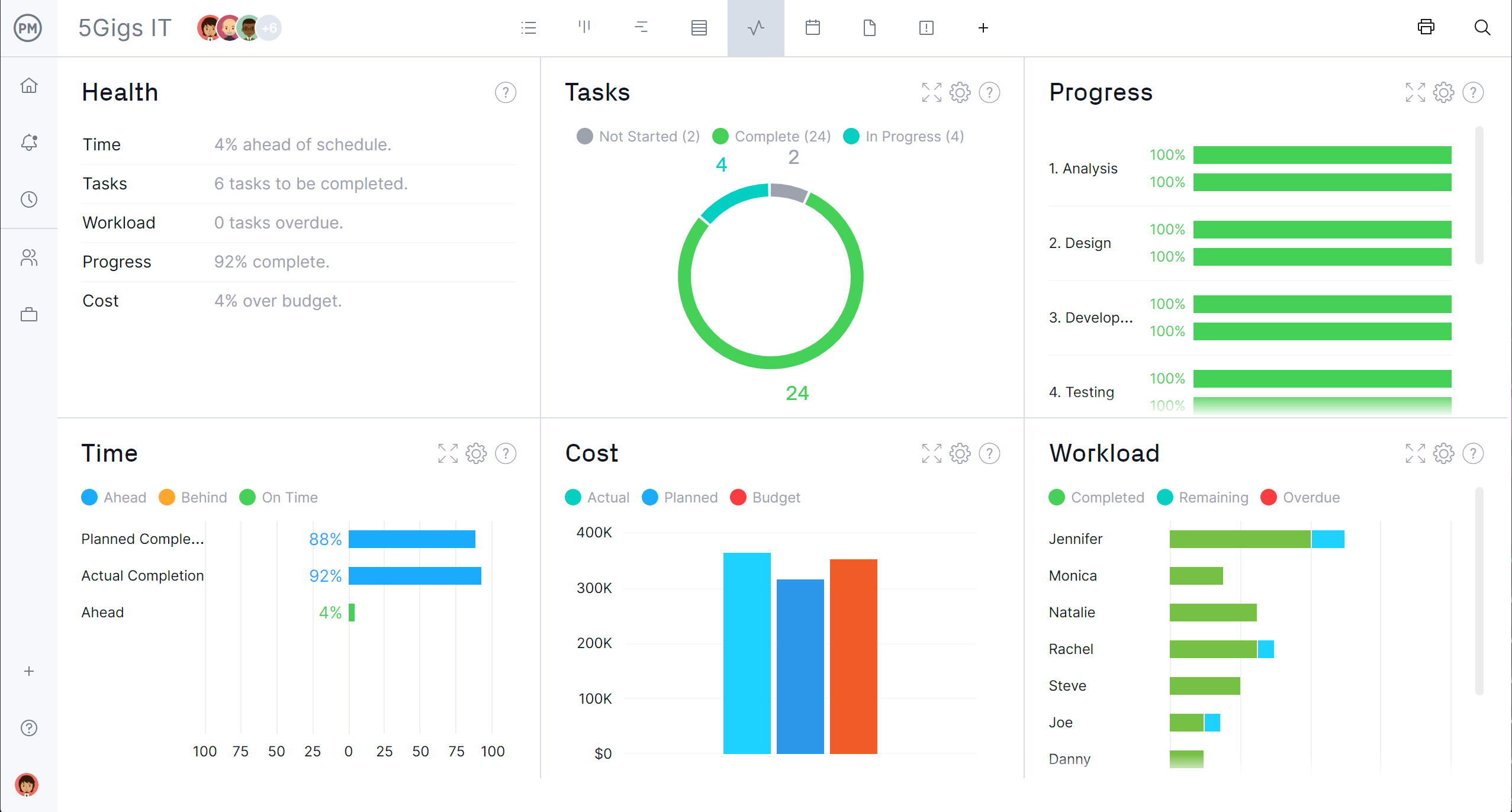
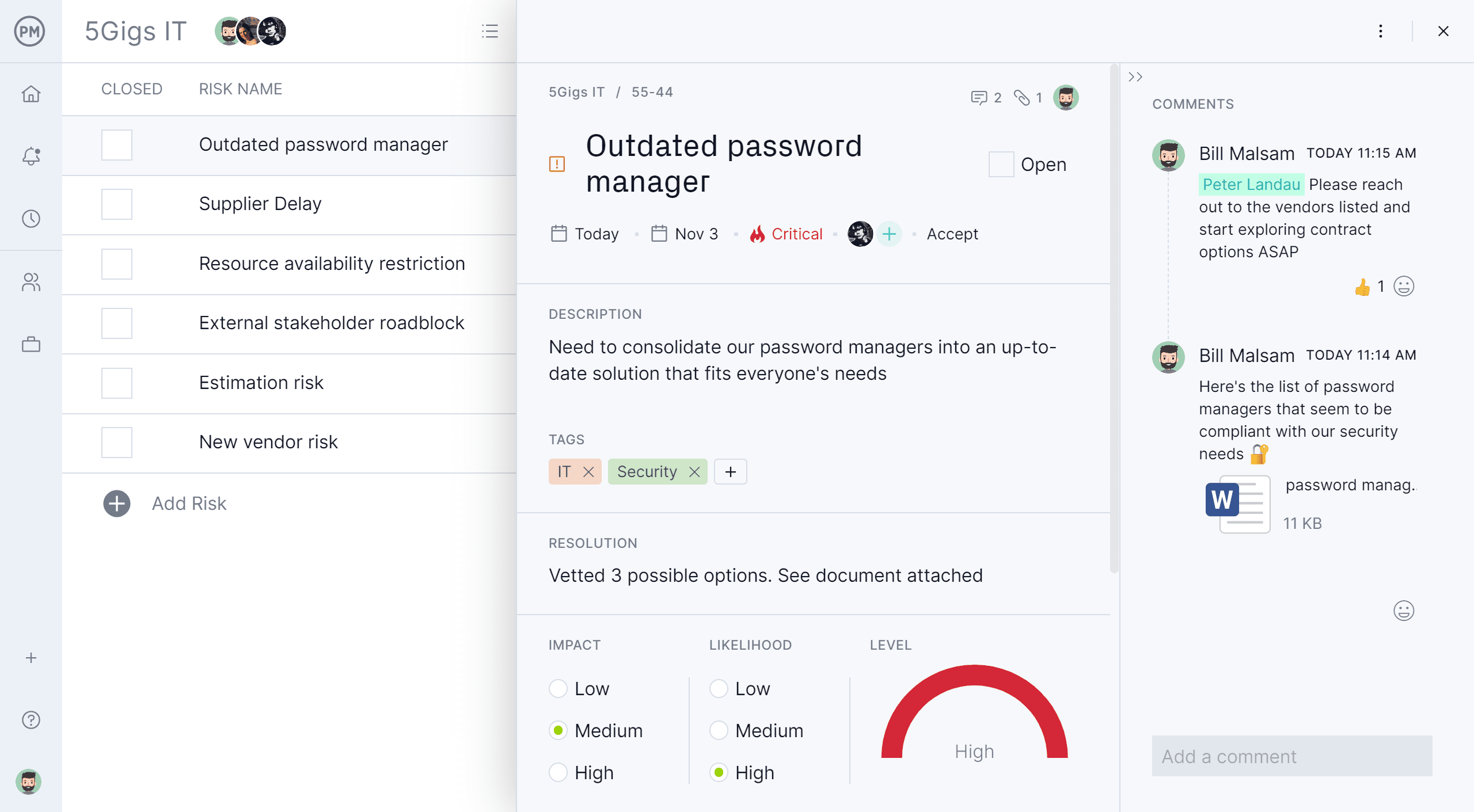
ProjectManager is a cloud-based project management software. Features include file storage, client logins, unlimited projects and integration with Google Apps, Microsoft Word, Excel and Project.
$17
per month per user
Pricing
Atlassian Jira
ProjectManager
Editions & Modules
Standard
$9
per month per user
Premium
$17
per month per user
Enterprise
Contact Sales
per year
Team
$17
per month per user
Business
$30
per month per user
Enterprise
Custom
Offerings
Pricing Offerings
Atlassian Jira
ProjectManager
Free Trial
Yes
Yes
Free/Freemium Version
Yes
No
Premium Consulting/Integration Services
No
No
Entry-level Setup Fee
No setup fee
Optional
Additional Details
Higher volume teams may qualify buyers for a discount.
Discount available for annual billing.
More Pricing Information
Community Pulse
Atlassian Jira
ProjectManager
Features
Atlassian Jira
ProjectManager
Project Management
Comparison of Project Management features of Product A and Product B
Atlassian Jira
9.5
Ratings
22% above category average
ProjectManager
9.2
Ratings
18% above category average
Task Management
9.70 Ratings
9.00 Ratings
Resource Management
9.40 Ratings
9.00 Ratings
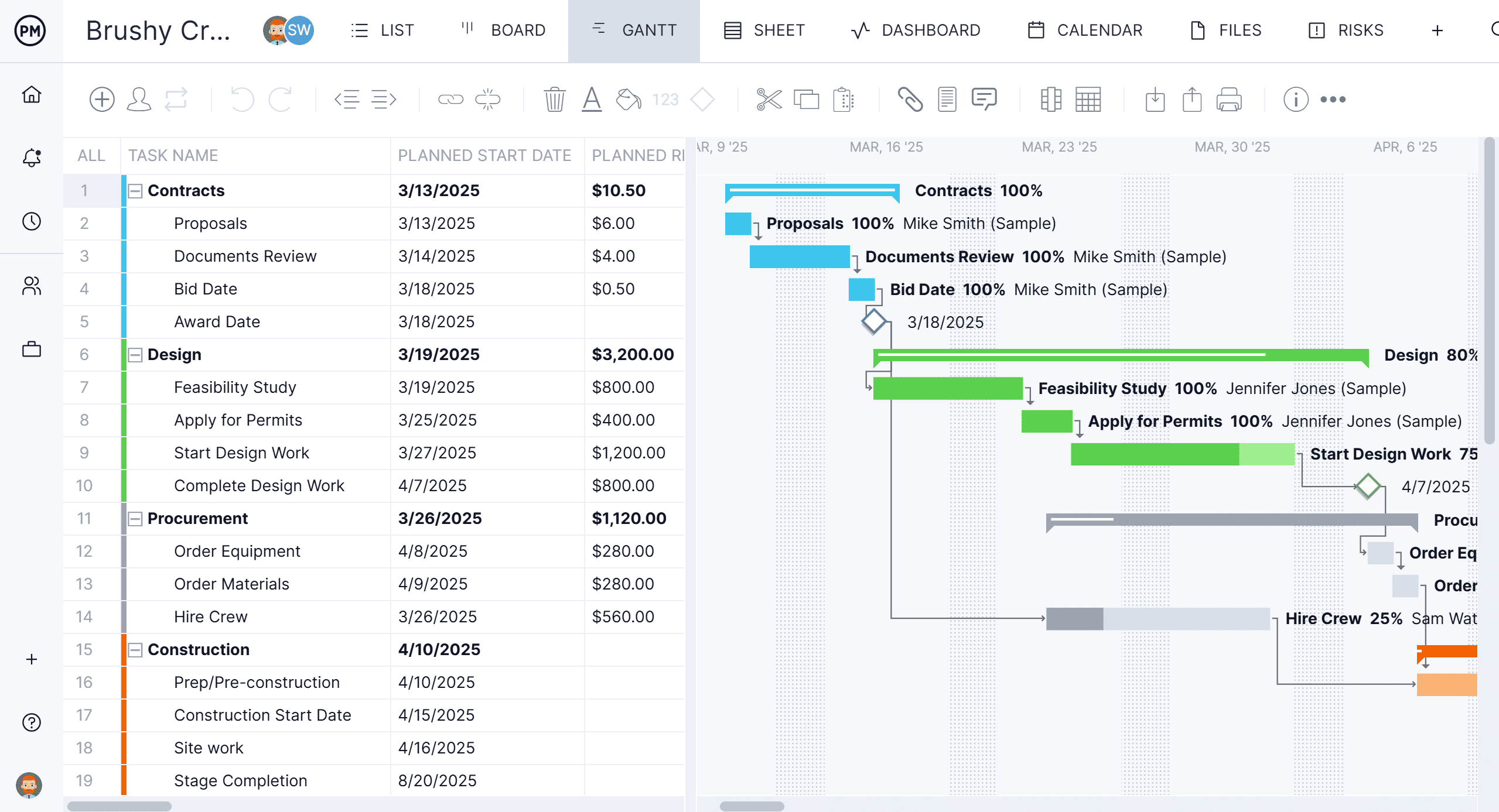
Gantt Charts
9.30 Ratings
8.50 Ratings
Scheduling
10.00 Ratings
8.50 Ratings
Workflow Automation
10.00 Ratings
8.50 Ratings
Team Collaboration
10.00 Ratings
8.50 Ratings
Support for Agile Methodology
8.80 Ratings
8.50 Ratings
Support for Waterfall Methodology
9.00 Ratings
8.50 Ratings
Document Management
8.90 Ratings
10.00 Ratings
Email integration
9.60 Ratings
10.00 Ratings
Mobile Access
9.10 Ratings
10.00 Ratings
Timesheet Tracking
10.00 Ratings
00 Ratings
Change request and Case Management
10.00 Ratings
10.00 Ratings
Budget and Expense Management
9.30 Ratings
10.00 Ratings
Professional Services Automation
Comparison of Professional Services Automation features of Product A and Product B
Jira facilitates software development, bug tracking, and sprints. It's ideal for structured workflows, issue management, and customer communication. However, more straightforward tools might be more efficient for highly creative, unstructured tasks or tiny, agile teams with quick visual overviews. Jira's complexity can be overkill for basic task lists.
ProjectManager.com is a very helpful tool for managing any job, no matter the size or scheduled length to completion. But it is also another added step in the process. So you either have to implement it as part of your standard operating procedure, or you may not utilize it to its full potential.
Creating job schedules and milestones, which we provide to our clients as well as our vendors.
A one stop shop for downloading/uploading any job/site specific documents (issues, daily reports, photos, signoffs, etc.).
Real time communication with your clients. As soon as an issue has been raised within ProjectManager.com, everyone attached to that job with get an email notification of what has been communicated or what document has been uploaded.
JIRA is highly integrated into our organization. Nearly every department uses it, and many have multiple JIRA projects set up to track different types of work. We rolled out JIRA in a staged manner, but it continued to be adopted by more and more people and departments because it continues to show results. I expect we will continue to renew our JIRA license for years to come
Atlassian Jira is relatively easy to use, but there are several ways to configure it, which can make it more complicated if you configure it incorrectly. Keeping the customizations and complexity limited to being the project would be suggested to ensure you don't lose in-built Atlassian Jira features, then change the configuration as you find things aren't meeting your exact needs.
Did not face any issues and whenever they plan maintanance they update all of us very well in advance also so in that view we are good with the product stability.
Performance is really good though it holds lot of data it loads quickly especially search operation also get the results very quickly as needed hence its good
I have not had a chance to contact JIRA's customer support. It does offer extensive documentation, although it often feels too technical for me. There is also a JIRA training app that lets you take little lessons and quizzes on different areas (e.g., JIRA basics, agile). I did find it a helpful way to teach myself.
Had received training from our own internal user so it was good and also very easy to understand topics and many tasks in the UI are self explanatory and we can do by our own
One of their strong points i stheir documentation. Almost all of the basic set up needed within JIRA is available online through atlassian and its easy to find and very precise. The more critical issues need to be addressed as well and hence the rating of 8 instead of a 9.
Take your time implementing Jira. Make sure you understand how you want to handle your projects and workflows. Investing more time in the implementation can pay off in a long run. It basically took us 5 days to define and implement correctly, but that meant smooth sailing later on.
Jira is more feature-rich than Trello and also has better integration with other tools. Trello is a lot more focused on work tracking, while Jira can do a lot more than that. Both can also be combined, although they're often considered mutually exclusive alternatives—I've seen cases where companies choose to use either one or the other, but I haven't met an actual case of a company using both.
Wanted more than what the Gantt project offered and still needed to maintain the low price point. Gantt chart tracking is an important feature, and both offer it well, but Project Manager.com offers additional features like Trello integration which made it easy for us to transfer that info from our existing projects.
JIRA has increased the teams' productivity and efficiency; the sprint timelines have improved by 15-20%.
JIRA's integration with tools like Bitbucket and Confluence has improved functional collaboration, leading to faster decision-making and issue resolution by approximately 10-15%.
Additional functionality requires additional third-party plugins, which require additional costs; the requirements of these plugins increase the costs by approximately 15%.