
AppsAnywhere vs. SolarWinds Server & Application Monitor
| Product | Rating | Most Used By | Product Summary | Starting Price |
|---|---|---|---|---|
 AppsAnywhere | Score9.8 out of 10 | Enterprise companies (1,001+ employees) | AppsAnywhere is a software delivery platform that gives students and staff access to the software they need to get their work done wherever they are, both on and off campus. Boasting more than 2 million students at over 200 universities and colleges worldwide, the vendor states AppsAnywhere improves student outcomes by making software available on any device, including BYOD, thanks to their unique approach to virtualization. Used by higher ed institutions, including University… | N/A |
 SolarWinds Server & Application Monitor | Score6.9 out of 10 | N/A | SolarWinds Server & Application Monitor (SAM) delivers application and server monitoring capabilities. SAM allows for self-service for easy setup, 1200+ monitoring templates, and customization options, as well as integrate with other SolarWinds products. | N/A |
| AppsAnywhere | SolarWinds Server & Application Monitor | |||||||||||||||
|---|---|---|---|---|---|---|---|---|---|---|---|---|---|---|---|---|
| Editions & Modules | No answers on this topic | No answers on this topic | ||||||||||||||
| Offerings |
| |||||||||||||||
| Entry-level Setup Fee | Required | No setup fee | ||||||||||||||
| Additional Details | — | SAM pricing starts at $2,995. | ||||||||||||||
| More Pricing Information | ||||||||||||||||
| AppsAnywhere | SolarWinds Server & Application Monitor | |
|---|---|---|
| Considered Both Products | No answer on this topic | No answer on this topic |
| Key User Insights | ||
| Would buy again | ||
100% Would buy again 6 Answers | 100% Would buy again 33 Answers | |
| Delivers good value for the price | ||
100% Delivers good value for the price 5 Answers | 100% Delivers good value for the price 31 Answers | |
| Happy with the feature set | ||
100% Happy with the feature set 6 Answers | 100% Happy with the feature set 33 Answers | |
| Lived up to sales and marketing promises | ||
No answers on this topic | 100% Lived up to sales and marketing promises 26 Answers | |
| Implementation went as expected | ||
No answers on this topic | 93% Implementation went as expected 28 Answers | |
| AppsAnywhere | SolarWinds Server & Application Monitor | ||||||||||||||||||||||||||||||||||||||||
|---|---|---|---|---|---|---|---|---|---|---|---|---|---|---|---|---|---|---|---|---|---|---|---|---|---|---|---|---|---|---|---|---|---|---|---|---|---|---|---|---|---|
| Application Virtualization |
| ||||||||||||||||||||||||||||||||||||||||
| Application Performance Management |
| ||||||||||||||||||||||||||||||||||||||||
| AppsAnywhere | SolarWinds Server & Application Monitor | |
|---|---|---|
| Small Businesses |  Parallels Desktop for Mac Score9.8 out of 10 | No answers on this topic |
| Medium-sized Companies | Parallels Desktop for Mac Score9.8 out of 10 |  SolarWinds AppOptics Score8.2 out of 10 |
| Enterprises | Parallels Desktop for Mac Score9.8 out of 10 |  Splunk AppDynamics Score8.2 out of 10 |
| All Alternatives | View all alternatives | View all alternatives |
| AppsAnywhere | SolarWinds Server & Application Monitor | |
|---|---|---|
| Likelihood to Recommend | 8.2 | 8.8 |
| Likelihood to Renew | - | 8.9 |
| Usability | 8.0 | 8.6 |
| Availability | - | 9.9 |
| Performance | - | 6.0 |
| Support Rating | - | 9.0 |
| Online Training | - | 4.5 |
| Implementation Rating | - | 4.5 |
| Configurability | - | 1.0 |
| Ease of integration | - | 4.5 |
| Product Scalability | - | 9.9 |
| Vendor post-sale | - | 4.5 |
| Vendor pre-sale | - | 4.5 |
| AppsAnywhere | SolarWinds Server & Application Monitor | |
|---|---|---|
| Likelihood to Recommend |
|
|
| Pros |
|
|
| Cons |
|
|
| Likelihood to Renew | No answers on this topic |
|
| Usability |
|
|
| Reliability and Availability | No answers on this topic |
|
| Performance | No answers on this topic |
|
| Support Rating | No answers on this topic |
|
| Online Training | No answers on this topic |
|
| Implementation Rating | No answers on this topic |
|
| Alternatives Considered |
|
|
| Scalability | No answers on this topic |
|
| Return on Investment |
|
|
| ScreenShots | AppsAnywhere Screenshots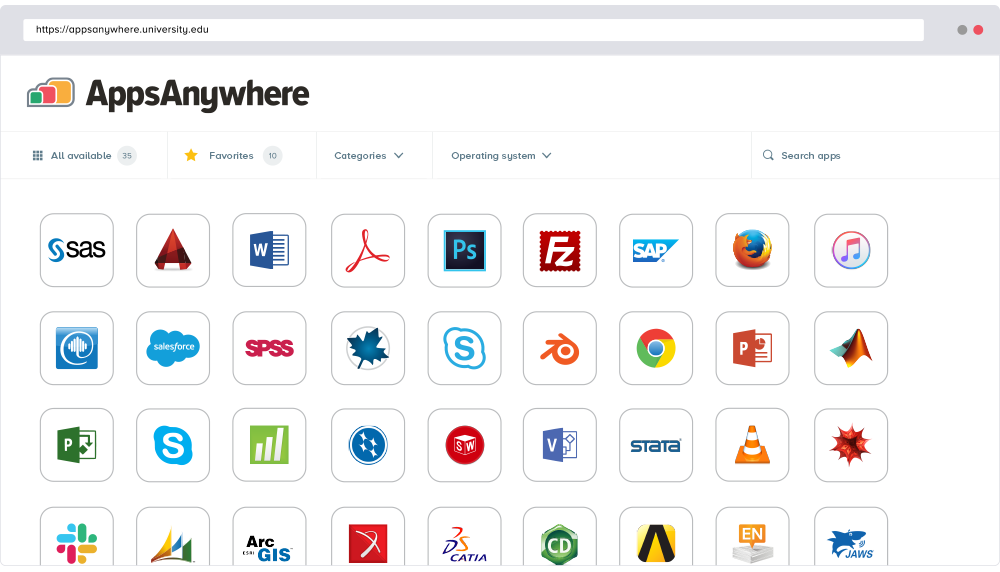 | SolarWinds Server & Application Monitor Screenshots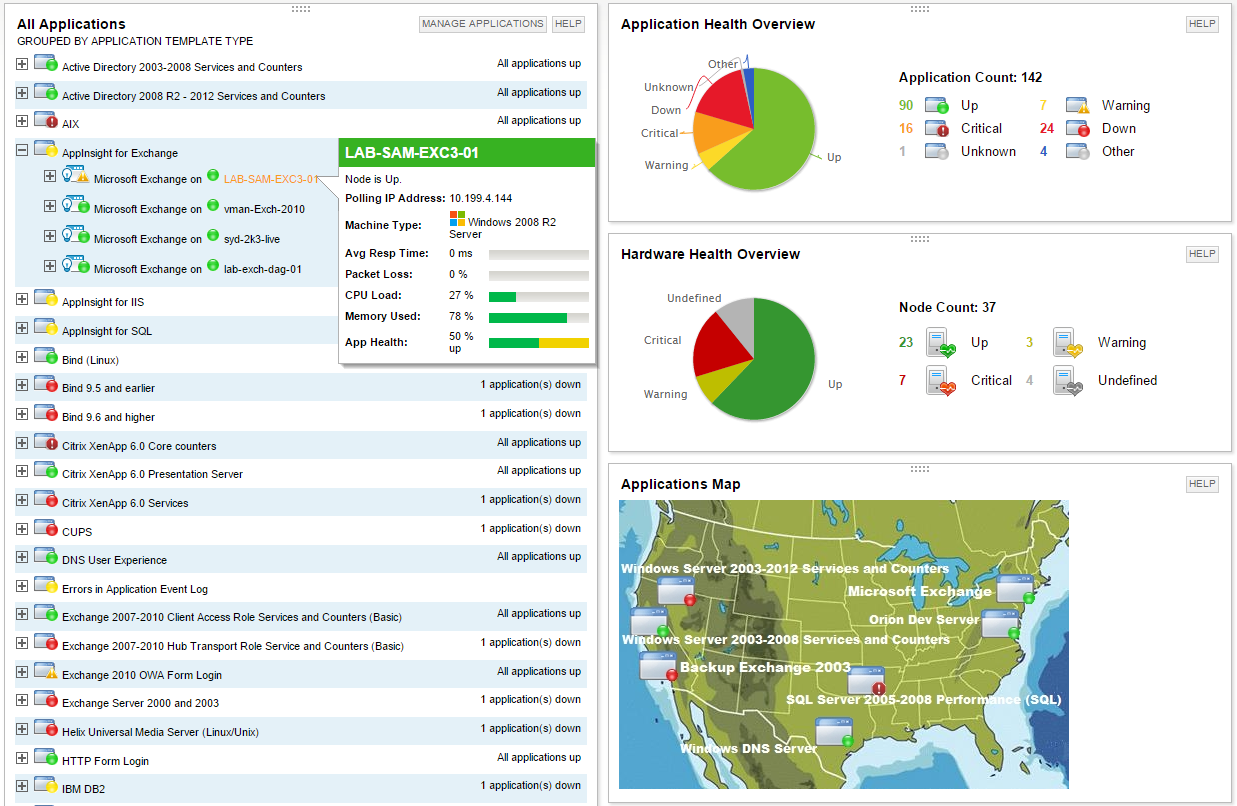      |




