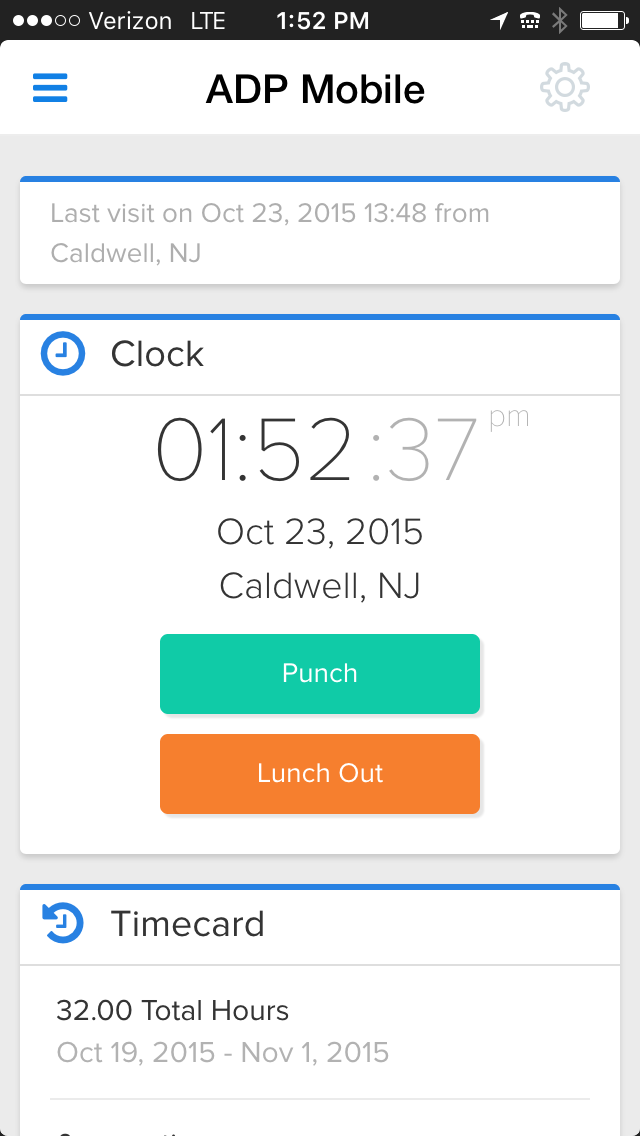
[ADP is well suited for] Smaller agencies with a regular payroll and not a complex payroll. Users must be familiar with databases, reporting, etc. as system is not as user friendly as we would like. The cost is also a factor especially as the basic system does not include other features such as performance management, dashboards, etc. I was hoping to have access to the dashboards. Reporting should also provide more sample reports
A de minimis incentive was given to thank the reviewer for their time. The incentive was not used to bias or drive a particular response, nor was the incentive contingent on a positive endorsement. More Info
WhenToWork is he very cost-effective solution that gives our team the capabilities they need without having to leverage in a much more developed workforce management solution. It allows us to manage role-based permissions that support multiple unique teams, supervisors, QA members, and contact center agents. All users can interact with the system on desktop or mobile.
A de minimis incentive was given to thank the reviewer for their time. The incentive was not used to bias or drive a particular response, nor was the incentive contingent on a positive endorsement. More Info
Ease of use: employees can clock in and out on the tablets that are at that location site. They can use the same punch information to log into ADP and look up and edit personal information on their own. Like changing address, phone, and open enrollments.
Various methods of clocking. Tablets, computer, biometric clocks, and hand clocks.
A de minimis incentive was given to thank the reviewer for their time. The incentive was not used to bias or drive a particular response, nor was the incentive contingent on a positive endorsement. More Info
A de minimis incentive was given to thank the reviewer for their time. The incentive was not used to bias or drive a particular response, nor was the incentive contingent on a positive endorsement. More Info
Trying to research previous time cards past a month are hard to achieve. There is a custom date range option but it rarely works, the program just sits there and doesn't pull up the custom range.
Pulling reports for various needs is also more difficult then it needs to be. Instead of pulling a quick report with the dates and parameters you need you have to go in and edit the report and then go back in and edit it again to return it to default settings.
You also have to watch your invoices and make sure you are receiving your discounts otherwise this software can be quite costly.
Make sure your employees bookmark the ADP ezLaborManager website, otherwise it gets difficult to find through an internet search.
A de minimis incentive was given to thank the reviewer for their time. The incentive was not used to bias or drive a particular response, nor was the incentive contingent on a positive endorsement. More Info
A de minimis incentive was given to thank the reviewer for their time. The incentive was not used to bias or drive a particular response, nor was the incentive contingent on a positive endorsement. More Info
A de minimis incentive was given to thank the reviewer for their time. The incentive was not used to bias or drive a particular response, nor was the incentive contingent on a positive endorsement. More Info
ADP is a good system to track information but, what it lacks is just some detail that provides time savings. Some instances they have made "updates" that tend to have been better previous to those "updates." One example is for staff to see how they have used their time off in the past. There should be an easy way to report and review such other than looking at pay periods. Pay statement and review and totals can also improve.
A de minimis incentive was given to thank the reviewer for their time. The incentive was not used to bias or drive a particular response, nor was the incentive contingent on a positive endorsement. More Info
The support is not the best as they take much time to get back to you, days for some items as simple as a standard report. They do not know much about their own system I feel and it shows a lack of knowledge on their part. We have gotten wrong answers and it's not so user friendly.
WhenToWork has an easy-to-access and comprehensive Help feature that gives the user quick answers. The tutorials are also a very helpful training tool for the new user.
A de minimis incentive was given to thank the reviewer for their time. The incentive was not used to bias or drive a particular response, nor was the incentive contingent on a positive endorsement. More Info
The training provided was based on a generic database and reporting which made it difficult to compare when you had your own database to work at. It also didn't provide good written materials that would be useful after the training session. It was more geared towards the practice tests or applications within the training.
A de minimis incentive was given to thank the reviewer for their time. The incentive was not used to bias or drive a particular response, nor was the incentive contingent on a positive endorsement. More Info
A de minimis incentive was given to thank the reviewer for their time. The incentive was not used to bias or drive a particular response, nor was the incentive contingent on a positive endorsement. More Info
ADP exLaborManager - I prefer ADP over the Paycor and Aon Hewitt timecard applications. This software was more user friendly, had easier access, reporting, and tracking hours than the others I have used. I am not saying the others are horrible, just that ADP was more simplistic to use and administer than the others.
A de minimis incentive was given to thank the reviewer for their time. The incentive was not used to bias or drive a particular response, nor was the incentive contingent on a positive endorsement. More Info
WhenToWork is much more cost-effective for our team size than other comparable workforce management solutions. It offers many of the same features, like role-based permissions, and mobile access, as the other much more expensive options. We are able to meet our needs across multiple unique contact center teams, with many different levels of access, and still have a cost-effective solution we have used for many years.
A de minimis incentive was given to thank the reviewer for their time. The incentive was not used to bias or drive a particular response, nor was the incentive contingent on a positive endorsement. More Info
A de minimis incentive was given to thank the reviewer for their time. The incentive was not used to bias or drive a particular response, nor was the incentive contingent on a positive endorsement. More Info
A de minimis incentive was given to thank the reviewer for their time. The incentive was not used to bias or drive a particular response, nor was the incentive contingent on a positive endorsement. More Info