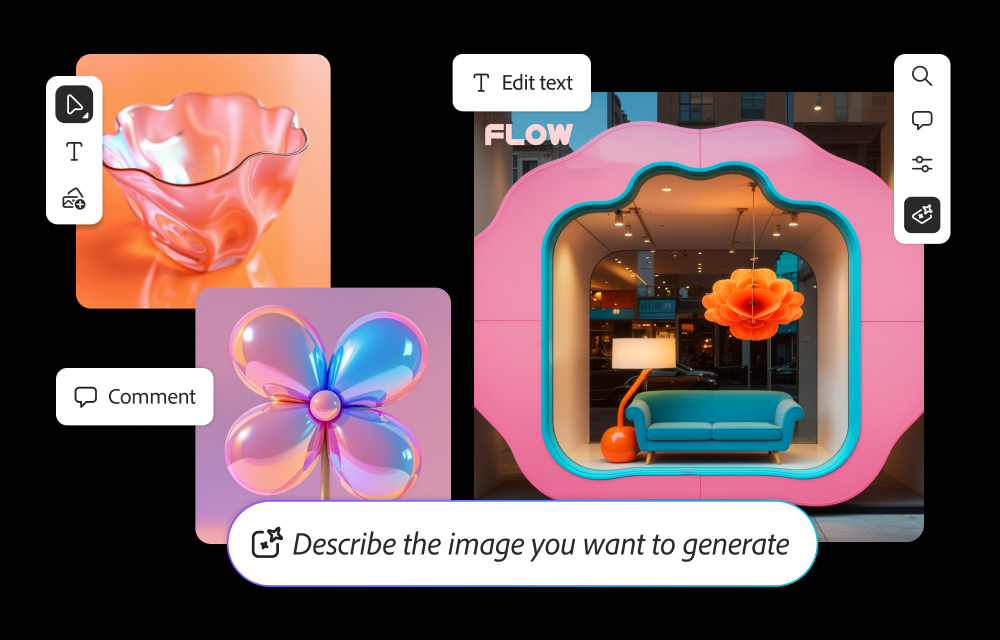
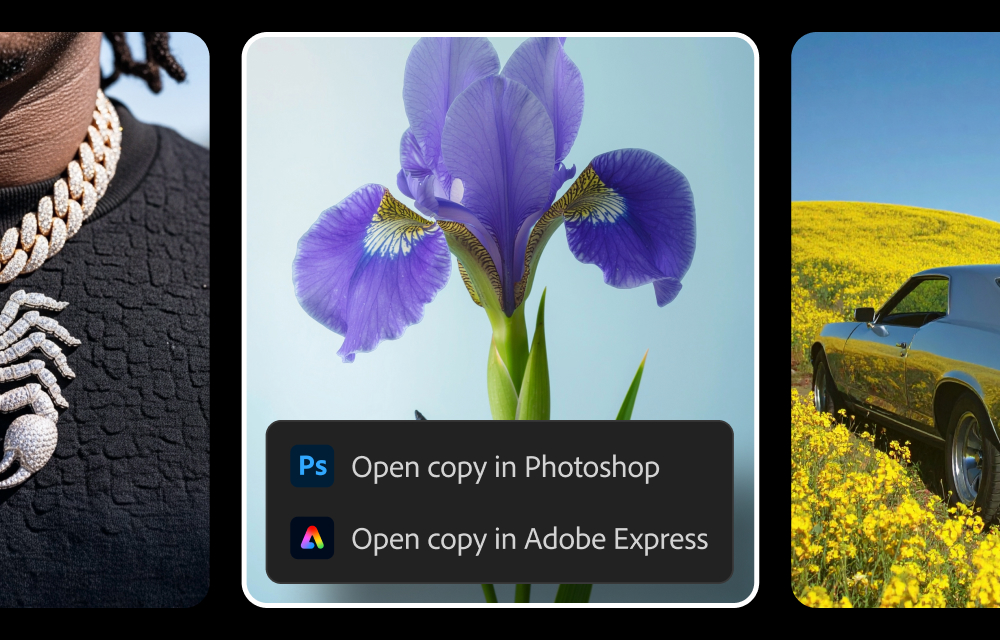
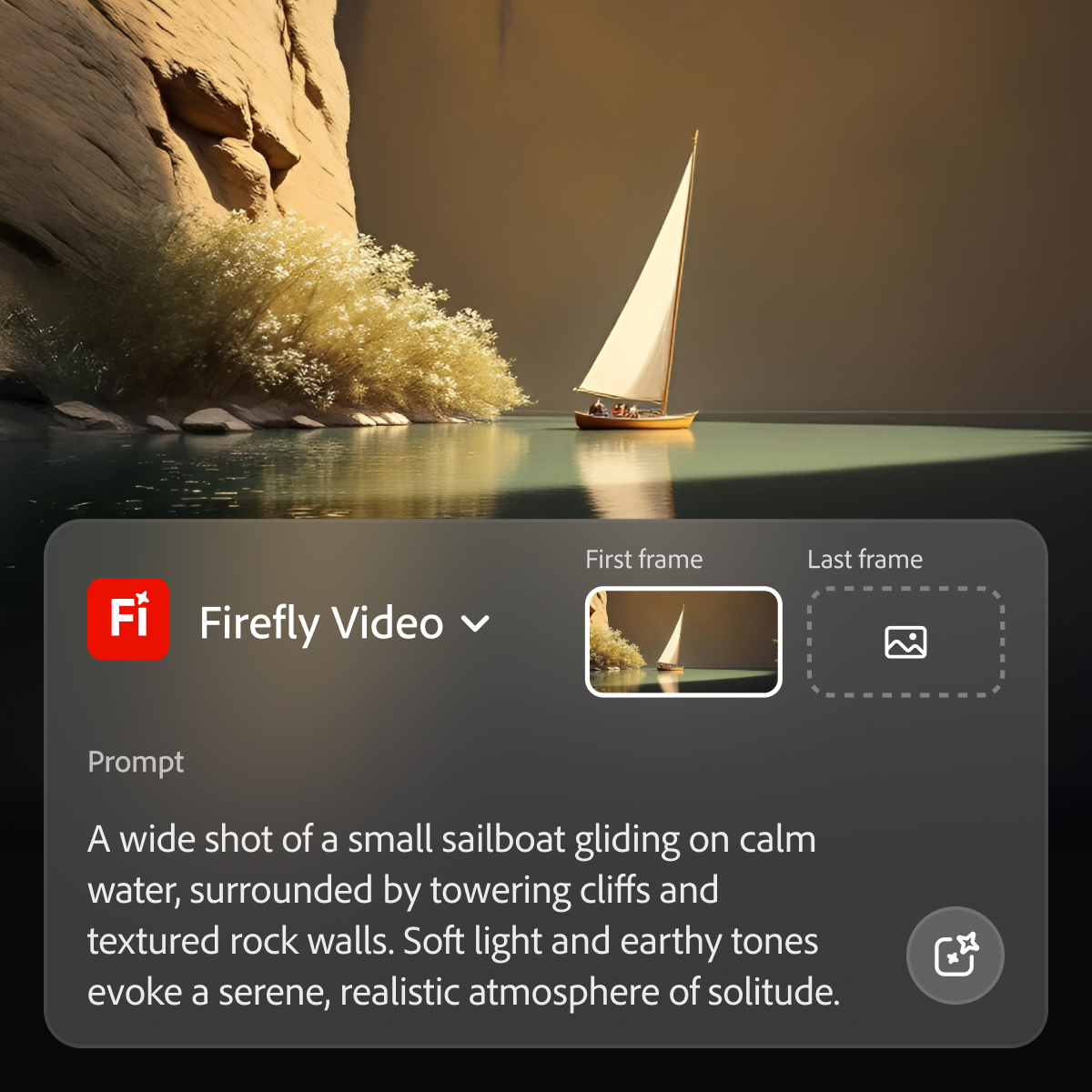
Adobe's Firefly models and services power generative AI features in Adobe creative apps, with features that can be used in Photoshop, Premiere Pro (beta), and the Firefly web app.
$9.99
per month (1 user & 2000 generative credits per month)
Canva
Score 9.1 out of 10
N/A
Canva is a popular, simple online graphic design tool. Users can import images, use templates to design banners and logos, or pay to use Canva's premium stock images/paid templates (elements starting at $1).
Adobe Firefly works pretty similar to what we also use in Canva. Canva's AI graphical generation also works fine, but we tend to use Firefly more because we feel it gives us more options that are closer to our scope and needs. We use both because we're active in both programs.
we have worked with Canva but right now it need a lot of work so we are working on Adobe Firefly currently because of its ease of use and wide range of library so the concepts are diverse and highly precise.
Adobe's Gen AI features are far more advanced than Canva. There is more user direction towards how to use the product successfully in terms of their community articles and webinars.
Adobe Firefly is a more trusted company than Canva. When we had to contact customer support, we found they are more responsive. Canva is used within the organization but not as many licenses are purchased. In the long run, we plan to continue using Firefly for most of our media …
Adobe Firefly outshines Canva in customization and integration with Adobe’s suite, making it ideal for advanced, brand-specific designs. While Canva is highly user-friendly and great for quick projects, Firefly’s AI-driven features and robust editing tools give us the …
I’ve tried other design tools like Canva and Midjourney, which are both great in their own ways. Canva is excellent for quick, easy-to-use templates and basic design needs, and it’s very beginner-friendly. Midjourney, on the other hand, has impressive AI capabilities for …
Photoshop at the end of the day can do a lot more than Adobe firefly, and probably most of the other software on the market for media generation. However, Adobe PhotoShop requires extensive training for results and quite a bit more of training for excellent results. That would …
Adobe Firefly provides images of much higher quality than the CoPilot image generator and without credit limitations, allowing for more continuous experimentation. Although I haven’t used Shutterstock’s AI yet, I no longer see the need to rely on image banks for most of our …
Adobe Firefly is a seperate version of AI from photoshop. Photoshop AI in latest version can do many things but it needs some work, it generates something different than you ask, thats where Firefly AI comes in handy because it's built just to tackle that problem we had with AI …
allows to you make changes of images that you already made and does not recreate the whole image that looks completely different than what you may like.
As I mentioned before, Adobe Firefly is a good AI generation tool, however it has both its pros and cons. If you are in a fast-paced scenario, streamlining your work and/or looking for momentary inspiration to get a project done is ideal; since it is integrated within the same Adobe suite (at least in Photoshop, Illustrator and Premiere Pro along with After Effects in beta) and usually saves you time in searches in browsers as well as in other services that, although they can help, are not fully integrated into the suite. However, as a downside, it must be clarified that since it is not perfect in content generation, you tend to waste some time trying to properly generate the prompt necessary for the optimal generation of the desired result. It is essential to clarify that it is also tiring that the prompt is not generated at all, causing you to fall behind in delivery times as well as in the quality of the material that was requested to be generated.
They are suited to serve the non-profit space, offering premium features at no charge for up to 50 users. They provide tools for non-graphic designers that help to create appealing and attractive pieces. For those who are unsure about where to start with a project, Canva offers templates that can be edited to suit the current need.
Generative fill is a real time-saver, enabling us to modify images to suit our needs quickly and easily.
Text to image is an effective and fun tool to use, enabling us to create hard-to-find images for projects, or to create fantasy-like images that would otherwise require lots of manual effort to generate.
Firefly enables non-designers and artists to generate ideas, helping them to brief the design team in more detail.
It helps you find the right design and helps you start with the right template
It helps in creating for all platforms, basically you need to create the design only once and Canva takes care of the rest by resizing the design for whichever platform you want to publish it to.
It also comes with a content planner which is extremely helpful for obvious reasons. It relieves you from the hassle of posting when the right time hits.
There's a Brand feature which is also extremely fascinating as it helps you store all your brand information (even color) at the same place.
Has mild compatibility issues depending on what software or needs you have pre existing.
While it does have deep customization, the areas it can apply to are bit narrow. It’s good quality, but we still find a few missing features and often supplement with human interaction.
Has a bit of a problem with file size uploads, which is tough in media related tasks.
I have a hard time coming up with any improvements, perhaps increase the number of free elements to use in design.
Maybe, Canva should check if you start editing a previous document to see if you want to change the current design or create a new one as a clone of the current document (design).
I'm sorry, I really can't think of a 3rd. Overall, I really like working in Canva.
Adobe Firefly is a very useful tool. It is compatible with my other graphic design tools in the Adobe Suite. It performs well and I have an understanding of many of its capabilities. Due to those factors alone, I find that I am able to incorporate it into my workflow pretty seamlessly.
The ease of use makes Canva a powerful tool for manipulating images, creating original content, and testing ideas without requiring the involvement of graphic design or more time-intensive image editing software such as Photoshop. While it doesn't have the full functionality of a mature software, such as Photoshop, The speed and simplicity of Canva makes it a necessity in a business of any size
I’m giving Adobe Firefly a 6 because, while it’s great for quickly generating design options, it has its limitations. It’s user-friendly for basic tasks and definitely helps speed things up, but when we need more customization or a specific style, it can feel a bit restrictive. The collaboration tools are also somewhat limited, which can be challenging for larger teams working together. Overall, it’s a helpful tool, but there’s room for improvement in advanced features and team collaboration.
It is super easy to use, but it could be limiting if you're on a small device. It is easier on a bigger device because you can resize graphics and text easier than with your fingers on a small device. I do think it's perfect and easy for non-designers who don't have any training. As long as you have a good eye for visuals, Canva is a wonderful substitute for graphics programs on-the-go.
I have yet to encounter Canva being offline in at least 6 years of using it regularly. They also announce well in advance if there may be upgrades to the code and the hours during which there may be issues accessing the service.
I haven't ever had issues with a slow-loading site and there haven't been any lag issues within the software. There have been maybe a handful of times over the past six years where I have tried to upload a large image and it will slow down as it loads the last megabyte, but I have yet to have the system time out or require any interference by me
Overall, Canva is easy to use, easy to train others to use, allows for creativity with a professional look without enormous associated costs. The mobile apps works almost as easily, but at a minimum allows for easy review and downloading in a pinch. Really, anyone can learn to use Canva quickly and will immediately benefit from the results.
As I have noted in previous answers, the integration of Adobe Firefly is already done for you. It is part of the Adobe Suite and works seamlessly with all other Adobe products. If you don't happen to use Adobe products, it works just like any other AI image creation tool in that you can save and download your creations to edit in whatever software tools you prefer.
Remember to download the mobile app onto your phone for easy image manipulation on the go. Adding company colors, logos, and typefaces to your company account is an easy process. When images are uploaded, these can also be shared between accounts within a company, as can canvases you've created for easy editing among teams.
Midjourney was not in this list but that is the most similar to Firefly in my opinion. I find that Adobe Firefly and Midjourney have a lot of overlap. The generative fill options on Photoshop and Illustrator also include very similar use cases with generating photography and extending areas of a photo to imagine outside of the crop.
Canva is faster and easy to use. There aren't complex menus like Adobe products and everything is generally intuitive. Menus are mostly open and visible or relatively small. Small changes to the program add to it's usability rather than detract. I also appreciate that Canva helps the user become more creative through use. By giving you editable examples through templates you can choose to re-design something ir create something from scratch w/ a similar concept or feel. Canva often gives me ideas that I can implement into my design or into the entire project even. I also like how Canva is intuitive in it's approach. The program gives you suggestions when it comes to graphics, etc. without getting in your way if you know what you already want
Very easy to add accounts and share content between them. Collaboration is also easy to manage and can be done on a project-by-project basis. The cloud-based software means it is incredibly fast to add a coworker and have them editing images within minutes. A live internet connection is required to access Canva so this is something to consider if expecting to use the software while on journeys without access to wifi etc
Overall, we have eliminated one of our paid stock subscriptions since we can get a good bit of image support through Adobe AI integrations
We are still at a bit of a break-even with firefly if you consider the credits cost and the additional "touchup" time needed when the AI generated image is not quite there.
Again, I think in 2-3 years, Firefly will be a bigger part of our daily workload. Right now, its more of a novelty that can help with quick fixes, an icon, a background pattern...just moving towards less stock resources and towards generating our own through ai
As far as ROI is concerned, Canva has proven itself time and time again as having a positive impact for business.
Just yesterday, I had to prepare an hour-long presentation on the fly; the great reviews of the presentation and the materials (all made in Canva) only served to advertise for Canva and it proves that Canva is a smart investment.
I don't think in the time that I have been a Canva pro user that I can say that my ROI has been negatively impacted. Highest recommendation. The software more the casually pays for itself time and time again.