TrustRadius: an HG Insights company

Snowflake

Score8.8 out of 10

373 Reviews and Ratings

What is Snowflake?

The Snowflake Cloud Data Platform is the eponymous data warehouse with, from the company in San Mateo, a cloud and SQL based DW that aims to allow users to unify, integrate, analyze, and share previously siloed data in secure, governed, and compliant ways. With it, users can securely access the Data Cloud to share live data with customers and business partners, and connect with other organizations doing business as data consumers, data providers, and data service providers.

Media

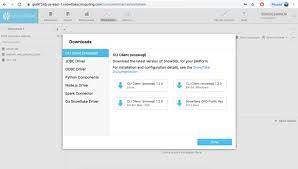
Snowflake Installation

Fastest Cloud-Base Data Storage in the world.

Use Cases and Deployment Scope

We use Snowflake daily, where all of our data is stored. It is straightforward to use and gives you a lot of flexibility to import your tables for custom analysis; it also provides more advanced functions, such as LISTAGG, which is not available on other cloud platforms.

Pros

  • Fast Query.
  • Reliable
  • Simple to Use.
  • Dark Mode.

Cons

  • Python files.
  • Import Python files from notebooks.
  • When pinning a table, the pinned items should always be visible.

Return on Investment

  • ROI
  • Communication.
  • Monitor Activities.

Usability

Alternatives Considered

Azure SQL Database

Other Software Used

Microsoft Power BI, Savant Labs, Looker Studio

Your data team will love Snowflake, just be sure to manage cost

Use Cases and Deployment Scope

Our company has grown organically and by acquisition, and as a result we have a series of disparate software products with around 800 databases across different clouds and different databases - SQL Server, MySQL, Postgres, AWS, Azure, etc.

My challenge was to implement an awesome and consistent reporting suite that allowed customers full access to all of their data across all of our products. While the software development team is working on integrating all these disparate products, that's a significant multi-year challenge.

Implementing a data lake in Snowflake greatly empowered my team to make tremendous reporting, blending data from many sources, without adding any load to the transactional databases. What's more, Snowflake has a vast array of excellent built-in features such as row-level security, data masking, secure sharing, and other items that allowed us to push security right down to the database level so we secure data no matter how customers access it, without relying on complex where clauses, etc., in queries.

The Snowflake model of separating compute from storage and allowing us to have differing workloads for differing usage scenarios is also very helpful.

Pros

  • Security
  • Scaling
  • Support
  • Separating compute from storage
  • Flexible disparate compute models
  • Detailed history of all your queries and activity, for analysis/review/troubleshooting
  • Cloning, undeletion, sharing - all tied to how Snowflake stores data

Cons

  • There is no support for triggers
  • Materialised views are limited to only one table
  • You can't create dynamic SQL in functions

Most Important Features

  • Security - role-based access control, row-level policies, data masking
  • Cloud agnostic - we can put it in any cloud, any region, so it lives where our apps/data is
  • The support is very good; you can ask questions and get detailed, helpful answers
  • The ability to review activity/usage, and look at any and all past queries is tremendously helpful for debugging and analysis

Return on Investment

  • Snowflake has accelerated our ability to offer a single reporting solution that blends many disparate databases together
  • There is a need, however, to carefully monitor costs. It's easy to bring costs up significantly through larger compute warehouses than needed, or by scaling too soon, or by not pairing the warehouse with the workload appropriately
  • We have had some difficulty finding the best tools to ingest data into Snowflake from all our sources, and it must be remembered there is a cost to this element also

Alternatives Considered

Amazon Redshift, Google BigQuery and Databricks Lakehouse Platform (Unified Analytics Platform)

Other Software Used

Hevo Data, Logi Composer (Zoomdata), Logi Info (Logi Analytics Platform), Amazon Redshift, Microsoft SQL Server


Snowflake - a scalable, secure and cost effective cloud based data storage platform.

Use Cases and Deployment Scope

At Numerator, Snowflake is used as a cloud based data storage platform and it also provides robust data warehousing solutions. The amount of data at Numerator is at a very large scale and it is growing very fast, Snowflake manages this large volume of data very efficiently. We also use Snowflake for analytical purposes, it provide us a platform to run SQL queries to analyze our data and create dashboards.

Pros

  • Snowflake provides faster data warehousing solutions.
  • Snowflake can be easily integrated and connected with other third party tools.
  • Snowflake does well in ETL and ELT task.

Cons

  • Snowflake can provide more data visualization options in their worksheets.
  • In Snowflake worksheet, the query results are cached for 24 hours and it is not possible to see the query result after 24 hours. Snowflake can provide option to see query results even after 24 hours, that will be very helpful.
  • Snowflake can implement more data masking and encryption options.

Return on Investment

  • With separate compute and storage feature, the queries get executed quickly and it improves our overall productivity.
  • Earlier we were using a different product for analytical purposes, but with Snowflake's in-built analytical feature we are now able to save money.
  • Snowflake is cost efficient, features like auto suspend for compute resources helped to control the costs.

Usability

Other Software Used

dbt, Apache Airflow, Atlassian Confluence

Performs well

Use Cases and Deployment Scope

we use it to find information on orders and supply chain issues. we also use it for various AI/ML and data science projects.

Pros

  • seems to scale well when needed
  • good at storing lots of data
  • modern and performant

Cons

  • speed could still be faster without requiring more compute
  • cheaper cost
  • more robust sql editor

Return on Investment

  • allows us to answer questions faster
  • takes advantage of cloud benefits

Usability

Alternatives Considered

Teradata Vantage, MySQL, Oracle Database and SingleStore

Other Software Used

Tableau Desktop, Tableau Server, ThoughtSpot

Snowflake a great data warehousing tool.

Use Cases and Deployment Scope

We work as a team setting up the Snowflake environment for our clients, which includes setting up production, development, and testing environments, setting up the role-based access control, and implementing masking policies. We create pipelines using tools like Azure Data Factory, airflow, and Matillion to bring clients' raw data into a Snowflake. Then, we create procedures and tasks on top of them to clean that data and transform the data for reporting purposes, and then we use the Snowflake consumption layer for all our reporting purposes and create reports out of it. We also use Snowsight for some of the Snowflake usage reports, such as cost monitoring and query monitoring. We have also made use of the dynamic table tables where we had a requirement to refresh the tables on an hourly basis so that we don't have to create multiple elements like task stream. The dynamic table can take care of everything.

Pros

  • Creating Procedures.
  • Python integration.
  • Snowsight for reports.
  • Data masking.
  • RBAC

Cons

  • Subquery.

Return on Investment

  • Increased business agility.
  • improved internal efficiency.
  • Cost effective.

Usability

Alternatives Considered

Amazon Redshift

Other Software Used

Sigma Computing, Matillion, Apache Airflow