
TrustRadius: an HG Insights company

Anypoint Platform

Score7.8 out of 10

115 Reviews and Ratings

What is Anypoint Platform?

The Anypoint Platform developed by MuleSoft and acquired by Salesforce in early 2018 is designed to connect apps, data, and devices anywhere, on-premises or in the cloud. This platform was built to offer out-of-the-box connectors as well as tools that architects and developers can adopt quickly to design, build and manage the entire lifecycle of their APIs, applications, and products.

Media

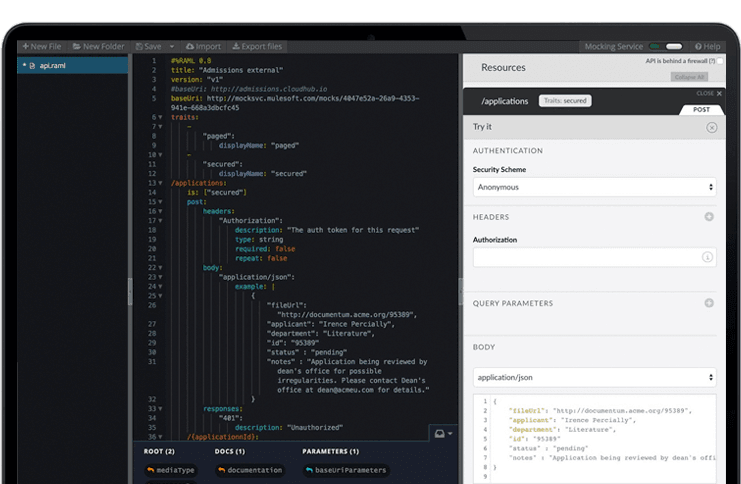
Connect any endpoints using out-of-the-box connectors, dynamic connectivity to API specifications, or by building reusable connectors with Anypoint DevKit™.
A reporting suite that provides a real-time view of API consumption trends and operational performance. Analytics provides insight into how your API is being used and informs forward-looking design decisions.
A platform to engage with API developers and drive adoption. Share documentation, examples and manage developer access from a single platform.

1 / 3

Top Performing Features

  • Pre-built connectors

    Pre-built, tested connectors to a wide variety of applications such as ERP, CRM, HCM, Marketing Automation, etc.

    Category average: 8.3

  • Connector modification

    Provision for modification of pre-built connectors to suit specific environments

    Category average: 7.5

  • Monitoring console

    Central console for monitoring resource utilization, system health, ability to start and stop processes, etc.

    Category average: 7.5

Areas for Improvement

  • Support for real-time and batch integration

    Software supports both real-time and batch integrations

    Category average: 7.6

  • Data security features

    Data security features include rights management, LDAP integration, password encryption, etc.

    Category average: 7.8

  • Data quality services

    Software includes capability to perform data profiling, deduplication, cleansing etc.

    Category average: 7.9

MuleSoft Anypoint Platform as an API Integration Experience

Use Cases and Deployment Scope

We're using MuleSoft Anypoint Platform to integrate our CRM software Salesforce with various other applications like SAP, AD, Workday etc. The integrations are invoked as APIs majority as REST webservices and for a small number of functions as SOAP Webservice. Many of these services are also opened for external use by proper authentications in place.

Pros

  • Cloud Deployments
  • Plug-and-play compatibility with prefabricated connections
  • We can use XML, JSON, and Java for it.

Cons

  • RAML should be designed and compiled within the MuleSoft Anypoint Platform studio
  • The MCD Certifications come with only 2 years of validity which makes it costly each time to go for paid certifications
  • While developers can eventually master MuleSoft Anypoint Platform, it takes some time

Return on Investment

  • Mulesoft can be used to provide an integration platform to a large number of systems like Salesforce, SAP, and others
  • An excellent option to develop microservices and real-time integrations
  • Time saver as it is very fast in data transformation and prototyping the services

Usability

Alternatives Considered

Amazon API Gateway

Other Software Used

Atlassian Crowd, Atlassian Confluence, Jira Product Discovery

Mulesoft is the leading integration solution connecting all areas of the business.

Use Cases and Deployment Scope

Mulesoft Anypoint Platform enables us to seamlessly integrate our SAP ERP business system with a variety of other business-critical systems that support our processes in the supply chain, manufacturing, logistics, sales order processing, warehousing, distribution, support, reporting, and analytics.

Pros

  • Integrates SAP with non-SAP systems to support our business.
  • Performs well.
  • Seamlessly integrates much like a native integration tool.

Cons

  • Price of licensing is a little on the high side.
  • Cost of customizing can be high due to specialized skills required.

Return on Investment

  • The only negative is the high cost to acquire Mulesoft licenses and consulting support.

Alternatives Considered

IBM API Connect

Best among all its competitors

Use Cases and Deployment Scope

It is being used by our Integration team. Basically, it is used to solve business problems where integration needs to be done between the legacy system and Salesforce.

Pros

  • First and foremost, it is capable of integration using a variety of connectors.
  • Secondly, the transformation is just so simple, we can use XML, JSON, and Java for it.
  • Thirdly, it's an all around good product. It has everything you need to start from scratch and deploy on CloudHub.

Cons

  • The functions used in the transformation connector should be prompted automatically.
  • RAML should be designed and compiled within the Anypoint studio.
  • There should be connectors in exchange for DB which doesn't exist.

Return on Investment

  • Positive impact in bringing more projects to us.
  • Negative impact in that not many clients are aware of it as of now.
  • ROI is overall on the positive side.

Alternatives Considered

Dell Boomi and Informatica Cloud

Other Software Used

Dell Boomi, Informatica Cloud

Great alternative to Boomi, SAP Integration Suite / PI/PO

Use Cases and Deployment Scope

A great alternative to Dell Boomi or other middleware products. I still think the user interface is evolving but it can be of significant use towards becoming an API-first company. Mulesoft Anypoint is a competitive solution for developing and deploying API for the organization. It is well documented, and easy to deploy and run.

Pros

  • API management
  • Monitoring
  • Cloud integration

Cons

  • Access management should be simplified.
  • Should be fully available over the cloud, with no more software installation on a laptop, but again something is necessary to act as a bridge unless it's C2C.
  • User Interface

Most Important Features

  • API Manager
  • Message Monitor
  • Pre-built packages

Return on Investment

  • Near real time monitoring, eliminated manual intervention
  • Quick deployment, reduced TAT
  • Efficient daily operations

Alternatives Considered

Boomi and SAP Integration Suite

Other Software Used

LEAi, SAP Process Automation, 1EDISource

MuleSoft Anypoint allows us to embrace the latest API technology and stay competitive in today's fast moving IT world

Pros

  • Fast deployment and implementation.
  • Seamless connection for any application.
  • Pre-built connectors out of the box.
  • Integrates easily with Salesforce platform.

Cons

  • Has more features than what we really need so we're paying for more than we use. Sort of like paying for an Abrams tank when all we really need is a Toyota Corolla.
  • Not a value product, tends to be expensive.
  • Takes a while for developers to learn to use Mulesoft Anypoint.

Most Important Features

  • MuleSoft Anypoint Exchange including templates, connectors and examples.
  • Multiple layers of management and engagement for APIs that create modular building blocks which can be shared in future builds and deployments.
  • Easy integration with just about any vendor out there.

Return on Investment

  • We haven't calculated ROI, but it has allowed us to onboard new vendors much faster than building solutions in-house.
  • Allows for faster integration and on-boarding of vendors and partners.

Alternatives Considered

Amazon API Gateway, Apigee Edge, TIBCO ActiveMatrix BPM and Dell Boomi

Other Software Used

AWS Lambda, Amazon Elastic Compute Cloud (EC2)
