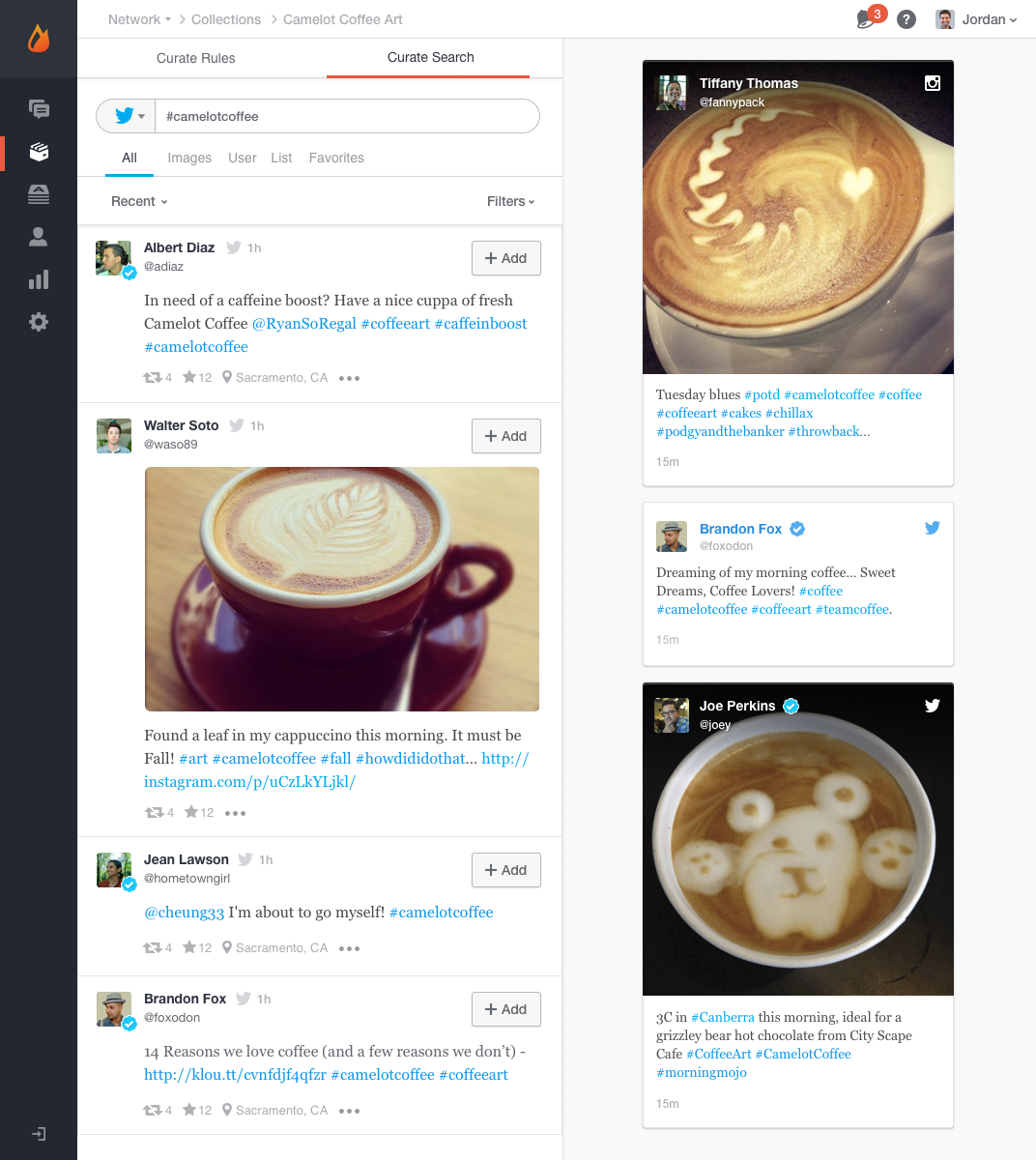
Livefyre was acquired in 2016 and became part of the Adobe Experience Manager suite of products. The product has since been discontinued, and is no longer available for sale.
A de minimis incentive was given to thank the reviewer for their time. The incentive was not used to bias or drive a particular response, nor was the incentive contingent on a positive endorsement. More Info
Verified User
Analyst in Information Technology (11-50 employees employees)
Pros
Ready made templates
Very valuable insights provided by the AI
Personalization is already taken care of
Cons
Analysis can be improved.
Learning curve
Return on Investment
The heavy work is already done given that we take the time to implement.
A de minimis incentive was given to thank the reviewer for their time. The incentive was not used to bias or drive a particular response, nor was the incentive contingent on a positive endorsement. More Info
Verified User
Engineer in Quality Assurance (10,001+ employees employees)
Sr. Software Engineer in Engineering at CBS Interactive (1001-5000 employees employees)
Pros
It's pretty flexible. There were only a few things we found that were too specific to our environment and could not be easily done.
The out-of-the-box GUI design was decent. It was also configurable with limited custom CSS, anticipating the need for each company to customize the look and feel to suit their own needs.
Basic interface is good, providing the necessary data points like total comment count. Visual effects are good too, with fade-in effects for new comments.
They also provide back-end APIs to gather information about the "hottest" threads. We used this to construct our own "Hot Topics" section that could link users to the related article so they could comment themselves.
Good support, even after implementation. They were always available by phone and even through realtime IM chats direct to their developers, skipping awkward non-technical middlemen.
Cons
Implementation was not easy. Although flexible, I personally wrote at least 1,400 lines of code to get this implemented over a few week's time.
The social login aspect is cool, but again, hard to implement. They did not write any of those modules, although they could have. This required senior-level developmental skills and a knowledge of how social media is interfaced with programmatically. Lots of questions arose from this and it was difficult to implement with virtually no help from Livefyre, other than to provide the hooks into their system for when users were validated. I had to write at least 2 separate login/redirection scripts to accomplish this flow.
CSS tweaking was tricky. We could override lots of common CSS classes, but to get things just the way we wanted it, I ended up writing LOTS of jQuery listeners and functions to transform the output into exactly what we wanted. This was a surprise since the software was sold to us as being 'fully customizable'.
Documentation was sufficient, but not great. Getting the flow of the callbacks that are fired wasn't clear at first, and sometimes did not work as expected.
It should be noted that, after this review was published, Livefyre contacted me stating they now have better documentation and process for implementation (for version V3, specifically) and urged me to revise this review. However, I can only write of my experience with V2, and it WAS difficult to implement over 3 weeks of dedicated time. Another developer on my team implemented version V3 and his evaluation is very similar to mine, claiming much difficulty with the CSS customization.
Return on Investment
The impact is positive. After its implementation, we have not had to touch the code.
Our comments section now looks very modern, as many companies on the Internet use Livefyre and are used to its interface.