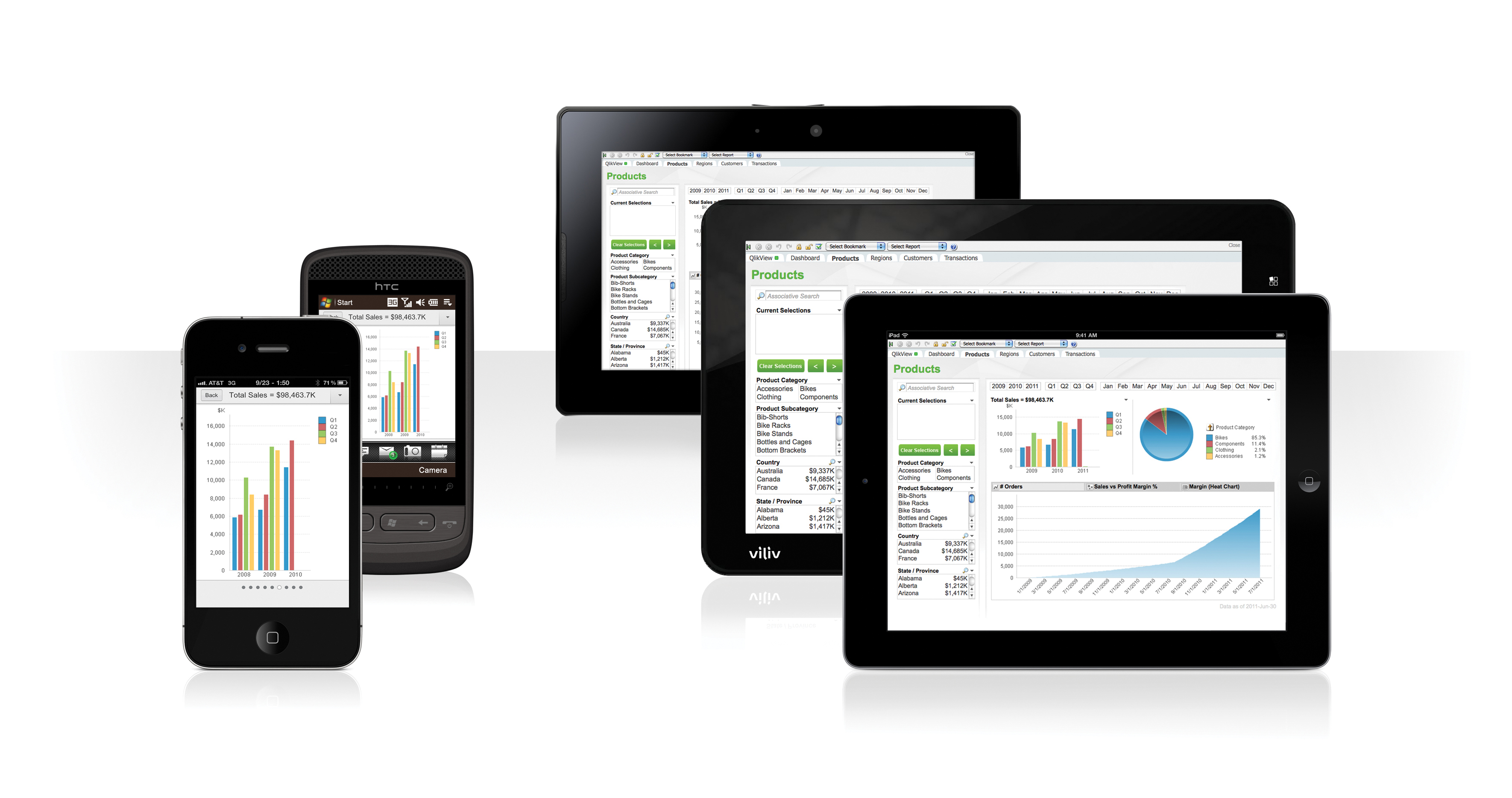
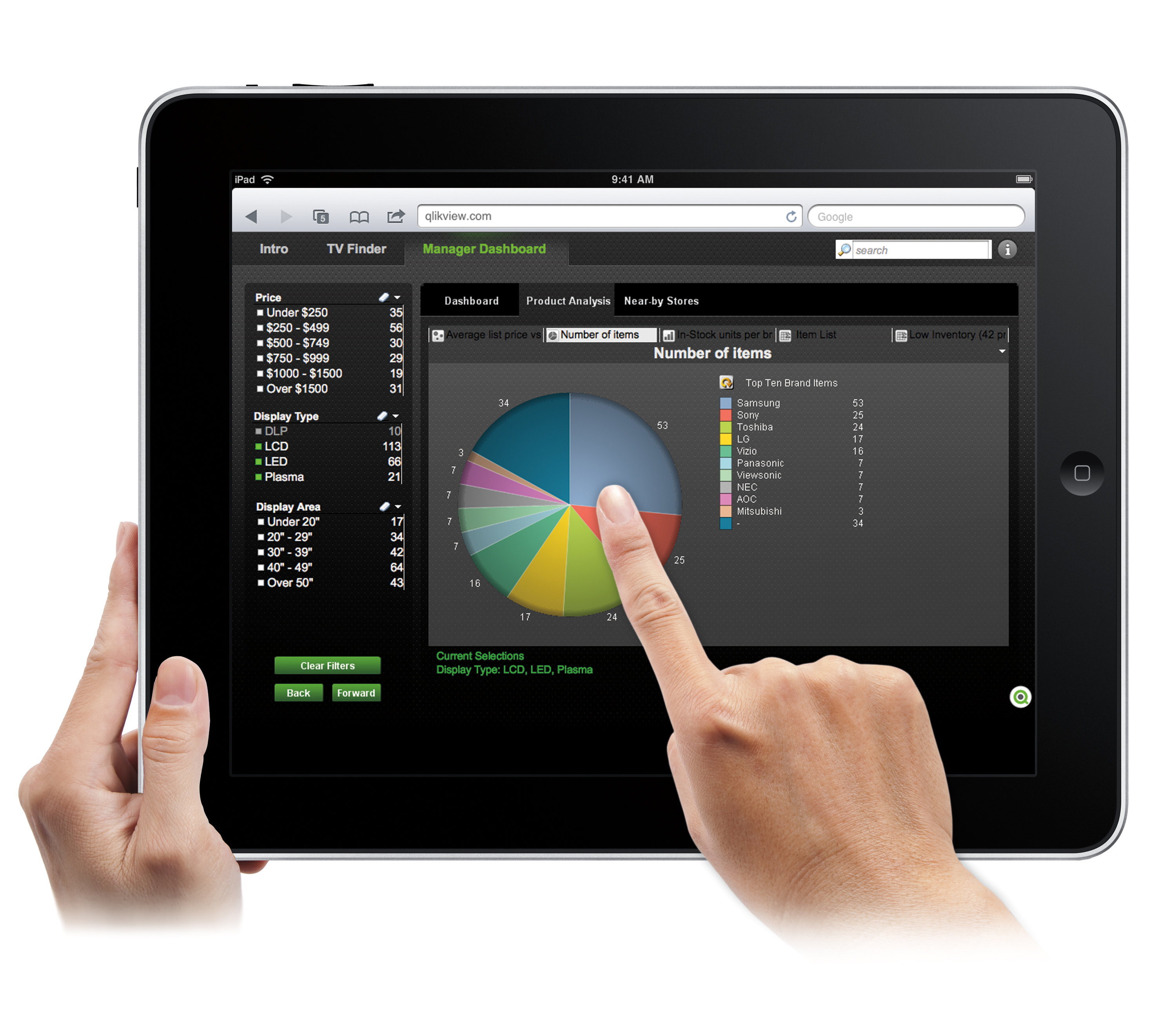
QlikView® is Qlik®’s original BI offering designed primarily for shared business intelligence reports and data visualizations. It offers guided exploration and discovery, collaborative analytics for sharing insight, and agile development and deployment.
N/A
Yellowfin
Score 8.0 out of 10
Mid-Size Companies (51-1,000 employees)
Yellowfin is a cloud-based business intelligence and dashboarding platform.
$250
per month
Pricing
QlikView
Yellowfin
Editions & Modules
QlikView
Custom
per user
No answers on this topic
Offerings
Pricing Offerings
QlikView
Yellowfin
Free Trial
Yes
Yes
Free/Freemium Version
No
Yes
Premium Consulting/Integration Services
Yes
Yes
Entry-level Setup Fee
Optional
Optional
Additional Details
On an perpetual license basis, based on server plus number of users.
Contact vendor for pricing.
The Yellowfin product technologies are superior and offers more flexibility in application. The Yellowfin product can be used in several different areas such a report engine over and above being a solid business intelligence tool. It further needs significant IT overhead to be …
Verified User
Program Manager
Chose Yellowfin
We ran a full procurement project to select Yellowfin and started with a long list of over 20 BI products. Key reasons for choice were ease of use, visual looks, product integrations and cost (both licence purchase and development of content).
My selection of Yellowfin based on following criteria for the Indian market:
Availability in Linux platform to process high volume of transaction with CAL (concurrent user access license) model to use multiple server with high concurrent users
Features
QlikView
Yellowfin
BI Standard Reporting
Comparison of BI Standard Reporting features of Product A and Product B
QlikView
8.0
67 Ratings
2% below category average
Yellowfin
6.1
12 Ratings
29% below category average
Pixel Perfect reports
8.149 Ratings
5.85 Ratings
Customizable dashboards
8.065 Ratings
6.212 Ratings
Report Formatting Templates
8.059 Ratings
6.411 Ratings
Ad-hoc Reporting
Comparison of Ad-hoc Reporting features of Product A and Product B
QlikView
8.3
66 Ratings
3% above category average
Yellowfin
6.6
12 Ratings
20% below category average
Drill-down analysis
9.065 Ratings
6.611 Ratings
Formatting capabilities
7.066 Ratings
7.112 Ratings
Integration with R or other statistical packages
8.336 Ratings
6.38 Ratings
Report sharing and collaboration
9.061 Ratings
6.511 Ratings
Report Output and Scheduling
Comparison of Report Output and Scheduling features of Product A and Product B
QlikView
7.9
61 Ratings
5% below category average
Yellowfin
5.9
11 Ratings
34% below category average
Publish to Web
8.048 Ratings
6.311 Ratings
Publish to PDF
9.056 Ratings
6.211 Ratings
Report Versioning
7.542 Ratings
5.89 Ratings
Report Delivery Scheduling
7.347 Ratings
5.611 Ratings
Delivery to Remote Servers
00 Ratings
5.55 Ratings
Data Discovery and Visualization
Comparison of Data Discovery and Visualization features of Product A and Product B
Sales data validations have helped manage our justifications in the past, especially with regard to new product development and new business introduction. It has also been helpful in identifying trends with business impact and direction specific to quarter and monthly sales from ERP data as well as decisions to purchase equipment of staffing based on run rates and product demand.
One thing that can get out of hand is data output - if you aren't careful in your query, you may be overloaded with data dumps and drown in the amount of info you have to filter through. This is a user caution, not a comment on the software itself.
We can recommend this software without hesitation, as it has the ability to generate reports and data analysis, as well as process the data automatically, which saves time. It is ideal for small and medium-sized companies that wish to improve their services in the business world
Yellowfin’s Storyboard, Timeline and Collaborative tools make it easy to share data and insights across an organisation.
Strong Operational and Executive Dashboards that reflect the business KPIs and can send out prompts to people within the business based on rules.
Yellowfin makes it incredibly easy to create dynamic reports and dashboards which incorporate maps through locational intelligence functionality.
Yellowfin is a single license and all access is via a web browser making it perfect for both on-premise and cloud deployment. Mobile apps are also available.
User roles and source filtering allows Admin/IT to offer different functions/views by user group/role.
Mobile BI applications to support any device ..
API connectors ( YF 7.2 on the way in Mar16 ) for a range of third-party Web-based applications, data sources, Enterprises CRM/ERP apps & open data platform apps, including Salesforce, Google Analytics, Twitter, Youtube , Zoho CRM, XE.com & more coming to make endusers to integrate their applications for better benefits
Yellowfin Integration with Predictive analytical and Big Data processing tools like R, UDF, Spark to build rich applications for end users
We found that QlikView can be a bit slow in supporting some forms of encryption. It is web-based and we needed to upgrade all of our server to not support the older SSL and TLS 1 protocols, only support TLS 1.2 and TLS 1.3. However, QlikView could not run with TLS 1.2 and TLS 1.3. We had to wait over six months to get a version that would handle the newer TLS versions.
There are so many options with QlikView that you can get lost when developing a visualization. There are still items I have not yet figured out, such as labeling a graph with the name of a selected detail item.
QlikView works by pulling the data it is going to use for visualization into its database. I am a security reviewer and I need to make certain that PII and PHI is not pulled by QlikView for a visualization, otherwise this could become a reportable indecent.
The ability to predefine a colour for a specific graph as a selection option dynamically.
The ability to customise the label of a chart, especially with respect to performance related reporting graphs we need an increase in dynamic charting options to meet our more specialised requirements.
Ease of use, ability to load from pretty much any data source. today I created an application that loaded time sheets from excel that are not in a table format. With Qlik's "enable transformation steps" I was able to automate loads of multiple spreadsheets and multiple tabs easily. Could not do that with any other tool.
QlikView is very easy to implement. The installation is very straight forward. QlikView has several different data connectors that can connect to different data sources very smoothly. The user interface to build the reports is very easy to understand. This helps to have a smaller learning curve. Something very helpful is that QlikView is a browser application for the end users. So, you don't need to install any applications on the user's computer.
As mentioned previously, if a newer company is looking for a strong, polished BI tool, Yellowfin would be a great software vendor to consider. Unfortunately, the high cost might be a barrier to these newer companies who dont have any legacy software/agreements such as an EA agreement with Microsoft.
My experience with the Qlik support team has been somewhat limited, but every interaction I have had with them has been very professional and I received a response quickly. Typically if there is a technical issue, our IT team will follow up. My inquiries are specific to product functionality, and Qlik has been very helpful in clarifying any questions I might have.
They have good support in what they provide. But what they provide is not what is promised. I would stay with them if I can. Be very careful before signing up with them. They are not what they seem in the sales pitches. Be very careful and make sure you test and test before you sign up.
My team attended, but I cannot myself rate, but I think it was good as they've successfully launched a training program at our company themselves for users. It was 3-4 day training.
Training was as expected. The demo environments tend to be more fully featured that our own environment, but the training was clear and well delivered.
"Implementation" can mean a few things... so I'm not sure that this is the answer you want.... but here it goes: To me, implementation means: "Is the user interface intuitive and can I produce meaningful reports with ease?" On that score, I'd say YES. The amount of training required was minimal and the results were powerful. The desktop implementation is a simple, "blank" interface just waiting for your creativity. The pre-populated templates give you a reasonable start to any project -- and a good set of objects to "play around with" if you're just getting started. Finally, note that the "implementation" I used was baked into QuickBooks 2016 Enterprise -- called "Advanced Reporting"..... That integration makes it ultra useful and simple.
The only other vendor product that I have worked with that provides a similar experience to Qlikview is Tableau. I would recommend Tableau if your use case is to build a fixed dashboard. You can share reports for free without needing to buy additional licenses. I would recommend Qlikview if your users are looking for a more interactive experience. They can create new objects to represent the data which can't be accomplished as easily in Tableau
Yellow Fin platform is browser agnostic and is accessible from desktops as well as mobile devices. It is very simple and fast, it is integrated with Big Data, clients do not require a great training. It just works. But it’s easier to have things on the cloud, especially if you need to use different computers. Yellow Fin lacks the cloud feature.
You can use the free desktop version to do a lot of reporting and analysis work more quickly so the ROI is huge
QlikView is great at finding outliers such as data entry errors
QlikView is great at helping you quickly discover new insights about your business that can prompt you to take action that can immediately affect your cash flow.