Chose StarWind SAN & NAS
For 2 node clusters, Starwind VSAN is the way to go. Most other solutions don't even allow 2 node set ups. For businesses looking for a solid 2 node set up with redundancy, performance, and reliability look no further.

| Product | Rating | Most Used By | Product Summary | Starting Price |
|---|---|---|---|---|
 StarWind SAN & NAS | N/A | StarWind SAN & NAS is an HCL-certified software-defined shared storage for VMware vSphere and Microsoft Hyper-V. The solution also enables the user to repurpose servers into certified backup targets if they are using Veeam. StarWind SAN & NAS, as a Linux-based VM, leverages all the features of ZFS to ensure optimal storage use, data safety and integrity. The solution is designed to present a unified,… | N/A | |
 VMware vSAN | N/A | VMware vSAN is an enterprise-class storage virtualization software that provides a simple path to hyperconverged infrastructure (HCI) and multi cloud. VMware vSAN is no longer sold as a standalone product and is now available as a part of VMware Cloud Foundation. | N/A |
| StarWind SAN & NAS | VMware vSAN | |||||||||||||||
|---|---|---|---|---|---|---|---|---|---|---|---|---|---|---|---|---|
| Editions & Modules | No answers on this topic | No answers on this topic | ||||||||||||||
| Offerings |
| |||||||||||||||
| Entry-level Setup Fee | No setup fee | No setup fee | ||||||||||||||
| Additional Details | — | — | ||||||||||||||
| More Pricing Information | ||||||||||||||||
| StarWind SAN & NAS | VMware vSAN | |
|---|---|---|
| Considered Both Products | StarWind SAN & NAS |  VMware vSAN No answer on this topic |
| StarWind SAN & NAS | VMware vSAN | |
|---|---|---|
| Small Businesses |  StarWind Virtual SAN Score 9.9 out of 10 |  StarWind HCA Score 9.0 out of 10 |
| Medium-sized Companies | StarWind Virtual SAN Score 9.9 out of 10 | StarWind HCA Score 9.0 out of 10 |
| Enterprises |  IBM Storage Scale Score 6.5 out of 10 |  Nutanix Cloud Infrastructure Score 8.3 out of 10 |
| All Alternatives | View all alternatives | View all alternatives |
| StarWind SAN & NAS | VMware vSAN | |
|---|---|---|
| Likelihood to Recommend | 10.0 (3 ratings) | 10.0 (17 ratings) |
| Usability | - (0 ratings) | 9.2 (4 ratings) |
| Support Rating | - (0 ratings) | 7.5 (5 ratings) |
| StarWind SAN & NAS | VMware vSAN | |
|---|---|---|
| Likelihood to Recommend | StarWind
| VMware by Broadcom
|
| Pros | StarWind
| VMware by Broadcom
 Chandrakandh Mouleeswaran Sr. Technical Consultant |
| Cons | StarWind
| VMware by Broadcom
|
| Usability | StarWind No answers on this topic | VMware by Broadcom
|
| Support Rating | StarWind No answers on this topic | VMware by Broadcom
|
| Alternatives Considered | StarWind
| VMware by Broadcom
 Md Tanjil Islam Bappi Senior Manager |
| Return on Investment | StarWind
| VMware by Broadcom
|
| ScreenShots | StarWind SAN & NAS Screenshots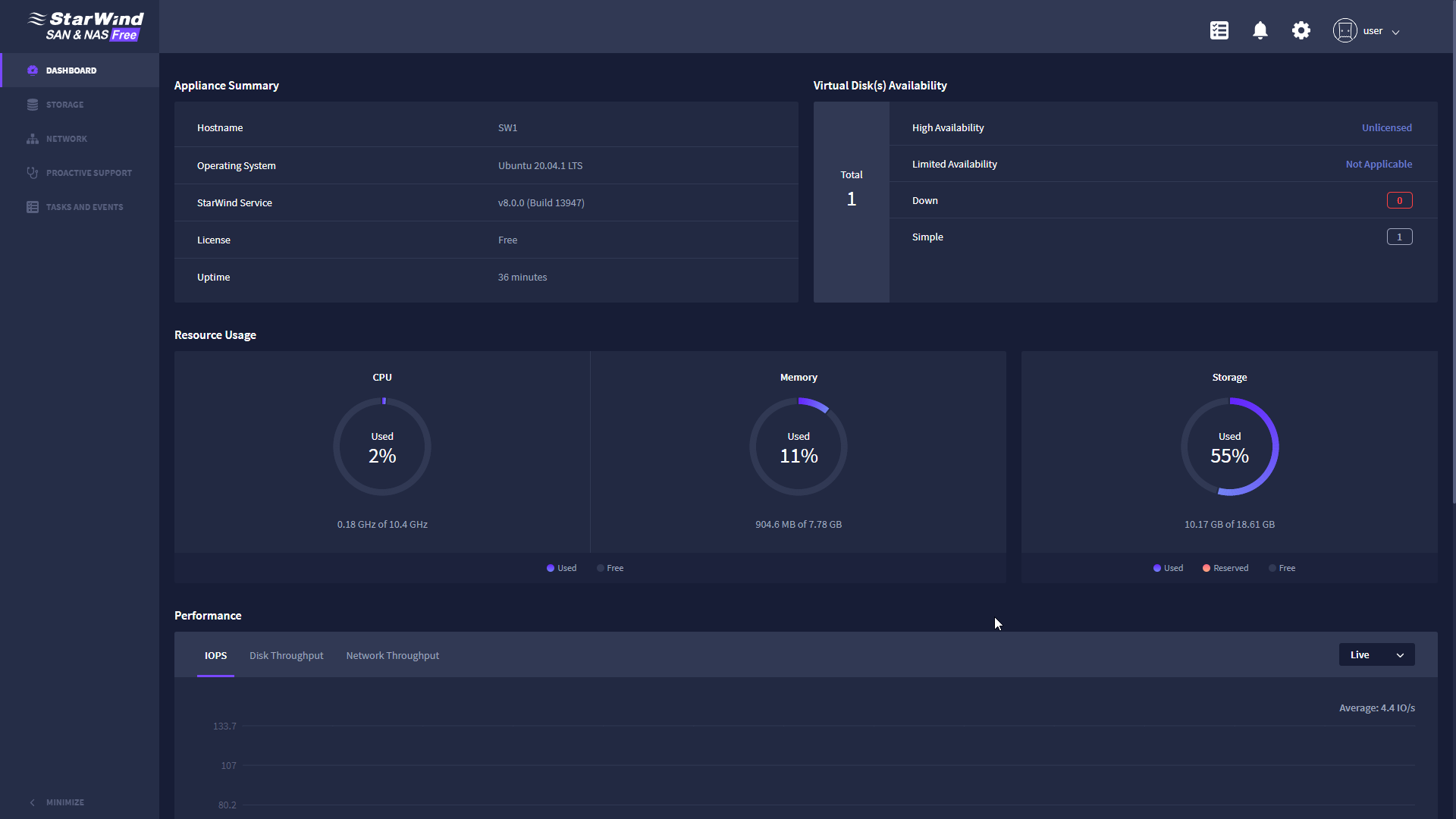   |