Chose Splunk Observability Cloud
Datadog

| Product | Rating | Most Used By | Product Summary | Starting Price |
|---|---|---|---|---|
 Splunk Observability Cloud | N/A | Splunk Observability Cloud aims to enable operational agility and better customer experience through real-time AI-driven streaming analytics allowing accurate alerts in seconds. It is designed to shorten MTTD and MTTR by providing real-time visibility into cloud infrastructure and services. | $15 per month (billed annually) per host | |
 Statseeker | N/A | Statseeker, a Techniche product, is a network performance monitoring solution used by private, Fortune 500 and S&P companies, and G20 governments around the world. The solution is designed to deliver instant, granular-level visibility of an entire network and history. | N/A |
| Splunk Observability Cloud | Statseeker | |||||||||||||||
|---|---|---|---|---|---|---|---|---|---|---|---|---|---|---|---|---|
| Editions & Modules |
| No answers on this topic | ||||||||||||||
| Offerings |
| |||||||||||||||
| Entry-level Setup Fee | No setup fee | No setup fee | ||||||||||||||
| Additional Details | — | — | ||||||||||||||
| More Pricing Information | ||||||||||||||||
| Splunk Observability Cloud | Statseeker | |
|---|---|---|
| Considered Both Products |  Splunk Observability Cloud  Ruben Martinez Information Systems Security Officer Chose Splunk Observability Cloud It's able to quickly detect and resolve issues across the entire spectrum of deployments including on-premises, public cloud, private cloud, hybrid cloud and multicloud  Brennan Fuller Systems Engineer Chose Splunk Observability Cloud Splunk is superior in many ways to these solutions when I'm comes to ingesting, storing, manipulating, and using data, but dynatraces automatic agents do make it much easier to use out of the box. Nagios seems much cheaper but does not provide as much functionality as Splunk. …  Giuseppe Cusello GRC Director Chose Splunk Observability Cloud Splunk requires less work for data in gestion and parsing. Splunk has more efficient data display features.  Mayank Thirani Senior Software Engineer Chose Splunk Observability Cloud Splunk Log Observer provides easy setup and ease of admin features and direction of product was better compared to Lightstep  Anuj Rai Performance Engineer Chose Splunk Observability Cloud We are having other monitoring tools like AppDynamics, Dynatrace, Datadog and already using their end-user monitoring capability. Most of our customers are looking for agent-free monitoring where they don't want to instrument any agent on their client-side (as it might …  David Williams CIO (Chief Information Officer) Chose Splunk Observability Cloud Splunk Infrastructure Monitoring provides far superior options for anybody using a complex hybrid multi-cloud environment and allows both your SOC and NOC to work together on the same data while driving their own insights. We found other products are still in the old world view …  Kendal Droddy Senior System Engineer Chose Splunk Observability Cloud Splunk Infrastructure Monitoring is the only product of its kind that I've used and I've been very happy with it. | Statseeker |
| Splunk Observability Cloud | Statseeker | ||||||||||||||||||||||||
|---|---|---|---|---|---|---|---|---|---|---|---|---|---|---|---|---|---|---|---|---|---|---|---|---|---|
| Network Performance Monitoring |
|
| Splunk Observability Cloud | Statseeker | |
|---|---|---|
| Small Businesses |  InfluxDB Score 8.8 out of 10 |  NinjaOne Score 9.0 out of 10 |
| Medium-sized Companies |  Sumo Logic Score 9.4 out of 10 |  PingPlotter Score 9.3 out of 10 |
| Enterprises |  NetBrain Technologies Score 9.2 out of 10 | PingPlotter Score 9.3 out of 10 |
| All Alternatives | View all alternatives | View all alternatives |
| Splunk Observability Cloud | Statseeker | |
|---|---|---|
| Likelihood to Recommend | 8.6 (0 ratings) | 8.0 (0 ratings) |
| Likelihood to Renew | 6.4 (0 ratings) | - (0 ratings) |
| Usability | 7.3 (0 ratings) | - (0 ratings) |
| Support Rating | - (0 ratings) | 8.0 (0 ratings) |
| Splunk Observability Cloud | Statseeker | |
|---|---|---|
| Likelihood to Recommend |
|
|
| Pros |
|
|
| Cons |
|
|
| Likelihood to Renew |
| No answers on this topic |
| Usability |
| No answers on this topic |
| Support Rating |
Giuseppe Cusello GRC Director |
|
| Implementation Rating |
Giuseppe Cusello GRC Director | No answers on this topic |
| Alternatives Considered |
|
|
| Return on Investment |
|
|
| ScreenShots | Splunk Observability Cloud Screenshots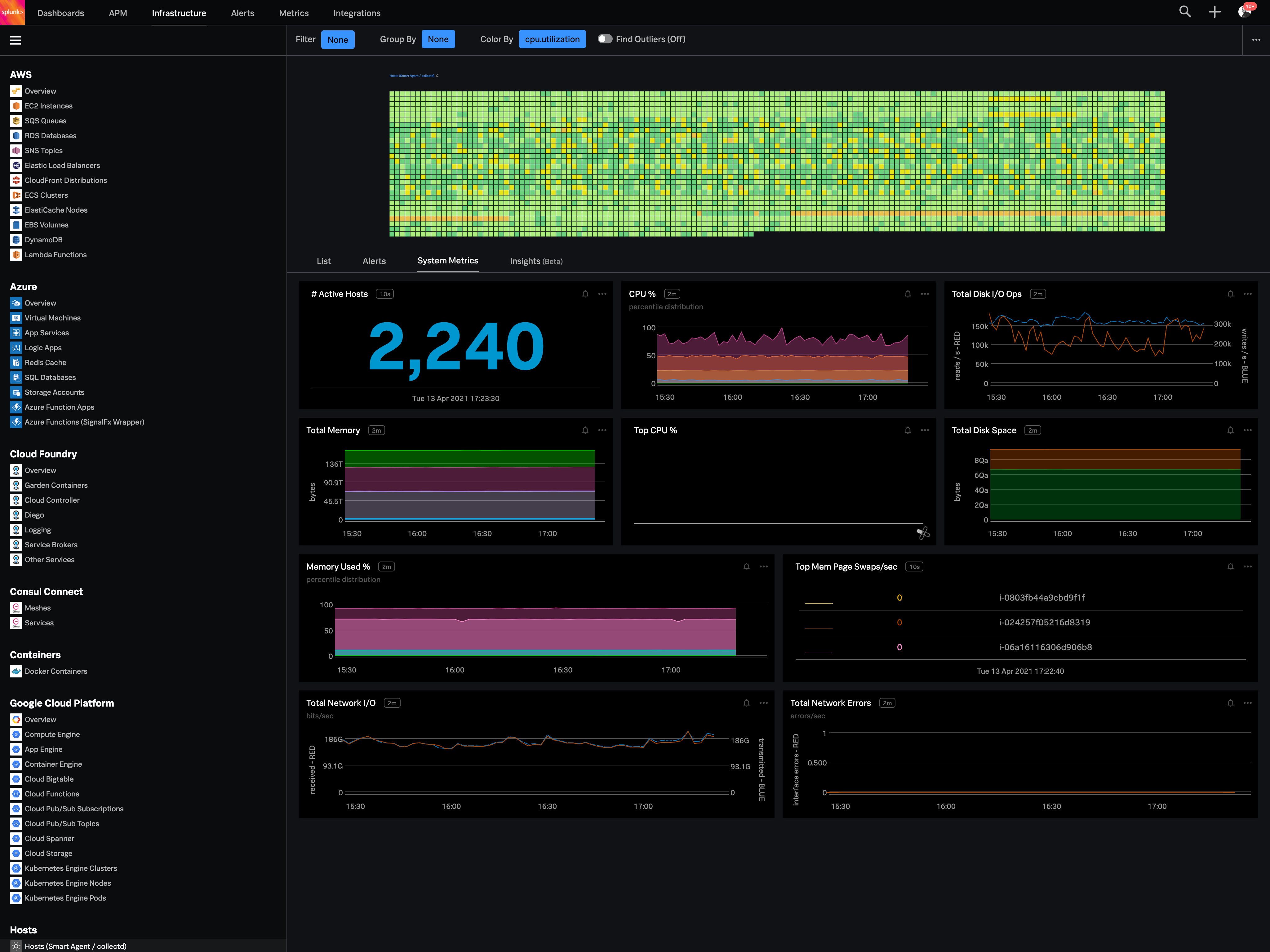 |