
Progress WhatsUp Gold vs. SolarWinds Network Automation Manager (NAM)
| Product | Rating | Most Used By | Product Summary | Starting Price |
|---|---|---|---|---|
 Progress WhatsUp Gold | Score7.2 out of 10 | Mid-Size Companies (51-1,000 employees) | WhatsUp Gold developed by Ipswitch (acquired by Progress Software May 2019) offers network performance monitoring and mapping. It supports core monitoring features, including automated workflows and network capacity planning, and monitors across hybrid environments. | N/A |
 SolarWinds Network Automation Manager (NAM) | Score8.1 out of 10 | N/A | SolarWinds Network Automation Manager is designed to scale to environments of all sizes while providing comprehensive performance, traffic, WAN, and switch port monitoring, automated change and configuration, and IP address management in a single, unified software solution. Key differentiators: Customizable, single-pane-of-glass network monitoring software Topology- and dependency-aware intelligent alerts Real-time config change… | N/A |
| Progress WhatsUp Gold | SolarWinds Network Automation Manager (NAM) | |||||||||||||||
|---|---|---|---|---|---|---|---|---|---|---|---|---|---|---|---|---|
| Editions & Modules | No answers on this topic | No answers on this topic | ||||||||||||||
| Offerings |
| |||||||||||||||
| Entry-level Setup Fee | Optional | Optional | ||||||||||||||
| Additional Details | — | SolarWinds professional support is included to help customers on active maintenance 7 days a week, 365 days a year. We can help you get back up and running when issues occur to keep your systems meeting your needs. Ask your account manager for more information about SolarWinds Premier Support offerings. | ||||||||||||||
| More Pricing Information | ||||||||||||||||
| Progress WhatsUp Gold | SolarWinds Network Automation Manager (NAM) | |
|---|---|---|
| Considered Both Products | No answer on this topic | No answer on this topic |
| Key User Insights | ||
| Would buy again | ||
80% Would buy again 4 Answers | No answers on this topic | |
| Delivers good value for the price | ||
No answers on this topic | No answers on this topic | |
| Happy with the feature set | ||
80% Happy with the feature set 4 Answers | No answers on this topic | |
| Lived up to sales and marketing promises | ||
No answers on this topic | No answers on this topic | |
| Implementation went as expected | ||
No answers on this topic | No answers on this topic | |
| Progress WhatsUp Gold | SolarWinds Network Automation Manager (NAM) | |
|---|---|---|
| Small Businesses |  Pulseway Score9.9 out of 10 | Pulseway Score9.9 out of 10 |
| Medium-sized Companies |  Cisco Meraki Dashboard Score9.3 out of 10 | Cisco Meraki Dashboard Score9.3 out of 10 |
| Enterprises |  Cisco Prime LAN Management (discontinued) Score8.5 out of 10 | Cisco Prime LAN Management (discontinued) Score8.5 out of 10 |
| All Alternatives | View all alternatives | View all alternatives |
| Progress WhatsUp Gold | SolarWinds Network Automation Manager (NAM) | |
|---|---|---|
| Likelihood to Recommend | 8.3 | 9.5 |
| Support Rating | 4.2 | - |
| Progress WhatsUp Gold | SolarWinds Network Automation Manager (NAM) | |
|---|---|---|
| Likelihood to Recommend |
|
|
| Pros |
|
|
| Cons |
|
|
| Support Rating |
| No answers on this topic |
| Alternatives Considered |
|
|
| Return on Investment |
|
|
| ScreenShots | Progress WhatsUp Gold Screenshots  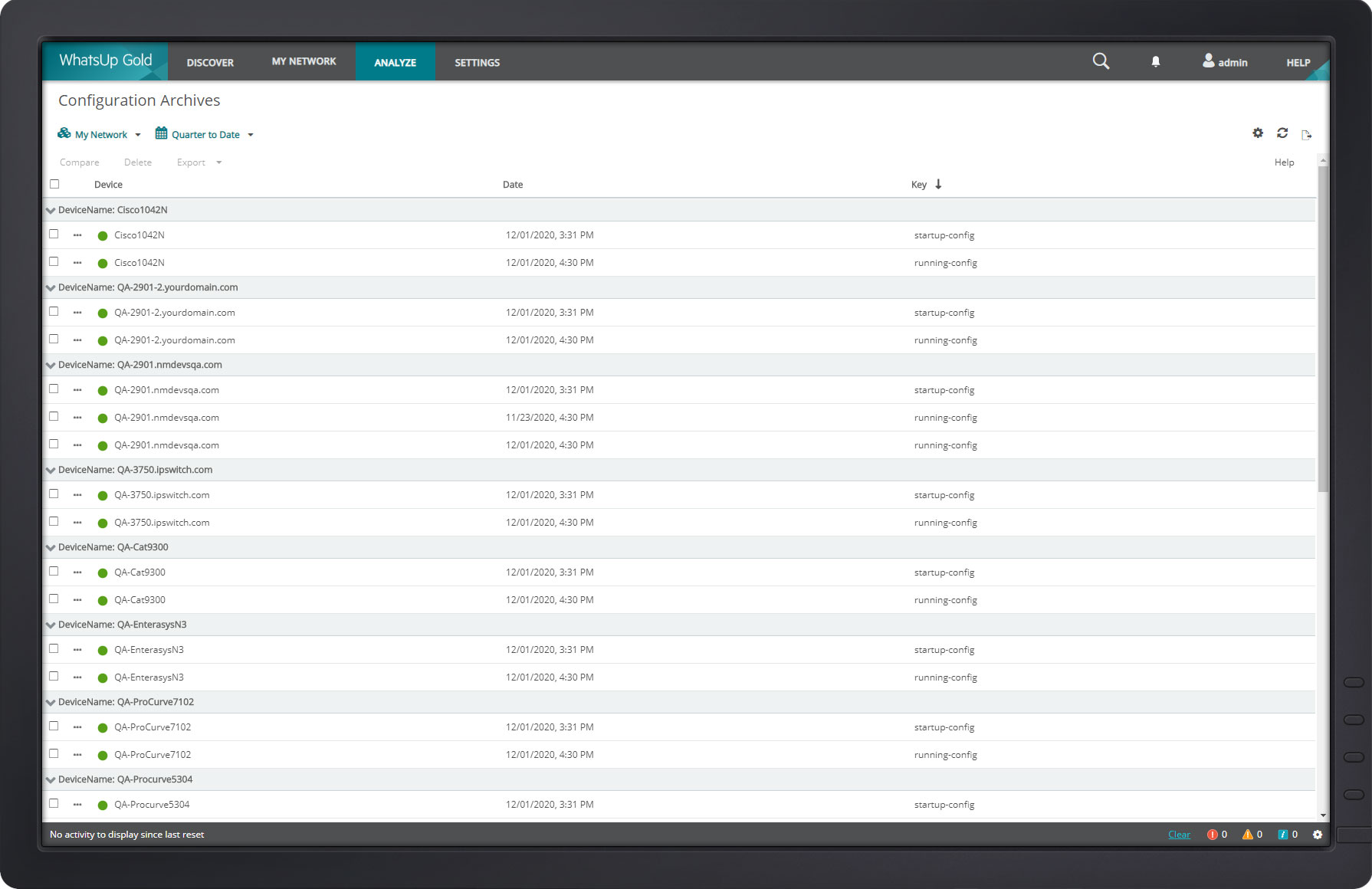  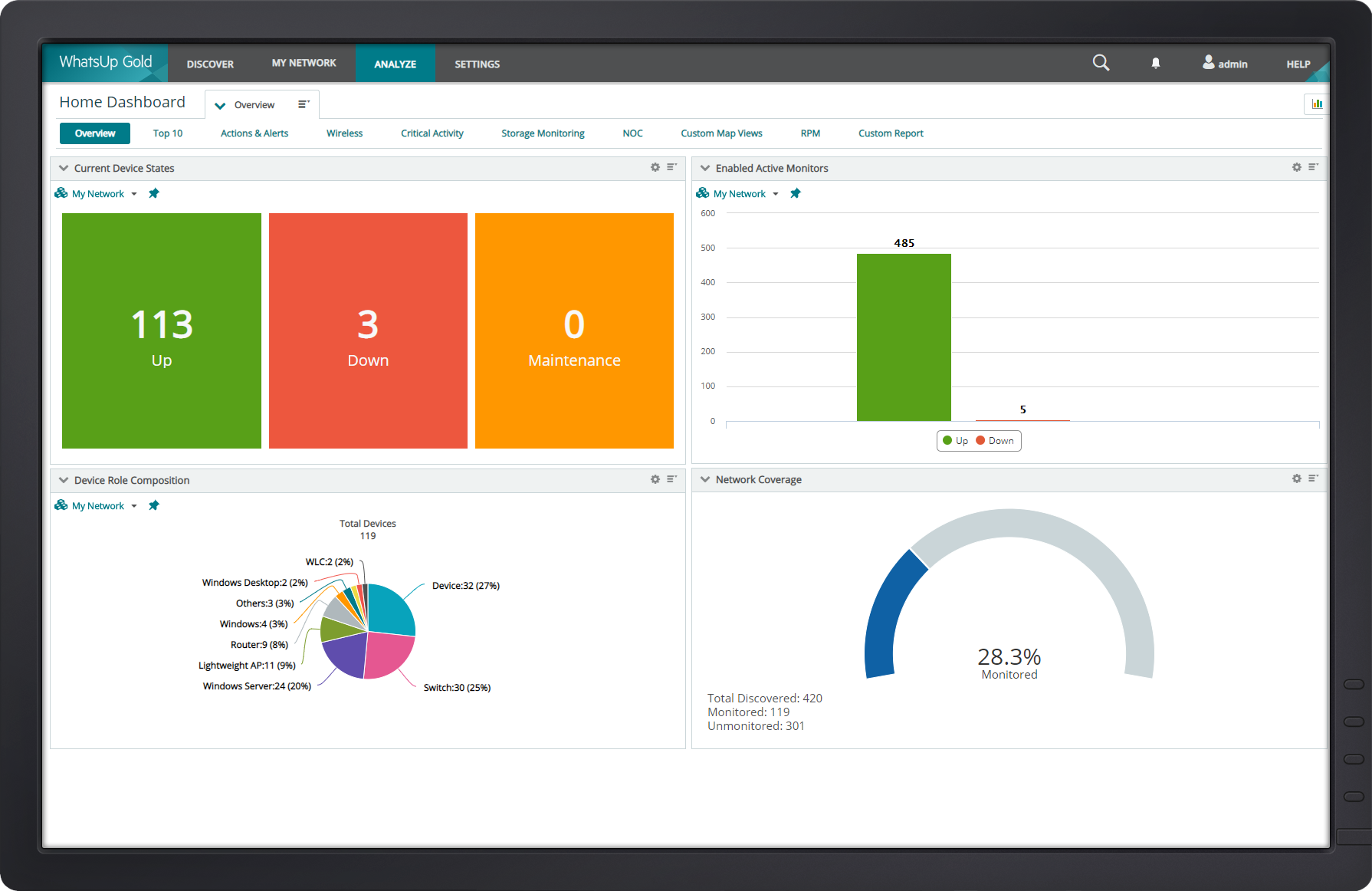  | SolarWinds Network Automation Manager (NAM) Screenshots      |



