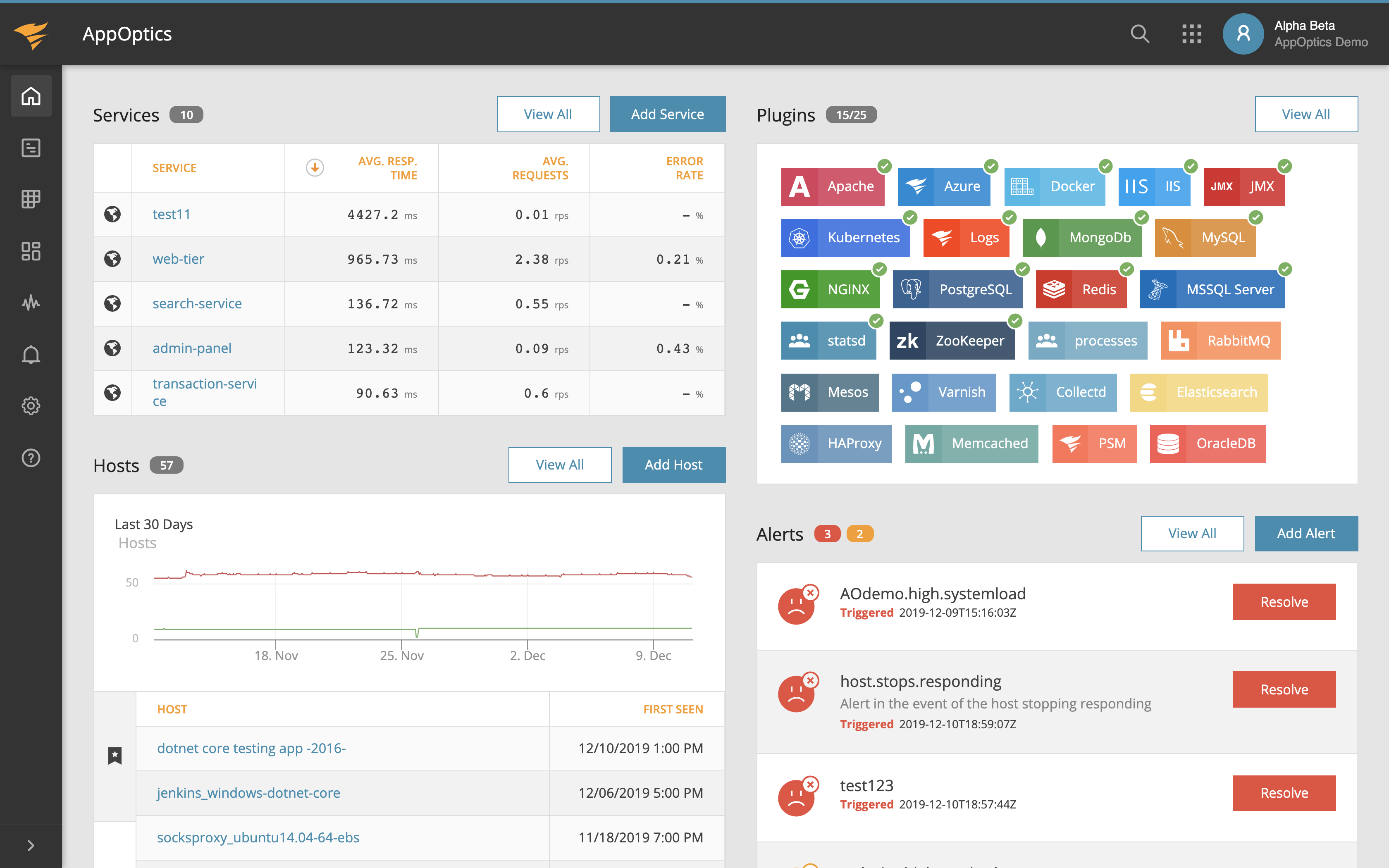
SolarWinds AppOptics (formerly Librato) is an IT infrastructure monitoring service and APM, based on technology acquired by SolarWinds with Librato in 2015 to expand its cloud monitoring portfolio.
N/A
Sumo Logic
Score 9.4 out of 10
N/A
Sumo Logic is a log management offering from the San Francisco based company of the same name.
$3
Per GB Logs
Pricing
SolarWinds AppOptics
Sumo Logic
Editions & Modules
No answers on this topic
Essentials
$3.00
Per GB Logs
Enterprise
$4.00
Per GB Logs
Enterprise Security
$4.25
Per GB Logs
Enterprise Suite
$4.75
Per GB Logs
Offerings
Pricing Offerings
SolarWinds AppOptics
Sumo Logic
Free Trial
Yes
No
Free/Freemium Version
No
No
Premium Consulting/Integration Services
No
No
Entry-level Setup Fee
No setup fee
No setup fee
Additional Details
—
—
More Pricing Information
Community Pulse
SolarWinds AppOptics
Sumo Logic
Features
SolarWinds AppOptics
Sumo Logic
Application Performance Management
Comparison of Application Performance Management features of Product A and Product B
AppOptics is good for small to medium-sized organizations with less than 150 servers or less than 40 services to monitor. It performs well for this use case where people need to get an overview of application performance, and 95%ile data is okay. Somewhere every data point and every record is critical; it should be avoided.
SumoLogic is a fantastic log aggregator and analysis tool, a fine alternative to Splunk. Searching is powerful and mostly intuitive and results come fast. If you have application logs in clusters or Kubernetes pods that lose their logs every time they're restarted, Sumo is the solution for you
Log Aggregation and uploading. The architecture for Sumo Logic makes a great deal of sense and works very well.
Automated analysis. It still impresses me how well a newly uploaded log can be broken into intelligent parts, then searched and sorted using their tools.
Dashboards. It might not be what YOU will need as an IT admin, but you can give access to these dashboards easily to business users who love that kind of stuff. Most other types of (monitoring / alerting) tools, for no apparent reason, lack this feature.
Reporting, monitoring, and graphing. Given, you need to have useful log generation for an application or service as a prerequisite for sumo logic to be able to gain use, once it has it is an amazingly powerful tool.
The only thing that I would add is the possibility to display every single query our servers receive to eventually analyze them and query through them. We could also generate nice visualizations from that. Right now I believe we can only see averages.
AppOptics has performed well for all of the major functions we have needed it for. Especially when it comes to tracking down response time issues and researching app performance for different pages and different times of day we have been able to do everything we need to. We know there are some more advanced features that could help us in more niche areas, but haven't had the time to delve deeper into using or setting them up.
Sumo Logic is very powerful but definitely requires some configuration work to get the most out of it. You can get a certification related to this, but it is definitely not something you can just throw together.
Solarwinds AppOptics is rated as 9 out of 10 and the reason is there are still few areas where AppOptics needs to improve such as Service Now Integration, GCP Cloud Support, Better Dashboard visualization for application transactions flow. Other than these feature everything is there in AppOptics and that's a reason given 9 points out of 10.
I would give this rating because I attended a free Sumo Logic training at a WeWork in Chicago. I found the training very useful, and I learned a lot of features that I was not aware of before I went to the training. I like the idea that SumoLogic provides free training seminars. I am certified in level1, and I plan on certifying to level2.
I was satisfied with the implementation, as at the time, it was the best way to implement the product with the available feature sets in Sumo Logic. User creation and management became more of an issue during continued use, instead of it being an issue related to deploying the product in our environment.
What we found positive in AppOptics from others is:
Easy to install and manage.
Various stack support.
Point to point deep-dive metrics and correlation.
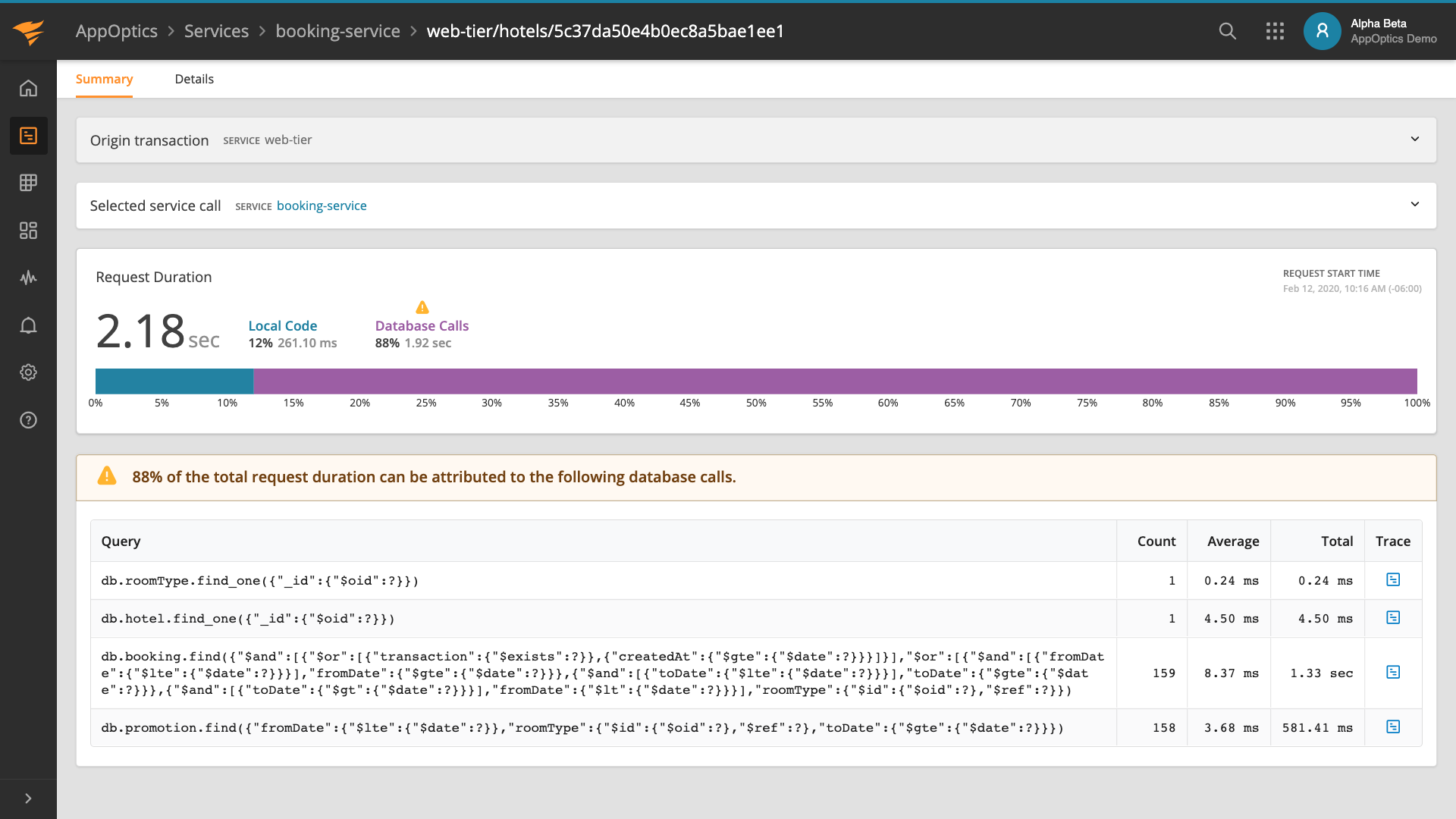
Metrics like DB connection, query analysis, latency in API calls, and other connections, response codes for various APIs, etc are the key ones in our case, which AppOptics provides efficiently.
We had used Splunk previously. Sumo Logic defeats them when it comes to cost, including the costs that would normally come with supporting/managing/patching/upgrading your own infrastructure and storage. Those were wins, but especially the real-time CDN integrations due to Sumo Logic's collaborations with other vendors. We had spoken to Logentries and discovered that many of the cons we found with Sumo Logic seemed to have been resolved in their product. Their pitfall was that, at the time, Logentries did not have the ability to get real-time log ingestion from our CDN. They said they had a solution, which was scripted, but we had not evaluated/tested. Logentries also did not have a User / RBAC REST API, and are nowhere near the level of compliance that Sumo Logic had (https://www.sumologic.com/press/2015-02-19/sumo-logic-successfully-completes-pci-data-security-stand...). In the end, I believe Logentries and Sumo Logic would be two good vendors to get involved in a bake-off