Nagios XI is an Enterprise Server and Network Monitoring Software, built on Nagios Core and designed to comprehensive application, service, and network monitoring in a central solution. Nagios XI is available in two different editions: Standard Edition and an Enterprise Edition. The Enterprise Edition provides users with additional functionality and includes features that are designed to aid in…
$1,995
Per Instance
Progress WhatsUp Gold
Score 7.2 out of 10
Mid-Size Companies (51-1,000 employees)
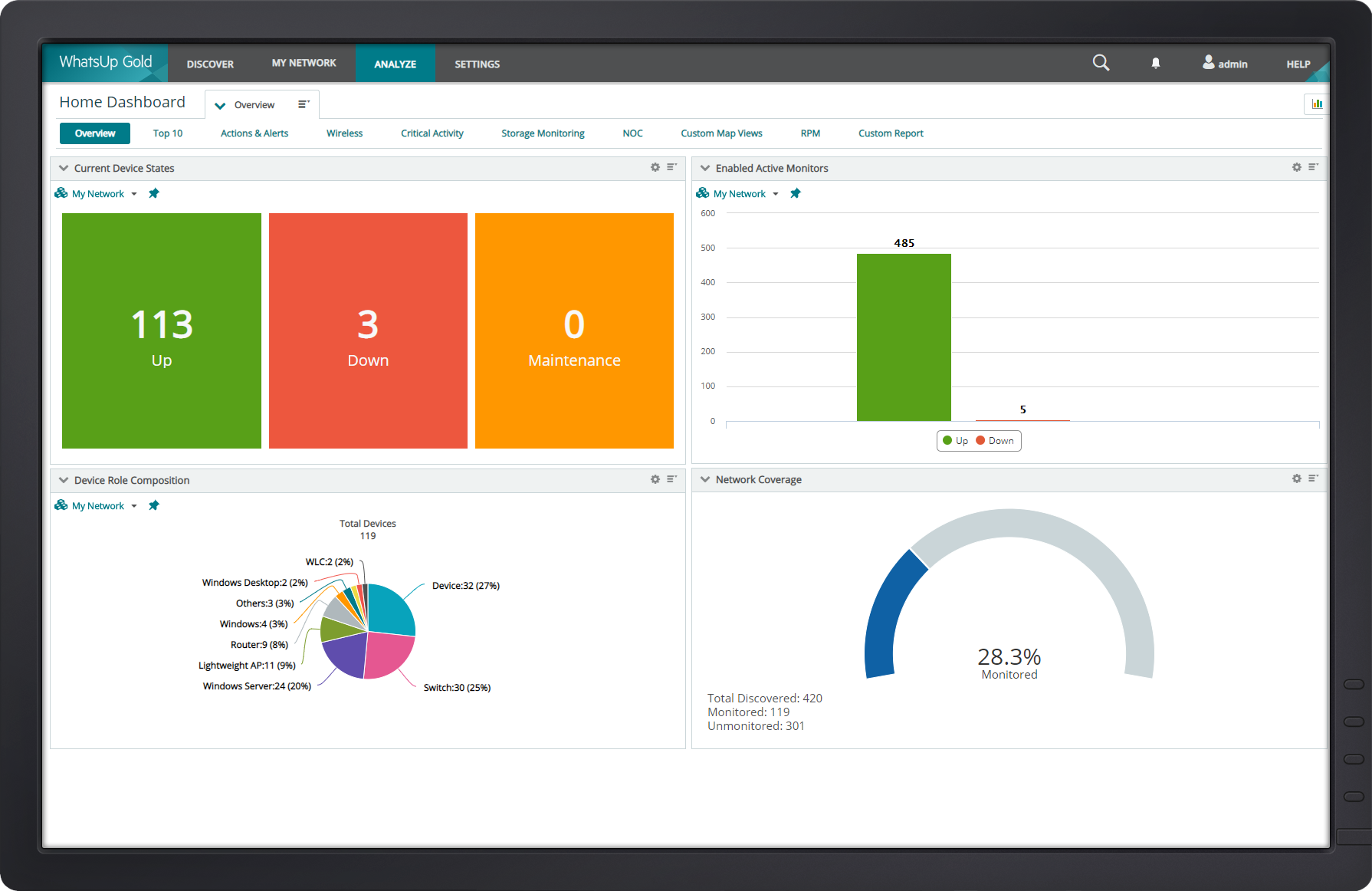
WhatsUp Gold developed by Ipswitch (acquired by Progress Software May 2019) offers network performance monitoring and mapping. It supports core monitoring features, including automated workflows and network capacity planning, and monitors across hybrid environments.
Nagios XI is suitable for inexpensive and very detailed monitoring of the physical hosts and VMs. Both Windows and Linux. This would require configuring 2-3 ways of monitoring for the same set of hosts and some time spent to fine tune the configurations. It may also be used for SQL and Apache front-ends such as Tomcat, Glassfish, etc.
[Progress WhatsUp Gold (formerly Ipswitch WhatsUp Gold)] is good for what it is. An inexpensive but accurate monitor for alerting on systems and services. However, it is time consuming to configure, The GUI leaves a lot to be desired and the formatting for txt alerts stinks (I just use it now as an alert to check my email to view the actual alert.)
While it does require a whole server with IIS and a SQL db it is low impact on resources but still quick to respond.
Great for quick notifications about a server going above a configured resource threshold. We don't have to look at every server's resource utilization individually anymore.
Quick and easy to setup a service up or down notification.
While it is easy to get up and running, I know I could utilize the software better if I had some formal training on it. There are a wealth of features available, but I don't have time to learn them all in depth.
The training classes offered are very expensive. I'd love it if IPSwitch offered some kind of reasonably priced training options.
This tool has been has been of great use and learning , offering exceptional ease of use, scalability, and detailed reporting. It has a lot of customization options and proactive monitoring which have significantly improved our infrastructure management.It's UI & functions are good. Also has built in templates for various end points.It also provides graphical reports. With a Dashboard you can monitor easily
We are using Nagios XI in our organization primarily for monitoring all our application servers and databases, this is helping us in addressing all the infrastructure issues in advance by alerting us when it any server hits the threshold as per the initial parameter setup also it has free tier which helps for small scale applications monitoring to save some expenses.
I have been participated in the few implementations, and I would say its bit complex when its come to initial setup once its set post that its easy to manage
Cost efficiency is the main reason which we opted [for] Nagios as we were previously using IDERA tool with comprehensive database monitoring solutions, but the slow performance we are getting while monitoring the instance of the database.
WhatsUp Gold gives you a much better in-depth analysis and understanding of both your network and endpoint devices but the emphasis should be laid more on report generation. WhatsUp Gold has the ability to generate a report (e.g device uptime, bandwidth utilization, device health etc) and track events that took place even as low as 5 minutes ago.
We have installed Nagios XI for our monitoring system and with this we are managing around 600 servers in total and not seen any major issues with its scalability we can scale it as much as we require and also installed on various applications servers and working as expected
As I mentioned earlier, the monitoring of the external environment and uptime is a necessity. An hour down is a 1% loss of revenue per day which may not sound like much but in a million dollar company, that 1% is a huge chunk.
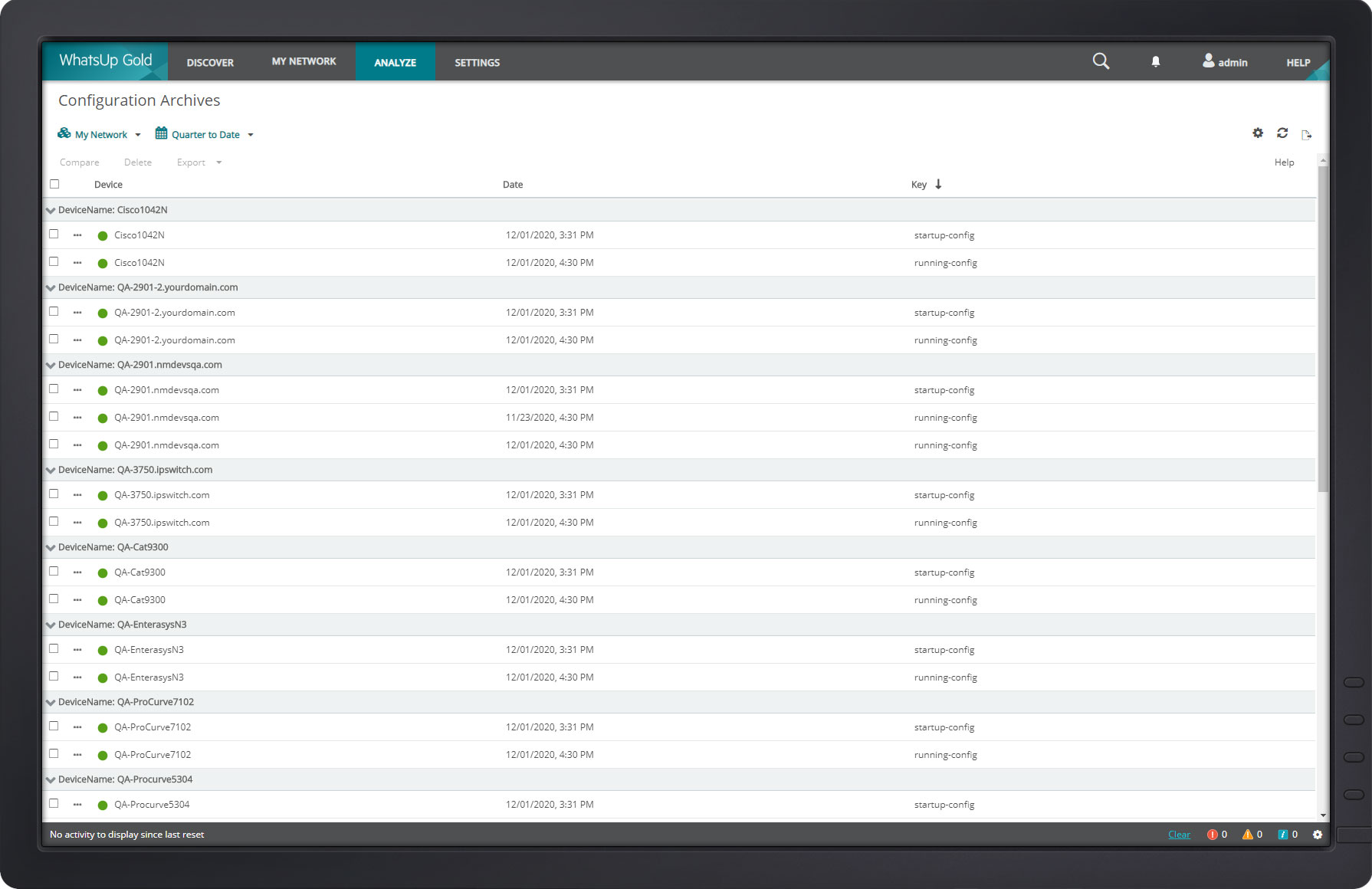
The backup configuration has been very handy in turn around time for failed equipment. I did have a homegrown way of backing up configurations but had to check daily and verify every backup. This becomes very time consuming and a waste of company time.
Only negative is the mapping. In the Cisco world CDP is a great way to map connections and they don't seem to do it that way.