Power BI for Office 365 allowed users to model and analyze data, and query large datasets with complex natural language queries. It has been discontinued in favor of other editions of Power BI going forward.
N/A
QlikView
Score 7.3 out of 10
N/A
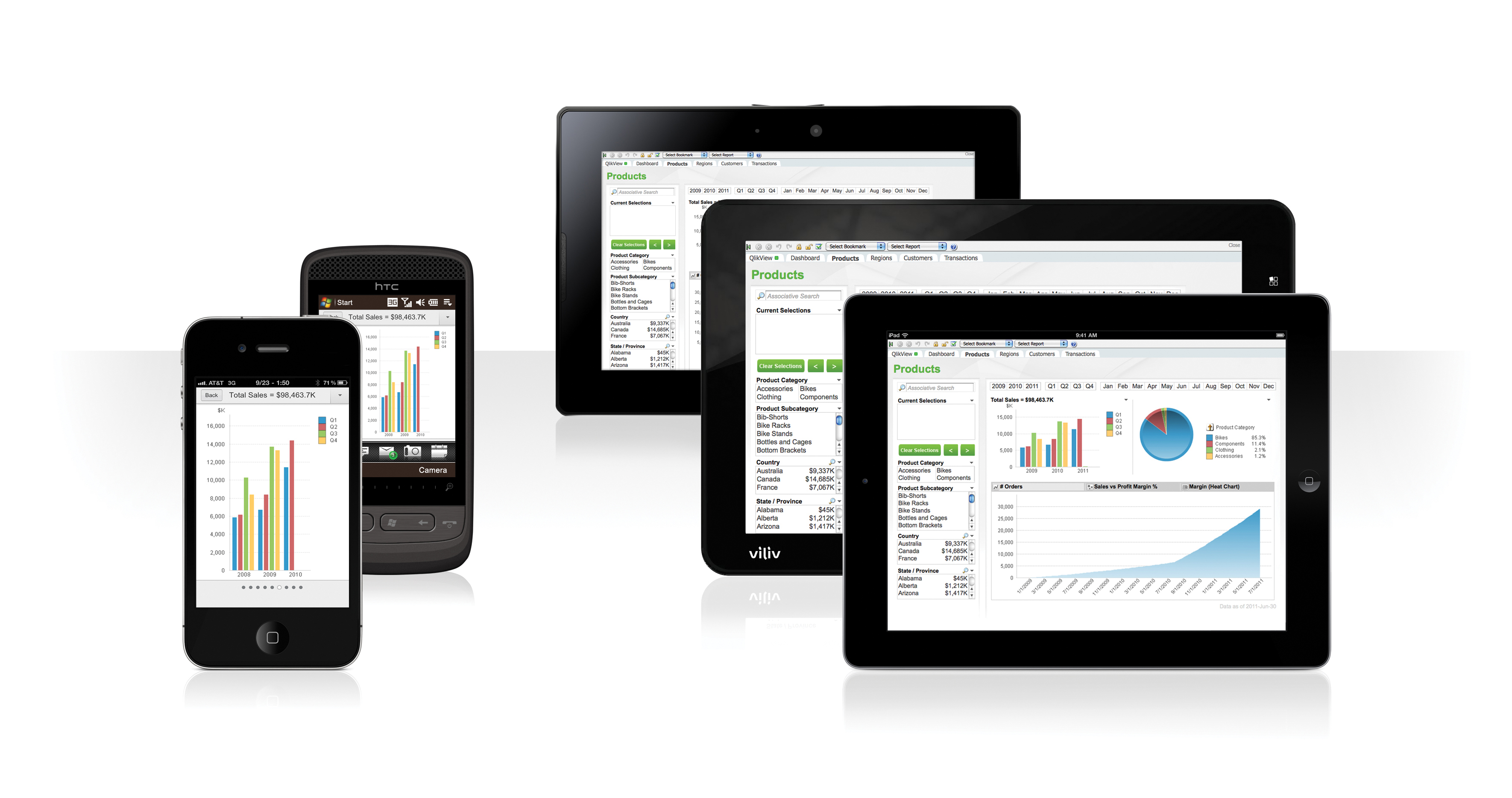
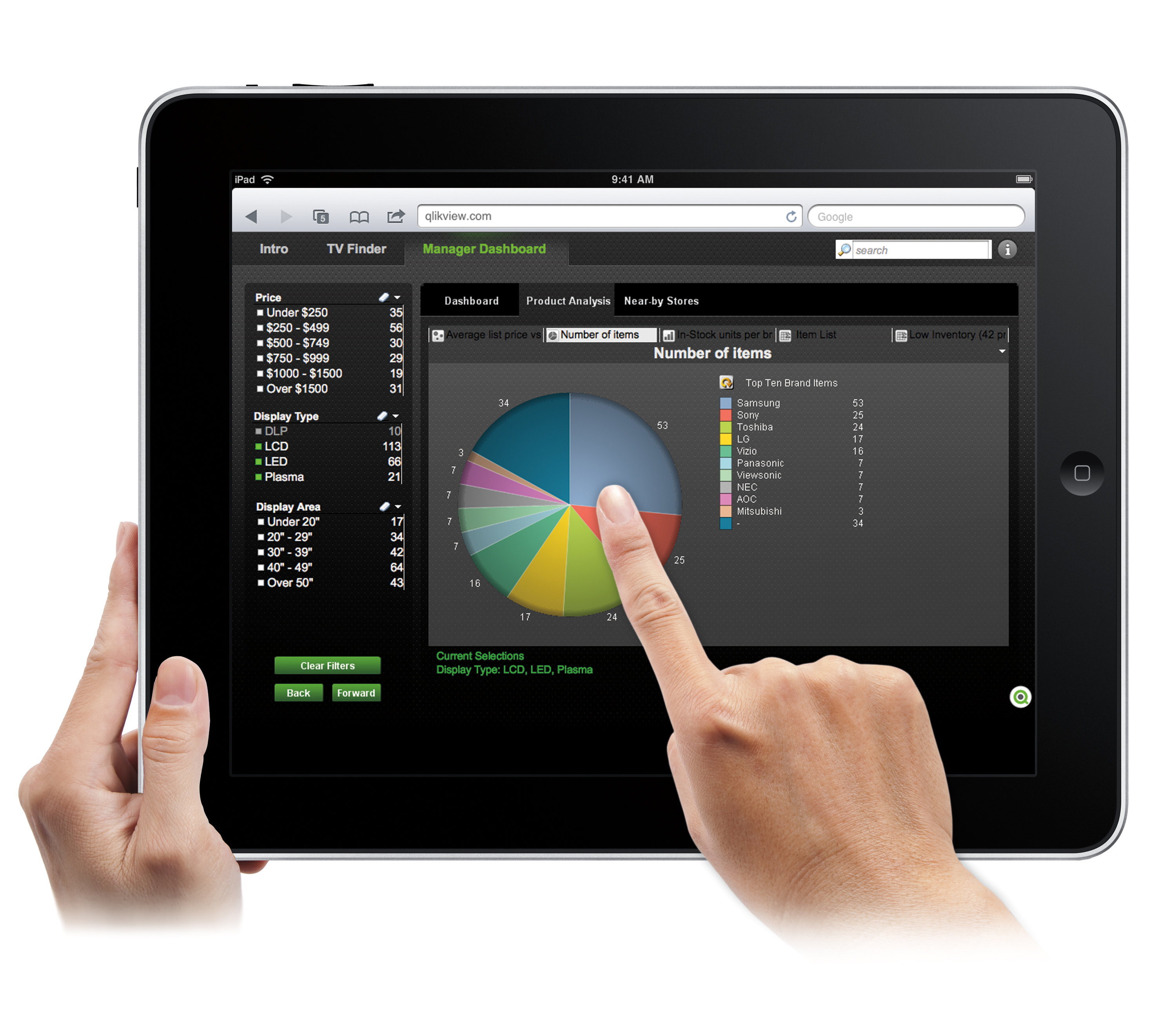
QlikView® is Qlik®’s original BI offering designed primarily for shared business intelligence reports and data visualizations. It offers guided exploration and discovery, collaborative analytics for sharing insight, and agile development and deployment.
N/A
Pricing
Power BI For Office 365 (discontinued)
QlikView
Editions & Modules
No answers on this topic
QlikView
Custom
per user
Offerings
Pricing Offerings
Power BI For Office 365 (discontinued)
QlikView
Free Trial
No
Yes
Free/Freemium Version
No
No
Premium Consulting/Integration Services
No
No
Entry-level Setup Fee
No setup fee
Optional
Additional Details
—
On an perpetual license basis, based on server plus number of users.
Contact vendor for pricing.
More Pricing Information
Community Pulse
Power BI For Office 365 (discontinued)
QlikView
Features
Power BI For Office 365 (discontinued)
QlikView
BI Standard Reporting
Comparison of BI Standard Reporting features of Product A and Product B
Power BI For Office 365 (discontinued)
9.0
Ratings
10% above category average
QlikView
8.0
Ratings
2% below category average
Pixel Perfect reports
9.00 Ratings
8.10 Ratings
Customizable dashboards
8.00 Ratings
8.00 Ratings
Report Formatting Templates
10.00 Ratings
8.00 Ratings
Ad-hoc Reporting
Comparison of Ad-hoc Reporting features of Product A and Product B
Power BI For Office 365 (discontinued)
9.5
Ratings
16% above category average
QlikView
8.3
Ratings
3% above category average
Drill-down analysis
9.00 Ratings
9.00 Ratings
Formatting capabilities
9.00 Ratings
7.00 Ratings
Integration with R or other statistical packages
10.00 Ratings
8.30 Ratings
Report sharing and collaboration
10.00 Ratings
9.00 Ratings
Report Output and Scheduling
Comparison of Report Output and Scheduling features of Product A and Product B
Power BI For Office 365 (discontinued)
9.5
Ratings
13% above category average
QlikView
7.9
Ratings
5% below category average
Publish to Web
10.00 Ratings
8.00 Ratings
Publish to PDF
10.00 Ratings
9.00 Ratings
Report Versioning
9.00 Ratings
7.50 Ratings
Report Delivery Scheduling
9.60 Ratings
7.30 Ratings
Delivery to Remote Servers
8.70 Ratings
00 Ratings
Data Discovery and Visualization
Comparison of Data Discovery and Visualization features of Product A and Product B
If you want to create a visual dashboard or report that utilises various data sources then PowerBI can do this. It is great in that it takes your on-premises data and stores it on Microsoft servers where it can interact with it faster, reducing load on your own servers, while being efficient in what it transfers out. We have found it not well suited if you wanted to publish a simple report to many staff as they may all need a Pro license which can get expensive. Even if embedding the report onto a shared platform like SharePoint, it will not display if the users doesn't have a PowerBI Pro license.
Sales data validations have helped manage our justifications in the past, especially with regard to new product development and new business introduction. It has also been helpful in identifying trends with business impact and direction specific to quarter and monthly sales from ERP data as well as decisions to purchase equipment of staffing based on run rates and product demand.
One thing that can get out of hand is data output - if you aren't careful in your query, you may be overloaded with data dumps and drown in the amount of info you have to filter through. This is a user caution, not a comment on the software itself.
Ease of use. Most people have experience working with Excel. If you know how to create pivots, you can use Power BI.
Data extraction and transformation (ETL). ETL is a joy with Power Query. It is intuitive, simple and a magical experience to transform poor data into something useful.
Visuals. Power BI is beautiful to behold, especially Power View.
Maps. The interactive maps are great built-in tools.
Cost You cannot find anything cheaper than Power BI, unless you want to give it to every user in your company.
Like many Microsoft products, you can get by with a small understanding of the product, but to truly realize the entire potential does take a while to learn.
Hooking up SQL databases to the cloud version is a more complex than just querying right into the database from the desktop version.
We found that QlikView can be a bit slow in supporting some forms of encryption. It is web-based and we needed to upgrade all of our server to not support the older SSL and TLS 1 protocols, only support TLS 1.2 and TLS 1.3. However, QlikView could not run with TLS 1.2 and TLS 1.3. We had to wait over six months to get a version that would handle the newer TLS versions.
There are so many options with QlikView that you can get lost when developing a visualization. There are still items I have not yet figured out, such as labeling a graph with the name of a selected detail item.
QlikView works by pulling the data it is going to use for visualization into its database. I am a security reviewer and I need to make certain that PII and PHI is not pulled by QlikView for a visualization, otherwise this could become a reportable indecent.
If I were a small business owner, I would likely use Power BI for Office 365 for the sheer fact that I would get the Office licensing I need, along with powerful capabilities. As a Microsoft Partner, we continue to see Microsoft invest heavily in the Power BI capabilities, and will continue to implement and support BI solutions around this product, as we believe this is in the best interest of our clients.
Ease of use, ability to load from pretty much any data source. today I created an application that loaded time sheets from excel that are not in a table format. With Qlik's "enable transformation steps" I was able to automate loads of multiple spreadsheets and multiple tabs easily. Could not do that with any other tool.
We are satisfied with the functionality and capabilities of Power BI. Product is cost effective and full-fill the reporting requirements of the organization. You can perform most of the report level complex analysis with the help of DAX which makes Power BI very powerful analytic tool. Power BI for Office 365 has gone away and Power BI is the next evolution of it. Power BI comes with your Office 365 E5 subscription or you can purchase licensing for it separately.
I do think there is a steep learning curve to the program and that it requires a high level of experience or a data scientist background to fully take advantage and implement dashboards, and users will require ongoing training to maximize ROI, but it is absolutely worth it considering the impact it can make on an organization.
as of now there is strong community for Power BI, you can get solution for most of your problems from there. Also you can send your error to Microsoft as well. After every 15 days they release updates to overcome all the issues of defects.
The documentation presented by QlikView is very clear and exact. This makes the process of implementation more easy. If any questions arise while creating the reports it is very easy to access the QlikView documents through the internet. QlikView also has a Qlik Community, full of different questions and answers. This helps a lot to resolve issues even without contacting the support team.
My team attended, but I cannot myself rate, but I think it was good as they've successfully launched a training program at our company themselves for users. It was 3-4 day training.
Training was as expected. The demo environments tend to be more fully featured that our own environment, but the training was clear and well delivered.
It has taken some time to get used to Qlikview and the backend team behind it. From understanding the new regulations on using less images and also pushing for more tools (such as full compatibility on desktop, laptop, ipad, phone). We were given training on this and have helpful tips to find analytics behind Qlikview but it is very much also a learn as you implement system.
One main competitor of Power BI is Tableau. Tableau has been around longer than Power BI so it can feel a little more refined in areas, however Power BI is catching up quickly. Tableau can be more expensive than Power BI. If you want more features and more refinement, and don't mind extra cost, then Tableau may be a better choice. But if you want something that's integrated with many things in O365, and are satisfied with fewer bells and whistles, Power BI may be the better option.
With QlikView and Qlik Sense the users can answer their own questions more interactively. They also can build their own visualizations without waiting [for] someone from IT to create a new report. The users can navigate through the data finding out relevant information. Through QlikView color code, users can get aware of the relationship between the different data points.
As a Microsoft Partner implementing Business Intelligence solutions, Power BI has removed the barrier for our clients to begin the "BI journey". So often, projects get hung up in that early phase of procuring and installing/configuring expensive hardware and software. Just simply getting started and designing a beginning solution has allowed our clients to see results in 1-2 weeks using their data that might have taken months to achieve otherwise.
One significant ROI example is process improvement. In many cases, individuals or teams are spending days each month gathering data from multiple sources for reporting to their constituents. We are reducing these times to minutes by automating many of the data collection and integration processes that were previously manual.
Speed to market is the really big thing. You can attach to multiple data sources quickly and build a consumable model for a dashboard. It doesn’t require IT talent to build. We have built more dashboards and added more users in the last year, then in our entire history. I was at a company of 30k+ employees before, and we didn't have near this level of BI adoption.
As a result, we are seeing benefits across business function. For example, within sales, our pipeline has much more visibility. It allows for much faster decisions on things like quotas. One of our biggest power users is in sales ops. She feels her dashboards load 10x faster than our previous tool and she can make changes on the fly.