GitHub is a platform that hosts public and private code and provides software development and collaboration tools. Features include version control, issue tracking, code review, team management, syntax highlighting, etc. Personal plans ($0-50), Organizational plans ($0-200), and Enterprise plans are available.
$40
per year per user
Plastic SCM
Score 8.2 out of 10
Enterprise companies (1,001+ employees)
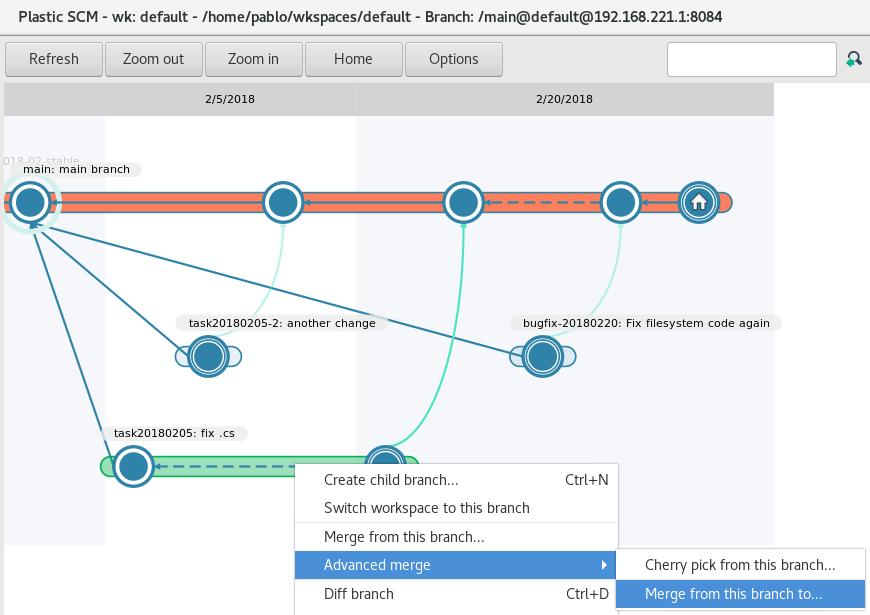
Plastic SCM is a full stack version control system that aims to make software configuration easy. It focuses on enabling dev teams get work done by facilitating branching, diffing and merging. The vendor says that for those purposes it provides cross-platform apps and GUIs with: Branch explorer Diffing and merging tools (both syntactic and semantic) On-premises and cloud repo management Code review mergebots (last mile…
$6.95
per user
Pricing
GitHub
Plastic SCM
Editions & Modules
Team
$40
per year per user
Enterprise
$210
per year per user
Cloud Edition
$6.95
per user
Team Edition (on prem)
$9.95
per user
Enterprise Edition
$23.25
per user
Enterprise Edition (perpetual)
$595.00
per user
Offerings
Pricing Offerings
GitHub
Plastic SCM
Free Trial
Yes
Yes
Free/Freemium Version
Yes
Yes
Premium Consulting/Integration Services
No
No
Entry-level Setup Fee
No setup fee
Optional
Additional Details
—
* Educational institutions receive a substantial discount on Plastic SCM licensing fees
* Corporate/volume pricing is available
* For more information, please contact sales at sales@codicesoftware.com
More Pricing Information
Community Pulse
GitHub
Plastic SCM
Features
GitHub
Plastic SCM
Version Control Software Features
Comparison of Version Control Software Features features of Product A and Product B
I’ve worked with Github my entire career and view it as an essential part. As a Product manager it allows me to keep track of my features, epics, issues and QA. It is easy to set up and integrate with tools such as intercom or notion.
Plastic SCM is well suited for the distributed development environment, where branching and merging can easily be handled. Its a good tool for version controlling, especially for a big team which is contributing to a big project simultaneously. Situation where Plastic SCM is not at all well suited are : If the project is smaller one and need to be handled by couple of people. So in that case setting up Plastic SCM and educating people to work on it is not at all efficient
Version control: GitHub provides a powerful and flexible Git-based version control system that allows teams to track changes to their code over time, collaborate on code with others, and maintain a history of their work.
Code review: GitHub's pull request system enables teams to review code changes, discuss suggestions and merge changes in a central location. This makes it easier to catch bugs and ensure that code quality remains high.
Collaboration: GitHub provides a variety of collaboration tools to help teams work together effectively, including issue tracking, project management, and wikis.
Not an easy tool for beginners. Prior command-line experience is expected to get started with GitHub efficiently.
Unlike other source control platforms GitHub is a little confusing. With no proper GUI tool its hard to understand the source code version/history.
Working with larger files can be tricky. For file sizes above 100MB, GitHub expects the developer to use different commands (lfs).
While using the web version of GitHub, it has some restrictions on the number of files that can be uploaded at once. Recommended action is to use the command-line utility to add and push files into the repository.
GitHub's ease of use and continued investment into the Developer Experience have made it the de facto tool for our engineers to manage software changes. With new features that continue to come out, we have been able to consolidate several other SaaS solutions and reduce the number of tools required for each engineer to perform their job responsibilities.
GitHub is a clean and modern interface. The underlying integrations make it smooth to couple tasks, projects, pull requests and other business functions together. The insights and reporting is really strong and is getting better with every release. GitHub's PR tooling is strong for being web based, i do believe a better code editor would rival having to pull merge conflicts into local IDE.
It's a testament to how easy it is to use GitHub and how many others use it that you can pretty much find the answer to any problem you have by searching online. Consequently, I've never needed to use their support. It's an incredibly easy tool to set up initially, so it won't require much onboarding expertise to get started.
GitHub comes handy in terms of usage and capabilities, it is easy to use and quite a user friendly tools when it comes to user experience, with limited UI/UX and it has vast exposure when it comes to third party integration and being quite mature and yet evolving and popular tool many other platform provide easy integration with the platform and make first choice for many tools architects.
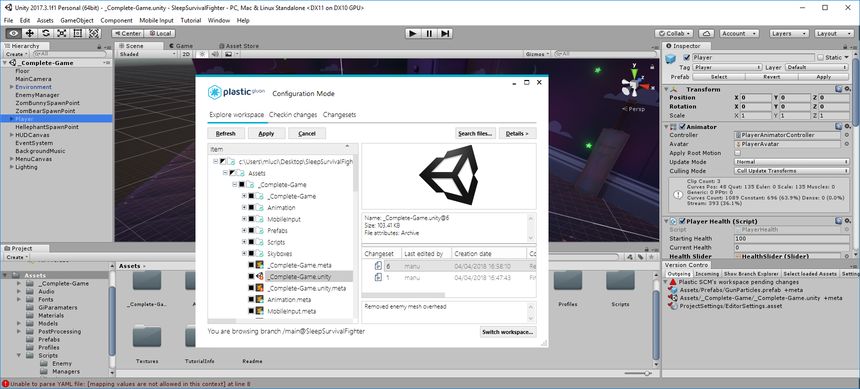
Plastic has best integration with unity - zero issues, native, straightforward. GitHub feels more stable but for smaller and or indie teams plastic s version control feels much more under control - you click, you feel safe. moreover, there is no need for extra tools such as gitkraken, gitlab, Sourcetree, fork, etc. it is really easy to develop games this way.
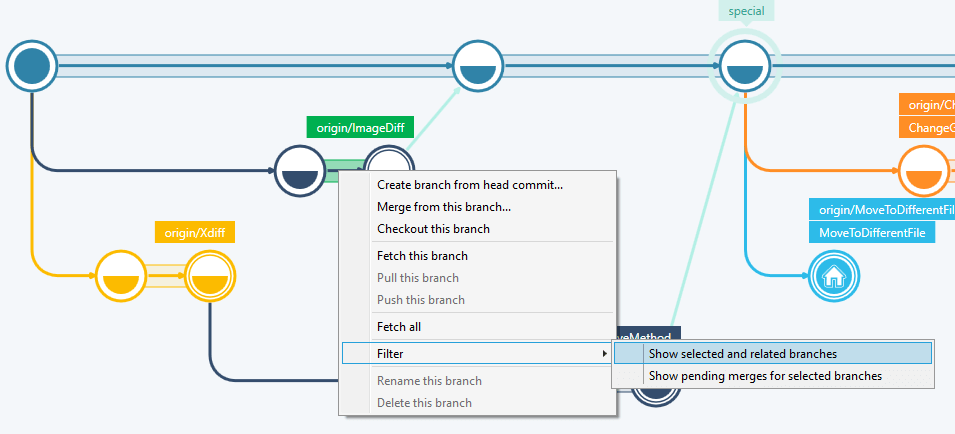
GitHub has made branching much easier for our dev team. Easy branching makes it easier for us to gain all the benefits of source control while giving us the flexibility to decide what features/branches we want to go in any particular release.
Integration with third-party tools like Azure DevOps has allowed us to streamline workflows and gain the benefits of automated testing whenever a commit is made.
GitHub has also raised visibility with its integration with our Sprint boards. We can easily jump to a commit from a work item.