Oracle Service is the help desk and customer experience management platform from Oracle. The technology was developed and supported by RightNow Technologies as RightNow CX for cloud-based call center automation, until that company's acquisition by Oracle in 2011 for about $1.5 billion.
N/A
ServiceMax
Score7.9 out of 10
N/A
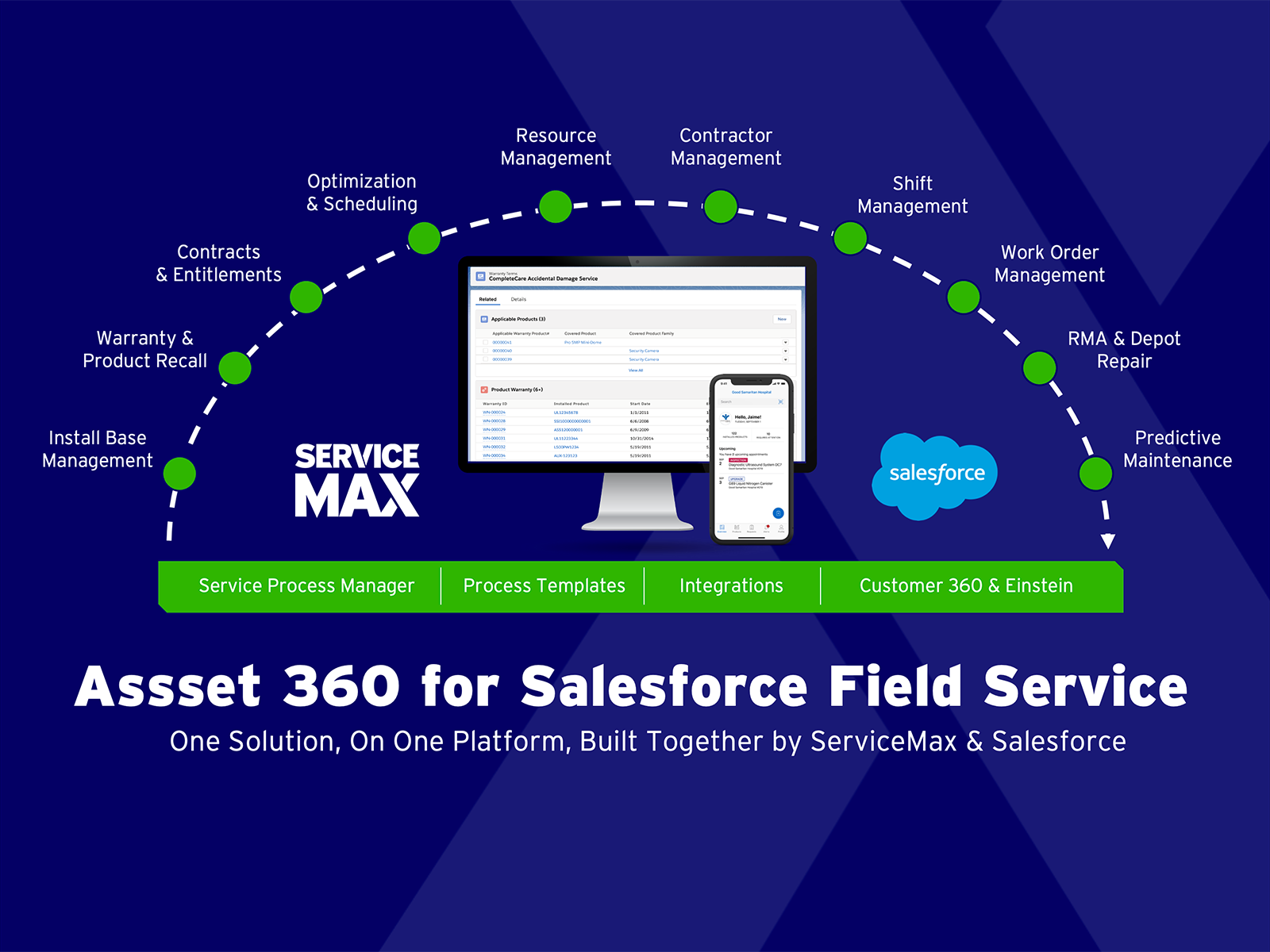
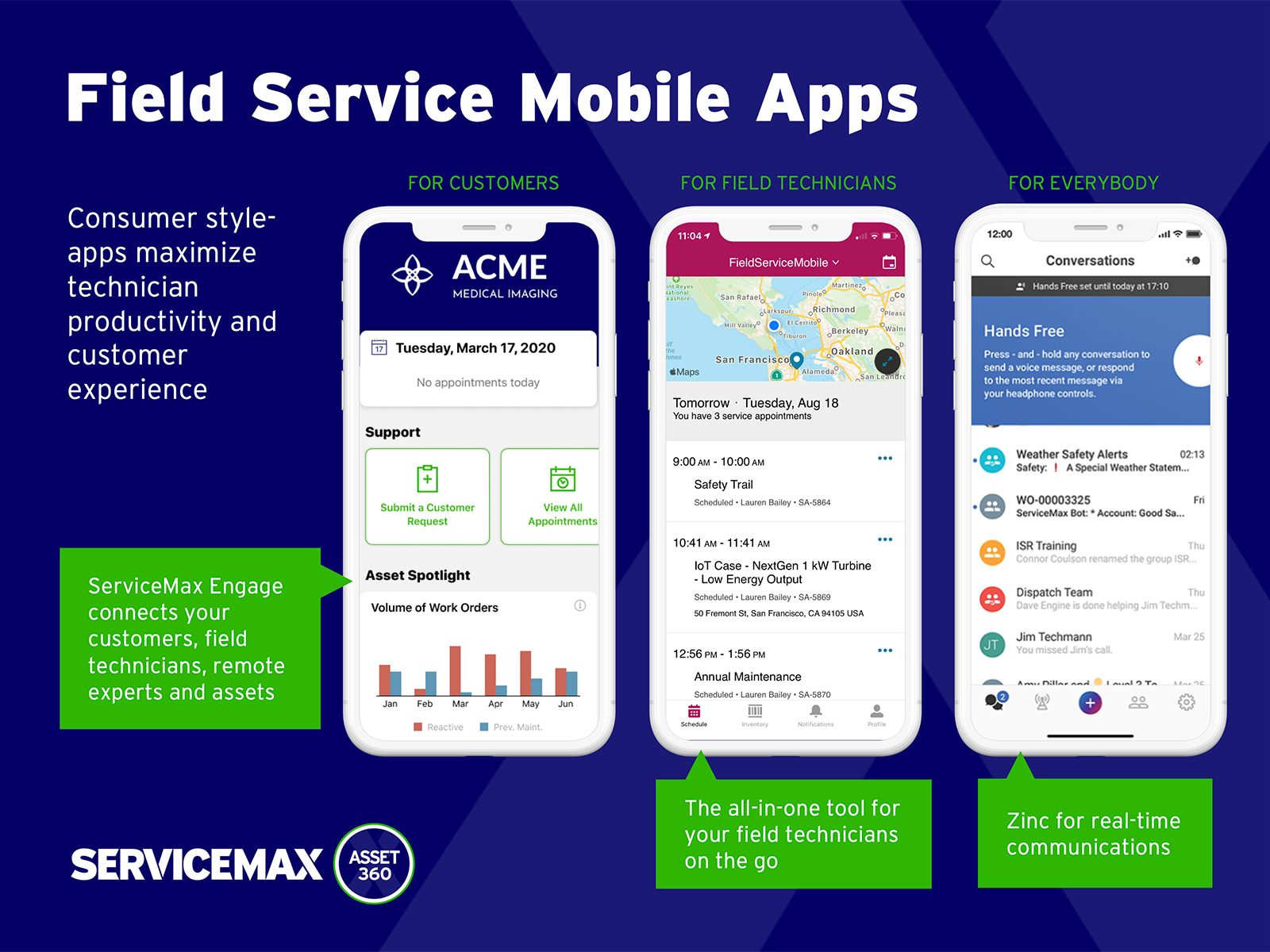
ServiceMax’s mission is to help customers with asset-centric field service management software. ServiceMax’s mobile apps and cloud-based software provide an overview of assets to field service teams. By optimizing field service operations, customers across all industries can better manage the complexities of service, support faster growth and run more profitable, outcome-centric businesses.
Business Development Director - TCS Oracle Practice, Americas in Sales at Tata Consultancy Services (Information Technology and Services, 10,001+ employees)
Chose Oracle Service
TCS' customers who also selected Oracle Service Cloud over Salesforce Service Cloud and GE's ServiceMax in the Mfg. vertical in which I work, did so because of the robust ability of Oracle Service Cloud and its APIs to integrate with other value-add solutions for manufacturers …
A de minimis incentive was given to thank the reviewer for their time. The incentive was not used to bias or drive a particular response, nor was the incentive contingent on a positive endorsement. More Info
ServiceMax
No answer on this topic
Key User Insights
Would buy again
No answers on this topic
No answers on this topic
Delivers good value for the price
No answers on this topic
No answers on this topic
Happy with the feature set
No answers on this topic
No answers on this topic
Lived up to sales and marketing promises
No answers on this topic
No answers on this topic
Implementation went as expected
No answers on this topic
No answers on this topic
Features
Oracle Service
ServiceMax
Incident and problem management
Comparison of Incident and problem management features of Oracle Service and ServiceMax
Feature
Oracle Service
7.5
78 Ratings
7% below category average
ServiceMax
-
Ratings
Organize and prioritize service tickets
7.073 Ratings
00 Ratings
Expert directory
7.553 Ratings
00 Ratings
Subscription-based notifications
7.057 Ratings
00 Ratings
ITSM collaboration and documentation
6.750 Ratings
00 Ratings
Ticket creation and submission
9.074 Ratings
00 Ratings
Ticket response
8.074 Ratings
00 Ratings
Self Help Community
Comparison of Self Help Community features of Oracle Service and ServiceMax
Feature
Oracle Service
7.3
74 Ratings
7% below category average
ServiceMax
-
Ratings
External knowledge base
6.865 Ratings
00 Ratings
Internal knowledge base
7.774 Ratings
00 Ratings
Multi-Channel Help
Comparison of Multi-Channel Help features of Oracle Service and ServiceMax
Oracle Right (Oracle Service Cloud) was an important evolution in the group's ombudsman channel management processes. We brought the Oracle Service Cloud to digitize the processes for capturing and managing the group's ombudsman channel, no longer operating manually (MS Excel).
Oracle Service Cloud (Right Now) brought about an important evolution in the management processes of the group's ombudsman channel, where activities that were performed manually, repetitively and with risk of errors, are now operated by the Right Now platform itself, whether by API, or by automation of the tool.
A de minimis incentive was given to thank the reviewer for their time. The incentive was not used to bias or drive a particular response, nor was the incentive contingent on a positive endorsement. More Info
Small deployments, where you have some specific need for ServiceMax and absolutely need offline capabilities, and are willing to deal with the problems. Otherwise, you may be better off looking at the built-in Work Orders and field service module that Salesforce is now providing. Their app is direct competition for ServiceMax and integrates much better with cases and knowledge articles.
A de minimis incentive was given to thank the reviewer for their time. The incentive was not used to bias or drive a particular response, nor was the incentive contingent on a positive endorsement. More Info
A de minimis incentive was given to thank the reviewer for their time. The incentive was not used to bias or drive a particular response, nor was the incentive contingent on a positive endorsement. TR verified that a representative sample of customers was invited. More Info
A de minimis incentive was given to thank the reviewer for their time. The incentive was not used to bias or drive a particular response, nor was the incentive contingent on a positive endorsement. More Info
Oracle Service Cloud needs a better built in integration with Oracle Social Cloud or it needs to build in more Social network capabilities.
SMS is handle via a third party application but could be built in as part of the product.
The knowledge foundation product needs a better way to handle multiple languages. Currently you have to purchase an additional interface for each language. You can purchase the more expensive Knowledge Advance which does have a better language feature.
A de minimis incentive was given to thank the reviewer for their time. The incentive was not used to bias or drive a particular response, nor was the incentive contingent on a positive endorsement. More Info
Although RightNow is extremely flexible, the flexibility comes with a price. It is often not intuitive which settings you need to change (and under which menus these setting are buried) to enable the system to do what you want. Also, sometimes the system can do things you need, but you don't initially realize it. When RightNow sells a system to a new customer, I think it should come with X hours of consulting time with a RightNow expert. The customer should be able to consult with this expert over the next year to get advice concerning how to configure the system to achieve desired needs. Often RightNow Support would just answer "no" when I asked if I could do something, but then I would find another way to achieve my goals after talking with other companies using RightNow.
The learning curve is fairly steep; but for something that has this much capability, it's nearly impossible to make it "easy". The layout and organization are at least reasonably intuitive. The hardest part-- the "weakest link"-- is the portal development (where you can build help centers and other end-user pages.) The capabilities there are significant, but the learning curve for that part is especially steep and it takes a fair amount of expertise to be able to update it.
A de minimis incentive was given to thank the reviewer for their time. The incentive was not used to bias or drive a particular response, nor was the incentive contingent on a positive endorsement. TR verified that a representative sample of customers was invited. More Info
We use a lot of tabs and fields on our incident workspace, which should slow the system down, but it's still quite fast, and we continue to optimize whatever is possible.
A de minimis incentive was given to thank the reviewer for their time. The incentive was not used to bias or drive a particular response, nor was the incentive contingent on a positive endorsement. TR verified that a representative sample of customers was invited. More Info
Technicians seem to be assessed based solely on how quickly they close the issues. I've had to reopen requests multiple times because they didn't actually solve my problem. Also, when the issue has even a moderate amount of complexity, the technicians often instruct me to "open another SR" to handle the other issue. I'm the customer, I shouldn't have to follow their processes, they should handle that for me. But even when I create the new SR, it seems like their right hand isn't talking to their left - they aren't reading back to the previous issue for context. So I get bounced around a lot, and I have to tell them how to do their job
A de minimis incentive was given to thank the reviewer for their time. The incentive was not used to bias or drive a particular response, nor was the incentive contingent on a positive endorsement. More Info
A de minimis incentive was given to thank the reviewer for their time. The incentive was not used to bias or drive a particular response, nor was the incentive contingent on a positive endorsement. More Info
Most of our training was given while doing user acceptance testing, and getting the system approved by the market. When ever we were in doubt, our implementer helped us along. Later on we started exploring by our selves.
A de minimis incentive was given to thank the reviewer for their time. The incentive was not used to bias or drive a particular response, nor was the incentive contingent on a positive endorsement. TR verified that a representative sample of customers was invited. More Info
Work with a RightNow expert during the implementation. Explain features that would you like to have. Often, somebody who really knows the system can show you what you need to do to achieve the desired results. Where a RightNow support engineer or a consultant might say "the system can't do that," a RightNow application engineer will listen to what you need, and often come up with an alternate path to achieve it
TCS' customers who also selected Oracle Service Cloud over Salesforce Service Cloud and GE's ServiceMax in the Mfg. vertical in which I work, did so because of the robust ability of Oracle Service Cloud and its APIs to integrate with other value-add solutions for manufacturers such as IoT applications, Big Data Analytics, and Field Service applications.
A de minimis incentive was given to thank the reviewer for their time. The incentive was not used to bias or drive a particular response, nor was the incentive contingent on a positive endorsement. More Info
ServiceMax has an offline capability, and also integrates with our Salesforce side of business. At the time, Salesforce did not have a field service application so we could not consider it, but if we could now, we would probably go with that instead. ServiceMax is also expensive. But at the time, ServiceMax was the only offering out there that integrated with Salesforce, had mobile offline capability, and could operate at the scale we needed.
A de minimis incentive was given to thank the reviewer for their time. The incentive was not used to bias or drive a particular response, nor was the incentive contingent on a positive endorsement. More Info
A de minimis incentive was given to thank the reviewer for their time. The incentive was not used to bias or drive a particular response, nor was the incentive contingent on a positive endorsement. TR verified that a representative sample of customers was invited. More Info
A de minimis incentive was given to thank the reviewer for their time. The incentive was not used to bias or drive a particular response, nor was the incentive contingent on a positive endorsement. TR verified that a representative sample of customers was invited. More Info
ROI for ServiceMax is mostly dependent on how in depth the organization wants the software. Our ROI is expected within the second year of operation due to the complexity of integration and the initial training requirements for in-house programmers.
Inventory control ROI is expected within year three or four due to the number of technicians and creating the foundation of information to import into ServiceMax. Expectations are the front end programming will be complete and our programmers will be better acquainted with the modules and architecture to make the inventory integration smoother than the initial integration.
Our organization has been working with ServiceMax for ten months and beginning to incorporate the financials to the work orders. This process has not been as seamless as once projected and the root causes are under investigation. It appears the original fields available to track time between employees were not in depth nor segregated sufficiently for granularity.
A de minimis incentive was given to thank the reviewer for their time. The incentive was not used to bias or drive a particular response, nor was the incentive contingent on a positive endorsement. More Info