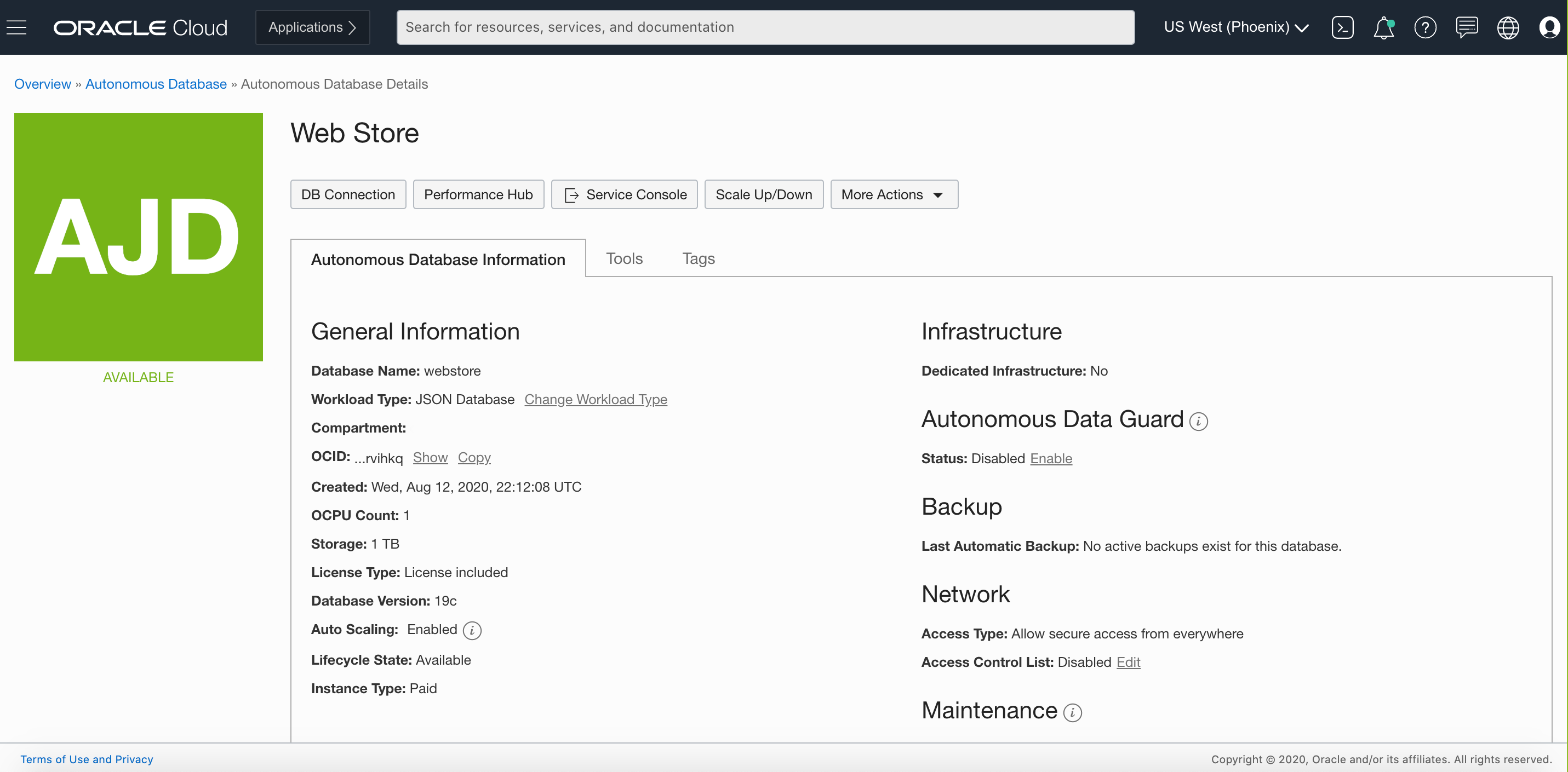
Oracle Autonomous Database provides a self-driving, self-securing, self-repairing cloud service that eliminate the overhead and human errors associated with traditional database administration. Oracle Autonomous Database takes care of configuration, tuning, backup, patching, encryption, scaling, and more.
N/A
SolarWinds Database Performance Analyzer
Score 5.5 out of 10
N/A
SolarWinds Database Performance Analyzer (DPA) enables deep visibility into database performance and expert advice for performance optimization and tuning. What can you monitor with DPA? Oracle Oracle Exadata Oracle EBS Microsoft SQL Server Azure SQL Database Azure SQL Database Managed Instance MySQL DB2 SAP ASE Aurora MariaDB DPA monitors physical, virtual,…
N/A
Pricing
Oracle Autonomous Database
SolarWinds Database Performance Analyzer
Editions & Modules
No answers on this topic
No answers on this topic
Offerings
Pricing Offerings
Oracle Autonomous Database
SolarWinds Database Performance Analyzer
Free Trial
Yes
Yes
Free/Freemium Version
Yes
No
Premium Consulting/Integration Services
No
No
Entry-level Setup Fee
Optional
Optional
Additional Details
—
—
More Pricing Information
Community Pulse
Oracle Autonomous Database
SolarWinds Database Performance Analyzer
Features
Oracle Autonomous Database
SolarWinds Database Performance Analyzer
Database Development
Comparison of Database Development features of Product A and Product B
Oracle Autonomous Database
7.2
Ratings
17% below category average
SolarWinds Database Performance Analyzer
-
Ratings
Version control tools
6.20 Ratings
00 Ratings
Test data generation
5.70 Ratings
00 Ratings
Performance optimization tools
8.20 Ratings
00 Ratings
Schema maintenance
9.00 Ratings
00 Ratings
Database change management
7.00 Ratings
00 Ratings
Database Administration
Comparison of Database Administration features of Product A and Product B
Scenarios where this is best suited are like where there are not large set of data which has to be analyzed and extracted.It helps in the efficiency of data .It is also well suited for medium size companies where you have to create a common data for everyone. As for large set of data, there can be network latency issues and thus there are some limitations of this software.
I believe that SolarWinds Database Performance Analyzer is a great choice for an organization that does not have a specific DBA or one that is still growing into the role. SolarWinds Database Performance Analyzer is filled with hints, tips, and explanations of the various readings and metrics. This is very useful to help understand what is happening and why, what it means, and what some potential solutions are towards remediating any issues. This is extremely valuable for our development team, allowing them to be more proactive with the queries they write in viewing how they perform and where bottlenecks might be.
There is no access to the physical host of the DB. This is expected from a managed DB. Everything must be done through the console or via API calls. This is a new learning curve for the DBAs.
Due to the lack of physical host access, certain features are not supported, such as Transportable tablespaces and Oracle LogMiner.
Certain special data types, (such as XMLType) are not allowed; be sure the app vendor certifies their product on this platform.
Resiliency of the Monitoring checks after the server underwent maintenance reboot. My experience is the monitor (Action) needs to be started manually. If possible it can automatically detect service/server then start to monitor again when system is back up.
Autonomous is the way of the future and this is one system which is crucial to any system and is also autonomous. It is self-tuning and self-maintaining which are major advantages.
We have relied on this product for a very long time and it continues to exceed expectations. The product is a vital part of our organization at this point, it would not be very ideal for us to abandon it. We use it almost every day and depend on its alerts for critical parts of our business
The product is continuously evolving and new features are added frequently. Management options through the OCI (Oracle Cloud Infrastructure) console and through the command line and API are being enhanced frequently.
I don't want to think about managing clusters of SQL servers in the future without this tool. We have demoed other tools and SolarWinds Database Performance Analyzer is the gold standard for usability and insight into what your servers are doing. The UI is a bit dated, but everything is laid out in a logical manner and drilling down into queries or timeslices is extremely intuitive.
I have had to use their support on a few occasions, for reasons that I am not clear about until recently I have always had problems upgrading the software (although the last 2 updates have gone without issue which I am very pleased to say). On those unfortunate occasions, the support has been brilliant with either excellently documented guides on how to resolve the issue by myself or have been hands-on with calls and screen sharing to remotely fix the issue. Every time the problem was sorted and more importantly, nothing was lost (apart from a bit of time). And as I stated above whatever the problem was that was causing my upgrade issues appears to have been resolved in the last 2 updates.
Follow the guidelines for the capacity of the servers. We found that the DPA databases were getting rather large and also that there are ways to reduce their size built into some of the options.
Hands down it's the best. It's secure and extremely fast. It also doesn't need a lot of babysitting. It's running itself. It does its job as advertised. This is why I feel everyone should if they haven't already taken a hard look OAD. I feel it's the future of technology at its best. Everyone should be taking notice of how far technology has come and where it's going.
I have used Spotlight (for Oracle on RAC) but it has been several years. The dashboard was crisp, clean, and intuitive, but the tool had a significant overhead. However, no competitor made a tool that met our needs at the time. I have also used Idera's SQL Diagnostic Manager in more than one company. That tool is helpful for a larger environment than we currently have. But I think it is better at alerting than DPA but worse at just about everything else. The good thing is you can flag an alert as acknowledged, so you stop getting emails. The bad thing is I don't think I could use it to troubleshoot issues like I do with DPA. I do not have enough experience to provide helpful feedback on the others selected.
Paid for itself in days. We had a stored procedure that could not meet its SLA, DPA highlighted the issue and contributed to the resolution.
We had a stored procedure that we were able to calculate as running in 9 milliseconds, unfortunately, we had transactions coming in 7 milliseconds, resulting in duplicate transactions, indicating that a mutex function was needed.