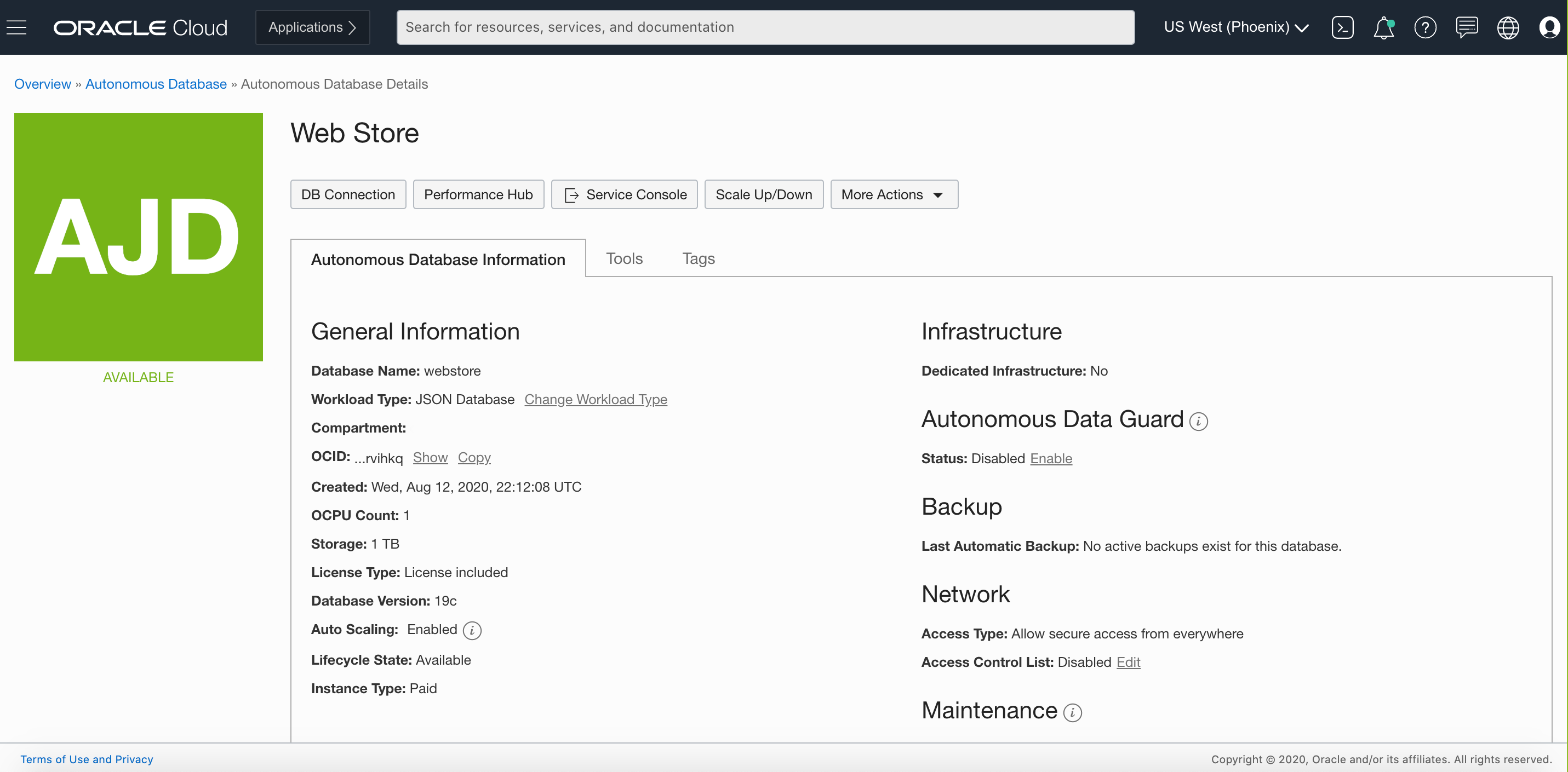
Oracle Autonomous Database provides a self-driving, self-securing, self-repairing cloud service that eliminate the overhead and human errors associated with traditional database administration. Oracle Autonomous Database takes care of configuration, tuning, backup, patching, encryption, scaling, and more.
N/A
Redgate SQL Toolbelt Essentials
Score 8.2 out of 10
N/A
Redgate's SQL Toolbelt Essentials includes industry-standard tools for SQL Server development & deployment, enabling users to include SQL Server databases in agile processes and enabilng developers to embed robust and scalable development practices.
N/A
Pricing
Oracle Autonomous Database
Redgate SQL Toolbelt Essentials
Editions & Modules
No answers on this topic
No answers on this topic
Offerings
Pricing Offerings
Oracle Autonomous Database
Redgate SQL Toolbelt Essentials
Free Trial
Yes
Yes
Free/Freemium Version
Yes
No
Premium Consulting/Integration Services
No
No
Entry-level Setup Fee
Optional
No setup fee
Additional Details
—
—
More Pricing Information
Community Pulse
Oracle Autonomous Database
Redgate SQL Toolbelt Essentials
Features
Oracle Autonomous Database
Redgate SQL Toolbelt Essentials
Database Development
Comparison of Database Development features of Product A and Product B
Oracle Autonomous Database
7.2
Ratings
17% below category average
Redgate SQL Toolbelt Essentials
-
Ratings
Version control tools
6.20 Ratings
00 Ratings
Test data generation
5.70 Ratings
00 Ratings
Performance optimization tools
8.20 Ratings
00 Ratings
Schema maintenance
9.00 Ratings
00 Ratings
Database change management
7.00 Ratings
00 Ratings
Database Administration
Comparison of Database Administration features of Product A and Product B
Scenarios where this is best suited are like where there are not large set of data which has to be analyzed and extracted.It helps in the efficiency of data .It is also well suited for medium size companies where you have to create a common data for everyone. As for large set of data, there can be network latency issues and thus there are some limitations of this software.
We use SQL Compare to troubleshoot performance problems quite a bit since our data model is more like a template and not everything is 100% in sync and customization occurs between different client databases. We continually get pulled into performance issues and the developers will say Client A is performing different than Client B, why? Using SQL Compare, we usually find that one client was tuned and had indexes altered or added that weren't deployed to all clients or other objects weren't deployed correctly during the release. On the other hand, since our data model practices allow client databases to drift I tried to create a new golden image by trying to compare multiple databases based on the same data model and found it to be a very difficult process to complete using SQL Compare. SQL Compare gave me too much information and doesn't allow enough filtering to eliminate a lot of the noise.
Simple and easy comparison of database schemas and data. Differences can be copied or synced from one database to another with a click of a button.
You can save "projects" so that you can easily rerun a previous comparison whenever you need to.
It has a very simple, easy to learn interface. I've never needed to read any documentation or watch any tutorials in order to figure out how to do something.
There is no access to the physical host of the DB. This is expected from a managed DB. Everything must be done through the console or via API calls. This is a new learning curve for the DBAs.
Due to the lack of physical host access, certain features are not supported, such as Transportable tablespaces and Oracle LogMiner.
Certain special data types, (such as XMLType) are not allowed; be sure the app vendor certifies their product on this platform.
Pricing.... I wish there was an inexpensive developer version I could buy for myself.
Portability.... I would like to use it from a flash drive so I can use it where ever I am asked to work.
Unbundled.... This may be available already but I dont' recall I can buy it cheaply as a stand-alone product. Its only part of the bundle - cost effectively.
Autonomous is the way of the future and this is one system which is crucial to any system and is also autonomous. It is self-tuning and self-maintaining which are major advantages.
The product is continuously evolving and new features are added frequently. Management options through the OCI (Oracle Cloud Infrastructure) console and through the command line and API are being enhanced frequently.
Hands down it's the best. It's secure and extremely fast. It also doesn't need a lot of babysitting. It's running itself. It does its job as advertised. This is why I feel everyone should if they haven't already taken a hard look OAD. I feel it's the future of technology at its best. Everyone should be taking notice of how far technology has come and where it's going.
I've used Visual Studio Database Projects for this type of work in the past with some success, but Redgate SQL Compare is faster, more transparent, and simply easier to use. Faster is self explanatory. More transparent, means that it's much easier to set up your desired options for schema change deployment scripts. Easier to use, It's really dead simple. Start a project, connect your source, connect destination, click compare.