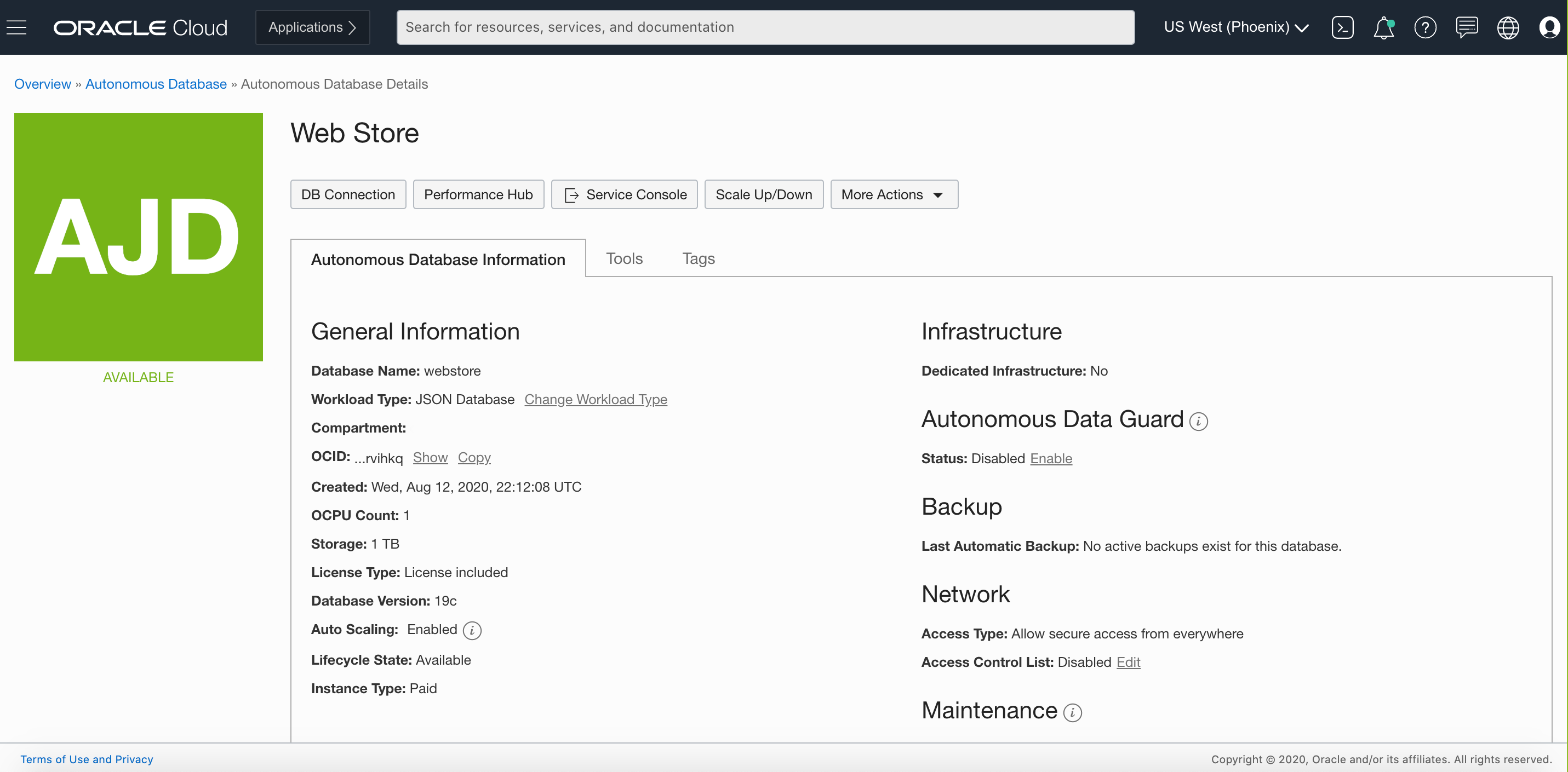
Oracle Autonomous Database provides a self-driving, self-securing, self-repairing cloud service that eliminate the overhead and human errors associated with traditional database administration. Oracle Autonomous Database takes care of configuration, tuning, backup, patching, encryption, scaling, and more.
N/A
PostgreSQL
Score8.2 out of 10
N/A
PostgreSQL (alternately Postgres) is a free and open source object-relational database system boasting over 30 years of active development, reliability, feature robustness, and performance. It supports SQL and is designed to support various workloads flexibly.
Pro - Stability. Does everything anyone could need. If it's not there it will be on the next update. There is plenty of support for it. It's been around for a long time and it's reliable. The support is well documented and has a great reputation. Cons - Errors have been found in the documentation provided by Oracle with guidelines, etc. Oracles salespeople have a reputation of being obnoxious and condescending.
A de minimis incentive was given to thank the reviewer for their time. The incentive was not used to bias or drive a particular response, nor was the incentive contingent on a positive endorsement. TR verified that a representative sample of customers was invited. More Info
PostgreSQL, unlike other databases, is user-friendly and uses an open-source database. Ideal for relational databases, they can be accessed when speed and efficiency are required. It enables high-availability and disaster recovery replication from instance to instance. PostgreSQL can store data in a JSON format, including hashes, keys, and values. Multi-platform compatibility is also a big selling point. We could, however, use all the DBMS’s cores. While it works well in fast environments, it can be problematic in slower ones or cause multiple master replication.
A de minimis incentive was given to thank the reviewer for their time. The incentive was not used to bias or drive a particular response, nor was the incentive contingent on a positive endorsement. More Info
The stability it offers, its speed of response and its resource management is excellent even in complex database environments and with low-resource machines.
The large amount of resources it has in addition to the many own and third-party tools that are compatible that make productivity greatly increase.
The adaptability in various environments, whether distributed or not, [is a] complete set of configuration options which allows to greatly customize the work configuration according to the needs that are required.
The excellent handling of referential and transactional integrity, its internal security scheme, the ease with which we can create backups are some of the strengths that can be mentioned.
A de minimis incentive was given to thank the reviewer for their time. The incentive was not used to bias or drive a particular response, nor was the incentive contingent on a positive endorsement. More Info
There is no access to the physical host of the DB. This is expected from a managed DB. Everything must be done through the console or via API calls. This is a new learning curve for the DBAs.
Due to the lack of physical host access, certain features are not supported, such as Transportable tablespaces and Oracle LogMiner.
Certain special data types, (such as XMLType) are not allowed; be sure the app vendor certifies their product on this platform.
A de minimis incentive was given to thank the reviewer for their time. The incentive was not used to bias or drive a particular response, nor was the incentive contingent on a positive endorsement. More Info
The query syntax for JSON fields is unwieldy when you start getting into complex queries with many joins.
I wish there was a distinction (a flag) you could set for automated scripts vs working in the psql CLI, which would provide an 'Are you sure you want to do X?' type prompt if your query is likely to affect more than a certain number of rows. Especially on updates/deletes. Setting the flag in the headless(scripted) flow would disable the prompt.
Better documentation around JSON and Array aggregation, with more examples of how the data is transformed.
A de minimis incentive was given to thank the reviewer for their time. The incentive was not used to bias or drive a particular response, nor was the incentive contingent on a positive endorsement. More Info
Because it does exactly what we need: it enables us to manage our development and testing database environments in a quick and simple way without requiring support from a database administrators team.
A de minimis incentive was given to thank the reviewer for their time. The incentive was not used to bias or drive a particular response, nor was the incentive contingent on a positive endorsement. More Info
A de minimis incentive was given to thank the reviewer for their time. The incentive was not used to bias or drive a particular response, nor was the incentive contingent on a positive endorsement. More Info
The product is continuously evolving and new features are added frequently. Management options through the OCI (Oracle Cloud Infrastructure) console and through the command line and API are being enhanced frequently.
A de minimis incentive was given to thank the reviewer for their time. The incentive was not used to bias or drive a particular response, nor was the incentive contingent on a positive endorsement. More Info
Postgresql is the best tool out there for relational data so I have to give it a high rating when it comes to analytics, data availability and consistency, so on and so forth. SQL is also a relatively consistent language so when it comes to building new tables and loading data in from the OLTP database, there are enough tools where we can perform ETL on a scalable basis.
A de minimis incentive was given to thank the reviewer for their time. The incentive was not used to bias or drive a particular response, nor was the incentive contingent on a positive endorsement. More Info
A de minimis incentive was given to thank the reviewer for their time. The incentive was not used to bias or drive a particular response, nor was the incentive contingent on a positive endorsement. More Info
The data queries are relatively quick for a small to medium sized table. With complex joins, and a wide and deep table however, the performance of the query has room for improvement.
A de minimis incentive was given to thank the reviewer for their time. The incentive was not used to bias or drive a particular response, nor was the incentive contingent on a positive endorsement. More Info
There are several companies that you can contract for technical support, like EnterpriseDB or Percona, both first level in expertise and commitment to the software.
But we do not have contracts with them, we have done all the way from googling to forums, and never have a problem that we cannot resolve or pass around. And for dozens of projects and more than 15 years now.
A de minimis incentive was given to thank the reviewer for their time. The incentive was not used to bias or drive a particular response, nor was the incentive contingent on a positive endorsement. More Info
The online training is request based. Had there been recorded videos available online for potential users to benefit from, I could have rated it higher. The online documentation however is very helpful. The online documentation PDF is downloadable and allows users to pace their own learning. With examples and code snippets, the documentation is great starting point.
A de minimis incentive was given to thank the reviewer for their time. The incentive was not used to bias or drive a particular response, nor was the incentive contingent on a positive endorsement. More Info
A de minimis incentive was given to thank the reviewer for their time. The incentive was not used to bias or drive a particular response, nor was the incentive contingent on a positive endorsement. More Info
I found Oracle Autonomous Database very secure to store data and private information.I always feel secure with Oracle Autonomous Databases disaster recovery features.It is very effective to build applications for mobile and desktop devices lesser code using a low code development framework namely Oracle Application Express (ApEx).
A de minimis incentive was given to thank the reviewer for their time. The incentive was not used to bias or drive a particular response, nor was the incentive contingent on a positive endorsement. More Info
Postgres stacks up just [fine] along the other big players in the RDBMS world. It's very popular for a reason. It's very close to MySQL in terms of cost and features - I'd pick either solution and be just as happy. Compared to Oracle it is a MUCH cheaper solution that is just as usable.
A de minimis incentive was given to thank the reviewer for their time. The incentive was not used to bias or drive a particular response, nor was the incentive contingent on a positive endorsement. More Info
A de minimis incentive was given to thank the reviewer for their time. The incentive was not used to bias or drive a particular response, nor was the incentive contingent on a positive endorsement. More Info
A de minimis incentive was given to thank the reviewer for their time. The incentive was not used to bias or drive a particular response, nor was the incentive contingent on a positive endorsement. More Info
The user-role system has saved us tons of time and thus money. As I mentioned in the "Use Case" section, Postgres is not only used by engineering but also finance to measure how much to charge customers and customer support to debug customer issues. Sure, it's not easy for non-technical employees to psql in and view raw tables, but it has saved engineering hundreds of man-hours that would have had to be spent on building equivalent tools to serve finance or customer support.
It provides incredibly trustworthy storage for wherever customer data dumped in. In our 6 years of Postgres existence, we have not lost a byte of customer data due to Postgres messing up a transaction or during the multiple times the hard-drives failed (thanks to ACID compliance!).
This is less significant, but Postgres is also quite easy to manage (unless you are going above and beyond to squeeze out every last bit of performance). There's not much to configure, and the out of the box settings are quite sane. That has saved us engineers lots of time that would have gone into Postgres administration.
A de minimis incentive was given to thank the reviewer for their time. The incentive was not used to bias or drive a particular response, nor was the incentive contingent on a positive endorsement. More Info