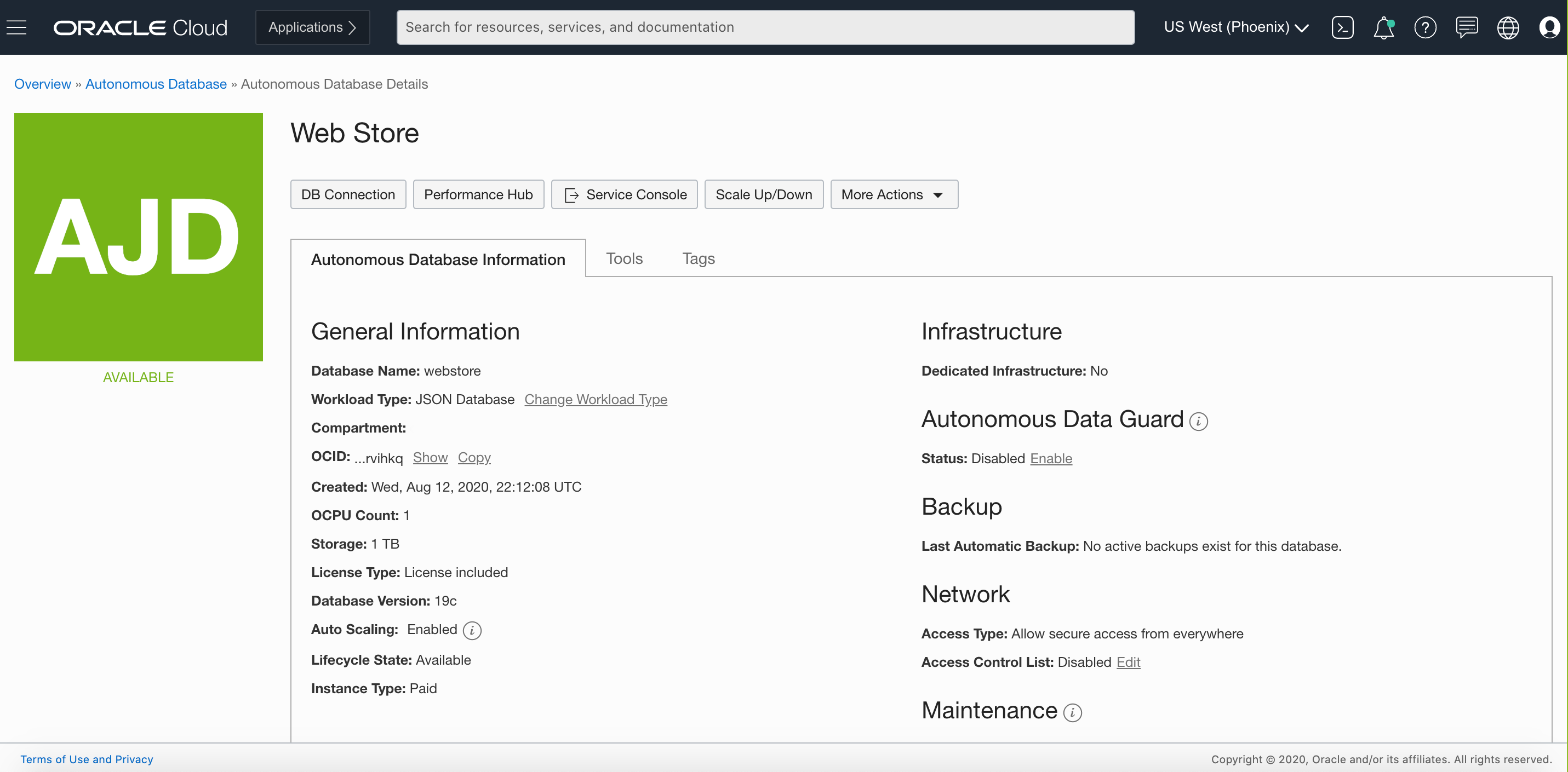
Oracle Autonomous Database provides a self-driving, self-securing, self-repairing cloud service that eliminate the overhead and human errors associated with traditional database administration. Oracle Autonomous Database takes care of configuration, tuning, backup, patching, encryption, scaling, and more.
N/A
Oracle Database
Score8 out of 10
N/A
Oracle Database, currently in edition 23ai, is a converged, multimodel database management system. It is designed to simplify development for AI, microservices, graph, document, spatial, and relational applications.
$0.05
per hour
Pricing
Oracle Autonomous Database
Oracle Database
Editions & Modules
No answers on this topic
Oracle Base Database Service - Standard
$0.0538
per hour
Oracle Base Database Service - Enterprise
$0.1075
per hour
Oracle Base Database Service - High Performance
$0.2218
per hour
Standard Edition
Contact Sales
Enterprise Edition
Contact Sales
Personal Edition
Contact Sales
Offerings
Pricing Offerings
Oracle Autonomous Database
Oracle Database
Free Trial
Yes
Yes
Free/Freemium Version
Yes
Yes
Premium Consulting/Integration Services
Yes
No
Entry-level Setup Fee
Optional
No setup fee
Additional Details
—
—
More Pricing Information
Community Pulse
Oracle Autonomous Database
Oracle Database
Considered Both Products
Oracle
Verified User
Chose Oracle Autonomous Database
Oracle Autonomous Database provides self administration features that are not available in previous databases like Oracle Database 12c and previous versions. So this is really good for the organizations to best use the resources and improve the performance of the applications. …
A de minimis incentive was given to thank the reviewer for their time. The incentive was not used to bias or drive a particular response, nor was the incentive contingent on a positive endorsement. More Info
A de minimis incentive was given to thank the reviewer for their time. The incentive was not used to bias or drive a particular response, nor was the incentive contingent on a positive endorsement. More Info
A de minimis incentive was given to thank the reviewer for their time. The incentive was not used to bias or drive a particular response, nor was the incentive contingent on a positive endorsement. More Info
Pro - Stability. Does everything anyone could need. If it's not there it will be on the next update. There is plenty of support for it. It's been around for a long time and it's reliable. The support is well documented and has a great reputation. Cons - Errors have been found in the documentation provided by Oracle with guidelines, etc. Oracles salespeople have a reputation of being obnoxious and condescending.
A de minimis incentive was given to thank the reviewer for their time. The incentive was not used to bias or drive a particular response, nor was the incentive contingent on a positive endorsement. TR verified that a representative sample of customers was invited. More Info
I believe Oracle Database is still the best RDBMS database which is the database to consider for OLTP applications and for Adhoc requests. They are good in Datawarehousing in certain aspects but not the best. Oracle is also a great database for scaling up with their Clusterware solution which also makes the database highly available with services moving to the live instance without much trouble.
A de minimis incentive was given to thank the reviewer for their time. The incentive was not used to bias or drive a particular response, nor was the incentive contingent on a positive endorsement. More Info
A de minimis incentive was given to thank the reviewer for their time. The incentive was not used to bias or drive a particular response, nor was the incentive contingent on a positive endorsement. More Info
A de minimis incentive was given to thank the reviewer for their time. The incentive was not used to bias or drive a particular response, nor was the incentive contingent on a positive endorsement. TR verified that a representative sample of customers was invited. More Info
There is no access to the physical host of the DB. This is expected from a managed DB. Everything must be done through the console or via API calls. This is a new learning curve for the DBAs.
Due to the lack of physical host access, certain features are not supported, such as Transportable tablespaces and Oracle LogMiner.
Certain special data types, (such as XMLType) are not allowed; be sure the app vendor certifies their product on this platform.
A de minimis incentive was given to thank the reviewer for their time. The incentive was not used to bias or drive a particular response, nor was the incentive contingent on a positive endorsement. More Info
A de minimis incentive was given to thank the reviewer for their time. The incentive was not used to bias or drive a particular response, nor was the incentive contingent on a positive endorsement. More Info
Because it does exactly what we need: it enables us to manage our development and testing database environments in a quick and simple way without requiring support from a database administrators team.
A de minimis incentive was given to thank the reviewer for their time. The incentive was not used to bias or drive a particular response, nor was the incentive contingent on a positive endorsement. More Info
There is a lot of sunk cost in a product like Oracle 12c. It is doing a great job, it would not provide us much benefit to switch to another product even if it did the same thing due to the work involved in making such a switch. It would not be cost effective.
A de minimis incentive was given to thank the reviewer for their time. The incentive was not used to bias or drive a particular response, nor was the incentive contingent on a positive endorsement. More Info
The product is continuously evolving and new features are added frequently. Management options through the OCI (Oracle Cloud Infrastructure) console and through the command line and API are being enhanced frequently.
A de minimis incentive was given to thank the reviewer for their time. The incentive was not used to bias or drive a particular response, nor was the incentive contingent on a positive endorsement. More Info
Many of the powerful options can be auto-configured but there are still many things to take into account at the moment of installing and configuring an Oracle Database, compared with SQL Server or other databases. At the same time, that extra complexity allows for detailed configuration and guarantees performance, scalability, availability and security.
A de minimis incentive was given to thank the reviewer for their time. The incentive was not used to bias or drive a particular response, nor was the incentive contingent on a positive endorsement. More Info
1. I have very good experience with Oracle Database support team. Oracle support team has pool of talented Oracle Analyst resources in different regions. To name a few regions - EMEA, Asia, USA(EST, MST, PST), Australia. Their support staffs are very supportive, well trained, and customer focused. Whenever I open Oracle Sev1 SR(service request), I always get prompt update on my case timely. 2. Oracle has zoom call and chat session option linked to Oracle SR. Whenever you are in Oracle portal - you can chat with the Oracle Analyst who is working on your case. You can request for Oracle zoom call thru which you can share the your problem server screen in no time. This is very nice as it saves lot of time and energy in case you have to follow up with oracle support for your case. 3.Oracle has excellent knowledge base in which all the customer databases critical problems and their solutions are well documented. It is very easy to follow without consulting to support team at first.
A de minimis incentive was given to thank the reviewer for their time. The incentive was not used to bias or drive a particular response, nor was the incentive contingent on a positive endorsement. TR verified that a representative sample of customers was invited. More Info
Overall the implementation went very well and after that everything came out as expected - in terms of performance and scalability. People should always install and upgrade a stable version for production with the latest patch set updates, test properly as much as possible, and should have a backup plan if anything unexpected happens
I found Oracle Autonomous Database very secure to store data and private information.I always feel secure with Oracle Autonomous Databases disaster recovery features.It is very effective to build applications for mobile and desktop devices lesser code using a low code development framework namely Oracle Application Express (ApEx).
A de minimis incentive was given to thank the reviewer for their time. The incentive was not used to bias or drive a particular response, nor was the incentive contingent on a positive endorsement. More Info
Oracle is more of an enterprise-level database than Access and SAP Adaptive Server Enterprise isn't getting developed much (some people wonder how close it is to end of life) but SQL Server is miles ahead of Oracle IMO in terms of user experience and comparable in terms of performance AFAIK. As stated, a vendor forced our hand to use Oracle so we did not have a choice. If you are looking for help with an issue you are having, there are lots of SQL Server articles, etc. on the web and the community of SQL Server developers and DBA's is very strong and supportive. Oracle's help on the web is much more limited and often has an attitude that goes with it of superiority and lacking in compassion, IMO. For instance, check out the Ask Tom Oracle blog - a world of difference. If you choose Oracle, go into it with eyes wide open.
A de minimis incentive was given to thank the reviewer for their time. The incentive was not used to bias or drive a particular response, nor was the incentive contingent on a positive endorsement. More Info
A de minimis incentive was given to thank the reviewer for their time. The incentive was not used to bias or drive a particular response, nor was the incentive contingent on a positive endorsement. More Info
Oracle Database 12c has had a very positive impact on our ability to build strong and robust custom applications in house without the need to come up with our own methods of data storage and management.
Oracle Database 12c has the strongest user interface of any database I have worked with and continuously is improving its strength with the addition of support for JSON and XML type objects in the database.
Oracle Database 12c is sometimes very heavy and DBA intensive, but the benefits far outweigh the costs, which we need to spend on DBA support for enabling security and access features.
A de minimis incentive was given to thank the reviewer for their time. The incentive was not used to bias or drive a particular response, nor was the incentive contingent on a positive endorsement. TR verified that a representative sample of customers was invited. More Info