OpenText™ ALM Octane, formerly from Micro Focus, includes integrated planning, continuous integration, test management, and release management. With these capabilities, it helps Agile teams and DevOps toolchains to deliver high-quality software with insight, traceability, analytics-focused end-to-end visibility, and continuous quality.
N/A
Tricentis qTest
Score 9.0 out of 10
N/A
Tricentis qTest (formerly QASymphony) provides enterprise-level agile testing tools giving businesses visibility and control needed to ensure application quality in fast-paced development environments. Tricentis and QASymphony merged in summer 2018.
$1,200
per year per user
Pricing
OpenText ALM Octane
Tricentis qTest
Editions & Modules
No answers on this topic
No answers on this topic
Offerings
Pricing Offerings
OpenText ALM Octane
Tricentis qTest
Free Trial
No
Yes
Free/Freemium Version
No
No
Premium Consulting/Integration Services
No
Yes
Entry-level Setup Fee
No setup fee
Optional
Additional Details
—
—
More Pricing Information
Community Pulse
OpenText ALM Octane
Tricentis qTest
Considered Both Products
OpenText ALM Octane
No answer on this topic
Tricentis qTest
Verified User
Professional
Chose Tricentis qTest
All of them offer formidable solutions in the test management realm, but each one caters to different niche and need. qTest distinguishes itself with its deep integration capabilities, especially with Agile and DevOps tools, enabling streamlined CI/CD process. Its modern, …
We felt like for the feature set and due to the fact it was mid-range on the cost, it was a good choice. It also has some other plugins which we plan to utilize at some point like Tosca.
If someone is already using ALM Octane, then it is worth the pain to go through the upgrade process to get the current versions. If you need it to tie into Jira, it can do that. Just be prepared for a rough road. If you have some other product that you use for DevOps, PM, and QA, you will probably be better off sticking with what you have. DaVita also uses TFS, but not in a full implementation (i.e. not with a build server for code deployment), so for them, ALM makes a lot of sense. If you are using TFS with a build server, there are other methodologies that won't end up making you want to pull your hair out trying to make it integrate with what you are using.
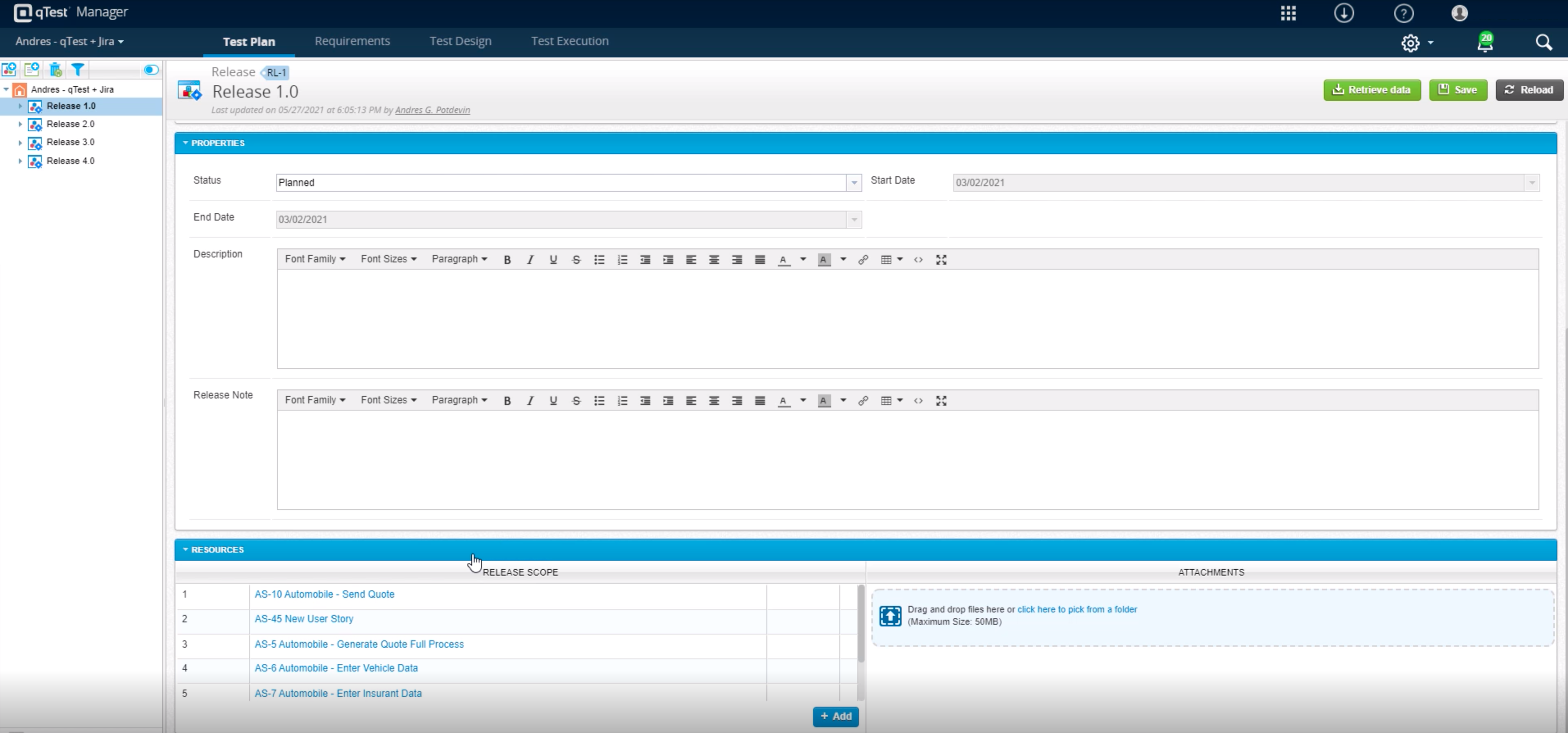
Tricentis qTest integrates seamlessly with Jira, making it ideal for teams that manage user stories and defects in Jira while keeping test cases and execution in qTest. When paired with automation tools like tosca, Selenium, or WebdriverIO, qTest is excellent for aggregating both manual and automated test results in one place.
As a fresher, when I started using qTest it was very handy and easy to understand.
It helps us trace the test cases that are used to test the quality in a single location
The main thing is its integration with JIRA as soon as we create a ticket we would be getting all the requirements in the qTest so it became easy for me
In requirements , we can't add multiple test cases at once, or search multiple cases at once, need to do one by one. Here actually qtest needs to improve.
Linking cloud hosted qtest and on-premise TOSCA is very difficult especially when you are working with client system with security wall. It requires tunnelling software which is not recommended.
Micro Focus ALM Octane use at DaVita goes back beyond my starting with them three years ago. They have used it as part of DevOps as well as for performance measurement of software releases in combo with HP Performance Center (a great combination). Jira is well suited to managing bug reports and development processes with Agile and Scrum, but ALM Octane goes above and beyond that.
All of them offer formidable solutions in the test management realm, but each one caters to different niche and need. qTest distinguishes itself with its deep integration capabilities, especially with Agile and DevOps tools, enabling streamlined CI/CD process. Its modern, user-centric interface contrasts with ALM's more dated appearance and complex setup. While TestRail provides a clean user experience and caters to a broad spectrum of business, qTest's scalability, from SMBs to large enterprises, stands out. PractiTest's cloud-based solution is geared towards mid-sized companies, but qTest's flexibility, advanced analytics, and robust reporting grant teams actionable insights. qTest' approach to a more holistic test management closely aligning with modern software development practices